
Switzerland is not laughing – and this may be the first time that a Swiss audience has collectively done the right thing.
Hazel Brugger, 32, is a star in Germany. Not primarily because she's funny, but because she embodies exactly what the left-leaning media establishment has been passing off as comedy for years: mocking bourgeois realities, selling her own background as a quaint joke, and wrapping it all up with a smile that says she's one of them – while sitting in a small town in Hesse, having won the German Comedy Bambi, hosted the world's biggest music show, and filling 5000-seat arenas. In Switzerland, the spark just isn't there. This isn't a cultural misunderstanding. It's a judgment of quality.
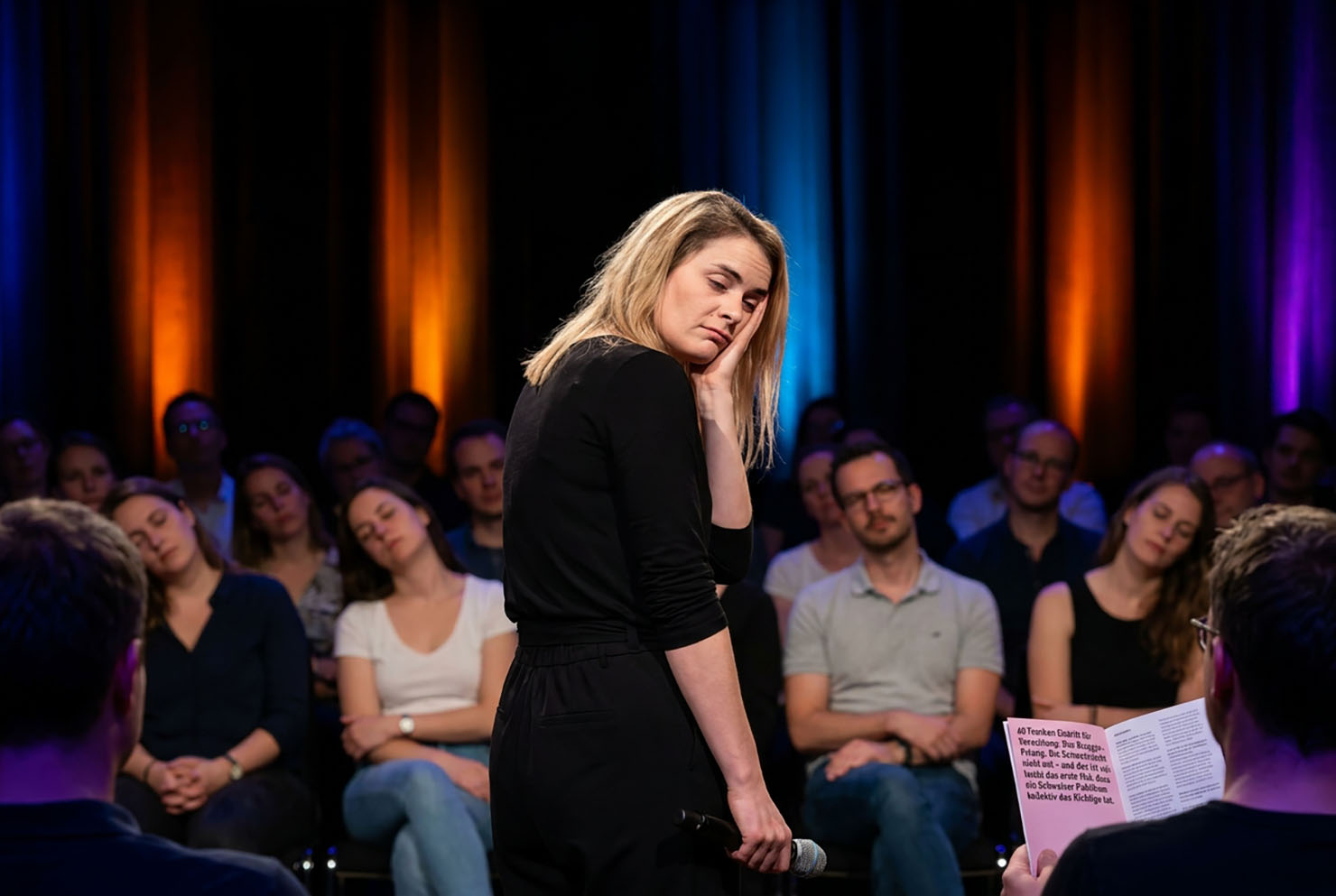
Her new show is called "Good Evening Europe"—a title as international as the self-image behind it. The poster depicts Brugger as the Phoenician princess Europa on a white bull, artificial wind in her hair. It's supposed to be self-irony. In reality, it's the opposite: self-love disguised as modesty. No one who actually wants to be seen as down-to-earth would allow themselves to be portrayed like that. SRF (Swiss Radio and Television) gave her the Eurovision Song Contest hosting job. Germany gave her the Comedy Bambi award. Now Switzerland is giving her its most honest assessment.
What they sell as humor
In Dübendorf, Brugger spoke to five thousand paying guests about annoying children you wish were hibernating, about the frustrations of dealing with tradespeople during home renovations, and about two tortoises as a compromise between a pet and a bicycle helmet. The highlight: an encounter with Angela Merkel at the airport, sitting on a bench with her feet dangling, playing "Letter Salad" on a no-name tablet – a plastic bag beside her. Brugger declared he would continue paying taxes in Germany until senior citizens could afford a decent handbag. This is the stuff of lunchtime podcasts – not material for big stage shows. Anyone who gets five thousand people to pay for this kind of thing has to wonder if their fame has outpaced their product by years.
The mechanics behind it have been tried and tested for years. Brugger simultaneously claims insider and outsider positions: Swiss, so she's allowed to laugh at the Swiss. Living in Germany, so she can laugh at Germans. A mother, so she's allowed to describe children as a burden. As an introvert with an extroverted husband, she's allowed to mock sociable people. All categories covered, no flank left untouched. Anyone who always plays it safe with humor isn't practicing art. They're practicing risk management. And Switzerland is supposed to applaud for it.
Silence as an answer
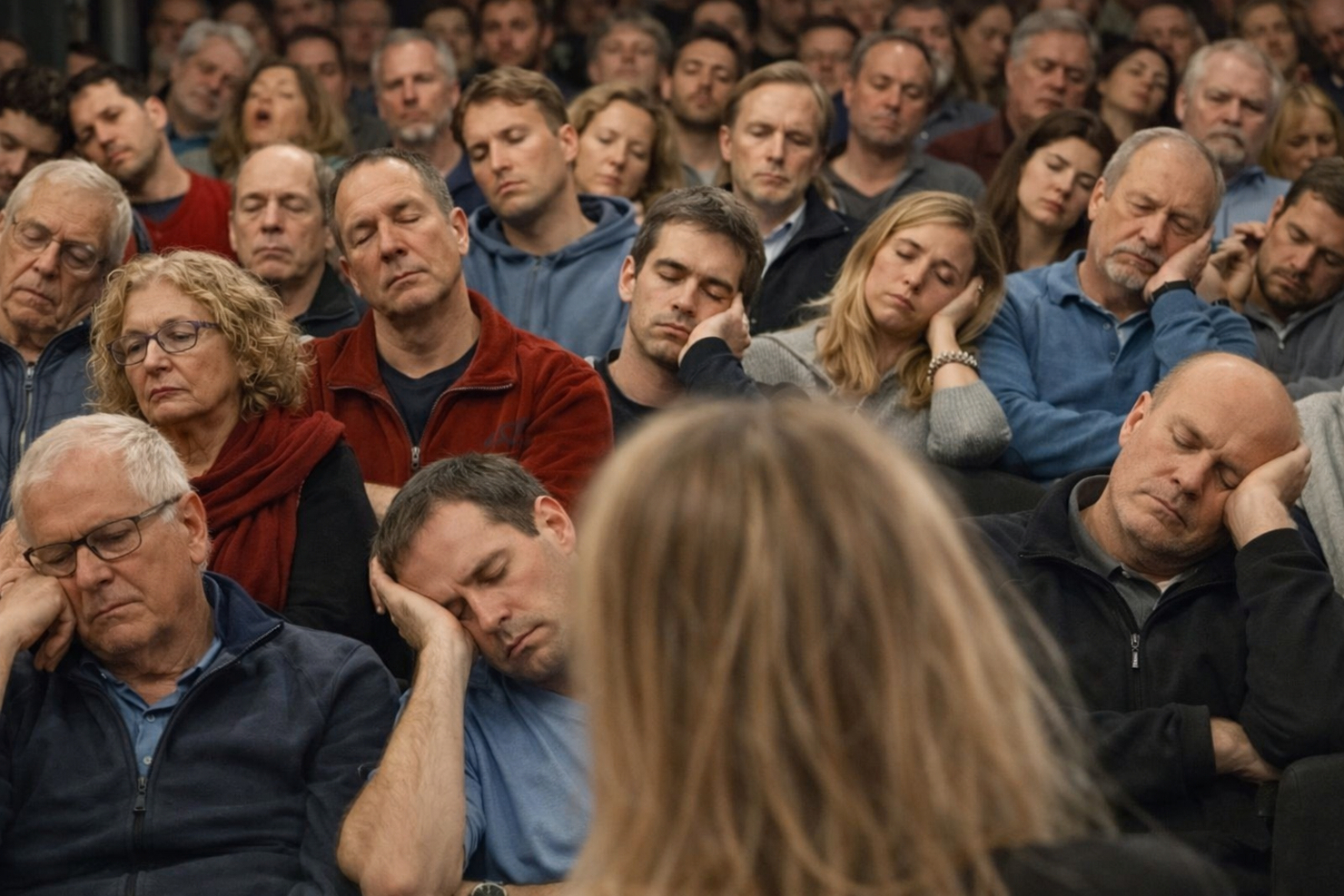
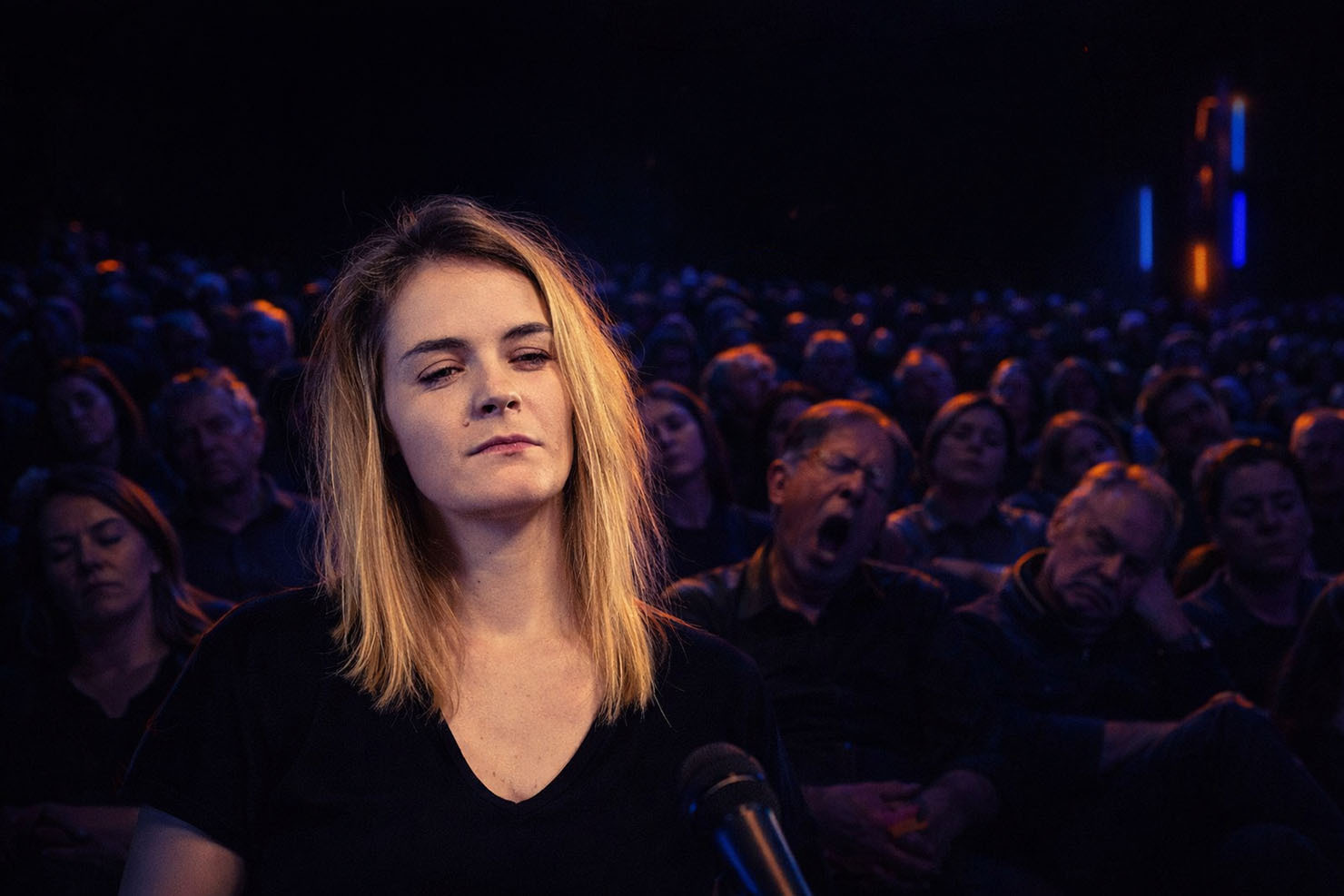
A key moment in the show: Brugger explains that Germans immediately laugh when she tells them the vibe in Germany is bad – because they already know it. In Dübendorf, silence follows. Brugger interprets this as typical Swiss reserve. The audience, she concludes, is like an ice pop: cool, sweet, icy cold, and with a stick up its sleeve. The more obvious explanation is far more banal: they simply didn't find it funny. Not out of awkwardness – but because the joke is at the expense of those sitting in the hall who paid 60 to 100 francs for admission to be lectured about their own national character by a Hessian expat.
Elsewhere, this is called mockery. Yet Brugger has proven in Switzerland that she understands how the country works: she suggested stage diving to SRF for the Eurovision Song Contest to liven things up for the audience. It was only permitted after three rehearsals – with six security guards on duty. "I've never longed for Germany more than at that moment," says Brugger. What she intends as criticism of the uptight Swiss television system is actually her own self-deprecation: anyone who uses their homeland as a punchline and then expects to get laughs for it has lost their way.
When contempt is sold as a punchline
What Brugger is doing is structurally the same as what a certain type of comedy has been successfully scaling for years: Defined groups, lifestyles, and attitudes are treated as readily available raw material for jokes—the reserved Swiss person, the traditional female role, the emotionally unavailable Central European. This works because a smile is considered a license. If the same structure were applied to other groups, the commentator would have been facing a barrage of media criticism for weeks. Brugger is allowed to do it because she belongs to the right camp and because comedy has always been considered a free pass for contempt, as long as you pull the right face. Contempt with an entrance fee is still contempt.
The Swiss audience's refusal to laugh sends a clearer message than any scathing review. The fact that Brugger lost out to Nik Hartmann in the public vote at the Prix Walo is almost too good a punchline – but it's true. The man with the friendly face and no global ambitions beat the Eurovision presenter. According to his management, further appearances in Basel, Bern, St. Gallen, and Geneva are planned. One can only hope that the audiences there react as honestly as the one in Dübendorf – not out of Swiss reserve, but because an empty hall is the most sincere criticism a stage can know.
Hazel Brugger's motto is: humorless and proud of it.

 "Dravens Tales from the Crypt" has been enchanting for over 15 years with a tasteless mixture of humor, serious journalism - for current events and unbalanced reporting in the press politics - and zombies, garnished with lots of art, entertainment and punk rock. Draven has turned his hobby into a popular brand that cannot be classified.
My blog was never designed to spread news, let alone get political, but with current affairs I just can't help but capture information here that is otherwise censored on all other channels. I am aware that the design page may not seem "serious" to many in this regard, but I will not change this to please the "mainstream". Anyone who is open to non-state-compliant information sees the content and not the packaging. I've tried enough to provide people with information over the last 2 years, but quickly noticed that it never matters how it's "packaged", but what the other person's attitude towards it is. I don't want to put honey on anyone's mouth to meet expectations in any way, so I'll keep this design because hopefully at some point I'll be able to stop making these political statements, because it's not my goal to go on like this forever  I leave it up to everyone how they deal with it. However, you are welcome to simply copy and distribute the content, my blog has always been under the WTFPL license.
It's hard for me to describe what I'm actually doing here, DravensTales has become a culture blog, music blog, shock blog, tech blog, horror blog, fun blog, a blog about found items on the internet, internet bizarre, trash blog, art blog, water heater, zeitgeist blog over the years , Scrap blog and grab bag blog called. Everything that is right ... - and yet not. The main focus of the blog is contemporary art, in the broadest sense of the word.
To ensure the continued operation of this site, you are welcome to make a donation via credit card, PayPal, Google Pay, Apple Pay, or direct debit/bank account . Many thanks to all readers and supporters of this blog!








