
Every minister who gives a speech about digitalization sells the same miracle: the machine slices through mountains of paperwork, applications are processed in minutes, and clerks become redundant. Seventy years of experience tell a different story. Every computer that ever challenged a government agency ended up as a new piece of furniture in the office, complete with additional staff to operate it.
Anyone who believes artificial intelligence will abolish bureaucracy hasn't grasped its purpose. It doesn't process files. It manages power, and no official relinquishes that voluntarily, least of all to an algorithm.
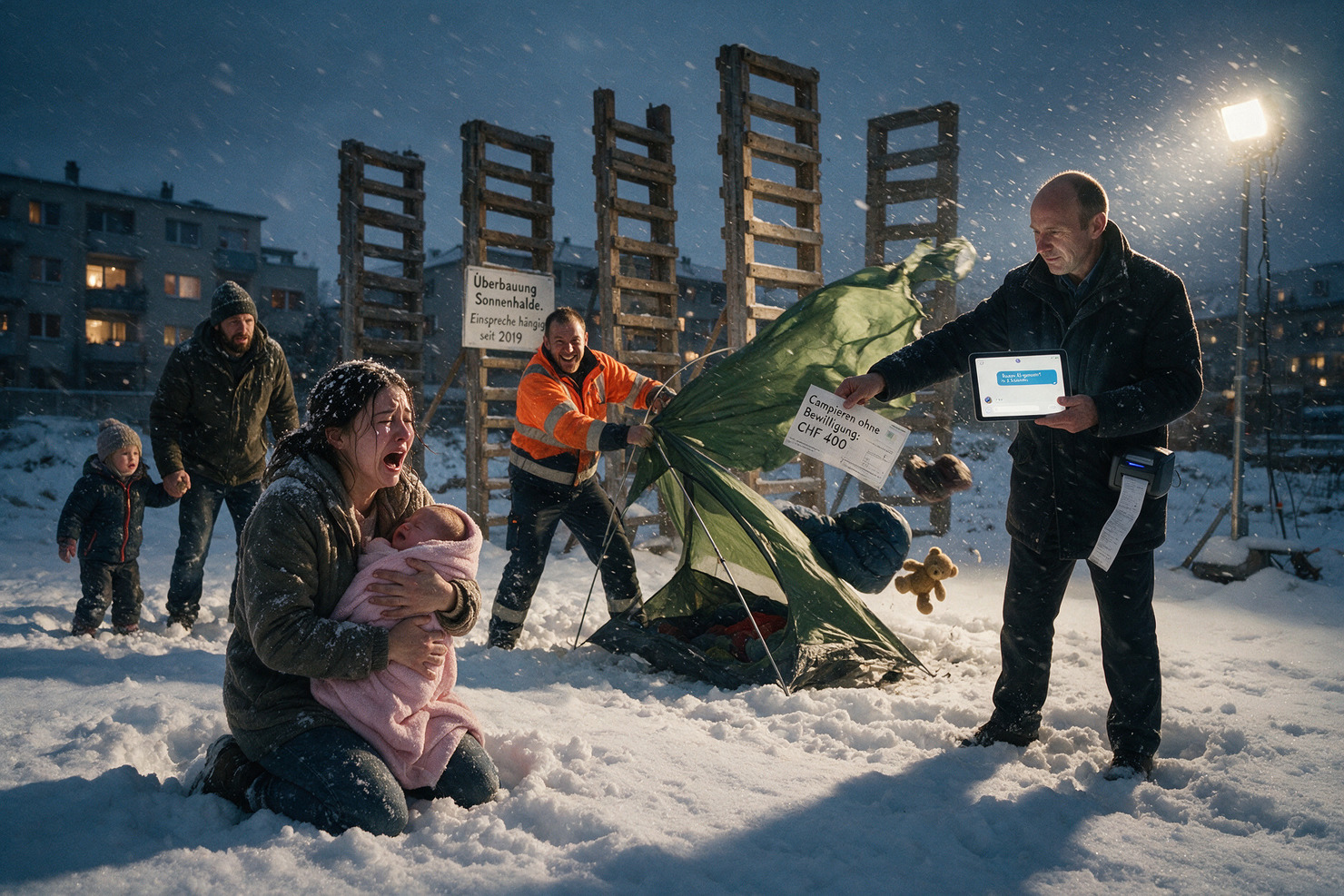
Parkinson has been grinning since 1955
The British naval historian C. Northcote Parkinson brought this drama to a close over seventy years ago in a satirical essay in The Economist . In 1914, the British Admiralty employed around 2000 officials; by 1928, this number had risen to 3569. During the same period, the fleet shrank by a third in personnel and two-thirds in ships. More desks for fewer warships—a navy on dry land. Between 1935 and 1954, the staff even swelled from around 8100 to nearly 33,800. Parkinson calculated that the Colonial Office experienced growth of almost six percent per year, regardless of how many colonies the shrinking empire still possessed. From this, Parkinson distilled two laws: An official wants subordinates, not rivals. And officials create work for each other. The number of civil servants and the amount of work, he dryly concluded, simply have nothing to do with each other.
Now hand this machine a language model. The machine takes work off its hands, and the machine immediately invents new work for it: a guideline for AI use, an impact assessment, a commissioner, an ethics committee, a test protocol for the test protocol. The puppet show at the tax office has already demonstrated how readily the civil servant functions as a tool. The only new thing is that the strings are now being pulled digitally.
Kyiv 1970: The computer loses against the finance minister
The hope of using computers to replace government officials once preoccupied an entire empire. From 1962, Viktor Glushkov headed the Institute of Cybernetics in Kyiv for twenty years and, with OGAS, designed a network intended to control the entire planned economy: a central computer in Moscow, up to 200 nodes in the cities, and up to 20,000 terminals in factories. This is how media historian Benjamin Peters describes it in his analysis . On October 1, 1970, Glushkov appeared before the Politburo. Brezhnev and Kosygin stayed away. Finance Minister Vasily Garbusov wanted the money for his own ministry and instead proposed computers that would blink and play music in chicken coops to encourage hens to lay more eggs. The project was shelved. According to Peters, ministers, officials, and factory directors scuttled it because it contradicted their institutional self-interest. What remained were hundreds of incompatible, isolated solutions.
Under Salvador Allende, Chile attempted to implement Stafford Beer's Cybersyn project, as documented by historian Eden Medina : a single mainframe computer, 400 stored teletype machines, and a futuristic control room. During the truck strike of October 1972, according to Beer, the teletype network transmitted around 2000 messages per day across the country, helping the government weather the crisis. The technology worked, but it didn't resolve the question of power. The coup of September 11, 1973, ended the experiment before the control room ever reached the presidential palace.
There was never a lack of knowledge.
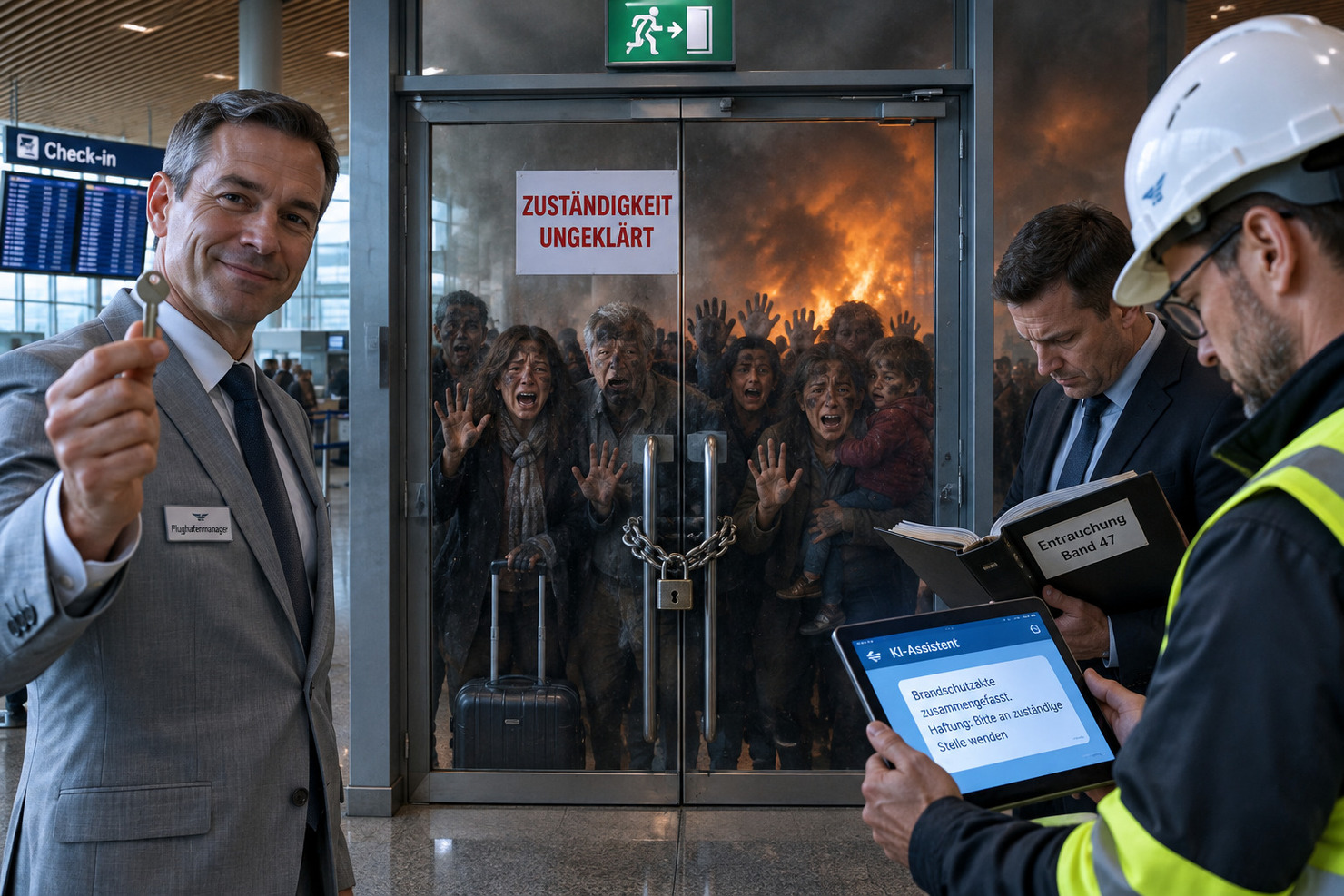
Berlin's BER airport was supposed to open in 2011, finally went into operation on October 31, 2020, and, according to airport CEO Engelbert Lütke Daldrup, its costs ballooned from around €2,7 billion to nearly €6 billion. His conclusion to Reuters : "We German engineers were ashamed." There was never a shortage of data. What was lacking was someone to sign off on it and stand by it. A language model summarizes the fire safety file in three seconds. The question of liability if the smoke extraction system fails is never answered. AI shortens the path to the file, not the path to a decision, because the decision is precisely what no one in office wants to make.
Ludwig von Mises succinctly captured this in his 1944 work, "Bureaucracy" : A government agency lacks a measure of profit and loss, so it measures its success by compliance with regulations. Friedrich August von Hayek added in 1945, in "The Use of Knowledge in Society ," that crucial knowledge is scattered among countless individuals, and only price consolidates it. AI gathers data faster, but it generates neither prices nor losses. Brussels amassed the EUdSSR's mountain of 20 million words of regulation without any linguistic model. With one, it simply grows faster.
Schoolhouse, housing estate, standstill
The same pattern extends to the village. The schoolhouse renovation is becoming increasingly expensive, while the building commission meets for the third time, and the planned housing development languishes for years in the objection loop. Neither project suffers from a lack of word processing. They fail due to tendering rules, budget caps, cascades of signatures, and the perennial question of who will ultimately be held accountable. No chatbot can change that.

Anyone who truly wanted to shrink the bureaucracy wouldn't need data centers, but rather four inconvenient rules. First: The office handling a file also makes the decision and doesn't simply forward it. Second: Whoever misses a deadline bears the consequences, not the applicant. Third: Silence is considered consent. Germany already has this deemed approval ; after three months, an application is considered approved, but only where explicitly mandated by law, and the office is allowed one extension. Fourth: Every new regulation is given an expiration date and becomes invalid as soon as no one justifies its extension. None of these rules requires a single line of code. That's precisely why none of them are implemented, because they cost the bureaucracy power, not budget.
Bern is saving money with AI and hiring a
Switzerland is providing the practical proof itself. The federal government's workforce grew by 22 percent between 2020 and 2025, reaching approximately 39,200 full-time positions, reports the "Netzwoche ." The Federal Office for Information Technology saw the largest increase, at 45,8 percent, though roughly two-thirds of this growth came from the transferred army IT department. This same office is developing Koby, the federal administration's AI service. The National Council wants to impose a staffing cap, arguing that AI brings efficiency. The Federal Council rejects this proposal.
Automation only works where no one loses power. On December 3, 1959, the Swiss Post, Telegraph and Telephone (PTT) replaced the last manual switchboard in Switzerland ; the telephone operators were laid off or transferred. They had no lobby. Today, digitalization prefers to hit those who don't own a smartphone and are therefore barred from government offices, while the government itself expands its surveillance systems . The telephone operator lost her job in 1959; the head of the office will get a second one in 2026 for the AI officer. Parkinson wrote the law; Bern provides the figures. The machine replaces everyone who doesn't have to sign. And those who should be responsible are now having it written away by algorithms!

More for you:






 "Dravens Tales from the Crypt" has been enchanting for over 15 years with a tasteless mixture of humor, serious journalism - for current events and unbalanced reporting in the press politics - and zombies, garnished with lots of art, entertainment and punk rock. Draven has turned his hobby into a popular brand that cannot be classified.
My blog was never designed to spread news, let alone get political, but with current affairs I just can't help but capture information here that is otherwise censored on all other channels. I am aware that the design page may not seem "serious" to many in this regard, but I will not change this to please the "mainstream". Anyone who is open to non-state-compliant information sees the content and not the packaging. I've tried enough to provide people with information over the last 2 years, but quickly noticed that it never matters how it's "packaged", but what the other person's attitude towards it is. I don't want to put honey on anyone's mouth to meet expectations in any way, so I'll keep this design because hopefully at some point I'll be able to stop making these political statements, because it's not my goal to go on like this forever  I leave it up to everyone how they deal with it. However, you are welcome to simply copy and distribute the content, my blog has always been under the WTFPL license.
It's hard for me to describe what I'm actually doing here, DravensTales has become a culture blog, music blog, shock blog, tech blog, horror blog, fun blog, a blog about found items on the internet, internet bizarre, trash blog, art blog, water heater, zeitgeist blog over the years , Scrap blog and grab bag blog called. Everything that is right ... - and yet not. The main focus of the blog is contemporary art, in the broadest sense of the word.
To ensure the continued operation of this site, you are welcome to make a donation via credit card, PayPal, Google Pay, Apple Pay, or direct debit/bank account . Many thanks to all readers and supporters of this blog!