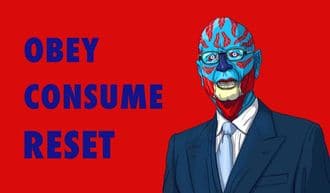
National Socialism is considered right-wing, as certain as death and taxes. But the family tree reveals a different lineage: The inventor of fascism was editor-in-chief of the socialist party newspaper, the Nazi Party (NSDAP) bore the word "socialism" in its name, communists and National Socialists called for strikes together, and Hitler revered Stalin as a brilliant planner. And when the two dictators divided Poland between themselves in 1939, the Kremlin handed over German communists to the Gestapo. This isn't an enmity between left and right; it's a family feud between hostile twins.
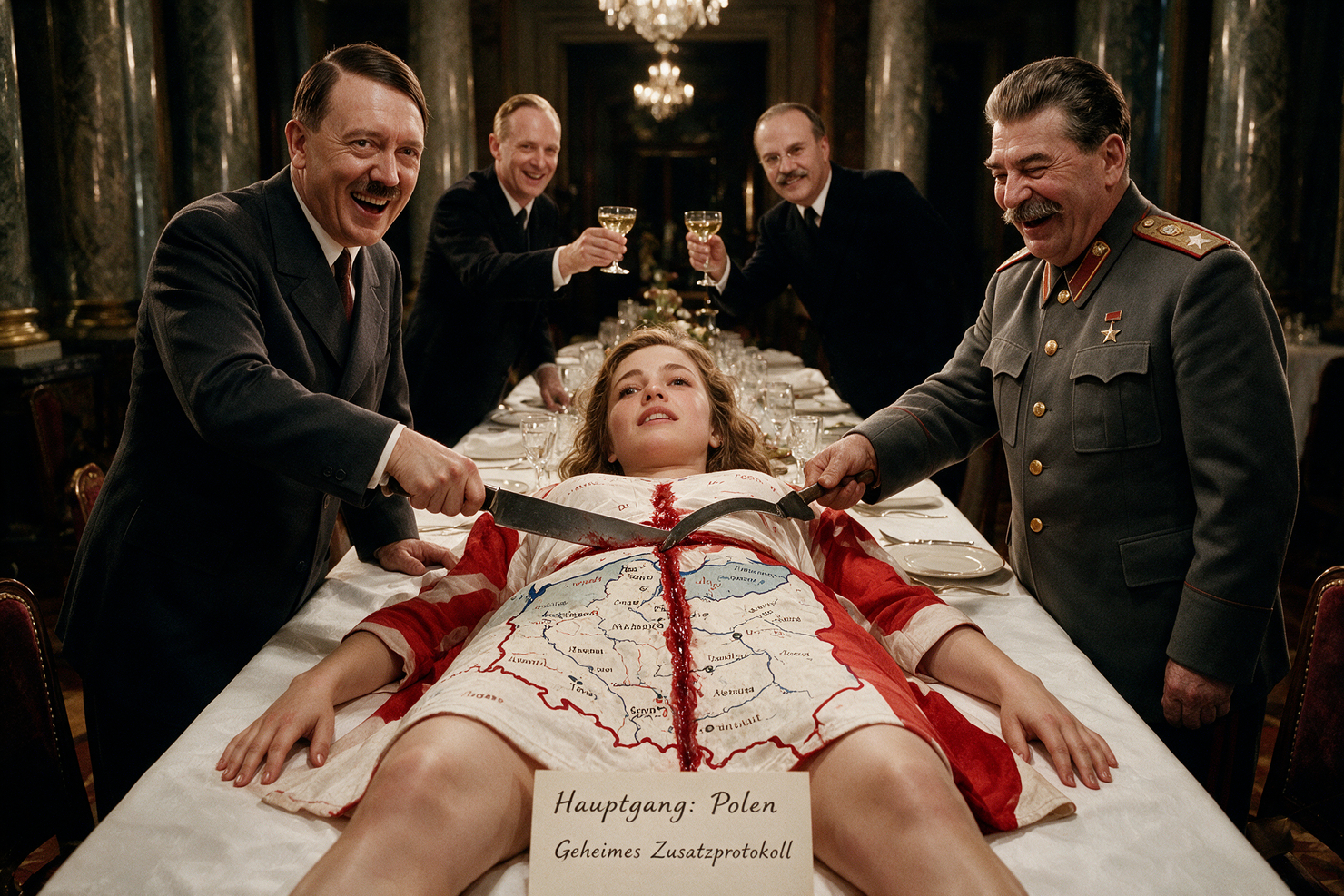
Anyone who says that gets labeled a Nazi before they've even finished their sentence. No one ever looks it up. We do it anyway.
The father of fascism came from the red editorial staff
Benito Mussolini was neither an aristocrat nor a capitalist. He joined the Italian Socialist Party in 1901 and in 1912 became editor-in-chief of its central organ, "Avanti," increasing its circulation from 20,000 to 100,000 copies . In the autumn of 1914, he was expelled from the party for advocating Italy's entry into the war. In 1919, he founded the Leagues of Combat , from which the Fascist Party emerged. The break did not concern belief in the state, but rather the direction of allegiance: instead of the International, loyalty now belonged to the nation.
The result was impressive. With the state-owned conglomerate IRI, founded in 1933, the regime took over banks, steelworks, shipyards, and armaments factories, and henceforth possessed a vast state-run industrial sector with over a thousand subsidiaries. Fascism is socialism that has exchanged class for nation—a heresy originating from within, not an invention of the Chamber of Commerce.
The taz knew – because Bild paid for it
Hitler biographer Joachim Fest wrote in 2003, of all places, in the taz newspaper, that National Socialism belonged "more on the left than on the right" and had more in common with Stalin's totalitarianism than with Mussolini's fascism. The text appeared in the so-called " enemy taz ," whose guest contributions were paid for by Bild editor-in-chief Kai Diekmann himself. The left-leaning house newspaper thus had to rely on Springer to provide it with the truth and continues to distance itself from it to this day.
Fest's most famous statement, that Hitler socialized not the factories but the people, has a catch, as a reader's letter pointed out eleven days later: it comes from Hermann Rauschning's "Conversations with Hitler," the authenticity of which is disputed. Nor is it needed. The official gazette lies less than any eyewitness.
Socialism by decree
In May 1932, Gregor Strasser, Reich Organization Leader of the Nazi Party, invoked an anti-capitalist yearning in the Reichstag , claiming it had gripped 95 percent of the population. After seizing power, the regime delivered. On May 2, 1933, the regime crushed the independent trade unions, and from then on, state trustees set wages. The Reich Hereditary Farm Law deprived the owners of approximately 700,000 farms of the right to sell or mortgage their own land. From October 1936, a total price and wage freeze was in effect, and a Reich Commissioner determined the price of any given commodity. In 1939, a centrally planned economy was introduced , complete with ration cards for almost everything. Anyone who considers this a market economy would also consider the vampire economy of those years a mark of quality.
In 1937, the state founded the Hermann Göring Works , which employed around 600,000 people in 1940. The factory owner remained the nominal proprietor but was reduced to a mere manager, producing what the authorities dictated at prices set by the authorities. Ludwig von Mises had already dubbed this "socialism with a capitalist facade" in 1941. That such models invariably end in failure is another story—but a socialist one nonetheless.
Red fists, brown shirts
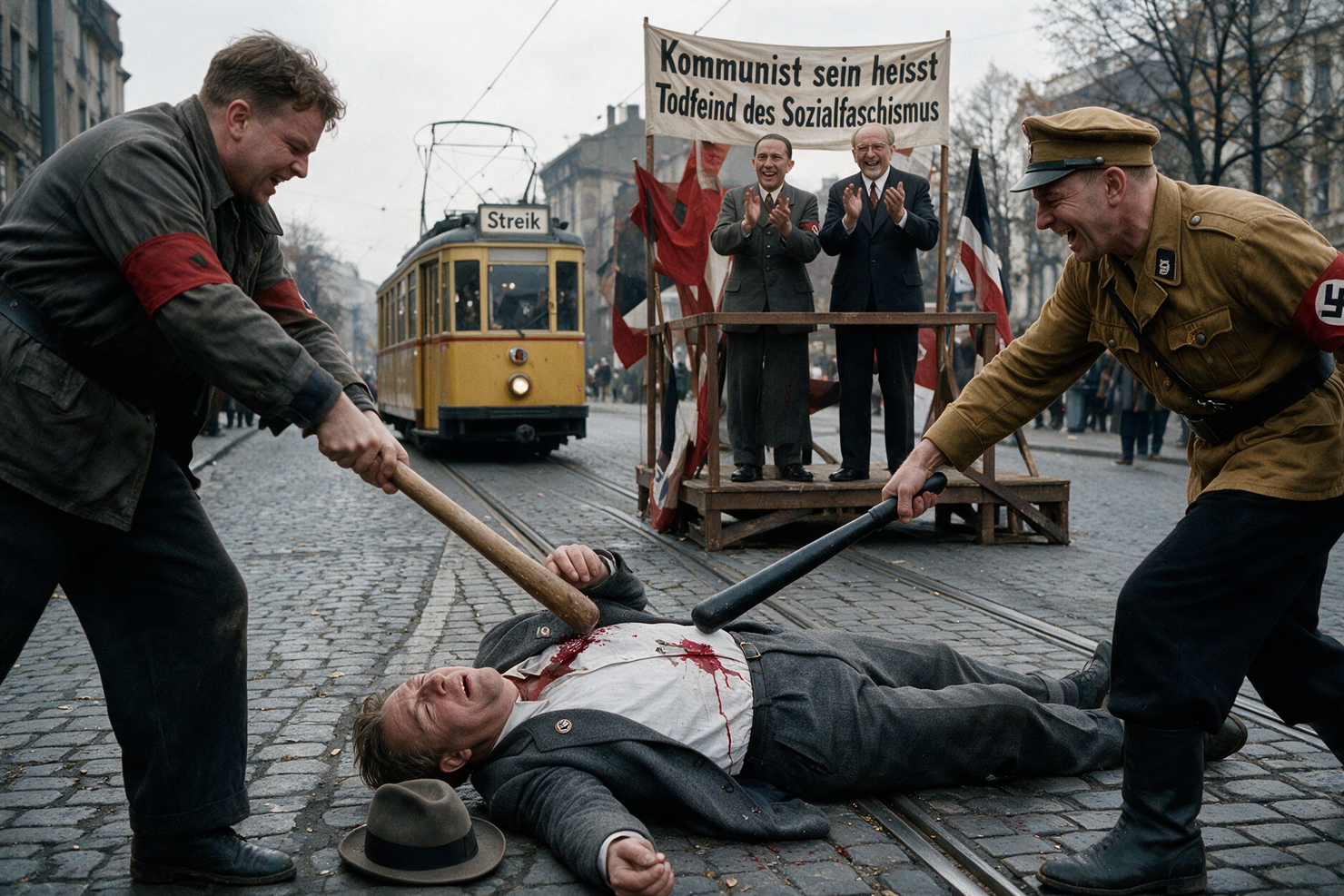
In the Weimar Republic, the KPD's main enemy was not the NSDAP, but the SPD. "To be a communist means to be a mortal enemy of social fascism ," decreed Ernst Thälmann in 1930, and in August 1931, the communists voted together with the National Socialists against the Social Democratic government in the Prussian plebiscite. In November 1932, the communist RGO and the Nazi factory cells jointly paralyzed Berlin's public transport system; Walter Ulbricht and Joseph Goebbels stood side by side on the podium.
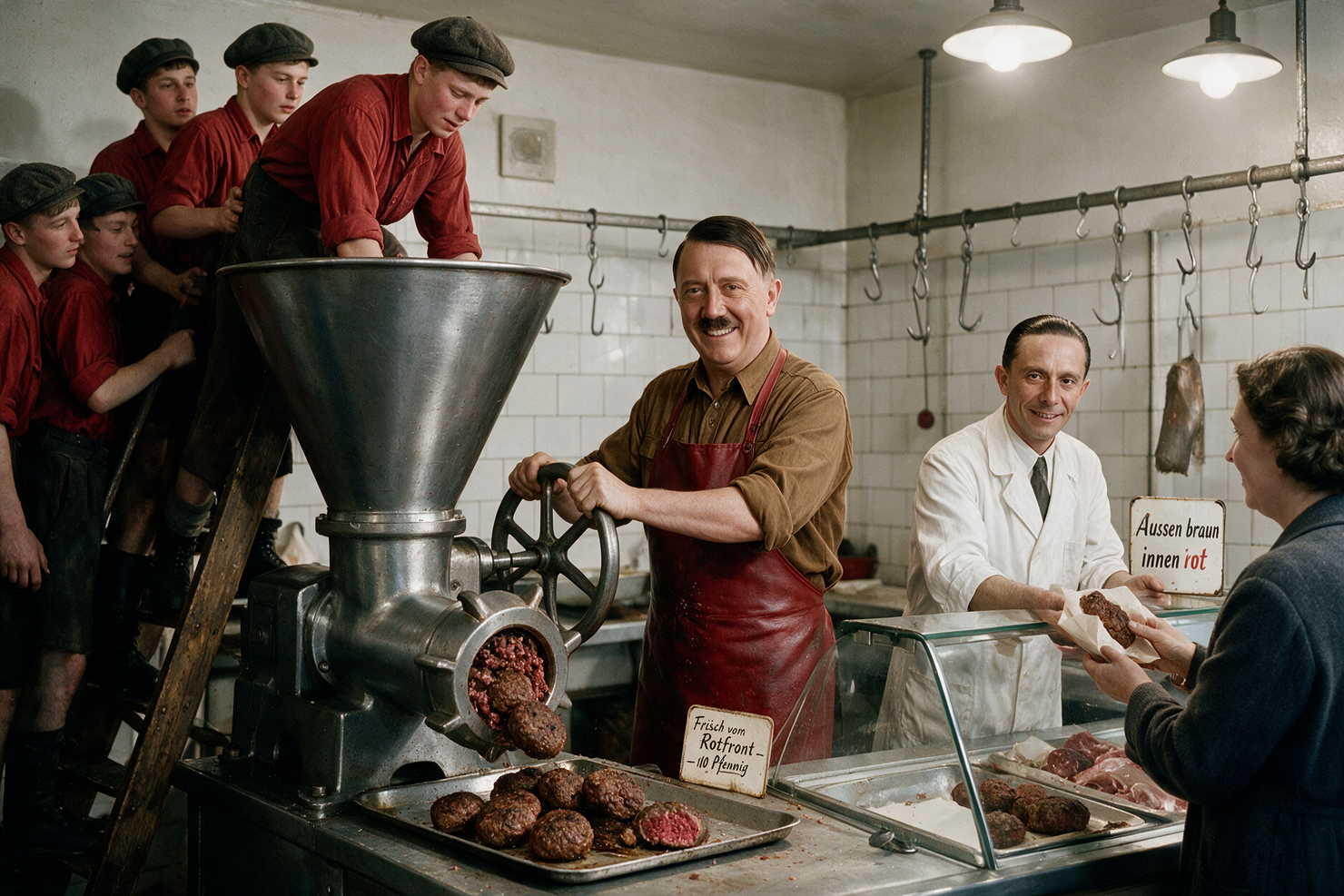
When entire communist combat units joined the SA en masse in the spring of 1933, Berliners jokingly nicknamed them after the meatball: brown on the outside, red on the inside. Hitler himself boasted in 1941 that his early party had consisted of "ninety percent left-wingers," as Rainer Zitelmann's study recounts . He praised the Social Democrats as a haven for the racially best Germans, despised the bourgeoisie as cowardly, and privately slandered Mussolini and Franco.
The leader and his idol in the Kremlin
Hitler referred to Stalin privately as a "brilliant fellow" who commanded unconditional respect for his comprehensive economic planning. In July 1941, he declared that a nation's resources could only be effectively utilized through a centrally planned economy.
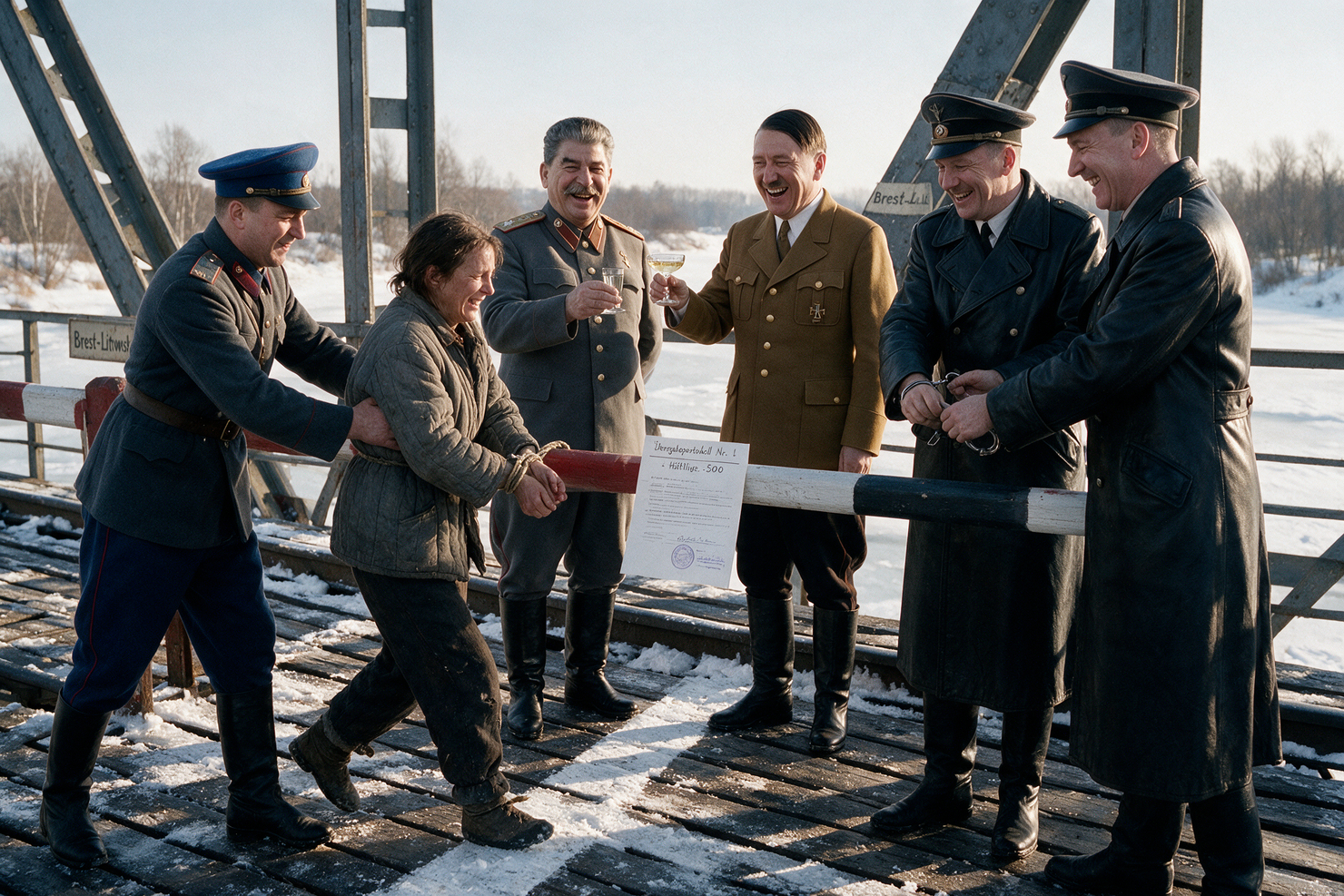
In business, the sympathy was mutual. In the autumn of 1939, the two regimes partitioned Poland, and by the end of that year, the Soviet secret service had handed over around 500 prisoners to Germany, including communists and KPD functionaries who had fled to Moscow to escape Hitler. The communist Margarete Buber-Neumann was transferred directly from the Soviet penal camp to the hands of the Gestapo at the Brest-Litovsk border crossing. A comrade was supplying comrades to the class enemy—or, indeed, to a competitor in the same field.
The opposing side also has files.
The opposing side has arguments, and they deserve more than a blunt instrument. Social Democrats and Communists provided the first concentration camp prisoners, and even Zitelmann concedes that they bore the greatest sacrifices, while bourgeois and capitalist circles profited handsomely. The economist Germà Bel demonstrates that the regime reprivatized state-owned enterprises in the mid-1930s , when no other Western country did so, partly to bind entrepreneurs to its interests. Strasser, the prophet of anti-capitalist aspirations, was murdered on Hitler's orders on June 30, 1934. And the extraditions began even before the pact; according to research, they are not suitable as a "morning gift" to Hitler.
However, Stalin also had the Old Bolsheviks Zinoviev, Kamenev, and Bukharin shot , and no one declares him a conservative for that. Property, which the state can command at any time, is about as private as one's opinion in a cancel-culture republic . Even Zitelmann sees Hitler as an extremist of both extremes, who wanted to dissolve right and left into a new extreme. Those who count the characteristics, however, end up closer to the totalitarian than to the bourgeoisie.
The label, which disappeared in 1945
Hitler was neither a liberal nor a conservative, and certainly not a market radical. He was a national socialist who hated the Internationale, replaced class struggle with the concept of the national community, and considered the bourgeoisie cowardly. Mussolini came from the "red" editorial staff, Goebbels stood beside Ulbricht, and Stalin supplied communists to the Gestapo. After 1945, someone discreetly removed the label and neatly trimmed the family album for the left. Read the law before you wield the club—it was signed by a socialist!
More for you:


 "Dravens Tales from the Crypt" has been enchanting for over 15 years with a tasteless mixture of humor, serious journalism - for current events and unbalanced reporting in the press politics - and zombies, garnished with lots of art, entertainment and punk rock. Draven has turned his hobby into a popular brand that cannot be classified.
My blog was never designed to spread news, let alone get political, but with current affairs I just can't help but capture information here that is otherwise censored on all other channels. I am aware that the design page may not seem "serious" to many in this regard, but I will not change this to please the "mainstream". Anyone who is open to non-state-compliant information sees the content and not the packaging. I've tried enough to provide people with information over the last 2 years, but quickly noticed that it never matters how it's "packaged", but what the other person's attitude towards it is. I don't want to put honey on anyone's mouth to meet expectations in any way, so I'll keep this design because hopefully at some point I'll be able to stop making these political statements, because it's not my goal to go on like this forever  I leave it up to everyone how they deal with it. However, you are welcome to simply copy and distribute the content, my blog has always been under the WTFPL license.
It's hard for me to describe what I'm actually doing here, DravensTales has become a culture blog, music blog, shock blog, tech blog, horror blog, fun blog, a blog about found items on the internet, internet bizarre, trash blog, art blog, water heater, zeitgeist blog over the years , Scrap blog and grab bag blog called. Everything that is right ... - and yet not. The main focus of the blog is contemporary art, in the broadest sense of the word.
To ensure the continued operation of this site, you are welcome to make a donation via credit card, PayPal, Google Pay, Apple Pay, or direct debit/bank account . Many thanks to all readers and supporters of this blog!