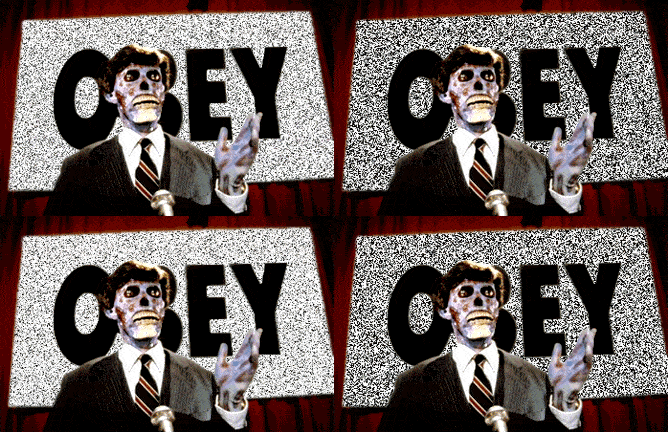
Sometimes you stumble across conversations that feel like a three-hour PowerPoint presentation about life, only without the slides, but with plenty of room for exploration. There you are, two people sitting and discussing whether we live in a matrix, whether reality is perhaps just a personal brew of trauma, nervous system, and societal operating system. And the best part: no one offers any "ready-made answers." Instead, you get a kind of metaphysical open-world game where you are simultaneously player, character, and patch notes.
The basic premise: The Matrix isn't just technology. It's an energetic, psychological, and social operating system into which we're logged with our "human avatar." Sounds fancy. But in everyday life, it's surprisingly banal: You wake up, scroll through the news, experience existential anxiety, call it "realism," go to work, and if you're lucky, you buy yourself a retreat in the evening to "reconnect." Because connection is apparently like Wi-Fi: always there, but you have to pay for the premium router first.
The avatar in the hamster wheel and the religion called optimization
The conversation makes one thing clear right from the start: Escaping the rat race is the new halo. Except now you're smoking "self-responsibility" instead of incense and booking coaching instead of confession. Sabine tells her story: she gave up law, left Germany, went "all in" to Switzerland, and then became a psychotherapist, healer, spiritual teacher, journalist, and bodyworker. The modern CV is no longer a CV at all, but a spiraling fog of identity updates.
And somewhere in between comes the sentence that sounds like a key: Many people are "children in adult bodies," trapped in survival mode. The nervous system is constantly on high alert, while the mind tries to manage everything by wanting... even more control. Brilliant idea. Works about as well as putting out a fire with gasoline.
"New Age"? No: "New Cage"
The best concept of the whole trip: New Age is New Cage. A new prison that feigns freedom as long as you follow the rules: "Only light and love," no duality, no anger, no rage, no abysses. If you do happen to have a dark feeling, it's not felt, but "transformed." Because feelings these days are apparently like old furniture: either shabby chic or off to the upcycling station.
That's the insidious twist: You're released from the old pressure to perform (school, job, status) and immediately thrust into the new pressure to perform (vibration, consciousness, enlightenment, "higher, faster, further"). Where religion used to say, "You have to go to church to experience God," New Cage says, "You have to meditate, do yoga, attend the retreat, and breathe at the correct frequency, otherwise you're just not ready yet."
And if you're thinking, "That sounds complicated"—yes. That's precisely the trick. Complicated keeps you busy. Busy keeps you controllable. And controllability keeps the system running, whether you call it "state," "matrix," "collective field," or "those in power." The name is cosmetic; the function is the same.
Commerce is highly spiritual, and that's unfortunately funny.
There's a moment when it gets truly absurd: commerce is highly spiritual. Because the "accounting of the world" (i.e., forms, person constructs, rules, numbers) isn't simply bureaucracy, but a ritual. A global sacrament on paper that reminds you: you are not a human being, you are a data record.
And here she briefly gets human (yes, it rarely happens, I know): She tells how at some point she wasn't even able to file a tax return anymore because it was tearing her apart inside. Not because of the math, but because of the meaning: Why should I have to justify myself if I fall below any kind of threshold? Why do I have to explain how often I go to the hairdresser? This kind of contact with the system is like an emotional sandpaper workshop.
Fear: The upgrade that nobody ordered, but everyone installed.
Then comes the central monster: fear. Not as a flaw, but as a feature. Sabine claims (in essence): The greatest fear is not the fear of death, but the fear of dying. Of the process, the loss of control, the pain. And she adds: Perhaps we aren't even so afraid of dying itself, but of real life: of rejection, of radicalism, of the moment when we stop being good.
This is where many "spiritual solutions" act like cheap band-aids: slap it on, smile, and "feel better." Meanwhile, the radical proposal being discussed is: Stay. Surrender. Feel. No miracle pill, no quick fix, no "fear-free in 7 days" approach. This, of course, offends the separation-minded mind that would prefer an instruction manual.
Tragedies, morality, and the grand theater of explanations
And then: a real tragedy, a fire, death, parents, grief. The conversation does something many can't bear: it separates compassion from pity and refuses cheap attempts to define the narrative. No "It was all for a higher purpose," no "Don't be so dramatic." Instead: When something affects you, ask yourself honestly, "How does this make me feel?" And let the other person live in their own reality, instead of overwhelming them with your worldview.
A thought arises, sounding like a warning siren: tragedies are also perfect levers for "more control." More cameras, more rules, more surveillance, because "you all want to make sure something like this never happens again." And just like that, the collective signs up for its next security subscription.
Conclusion: You're not "out of the Matrix." You're just in a different menu.
Ultimately, this uncomfortable sentence lingers: "You can't escape the Matrix, you are the Matrix." This is either liberation or the ultimate imposition, depending on how willing you are to shift the blame.
If you're serious about it, it'll be unpleasant: Less explanation, more perception. Less chasing the next concept, more honesty about what's currently going on inside you: survival mode, control, fear, longing for belonging, escape into optimization. And yes: humor. Not as repression, but as a pin that pops the balloons.
Because perhaps that is the only true "spirituality" that no one sells: simply being here, without constantly trying to fix, exaggerate, or dismiss oneself.
Everything else is just New Cage with incense sticks…

More for you:


 "Dravens Tales from the Crypt" has been enchanting for over 15 years with a tasteless mixture of humor, serious journalism - for current events and unbalanced reporting in the press politics - and zombies, garnished with lots of art, entertainment and punk rock. Draven has turned his hobby into a popular brand that cannot be classified.
My blog was never designed to spread news, let alone get political, but with current affairs I just can't help but capture information here that is otherwise censored on all other channels. I am aware that the design page may not seem "serious" to many in this regard, but I will not change this to please the "mainstream". Anyone who is open to non-state-compliant information sees the content and not the packaging. I've tried enough to provide people with information over the last 2 years, but quickly noticed that it never matters how it's "packaged", but what the other person's attitude towards it is. I don't want to put honey on anyone's mouth to meet expectations in any way, so I'll keep this design because hopefully at some point I'll be able to stop making these political statements, because it's not my goal to go on like this forever  I leave it up to everyone how they deal with it. However, you are welcome to simply copy and distribute the content, my blog has always been under the WTFPL license.
It's hard for me to describe what I'm actually doing here, DravensTales has become a culture blog, music blog, shock blog, tech blog, horror blog, fun blog, a blog about found items on the internet, internet bizarre, trash blog, art blog, water heater, zeitgeist blog over the years , Scrap blog and grab bag blog called. Everything that is right ... - and yet not. The main focus of the blog is contemporary art, in the broadest sense of the word.
To ensure the continued operation of this site, you are welcome to make a donation via credit card, PayPal, Google Pay, Apple Pay, or direct debit/bank account . Many thanks to all readers and supporters of this blog!