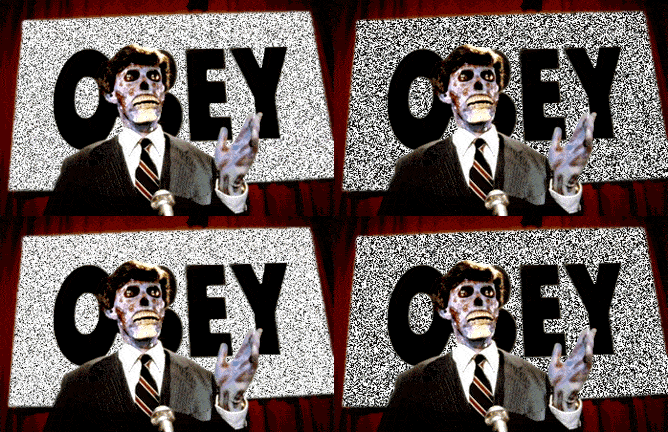
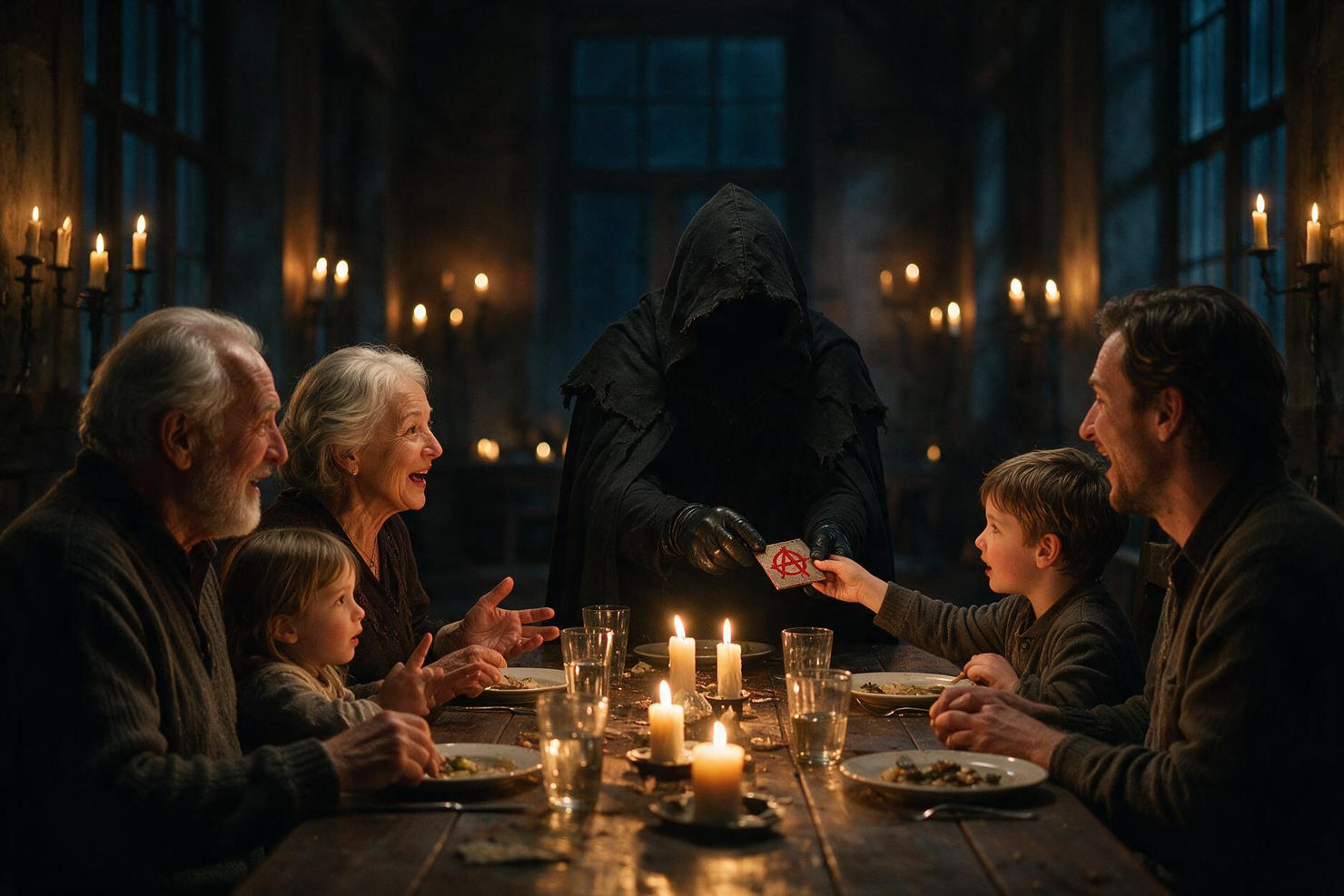
There is hardly a word more thoroughly misunderstood than anarchy. The evening news shows burning garbage cans, politicians point cautionaryly at masked figures, and both mean the same thing: chaos, violence, upheaval. Yet the Greek word an-arché implies the exact opposite – without rule, not without order. Anyone who confuses anarchy with politics has already lost before the first stone is thrown. For whoever overthrows the ruler without overthrowing the mindset of domination within themselves merely changes the emblem on the whip. This is precisely the cardinal error of all romanticized notions of revolution: the belief that freedom can be conquered like a fortress. But rule is not a fortress. It is a habit. And habits cannot be blown up with dynamite.
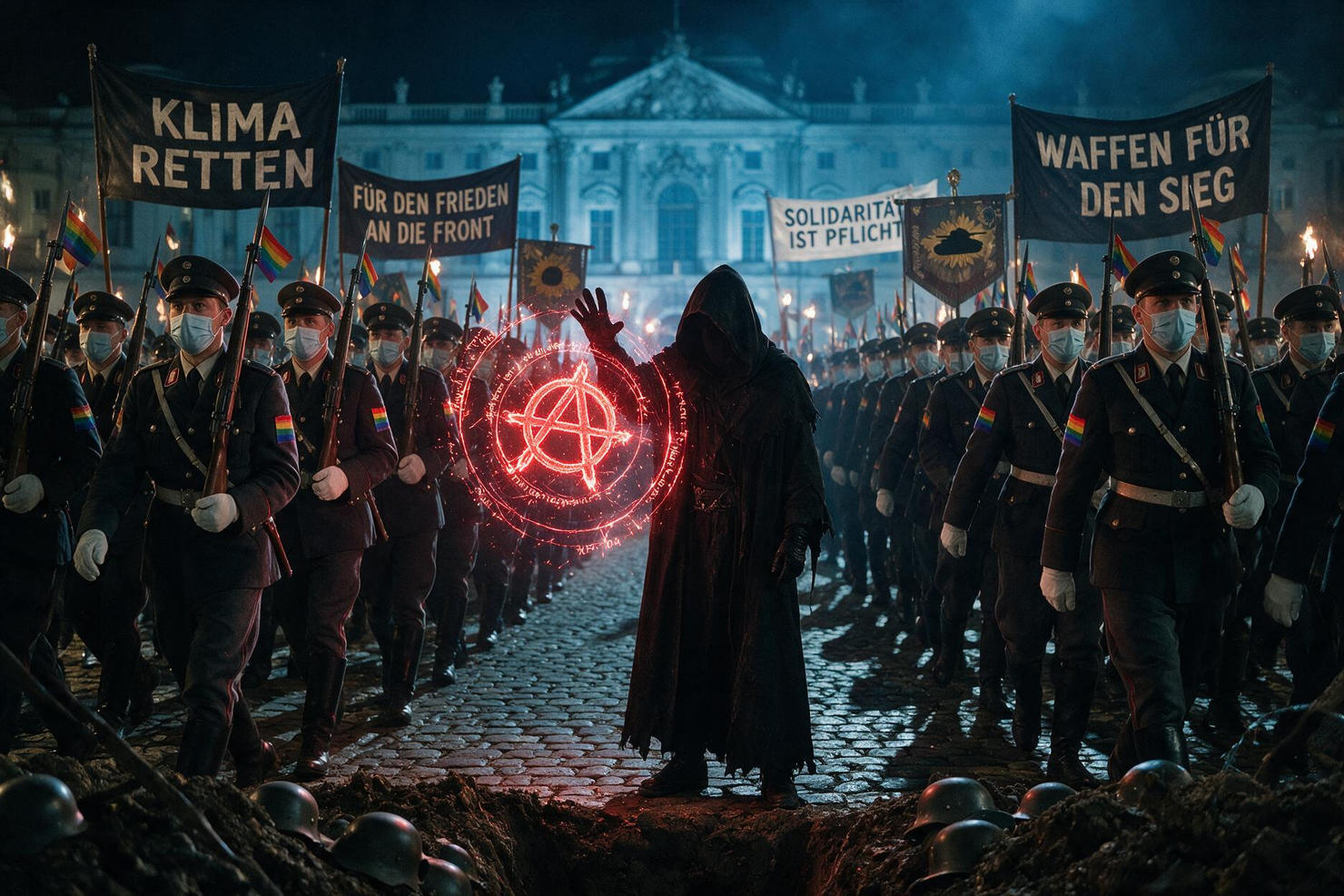
The barricade as a career ladder
History demonstrates this with the reliability of a Swiss watch: where overthrow is enforced by force, someone eventually sits on the throne again – usually with better weaponry than their predecessor. The textbook example was provided by March 1921. The sailors of the fortress island off Petrograd, once the spearhead of the October Revolution, demanded Freedom of speech, free councils and the release of political prisoners —exactly what the revolution had once promised. The new rulers' response: ultimatum, artillery, bloodshed. Trotsky called off the uprising. crushed by the Red ArmyWhile the dead were lied to, being told they were agents of the counter-revolution. The revolution doesn't just devour its children; it promotes its butchers. Those who believe that Molotov cocktails can usher in a period of rulelessness are therefore not practicing anarchy, but rather a political maneuvering for the vacant throne.
When liberation shouts orders
The same trap lurks not only on the streets, but in every organization that champions democracy. A state of non-domination cannot be administered from above like a vaccination. It arises where people freely encounter one another, sharpen their thinking, and manage their own affairs—without anyone granting permission. As soon as a movement begins to re-educate people through command, doctrine, and surveillance apparatus, instead of allowing them to govern themselves, it has switched sides: it is engaging in politics in black shirts. And a revolution that escalates into a power grab inevitably ends where all power grabs end—with violence, coercion over the entire population, and a new cast of characters on the old throne.
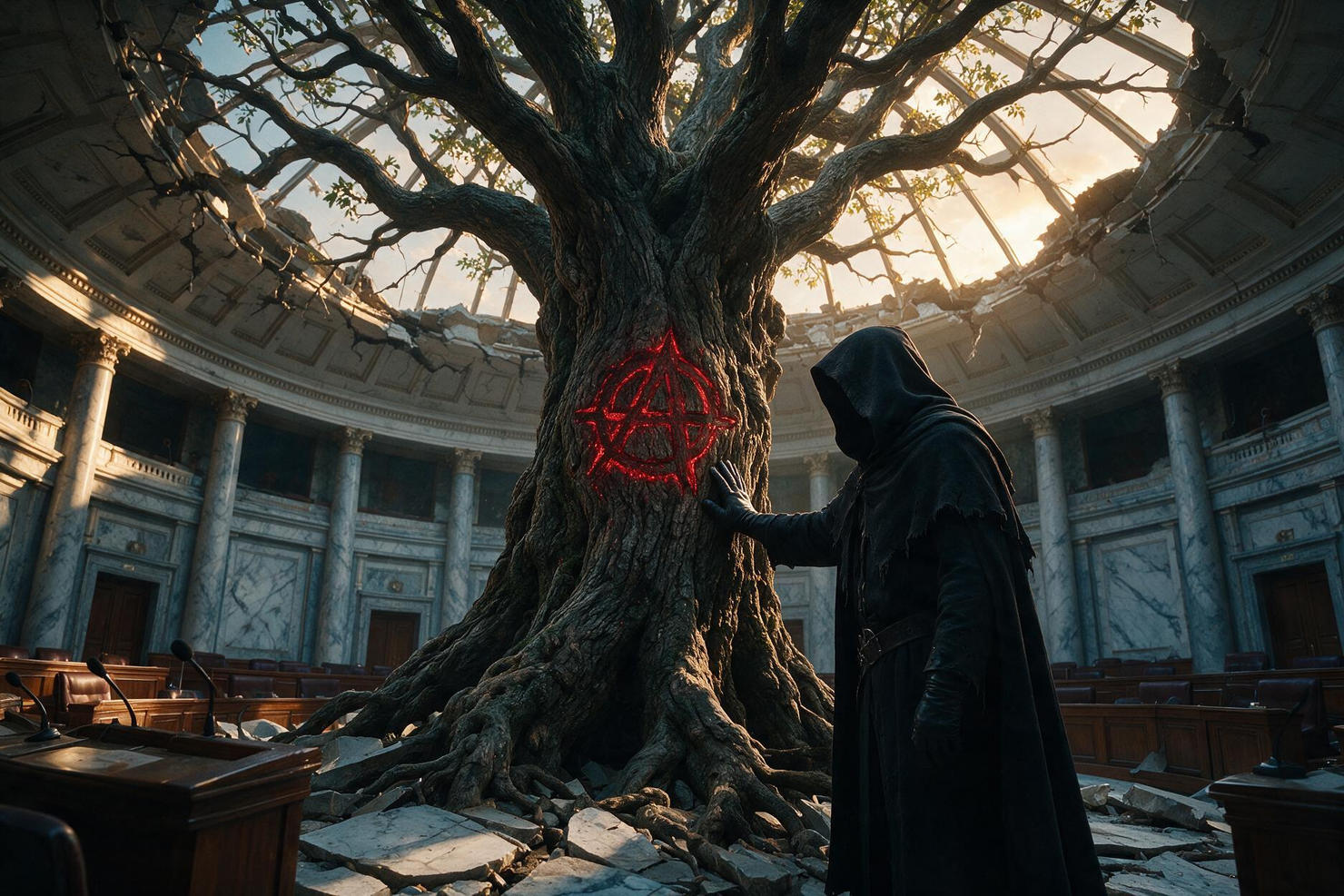
The state doesn't live in parliament, but in your head.
Gustav Landauer, the thinker of the Bavarian Soviet Republic who was beaten to death by Freikorps soldiers in 1919, had already formulated the crucial insight in 1910: The state is not something that can be smashed like a window pane, but a relationship between people, a way of behaving towards each other —and you can only destroy it by entering into other relationships. That's not poetry, that's diagnosis. Domination doesn't exist because there's a palace somewhere. It exists because millions of minds wake up every morning and consider it the only option.
Étienne de La Boétie dissected this riddle as early as the 16th century: How does a single individual manage to rule over millions? His answer in his treatise on voluntary servitude is as simple as it is devastating – through the subjugated themselves. The tyrant possesses only the power that the ruled lend him daily. Therefore, any revolt that merely changes personnel falls short: As long as people demand authority, they will receive it – if necessary, in the name of resistance against authority.
The fairy tale of the war gene
And then there's the favorite excuse of all apologists for domination: that humans are simply wolves, and without Leviathan, there would be murder and mayhem. Field research tells a different story. An analysis of 21 nomadic hunter-gatherer societies published in the journal Science found... There is little evidence of organized group warfare. – almost two-thirds of all fatal incidents were due to personal disputes, family feuds or accidents, not to coalition violence between groups.
Admittedly, the opposing view exists. Researchers like Samuel Bowles consider the sample biased and the primal war to have evolutionary impact – finding versus finding. But even the war thesis confirms the core issue: organized mass warfare with uniforms, flags, and a general staff is a product of organized domination. No peasant in the world has ever voluntarily marched 2000 kilometers to shoot strangers who had done him no harm. For that, there has always been a need for a system to collect taxes, draw borders, and administer oaths of allegiance. War is not in your genes. It is in your institutions.
The slowest revolution is the only real one.
This brings us to the most uncomfortable of all truths: the absence of domination cannot be decreed, stormed, or imposed by order of a ruler – a decreed order would itself be a form of domination. It either grows organically, or it doesn't exist. Over generations, in minds, in lived relationships, in the arduous process of weaning oneself off the drug of authority. The revolution takes place in the mind —or it doesn't happen at all, but rather just a shift change among the security personnel. Anyone who understands this also knows that Developing anarchic coexistence further means not throwing things into shop windows.One is raising awareness. The other is vandalism with ideological stickers.
The rioters, dressed in anarchist garb and waging street battles, are therefore the system's most useful idiots: they provide the images that discredit any idea of freedom for decades to come. They do exactly what the apparatus expects of them – and call it "liberation"!
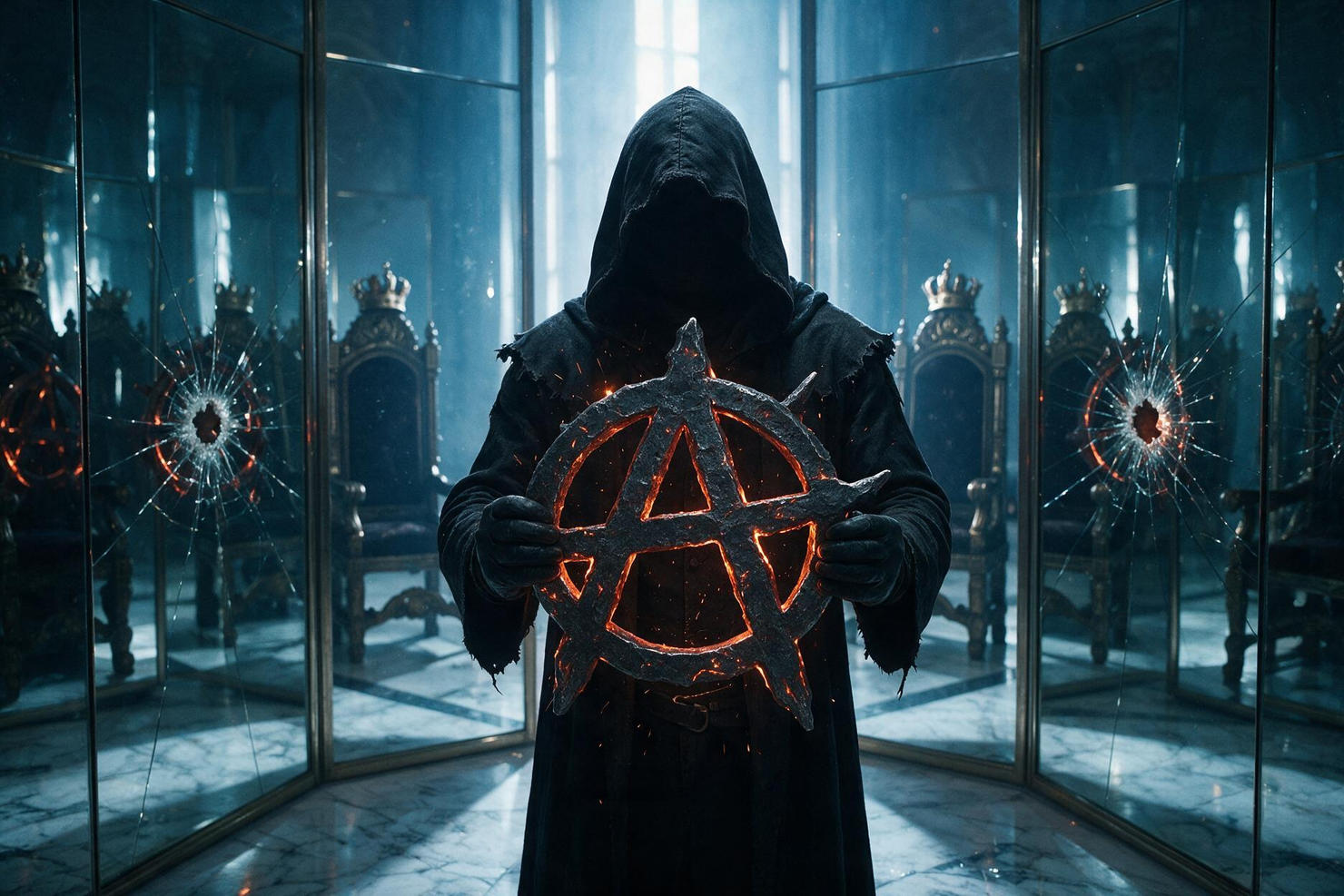
He who worships the crown deserves the chain.
You can storm palaces, topple monuments, and burn flags, but as long as the subject continues to rule in their own mind, every empty crown will be filled again within days. Rule doesn't die on the barricades; it dies the moment no one believes in it anymore. Until then, every violent overthrow is merely a job posting for the next tyrant. And humanity has been applying collectively for millennia—and calls this "progress"!
More for you:





 "Dravens Tales from the Crypt" has been enchanting for over 15 years with a tasteless mixture of humor, serious journalism - for current events and unbalanced reporting in the press politics - and zombies, garnished with lots of art, entertainment and punk rock. Draven has turned his hobby into a popular brand that cannot be classified.
My blog was never designed to spread news, let alone get political, but with current affairs I just can't help but capture information here that is otherwise censored on all other channels. I am aware that the design page may not seem "serious" to many in this regard, but I will not change this to please the "mainstream". Anyone who is open to non-state-compliant information sees the content and not the packaging. I've tried enough to provide people with information over the last 2 years, but quickly noticed that it never matters how it's "packaged", but what the other person's attitude towards it is. I don't want to put honey on anyone's mouth to meet expectations in any way, so I'll keep this design because hopefully at some point I'll be able to stop making these political statements, because it's not my goal to go on like this forever  I leave it up to everyone how they deal with it. However, you are welcome to simply copy and distribute the content, my blog has always been under the WTFPL license.
It's hard for me to describe what I'm actually doing here, DravensTales has become a culture blog, music blog, shock blog, tech blog, horror blog, fun blog, a blog about found items on the internet, internet bizarre, trash blog, art blog, water heater, zeitgeist blog over the years , Scrap blog and grab bag blog called. Everything that is right ... - and yet not. The main focus of the blog is contemporary art, in the broadest sense of the word.
To ensure the continued operation of this site, you are welcome to make a donation via credit card, PayPal, Google Pay, Apple Pay, or direct debit/bank account . Many thanks to all readers and supporters of this blog!