
Google is restructuring the internet – and this time it's not your data that's affected, but your hardware. With the "next evolution of reCAPTCHA," the deciding factor will no longer be whether you're human, but whether you own the right device: a smartphone with Google Play Services or an iPhone. Anyone using Linux, a de-Googled Android, or simply without a certified bug in their pocket will find themselves locked out. This two-tier internet is no longer a dystopian future scenario – it's being rolled out now, quietly, gradually, and marketed as a security feature.
The QR code as a doorman
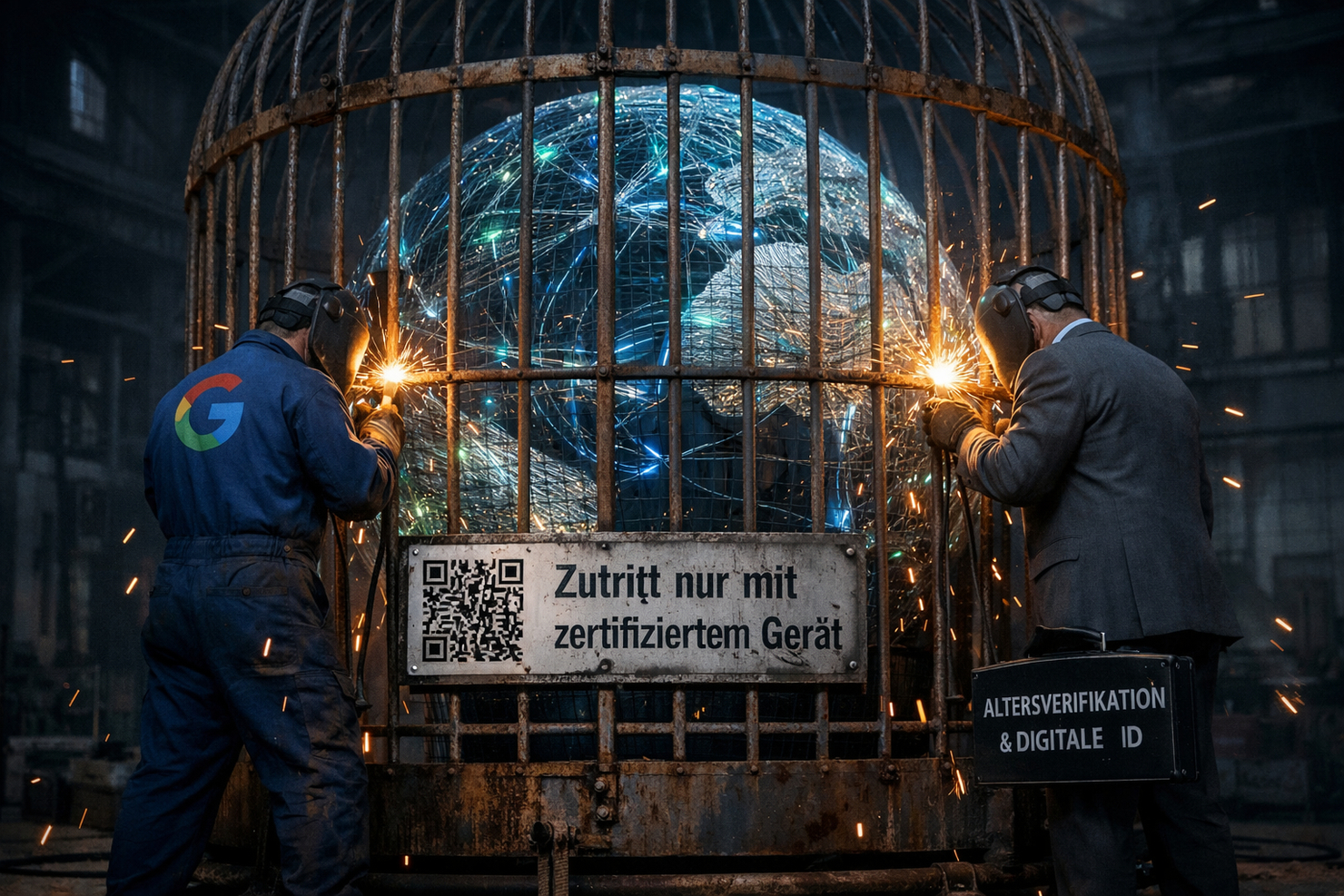
The mechanism is disarmingly audacious. On the Cloud Next in April 2026 Google unveiled its new flagship feature, Cloud Fraud Defense – existing reCAPTCHA customers were automatically migrated without asking anyone. Instead of pixelated traffic lights and crosswalks, a QR code will now appear on the screen. You scan it with your smartphone, and the phone then confirms "human presence and device integrity" to Google's servers. Sounds harmless? The devil is in the system requirements: Android devices need the latest version of Google Play Services, and Apple devices at least iOS 15. Those running GrapheneOS, CalyxOS, or LineageOS – systems that deliberately block Google's tracking services and are therefore often more secure than any stock Android – are out of luck. Not because of a lack of security, but because of a lack of compliance.
The whole thing is still being described as an "experimental challenge type in preview status," and visual alternatives still exist. These stories always start this way: first optional, then standard, then indispensable. According to research, the silent rollout has been underway since October 2025 – months before the public even noticed what was being imposed on millions of websites.
A zombie called Web Environment Integrity
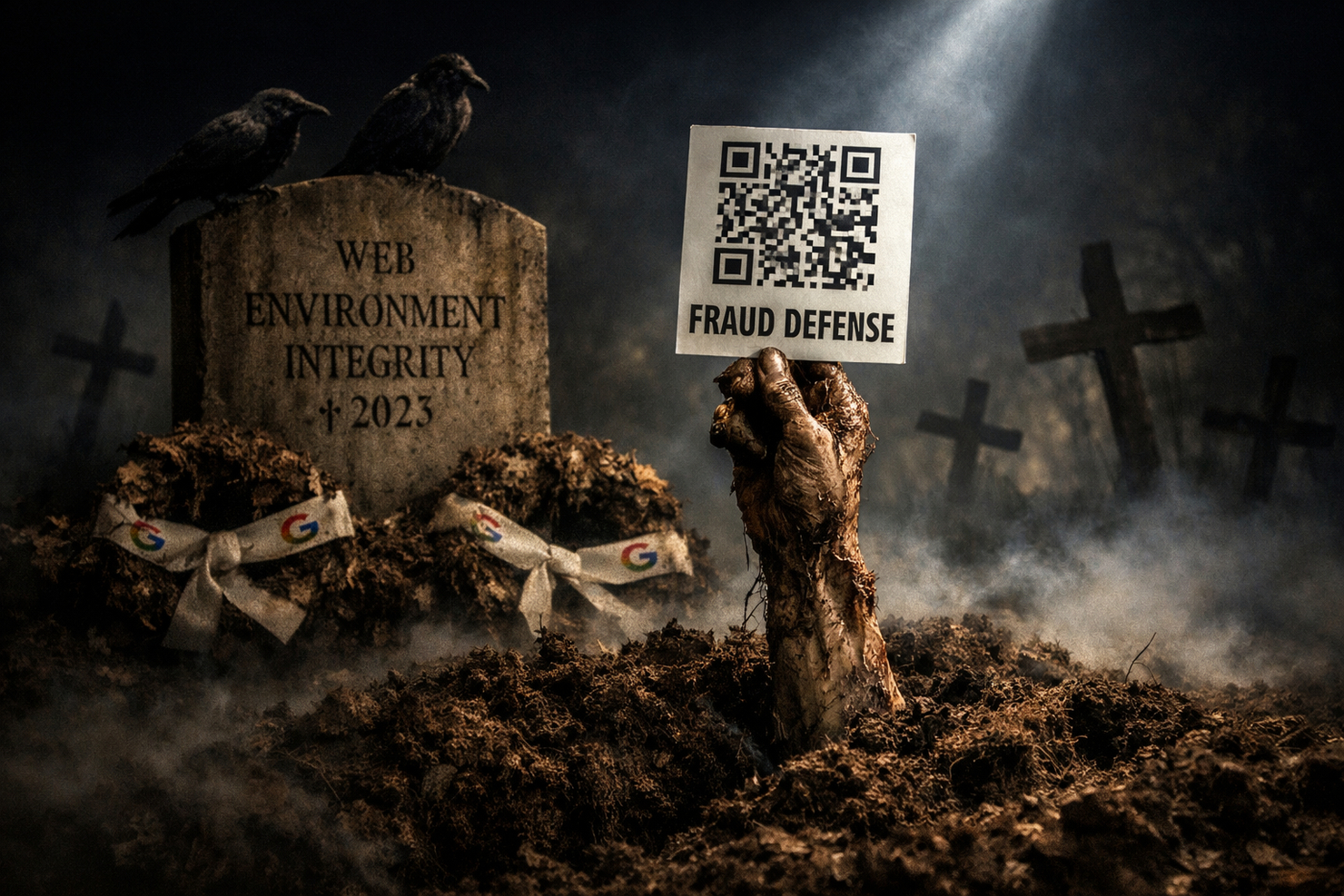
If this sounds familiar: Congratulations, you were paying attention in 2023. Back then, the project was called the Web Environment Integrity API and was supposed to allow browsers to prove to websites that they were running on "trusted" hardware and software. The outcry was enormous; developers, standards bodies, and even the competition protested vehemently, and Google publicly abandoned the plan. Three years later The exact same device certification returns. – not as a web standard that would require discussion, but as a commercial product that no one needs to approve. What failed in the regulatory bodies is now being pushed through the back door of fraud prevention measures. The corpse was never buried. It was merely relabeled.
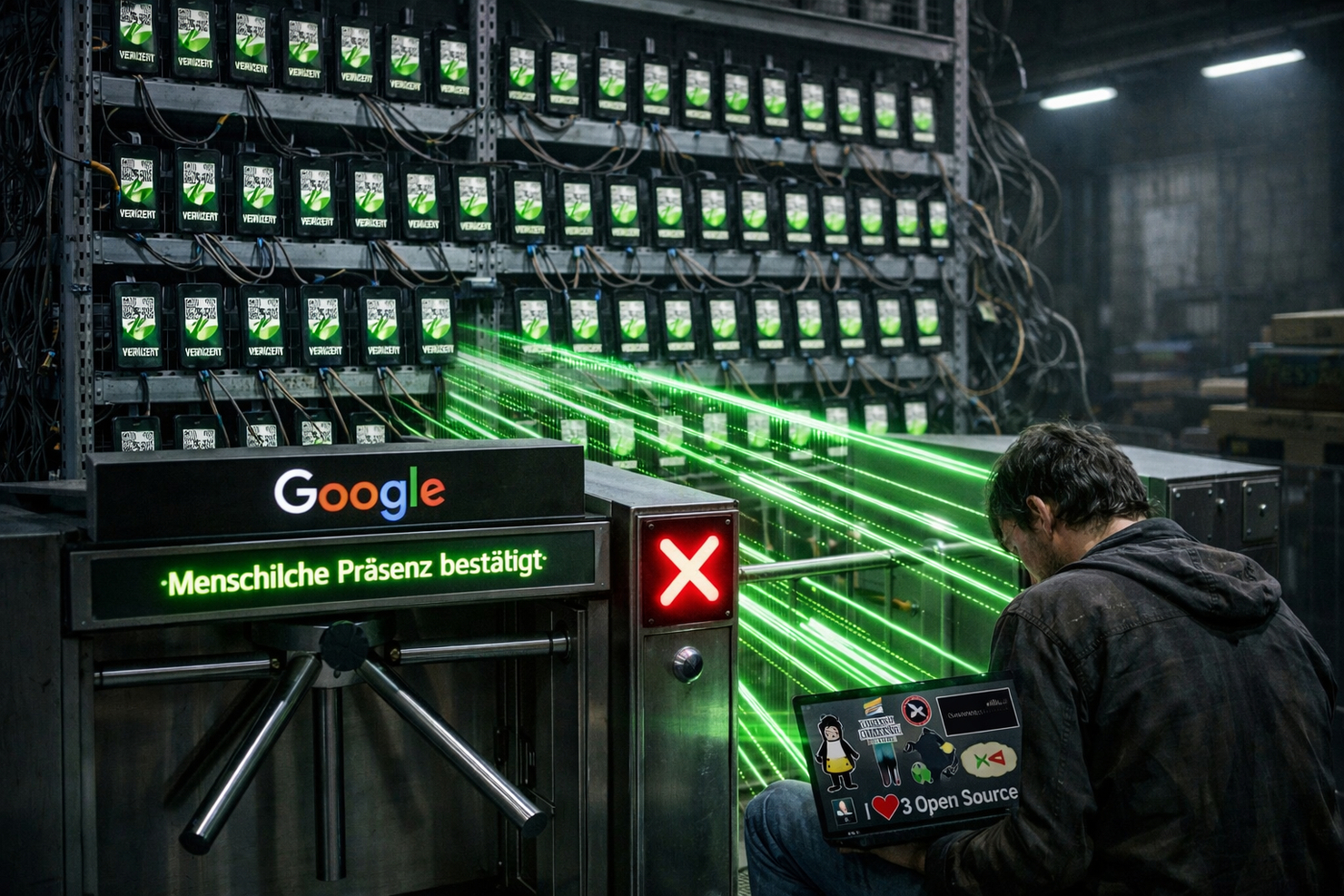
The developers of GrapheneOS succinctly summarize the true purpose: These systems allow ten-year-old devices without a single security patch to pass through, but block a significantly more secure operating system – because it doesn't carry a Google license. Security is the packaging. Monopoly enforcement is the content.
Security theater with bouncer logic
And now the punchline that exposes the whole construct as a farce: The magic is hardly effective against professional bot operators. In developer forums It was already calculatedA certified Android device that passes the test can be had for around $30 – a negligible fixed cost for any click farm that already operates with racks full of cheap smartphones. On top of that, there's a bonus for the phishing industry: Google is training billions of users to reflexively scan QR codes to access the internet. This very ingrained behavior is the gateway for every QR code scam. So the system doesn't stop the professionals, makes ordinary users more vulnerable, and locks out precisely those who want to control their own devices. Fraud prevention that lets fraudsters through and excludes data protection advocates doesn't fight fraud. It sorts people.
Those who stay outside – and those who read along
The sorting process is systematic. Millions of websites, online shops, and banks rely on reCAPTCHA. Anyone using a Linux desktop in the future will have to keep an "approved" smartphone nearby as a digital chaperone—a secondary device serving as an entry ticket to their own network. At the same time, this approval links every interaction to a device identity that runs through Google's servers. VPNs and Tor then mask the connection, but no longer the device itself. Anonymity doesn't die by a ban. It dies by a system requirement. And while governments are simultaneously welding together the same cage with age verification and digital identity measures, Google is providing the corresponding hardware gateway—privately owned, without legislation, without consultation, and without any possibility of appeal.
Conclusion: Entry only with house ID
The open internet was a historical stroke of luck that no single corporation could decide which devices were good enough to participate. This very stroke of luck is now being dismantled – not with a bang, but with a preview feature and a support page. Two corporations will soon define what constitutes a trustworthy person using a trustworthy device, while everyone else can stand outside the glass and wave. Those who protested against Web Environment Integrity in 2023 were right – and yet still lost. The gatekeeper no longer asks who you are, he asks whom your device obeys! The World Wide Web is becoming a gated community network with two landlords and billions of tenants! Google locks out the secure users, waves through the click farms, and calls this "fighting fraud"! And once age verification, digital IDs, and device attestation are fully integrated, the two-tier internet will have been just the entrance hall – welcome to the web where access to reality requires a license!
More for you:






 "Dravens Tales from the Crypt" has been enchanting for over 15 years with a tasteless mixture of humor, serious journalism - for current events and unbalanced reporting in the press politics - and zombies, garnished with lots of art, entertainment and punk rock. Draven has turned his hobby into a popular brand that cannot be classified.
My blog was never designed to spread news, let alone get political, but with current affairs I just can't help but capture information here that is otherwise censored on all other channels. I am aware that the design page may not seem "serious" to many in this regard, but I will not change this to please the "mainstream". Anyone who is open to non-state-compliant information sees the content and not the packaging. I've tried enough to provide people with information over the last 2 years, but quickly noticed that it never matters how it's "packaged", but what the other person's attitude towards it is. I don't want to put honey on anyone's mouth to meet expectations in any way, so I'll keep this design because hopefully at some point I'll be able to stop making these political statements, because it's not my goal to go on like this forever  I leave it up to everyone how they deal with it. However, you are welcome to simply copy and distribute the content, my blog has always been under the WTFPL license.
It's hard for me to describe what I'm actually doing here, DravensTales has become a culture blog, music blog, shock blog, tech blog, horror blog, fun blog, a blog about found items on the internet, internet bizarre, trash blog, art blog, water heater, zeitgeist blog over the years , Scrap blog and grab bag blog called. Everything that is right ... - and yet not. The main focus of the blog is contemporary art, in the broadest sense of the word.
To ensure the continued operation of this site, you are welcome to make a donation via credit card, PayPal, Google Pay, Apple Pay, or direct debit/bank account . Many thanks to all readers and supporters of this blog!








