Once upon a time, if you wanted to work in Hollywood, you at least had to be willing to put your ass on a plane. Sunburn, cocaine, and overconfidence included. Those days are over. Today, all you need is a home office in Hamburg-Altona, some AI software, and a creative will—and you're right in the thick of the dream factory. Welcome to the future of cinema. Or what's left of it.
Eike Swoboda, a graduate of the Hamburg University of Fine Arts, got the call. The call. Hollywood contacted him because he had submitted a work sample to a project tender from the company NeoCinema – and they liked what he had done. One could cynically ask why a Hollywood production company doesn't simply use the best of the best, who, as everyone knows, are sitting there waiting for work. But Swoboda asked this question himself – and the honest answer is probably: because AI is doing most of the work anyway, and a creative mind from Altona is just as effective as one from Beverly Hills. Probably cheaper, too.
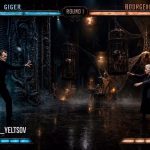
The result: Blurred Horizon, an AI-generated action series, delivers 25 minutes of top-notch entertainment with its first episode, "Expiration Day." No set. No camera. No spotlights. No stage construction. Instead: prompts, fine-tuning, and a plethora of decisions about what coffins should look like and where things should be placed in the background. This, we are assured, is "a whole lot of classic filmmaking." One can only forgive the directors of yesteryear for not knowing this.
The main character, Zara Vasquez—mid-thirties, dark hair, and exuding confidence—was created using AI prompts. It involved some back-and-forth with the software until the image was just right. At least her voice belongs to a real person. Rosa Salazar, known from "Alita: Battle Angel" and Amazon's "Undone," voices the role. Because, as Swoboda explains, AI voices sound too cold. He's right. It's actually reassuring to know that the machine still needs help, at least when it comes to speaking. For now.

The music, too, is human-made – synthesizers and Mellotron, recorded analog in Altona. Thirty Seconds to Mars and Jared Leto also contribute music, which is either a statement or a coincidence. The title track is by Photek. The whole thing sounds like a production roster deliberately designed to impress – executive producers Trey Callaway (House of David), Jeff T. Thomas (Fubar), and producer Kevin Tancharoen (Book of Boba Fett). A well-chosen list of names for a series that was essentially created on a laptop.
Episode two, Mindpods, plunges us into a bleak future where humanity sleepwalks through a corporate-controlled reality. A new virtual experience called MindPods offers a tantalizing escape—and its more intense version, Neurorush, promises total immersion at the cost of psychological damage, memory loss, and the complete blurring of the lines between digital and real. One wonders whether this is meant as satire or advertising. Then you look at how the series was made, and the question answers itself.
Be that as it may, Blurred Horizon exists, looks good, and a man from Hamburg has convinced Hollywood that his home office is a fully-fledged studio. That's not nothing, all sarcasm intended. The dream factory has reinvented itself – only now the dreams are rendered by algorithms…

More for you:


 "Dravens Tales from the Crypt" has been enchanting for over 15 years with a tasteless mixture of humor, serious journalism - for current events and unbalanced reporting in the press politics - and zombies, garnished with lots of art, entertainment and punk rock. Draven has turned his hobby into a popular brand that cannot be classified.
My blog was never designed to spread news, let alone get political, but with current affairs I just can't help but capture information here that is otherwise censored on all other channels. I am aware that the design page may not seem "serious" to many in this regard, but I will not change this to please the "mainstream". Anyone who is open to non-state-compliant information sees the content and not the packaging. I've tried enough to provide people with information over the last 2 years, but quickly noticed that it never matters how it's "packaged", but what the other person's attitude towards it is. I don't want to put honey on anyone's mouth to meet expectations in any way, so I'll keep this design because hopefully at some point I'll be able to stop making these political statements, because it's not my goal to go on like this forever  I leave it up to everyone how they deal with it. However, you are welcome to simply copy and distribute the content, my blog has always been under the WTFPL license.
It's hard for me to describe what I'm actually doing here, DravensTales has become a culture blog, music blog, shock blog, tech blog, horror blog, fun blog, a blog about found items on the internet, internet bizarre, trash blog, art blog, water heater, zeitgeist blog over the years , Scrap blog and grab bag blog called. Everything that is right ... - and yet not. The main focus of the blog is contemporary art, in the broadest sense of the word.
To ensure the continued operation of this site, you are welcome to make a donation via credit card, PayPal, Google Pay, Apple Pay, or direct debit/bank account . Many thanks to all readers and supporters of this blog!