The script was ready when the world still thought artificial intelligence was mainly good at labeling cat pictures. In April, Anthropic announced that its new model, "Mythos," had found thousands of critical security vulnerabilities in all major operating systems, web browsers, and financial infrastructures worldwide—and the consequences for economies, public safety, and national stability could be "severe." At the same time, the White House has mandated that the model not be widely deployed. Around 40 select corporations, including Amazon, Microsoft, Apple, and JPMorgan Chase, are permitted to use it. The rest of the world sits in the dark, waiting for the news that its infrastructure is being compromised.
The timing is impeccable. Andrew Bailey, Governor of the Bank of England and Chairman of the Financial Stability Board (FSB), declared at Columbia University that Mythos's discoveries had propelled cyber risks to the top of the global priority list "faster than any other category"—faster even than developments in the Gulf conflict. Shortly afterward, he asked Anthropic to brief the G20 finance ministers, central bankers, and securities regulators in an exclusive briefing. According to the Financial Times, requests from around the world to Anthropic for access to Mythos or information about how it works are now countless.
The WEF has practiced this.
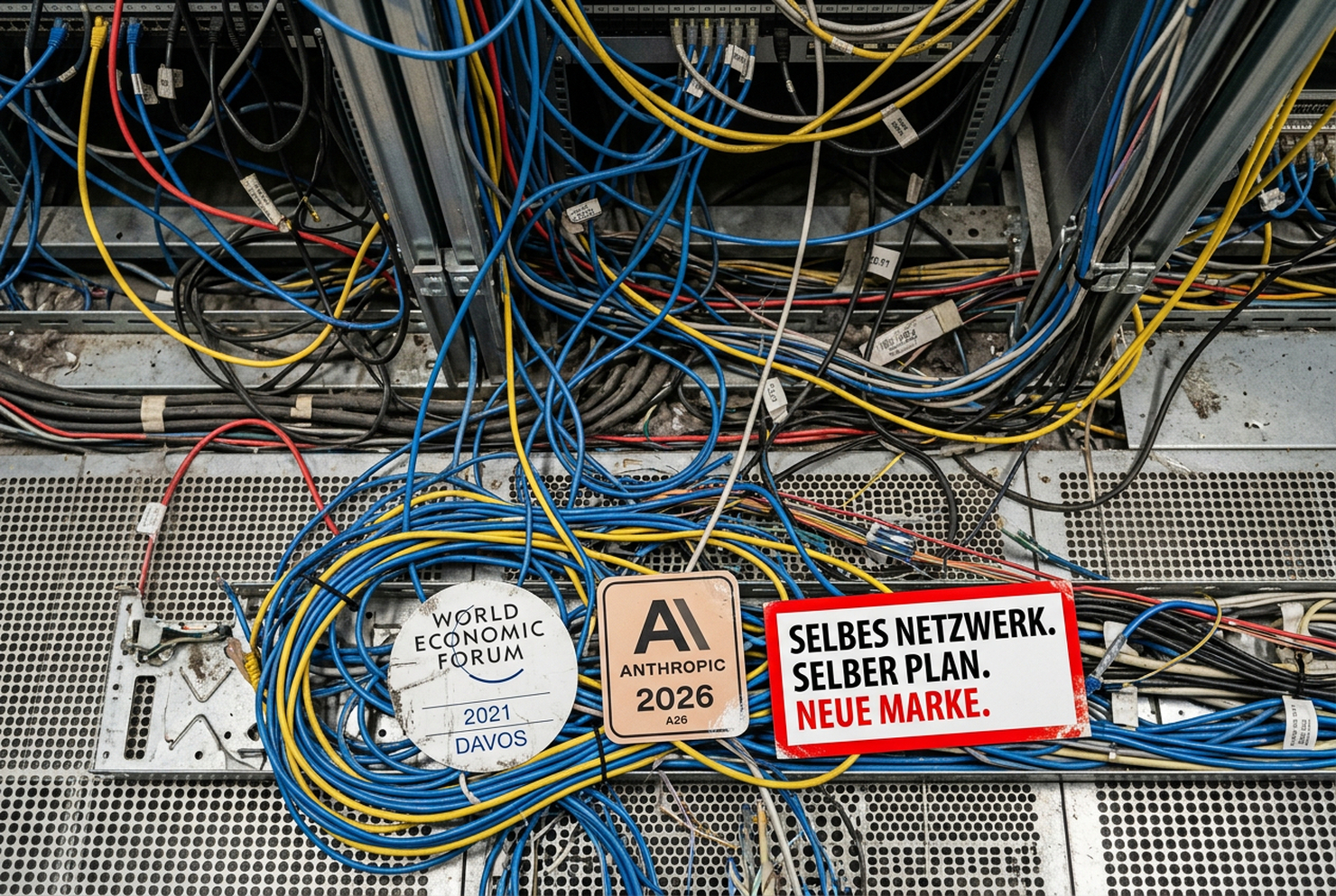
In recent years, the World Economic Forum has repeatedly warned of a global cyber blackout that could simultaneously cripple supply chains, banking systems, communication infrastructure, and government administration. The WEF-co-developed series of exercises…Cyber Polygon"It played through precisely these scenarios – a global cyber collapse as a simulation, a rehearsal, a calibration of institutional response patterns. The terminology used comes from the same drawers: "systemic risks," "cyber resilience," "macro-financial vulnerability" – the institutional jargon of the control architecture sounds exactly the same today as it did in 2020 and 2021. Critics were labeled conspiracy theorists at the time, accused of not being able to distinguish "harmless emergency drills" from a geopolitical agenda."
The exercise is now over. Or is it just beginning?
The basic structure is identical: An actor from the inner circle of technological power presents a threat of such monumental proportions that normal state institutions can no longer control it independently. The logical consequence is: a coordinated global response, central oversight, and new control mechanisms. And who gets to decide on access to the countermeasures? The same roughly 40 corporations that already have exclusive access to Mythos.
Two classes, one gap
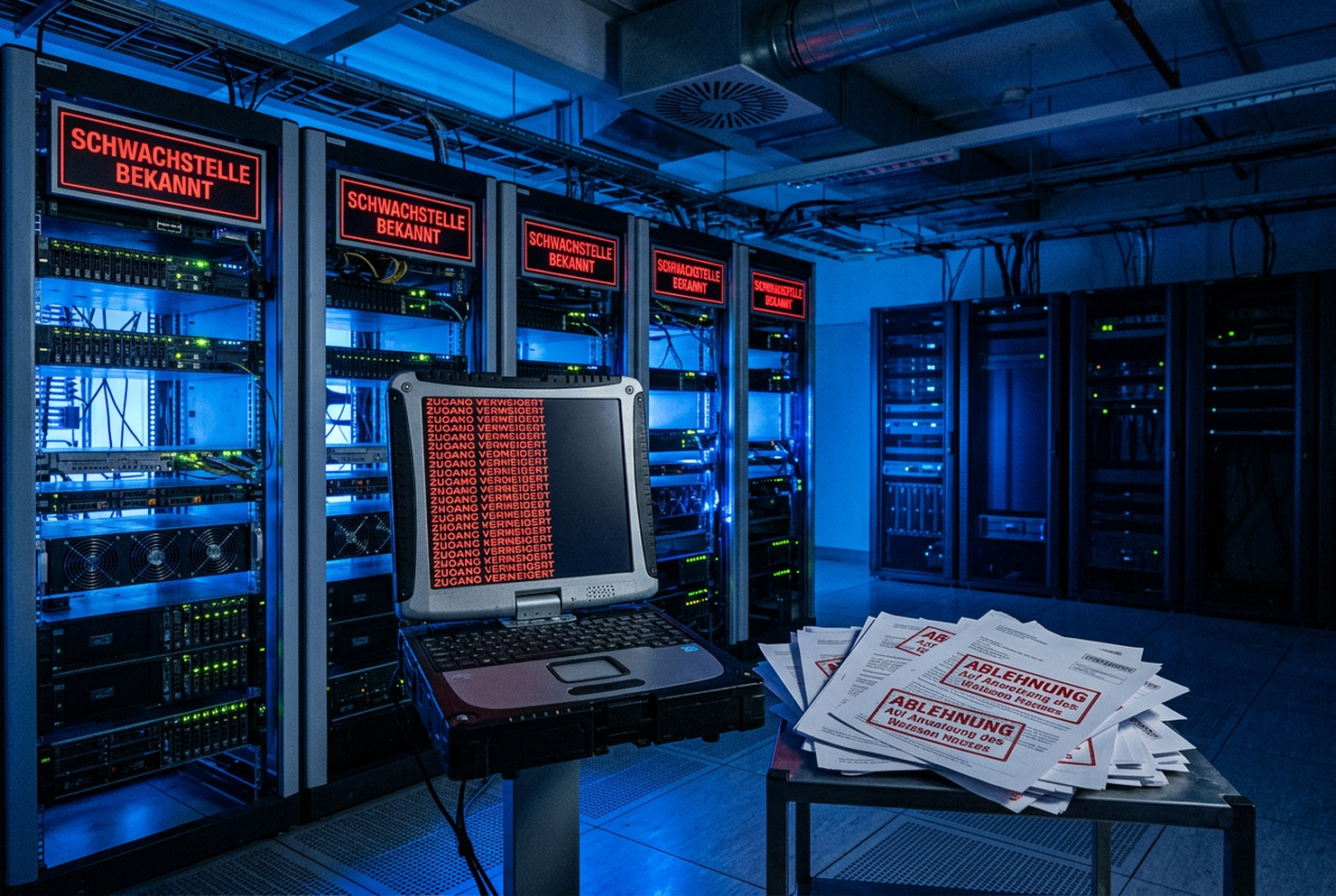
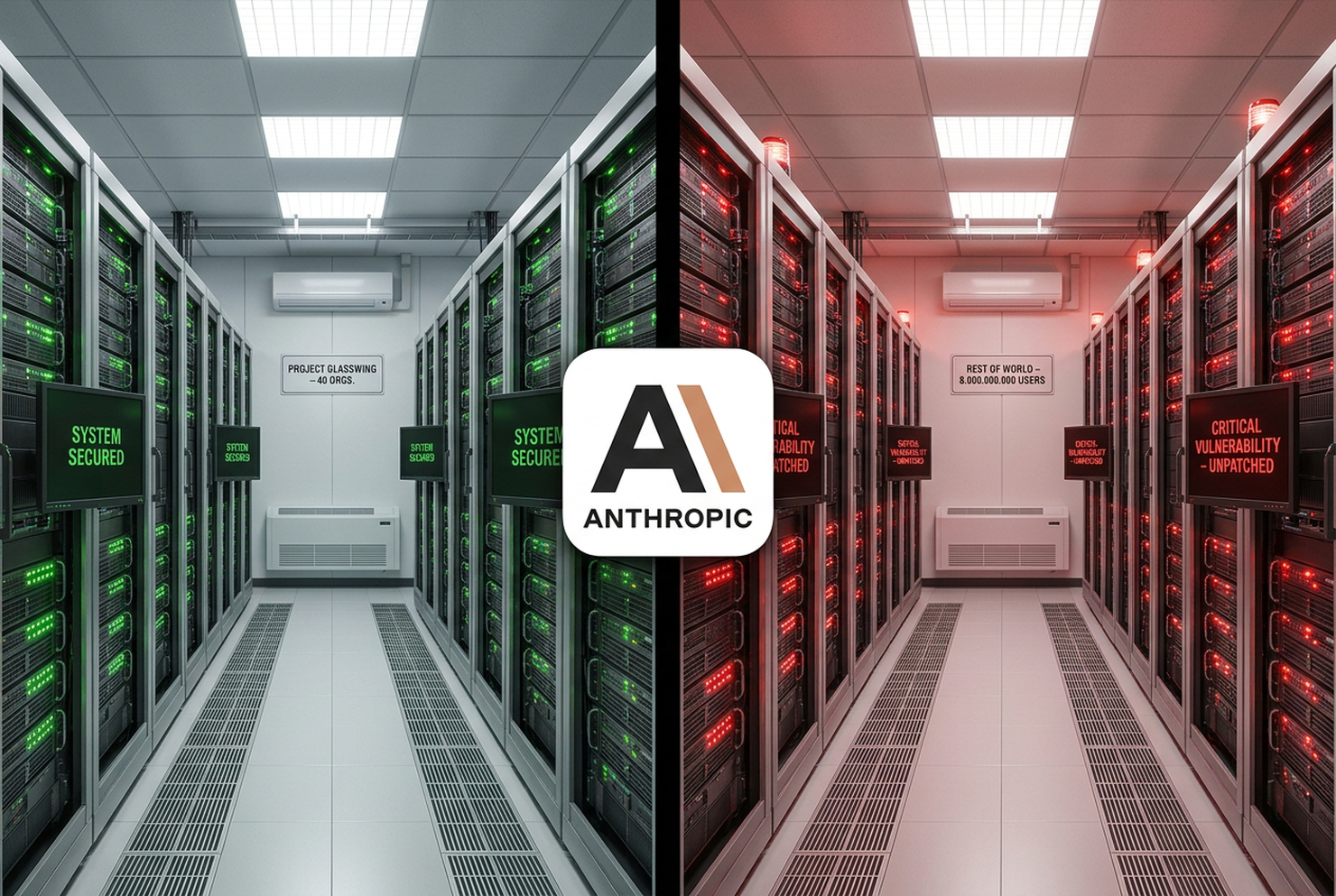
“Project Glasswing,” under which Anthropic manages Mythos access, is a textbook example of how technological power is concentrated. Amazon, Microsoft, Nvidia, Cisco, and JPMorgan Chase are allowed to close the vulnerabilities identified by Mythos. Everyone else—that is, the vast majority of banks, government agencies, hospitals, and infrastructure operators worldwide—are either waiting to be granted protection by some charitable grant or for someone to exploit these vulnerabilities against them first. Banking regulators outside this circle have publicly pressed for direct access or at least a regulatory-mediated alternative. Instead, they receive a briefing.
The FSB is currently developing recommendations for dealing with AI-driven cyberattacks. The IMF has already warned that such attacks could trigger "macro-financial shocks." Supervisors are openly discussing how attacks will occur "at machine speed" in the future. The language is the same as in the pandemic briefings from 2020 onward: dramatic, apocalyptic, and always implied by the message that national sovereignty in such a situation is a luxury that one simply cannot afford.
Vulnerable by design
It's worth pausing for a moment and asking a simple question: Who has been promoting maximum networking of critical infrastructure as the only option over the past fifteen years? Who has been selling digital IDs, cloud dependencies for government agencies, AI-driven financial systems, and fully automated administration as progress? The answer points to the same circles that are now alarmed by the vulnerability of precisely these systems: Silicon Valley technology companies, central banks in conjunction with the FSB, and the institutional networks surrounding the WEF.
The logic behind this is strikingly cynical: You build an architecture that is inherently fragile, then declare that fragility an existential threat, positioning yourself as the sole authority with the means to control it. The financial system is vulnerable to AI-driven attacks? Fine, then we need global AI oversight, coordinated by the FSB. Who sits on the FSB? The same central banks and finance ministries whose systems are currently being described as security holes. The difference to classic extortion is purely academic.
Anthropic itself operates according to a tried and tested pattern: alert the public, restrict access, position its own solution as the only alternative, and invite governments to briefings, which then, in turn, register their own regulatory needs – naturally with Anthropic as the preferred partner for "secure" implementation. What strategists in the industry call "threat framing" is, in reality, a multi-billion-dollar market that thrives on the fear it itself generates. The cyber pandemic is not a risk scenario that occurred by chance – it is the product of an architecture designed precisely for this purpose.
The script is being executed step by step, briefing by briefing, while forty corporations are shutting down their barns and the rest of the world is still searching for the key! Anyone who considers the parallels to Cyber Polygon, the 2019 pandemic simulations, and the emergency regulations implemented worldwide in the following years to be mere coincidence should explain how the same institutional apparatus can produce the same pattern twice without planning the same thing! In Davos, they call this "precaution," and in the rest of the world, "preparing for what's next"—and the question of what that is becomes clear as soon as you stop looking at the headline and start focusing on the architecture behind it!
- Financial Times – Anthropic to brief global financial watchdog on myth cyber flaws
- Irish Times – Anthropic to brief global financial watchdog on cyber flaws exposed by Mythos
- The Next Web – Anthropic is briefing the Financial Stability Board on what Mythos has been finding
- Bloomberg – Global financial watchdog to share insights on Anthropic's myth
- WEF Cyber Polygon
More for you:






 "Dravens Tales from the Crypt" has been enchanting for over 15 years with a tasteless mixture of humor, serious journalism - for current events and unbalanced reporting in the press politics - and zombies, garnished with lots of art, entertainment and punk rock. Draven has turned his hobby into a popular brand that cannot be classified.
My blog was never designed to spread news, let alone get political, but with current affairs I just can't help but capture information here that is otherwise censored on all other channels. I am aware that the design page may not seem "serious" to many in this regard, but I will not change this to please the "mainstream". Anyone who is open to non-state-compliant information sees the content and not the packaging. I've tried enough to provide people with information over the last 2 years, but quickly noticed that it never matters how it's "packaged", but what the other person's attitude towards it is. I don't want to put honey on anyone's mouth to meet expectations in any way, so I'll keep this design because hopefully at some point I'll be able to stop making these political statements, because it's not my goal to go on like this forever  I leave it up to everyone how they deal with it. However, you are welcome to simply copy and distribute the content, my blog has always been under the WTFPL license.
It's hard for me to describe what I'm actually doing here, DravensTales has become a culture blog, music blog, shock blog, tech blog, horror blog, fun blog, a blog about found items on the internet, internet bizarre, trash blog, art blog, water heater, zeitgeist blog over the years , Scrap blog and grab bag blog called. Everything that is right ... - and yet not. The main focus of the blog is contemporary art, in the broadest sense of the word.
To ensure the continued operation of this site, you are welcome to make a donation via credit card, PayPal, Google Pay, Apple Pay, or direct debit/bank account . Many thanks to all readers and supporters of this blog!