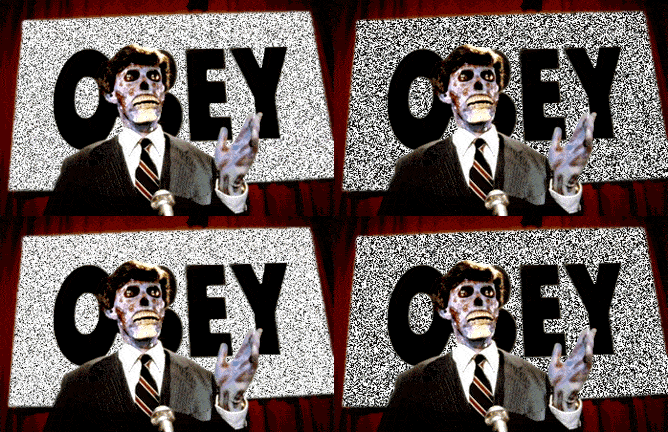
How a 2500-year-old half-sentence became the script for wars, temples and political promises of salvation – and why the countdown always begins when someone needs money, power or both.
Attention. The prophecy has begun. God's clock is ticking. The high priest is ready. The altar is consecrated. The Levites are rehearsing their songs. The golden menorah gleams behind security glass. And Daniel 9:27—that single phrase from a 6th-century BC Aramaic manuscript—is once again the hottest ticket in the eschatological entertainment industry. One has to admire the audacity. Truly.
For two thousand years, this verse has been making its rounds through world history like a chronically overwhelmed usher, appearing at every major event and whispering: It was predicted. It's all in there. I knew it. Nero? Daniel. The Crusades? Daniel. Napoleon? Daniel. Hitler? Daniel. The Cold War? Daniel. 9/11? Daniel. And now, with a newly consecrated altar, a genetically certified high priest, and US bombs over Tehran: Daniel. Of course. Always Daniel.
The man, the ancestry, the haplotype
Baruch Kahane. The name sounds like a character from a Dan Brown novel, but it's supposedly deadly serious. A direct descendant of Aaron. Genetically verified – the so-called Cohen Modal Haplotype, a Y-chromosomal marker that supposedly proves descent from Aaron's line, has been detected. Educated in the Mishnah, Talmud, and Maimonides. Appointed by the restored Sanhedrin – that assembly of 71 rabbis quietly reactivated in 2004 to ensure the proper functioning of the prophetic bureaucracy.
Note the precision of this staging. Not just any pious man declared himself a priest. No. There are documents. Genetic tests. Centuries-old lineages. Ceremonial knives made of reconstructed silver. A breastplate adorned with twelve precious stones. Bells of genuine gold on the blue tunic—so that God would hear that someone was coming who had something to say to him.
The Temple Institute, strategically located near the Western Wall, describes itself as not a museum, but an operational base. Priests train there, robes are folded, implements polished, and psalms rehearsed. Everything is ready. Only the Temple Mount is missing—that complicated piece of land on which the Dome of the Rock currently stands and which is administered by the Islamic Waqf. A minor logistical detail.
The script is written. The stage is missing.
Herein lies the true brilliance of the entire arrangement: the obstacle is built in. The Third Temple cannot be built as long as the Dome of the Rock stands. The Dome of the Rock has stood since 691 AD. Building the Temple would require a global peace agreement—or, alternatively, a war of apocalyptic proportions.
And what does Daniel 9:27 provide? Exactly this: A covenant with many. A diplomatic treaty. A guarantor of peace who makes the temple possible – and then, after three and a half years, desecrates it, declares himself a god, and thus triggers the great tribulation.
The beauty of this narrative is that it explains everything in advance and cannot be refuted. Peace in the Middle East? The Antichrist's pact. No peace? Not quite there yet. Temple built? The prophecy fulfilled. Temple not built? Wait another round. The countdown that never ends. The deadline that keeps getting pushed back. The endgame that's been on the brink of its finale for two thousand years.
The political dimension of sacred theatre
One might be tempted to dismiss all this as pious niche delusion – interesting for theologians, irrelevant to reality. Were it not for the uncomfortable fact that this delusion is currently being used to hold Bible studies in the Pentagon, lay hands on people in the Oval Office, and consecrate altars in Jerusalem.
Dispensation theology—that 200-year-old British invention of Reverend John Nelson Darby, which has spread like a spiritual virus through American evangelicalism—provides the ideological glue. Israel must exist. The temple must stand. The sacrifices must be made. The Antichrist must appear. And then Jesus will return and make everything right.
According to this logic, every war in the Middle East is not a geopolitical problem, but a prophetic step forward. Bombs on Tehran? A step toward fulfillment. Escalation? God's plan. Deaths? Eternal collateral damage.
And Baruch Kahane — the silent scholar who gives no speeches and does not post on social media — is, in this interpretation, not a human being of flesh and blood, but a cog in a cosmic machine, moved by an invisible hand.
The eternal countdown
What's truly disturbing about all this isn't the theology. It's the earnestness with which actors in government, the military, and financial circles not only believe this narrative but actively promote it. One verse. Twenty-seven words. Three and a half millennia of influence. And in the end, the conclusion remains the same as always: those who predict the end of the world need no proof—only believers. Whoever controls the prophecy controls the interpretation of the present. And whoever controls the interpretation of the present controls the future.
Daniel didn't write that. But he would have understood it.
The high priest is ready. The altar awaits. And the world keeps scrolling…

More for you:



 "Dravens Tales from the Crypt" has been enchanting for over 15 years with a tasteless mixture of humor, serious journalism - for current events and unbalanced reporting in the press politics - and zombies, garnished with lots of art, entertainment and punk rock. Draven has turned his hobby into a popular brand that cannot be classified.
My blog was never designed to spread news, let alone get political, but with current affairs I just can't help but capture information here that is otherwise censored on all other channels. I am aware that the design page may not seem "serious" to many in this regard, but I will not change this to please the "mainstream". Anyone who is open to non-state-compliant information sees the content and not the packaging. I've tried enough to provide people with information over the last 2 years, but quickly noticed that it never matters how it's "packaged", but what the other person's attitude towards it is. I don't want to put honey on anyone's mouth to meet expectations in any way, so I'll keep this design because hopefully at some point I'll be able to stop making these political statements, because it's not my goal to go on like this forever  I leave it up to everyone how they deal with it. However, you are welcome to simply copy and distribute the content, my blog has always been under the WTFPL license.
It's hard for me to describe what I'm actually doing here, DravensTales has become a culture blog, music blog, shock blog, tech blog, horror blog, fun blog, a blog about found items on the internet, internet bizarre, trash blog, art blog, water heater, zeitgeist blog over the years , Scrap blog and grab bag blog called. Everything that is right ... - and yet not. The main focus of the blog is contemporary art, in the broadest sense of the word.
To ensure the continued operation of this site, you are welcome to make a donation via credit card, PayPal, Google Pay, Apple Pay, or direct debit/bank account . Many thanks to all readers and supporters of this blog!