
For decades, nicotine was considered the primary cause of smoking-related illnesses. It was blamed for lung cancer, heart disease, and countless deaths—but this is a distortion of the truth. While nicotine is addictive, it is not the substance responsible for the devastating health consequences of smoking. The real dangers lie in the thousands of toxic chemicals added to cigarettes, in the combustion process, and in the systematic efforts to keep people addicted—not in nicotine itself.
What is nicotine really?
Nicotine is a naturally occurring alkaloid found in tobacco plants and, in smaller quantities, in vegetables such as eggplants, tomatoes, potatoes, and peppers (nightshade family). In plants, it serves as an insect repellent; however, in the human body, it stimulates nicotinic acetylcholine receptors (nAChRs) in the brain and nervous system. This affects:
• Dopamine – creates short-term pleasure and reward
• Acetylcholine – improves memory, attention, and learning ability
• Norepinephrine – increases alertness
• Serotonin – regulates mood
• Muscle activity – through neuromuscular stimulation
Consumed in moderation, nicotine is not a poison in the often-depicted sense. It has a stimulating effect, similar to caffeine, and has even been shown to have neuroprotective and cognitive-enhancing properties – however, the method of consumption determines its safety or harmfulness.
The real killer in cigarettes is not the nicotine, but the 7000 additives.
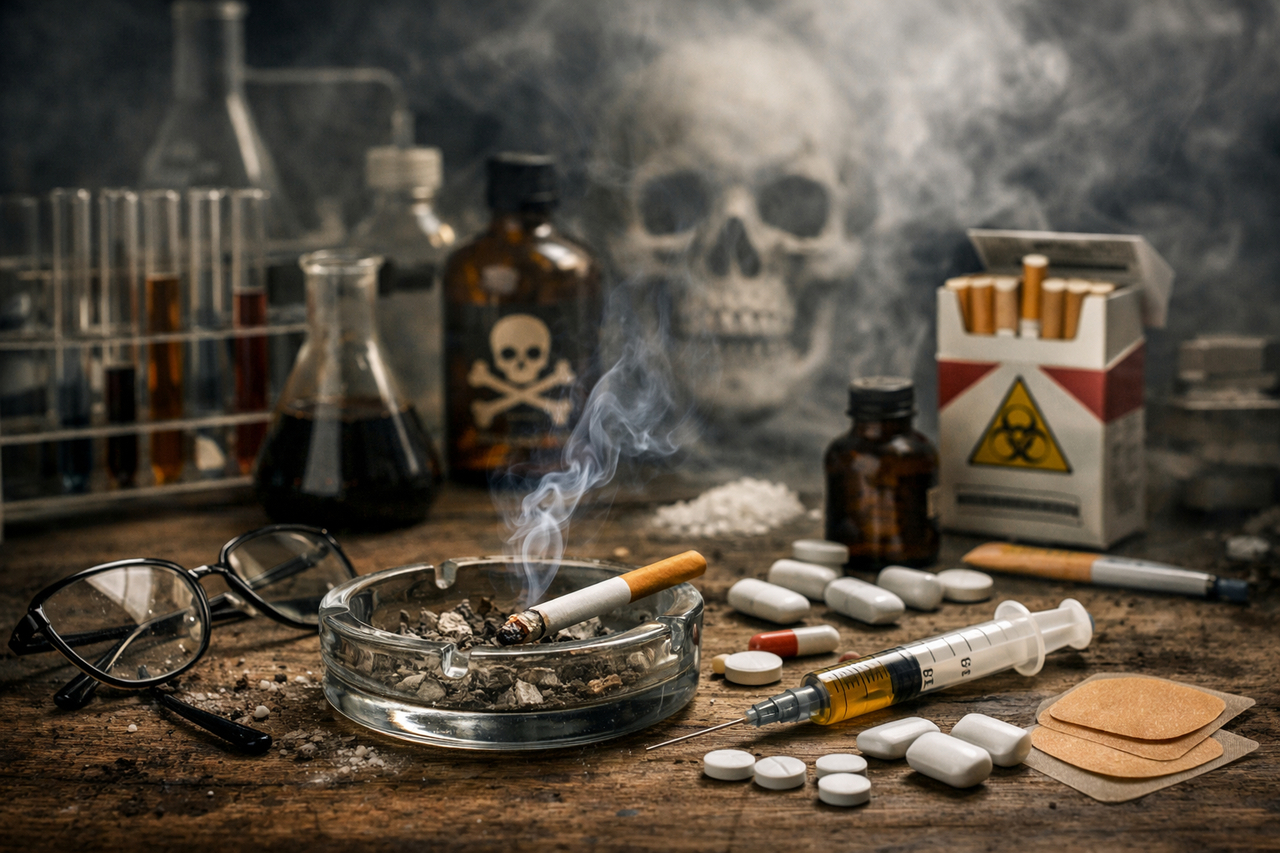
Cigarettes are chemical cocktails that, far beyond the act of smoking, contain not only tobacco and nicotine, but also expose the body to over 7000 toxic and carcinogenic substances:
• Formaldehyde – an embalming fluid known to be carcinogenic
• Hydrogen cyanide – a poison used in gas chambers
• Benzene – has been linked to leukemia
• Arsenic – toxic heavy metal
• Polonium-210 – radioactive material
• Tar – clogs the lungs and impairs gas exchange
• Ammonia – increases nicotine absorption
• Carbon monoxide, cadmium, lead, acetone – damage the brain, heart, liver and kidneys
It is not nicotine itself, but the burning of chemically contaminated tobacco that causes lung cancer, COPD, heart disease, stroke, infertility and DNA mutations.
Combustion = cancer. Every time plant material is burned and inhaled, carcinogenic substances and particulate matter are produced. Cigarette manufacturers add chemicals specifically designed to increase addiction, ensure even burning, and extend shelf life—often at the expense of human health.
Why is nicotine addictive?
Nicotine addiction affects not only the molecule itself, but also the rate of absorption, behavioral triggers, and chemical manipulation.
• Rapid absorption into the brain: Inhaled nicotine reaches the brain within 7–10 seconds.
• Dopamine reward cycle: Creates short, intense feelings of happiness
• Chemical enhancers: Ammonia and additives increase the bioavailability of nicotine
• Pavlovian reflexes: Smoking is associated with stress reduction, social rituals, breaks, and emotional coping.
People become addicted to the dopamine rushes, the habit, and the emotional relief – not just to the drug itself.
Why is nicotine so demonized?
The demonization of nicotine is rooted in fear-based communication, the competitive struggle of the pharmaceutical industry, and misunderstood science:
• Blame through association – because nicotine is contained in cigarettes, it is blamed for all harmful aspects of smoking.
• Simplified health communication – it aims to instill fear, not to educate.
• Influence of the pharmaceutical industry – it promotes nicotine replacement products (patches, gum) and denigrates other forms such as e-cigarettes or nicotine pouches as "dangerous"
• Suppressed nuances – Research findings that support nicotine intake without smoking receive little attention in the media.
Most people still don't know it: nicotine does not cause cancer. But this truth threatens the billions of dollars in interests of both sides – the tobacco and pharmaceutical industries.
Does nicotine have any potential benefits?
Although nicotine is not risk-free, it has been studied in controlled trials regarding its therapeutic use:
• Neuroprotective in early stages of Alzheimer's, Parkinson's and ADHD
• Can help stabilize mood and alleviate anxiety or depression
• Promotes cognition – improves memory, learning ability and attention span
• Some studies show anti-inflammatory and appetite-suppressing effects.
Potentially S-protein detoxification, since nicotine binds to the same receptors. Learn more about Dr. Ardis.
These findings do not justify recreational use, but they do show a differentiated potential that depends on the form of consumption, the dose, and the consumption history.
How to quit smoking without "cold turkey"
Nicotine itself is not the core problem – the way it is consumed is. This means that quitting smoking can be done gradually, using harm reduction strategies to ease the transition.
Nicotine alternatives (much safer than cigarettes):
• Nicotine patches – slow, steady dose with minimal withdrawal symptoms
• Chewing gum/lozenges – flexible and fast-acting
• Nicotine pouches – no combustion, no tobacco
• Clean vaping – flavorless options with few ingredients for a short-term switch
These options eliminate smoke, tar and chemicals – thus reducing the harmfulness by 90–95% compared to cigarettes.
Quitting smoking is only the beginning. Long-term recovery requires the regeneration of the lungs, brain, and detoxification processes.
Lung support:
• NAC (N-acetylcysteine) – supports mucus clearance and glutathione production
• Mullein leaves – calming and beneficial for the lungs
• Lobelia – helps with cravings and improves lung function
• Vitamin C, A, E – antioxidant regeneration
• Steam inhalation and deep breathing loosen tar and blockages.
Brain & Nervous System:
• L-Tyrosine or DLPA – naturally replenishes dopamine levels
• Omega-3 fatty acids – reduce inflammation and support neurogenesis
• Morning sun – regulates the circadian rhythm and improves mood
• Cold exposure and sauna – increase endorphin production and resilience
• Breathing exercises, tapping acupressure, body therapy – alter addiction and stress reactions
Liver & Detoxification:
• Milk thistle, dandelion root, burdock – support liver function
• Castor oil packs – lymphatic drainage and liver decongestion
• Activated carbon – short-term binding agent for toxins
• Sweating + hydration – daily exercise, sauna, lemon water
• Minerals – especially magnesium and zinc – to replenish depleted stores
The ultimate truth: Nicotine doesn't kill – it's the method of administration via additives.
Nicotine does not cause cancer. It is the combustion, additives, and radioactive chemicals that damage health. People are addicted to a lifestyle, a habit, and artificially generated pleasure—not to a molecule.
There are cleaner and safer ways to reduce nicotine use. Public health needs honest education—not fear-based oversimplification. When people know the truth, they can make better choices—instead of just feeling ashamed. Healing is possible when we separate addiction from misinformation and addiction treatment from judgment.
Knowledge is power. And when it comes to nicotine, it's time to set the record straight.
More for you:






 "Dravens Tales from the Crypt" has been enchanting for over 15 years with a tasteless mixture of humor, serious journalism - for current events and unbalanced reporting in the press politics - and zombies, garnished with lots of art, entertainment and punk rock. Draven has turned his hobby into a popular brand that cannot be classified.
My blog was never designed to spread news, let alone get political, but with current affairs I just can't help but capture information here that is otherwise censored on all other channels. I am aware that the design page may not seem "serious" to many in this regard, but I will not change this to please the "mainstream". Anyone who is open to non-state-compliant information sees the content and not the packaging. I've tried enough to provide people with information over the last 2 years, but quickly noticed that it never matters how it's "packaged", but what the other person's attitude towards it is. I don't want to put honey on anyone's mouth to meet expectations in any way, so I'll keep this design because hopefully at some point I'll be able to stop making these political statements, because it's not my goal to go on like this forever  I leave it up to everyone how they deal with it. However, you are welcome to simply copy and distribute the content, my blog has always been under the WTFPL license.
It's hard for me to describe what I'm actually doing here, DravensTales has become a culture blog, music blog, shock blog, tech blog, horror blog, fun blog, a blog about found items on the internet, internet bizarre, trash blog, art blog, water heater, zeitgeist blog over the years , Scrap blog and grab bag blog called. Everything that is right ... - and yet not. The main focus of the blog is contemporary art, in the broadest sense of the word.
To ensure the continued operation of this site, you are welcome to make a donation via credit card, PayPal, Google Pay, Apple Pay, or direct debit/bank account . Many thanks to all readers and supporters of this blog!








