
There's a special category of people who want to do so much good that they can never stop. They call themselves philanthropists. Benefactors. Saviors. People who generously use their wealth—acquired through methods best left unexamined—for the benefit of humanity. Bill Gates is the archbishop of this denomination. And his latest mission bears such a noble name that one almost feels ashamed to be skeptical. He wants to defeat hunger. With genetic engineering.
The EU is readily complicit in this by gradually weakening the labeling requirements for genetically modified foods. What previously had to be labeled "GMO" on the packaging so that consumers could decide for themselves what they put into their bodies will in the future be sold without any bothersome transparency requirements. The implicit message is that the public is too stupid to handle this information responsibly. Bill Gates knows better. And the EU Commission nods its approval.
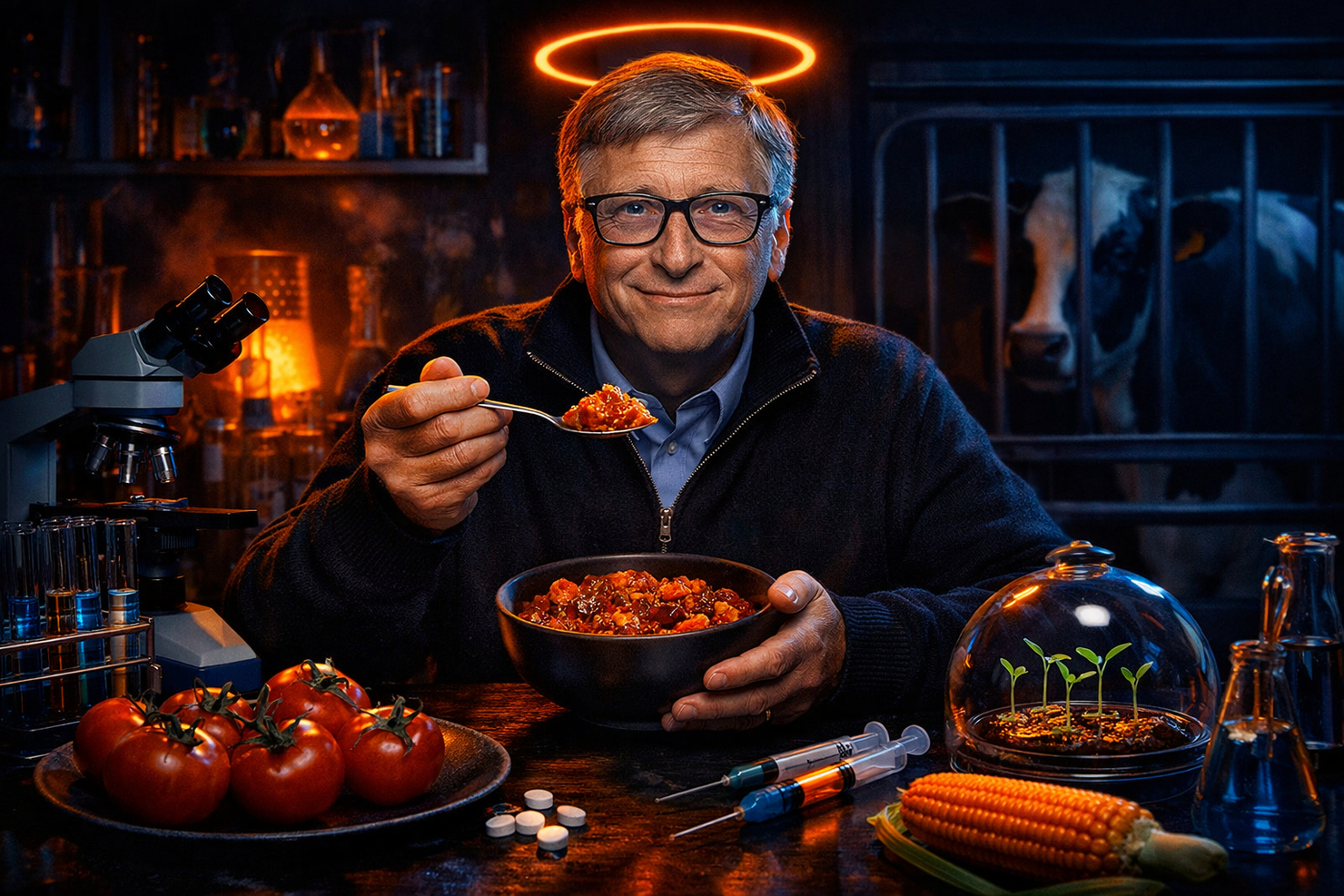
The reasoning is strikingly elegant: People in Africa are starving. Therefore, we in Europe must eat genetically modified tomatoes without warning labels. The causality of this argument is as watertight as a tea bag, but it sounds good, and anyone who opposes it obviously has something against starving children in Ethiopia.
What often goes unmentioned is that Gates is now the largest private owner of farmland in the US. Over 100,000 hectares. This isn't a hobby. This is infrastructure. Anyone who owns the land where seeds grow that are controlled by corporations in which he has a stake, corporations that sell licenses to farmers who can't plant without those licenses – he has built a value chain that is simply awe-inspiring in its completeness. Not as philanthropy. As a business model.
The seed patent is the heart of the project, yet it receives remarkably little attention in the hunger debate. Patented seeds cannot be reproduced. The farmer who buys them once buys them again every year – from the same corporation, at the same price, under the same conditions. Traditional agriculture means the farmer saves part of the harvest as seed for the next season. Patented genetic engineering agriculture means the farmer buys new seeds every year, or doesn't plant at all. This is called dependency. In philanthropic terms, it's called innovation.
Those who abolish mandatory labeling are not doing so to fight hunger. They are doing it to eliminate consumer choice. Because an informed consumer could decide not to buy the product. And a consumer who cannot decide because they don't know what's on their plate is a consumer who has no choice. Having no choice is the prerequisite for being fully integrated into a supply chain controlled by others.
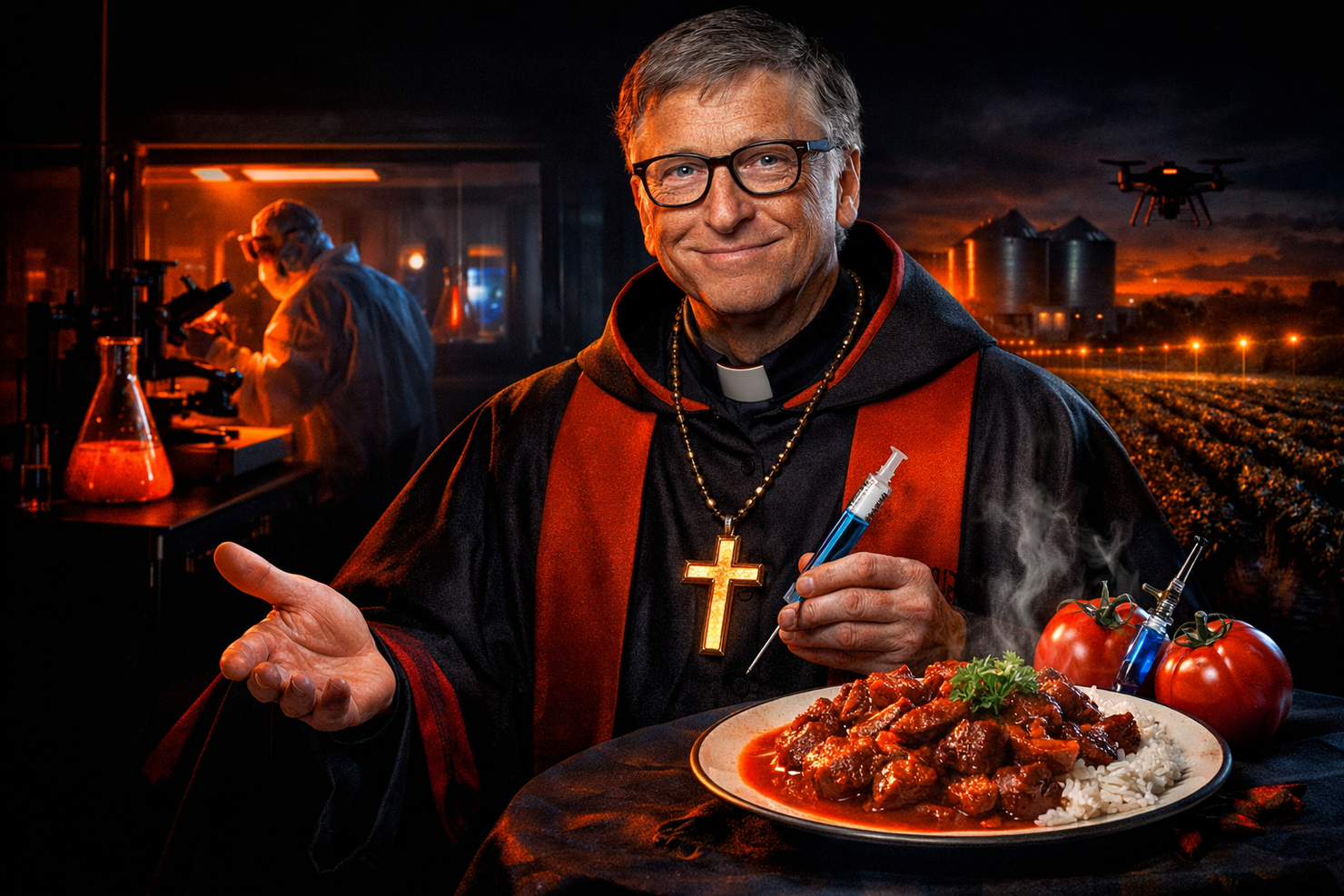
This is the real model. Not fighting hunger. Using hunger as leverage to open markets, eliminate regulations, and create dependencies. Anyone who doubts this should look at the history of the Green Revolution—that high-yield seed initiative of the 1960s that did indeed reduce hunger in parts of Asia, but at the same time destroyed small-scale farming structures, created dependence on fertilizers and pesticides, and ultimately ruined soil fertility in the affected regions. No one back then intended to do evil. But the model had a logic that prevailed over the interests of those it was supposed to protect.
Gates' version is the same logic – only with a better PR infrastructure, more money, and a foundation so large that it co-finances the WHO, influences WHO guidelines, and yet is still considered a neutral charitable institution. When the largest private donor to a global health agency is simultaneously invested in pharmaceutical companies, seed corporations, and farmland, a web of interests emerges that can be interpreted either as bold philanthropy or as a systematic conflict of interest. The mainstream press overwhelmingly favors the former interpretation.
And the EU? In its infinite wisdom, it has decided that transparency in this context is more of a hindrance than a help. What the citizen doesn't know can't hurt them. If you don't know that the carrot on your plate was designed in a lab, you can't object to it. This isn't regulation to protect the consumer – it's regulation to disenfranchise the consumer. It serves those who want to sell the product that the consumer wouldn't buy without labeling.
The question isn't whether genetic engineering is inherently evil. It's about who decides. The citizen, informed and freely choosing? Or the corporation that wants to get rid of the labeling because it hinders its sales? Bill Gates put the operating system on the computers of millions of people, an operating system they didn't really want but bought due to a lack of alternatives. Now he's putting food on their plates that they don't really know because the label is missing.
The model is the same. Only this time it doesn't run on Windows.
Enjoy your meal – and if an error message appears after eating, please reboot briefly…
More for you:






 "Dravens Tales from the Crypt" has been enchanting for over 15 years with a tasteless mixture of humor, serious journalism - for current events and unbalanced reporting in the press politics - and zombies, garnished with lots of art, entertainment and punk rock. Draven has turned his hobby into a popular brand that cannot be classified.
My blog was never designed to spread news, let alone get political, but with current affairs I just can't help but capture information here that is otherwise censored on all other channels. I am aware that the design page may not seem "serious" to many in this regard, but I will not change this to please the "mainstream". Anyone who is open to non-state-compliant information sees the content and not the packaging. I've tried enough to provide people with information over the last 2 years, but quickly noticed that it never matters how it's "packaged", but what the other person's attitude towards it is. I don't want to put honey on anyone's mouth to meet expectations in any way, so I'll keep this design because hopefully at some point I'll be able to stop making these political statements, because it's not my goal to go on like this forever  I leave it up to everyone how they deal with it. However, you are welcome to simply copy and distribute the content, my blog has always been under the WTFPL license.
It's hard for me to describe what I'm actually doing here, DravensTales has become a culture blog, music blog, shock blog, tech blog, horror blog, fun blog, a blog about found items on the internet, internet bizarre, trash blog, art blog, water heater, zeitgeist blog over the years , Scrap blog and grab bag blog called. Everything that is right ... - and yet not. The main focus of the blog is contemporary art, in the broadest sense of the word.
To ensure the continued operation of this site, you are welcome to make a donation via credit card, PayPal, Google Pay, Apple Pay, or direct debit/bank account . Many thanks to all readers and supporters of this blog!








