There's a light that illuminates nothing. It glitters in every timeline, smiles from every commercial, promises wholeness by subscription and healing by bank transfer—and it's about as real as fool's gold in an alchemist's display. The ancient mystery schools had a word for it: illusion. The modern bazaar calls it light and love. The social networks are overflowing again. One enlightenment offer after another jostles for attention, each more garish than the last, all with the same promise: You don't have to suffer anything, watch anything, or bury anything—you just have to book.
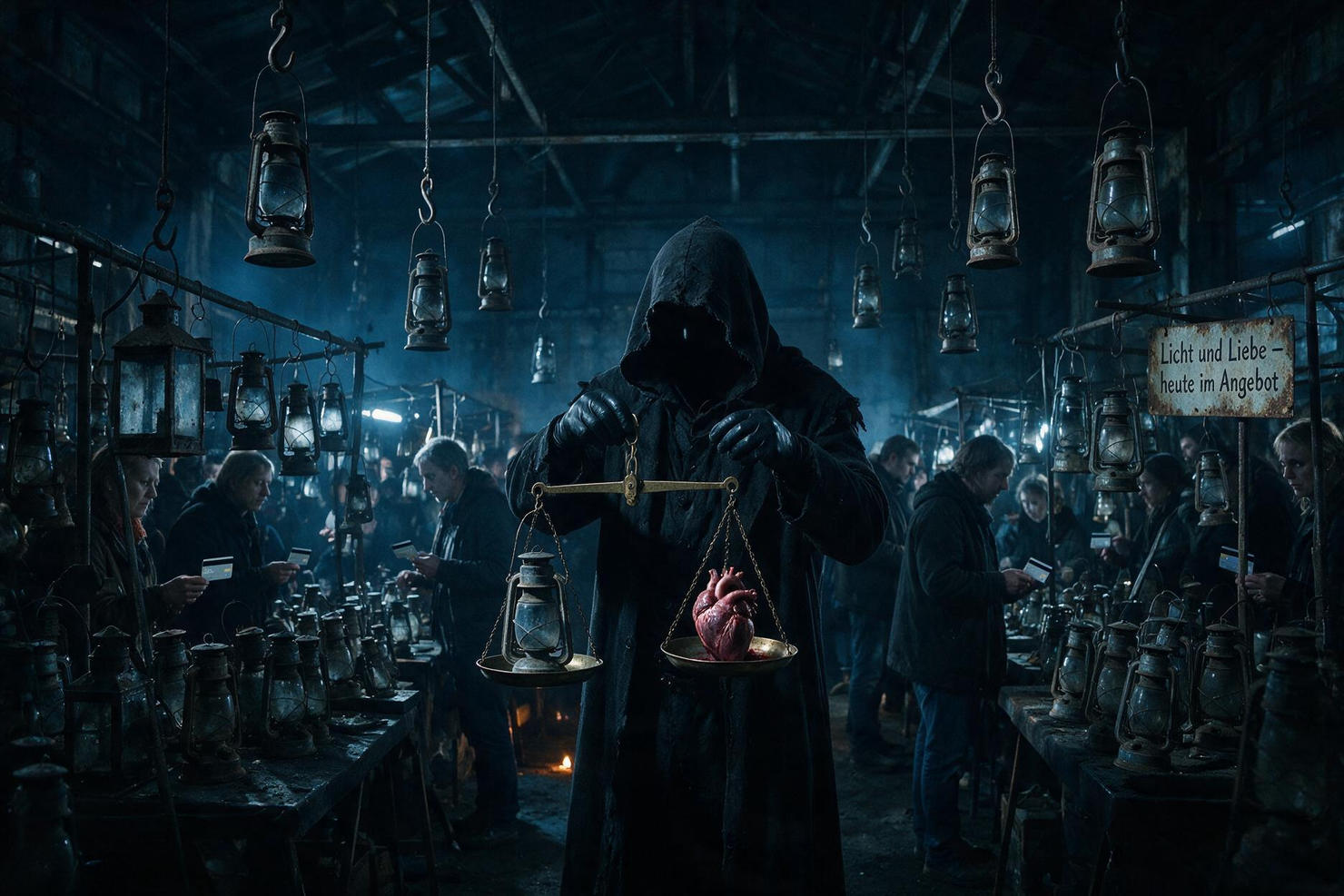
The Bazaar of Imposters
There's the soul whisperer with the rehearsed, benevolent gaze, whose eyes radiate about as much peace as a predator just before feeding time. He sells you his own likeness as an energetically charged power image—a self-portrait as a sacrament, narcissism in a haze of incense. Next to him is the self-proclaimed soul interpreter, who claims to be the only man on the planet to have unlocked the mystery of femininity and generously offers to dissolve your inner blockages in monastic seclusion on his estate. For a princely fee, of course, because the universe now accepts card payments. And finally, the host of the chosen ones, each of whom has an exclusive and personal direct line to the Absolute. One can't help but wonder how many direct connections the Absolute actually grants—heaven must be wired like a data center by now.
Lucifer sends his regards
The irony of this industry is older than the industry itself. Lucifer literally means "light-bearer," and even the Apostle Paul warned the Corinthian church that darkness prefers to disguise itself as an angel of light. The Gnostics spoke of the Demiurge's blinding light, which holds souls captive in matter by feigning salvation where imprisonment reigns. Every serious tradition recognized this distinction: there is a light that liberates and a light that blinds. The former you find at the end of a journey through your own darkness. The latter is sold to you at the entrance, so that you don't even begin the journey. Whoever offers you a flame you haven't lit yourself offers you a lantern without fire—pretty to look at, but utterly useless once darkness falls.
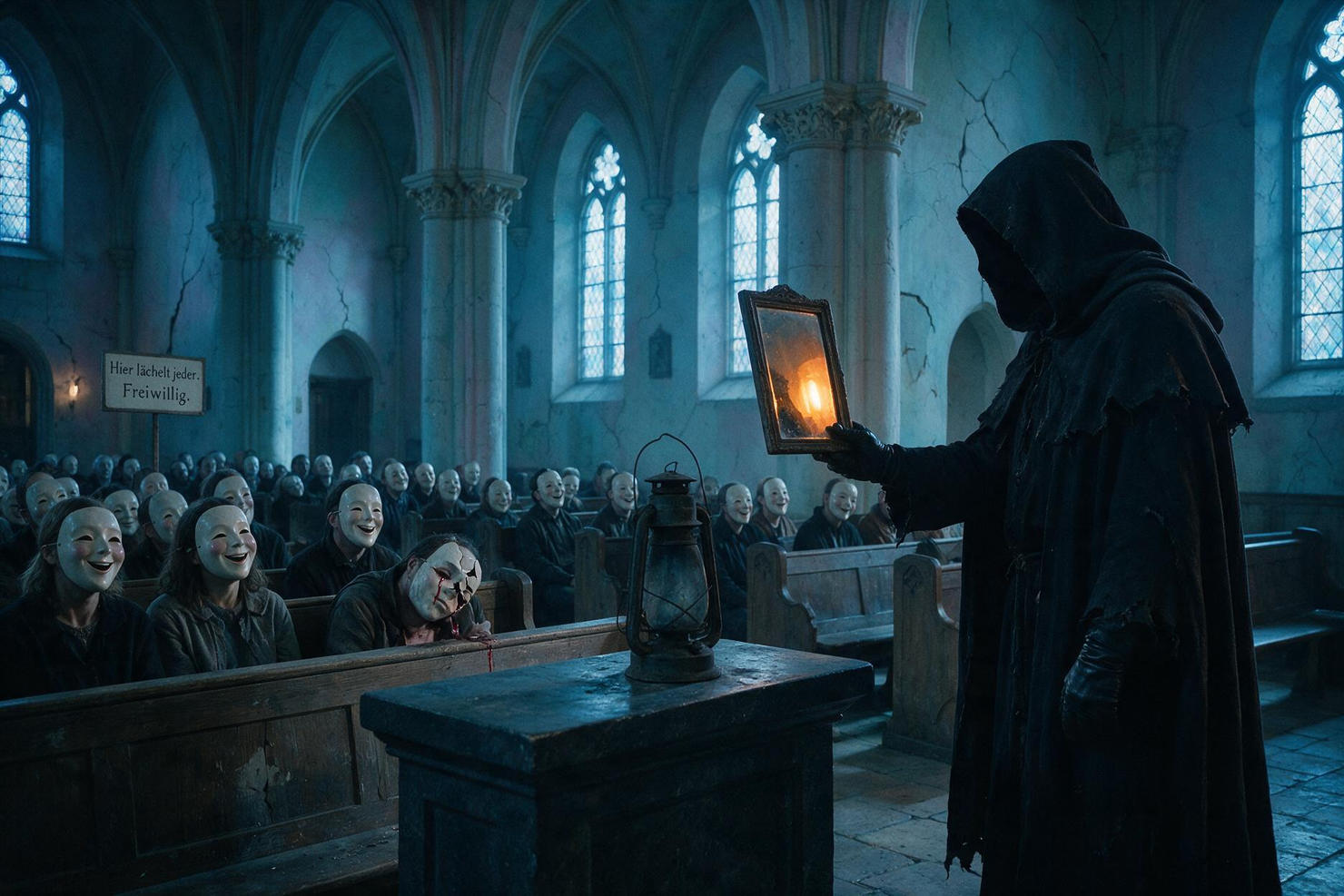
The blacking cannot be skipped.
The alchemists called the first stage of the Great Work Nigredo: the blackening. Before anything can turn to gold, it must rot, burn, crumble into black ash. John of the Cross called this same descent the dark night of the soul. The Eleusinian Mysteries first sent their initiates into the underworld, not into the dome of light. And C.G. Jung formulated it by saying that one is not enlightened by imagining figures of light, but by becoming aware of one's own darkness. The shadow is not an accident of the soul; it is its foundation. Even Saturn, the great teacher of ancient astrology, never bestows his wisdom in passing—he first takes what you hold onto and only then gives what sustains you. How distilling the actual work from the powerlessness itselfThat's another story in this chronicle – the point remains the same: there's no way around the descent. But it's precisely this step that the bazaar has removed from its offerings. No crystal grid weekend, no monthly subscription to angelic whispers, no seven-fold daily application of unicorn-fart protection spray can replace the journey down. All of that is mere cosmetics on the sarcophagus: gold leaf on the outside, but inside, what was never buried remains.
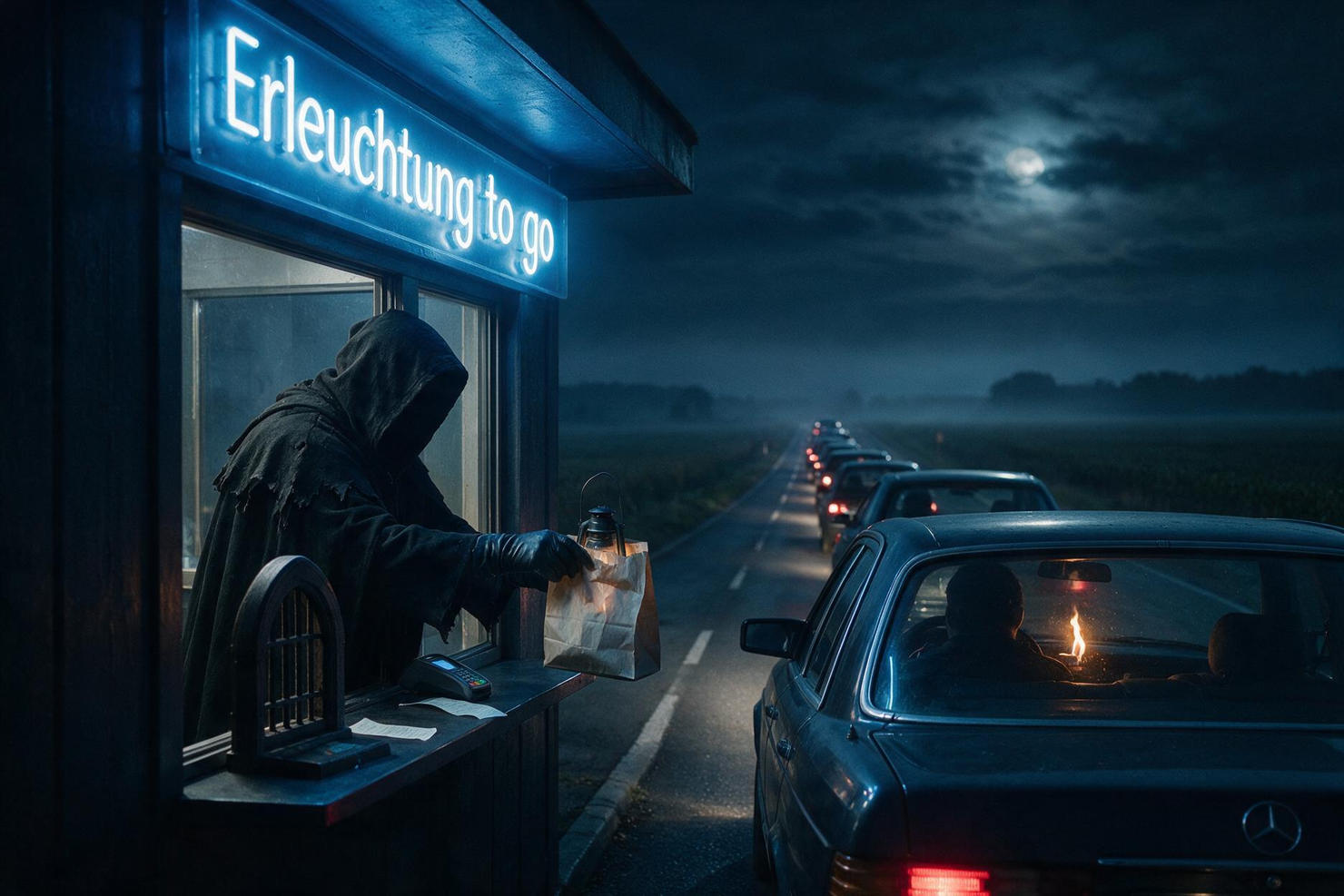
The dogma of lasting joy
But woe betide you if you speak of it. Woe betide you if you mention in the hallowed halls of perpetual bliss that there is night, loss, malice, true suffering. Then the mask of gentleness falls faster than the curtain after a bad premiere, and a rage erupts from the preacher of love, a rage that reeks surprisingly little of higher vibration. This perpetual bliss is not a philosophy; it is an immune system: it protects the business model from reality. A doctrine that cannot tolerate darkness is not a doctrine at all, but a sales floor. And because every sales floor must grow, this market ultimately devours itself—like… The snake that will only starve if you stop feeding it.The most shocking thing about it isn't the audacity of the merchants. It's the patience of the buyers, who allow themselves to be sold the same empty promises year after year, because the truth doesn't come with a special offer. Indulgences have always been nothing more than this: the priest collects, the sinner pays, and the soul remains exactly where it was before – only a few bills lighter.
The price no one mentions
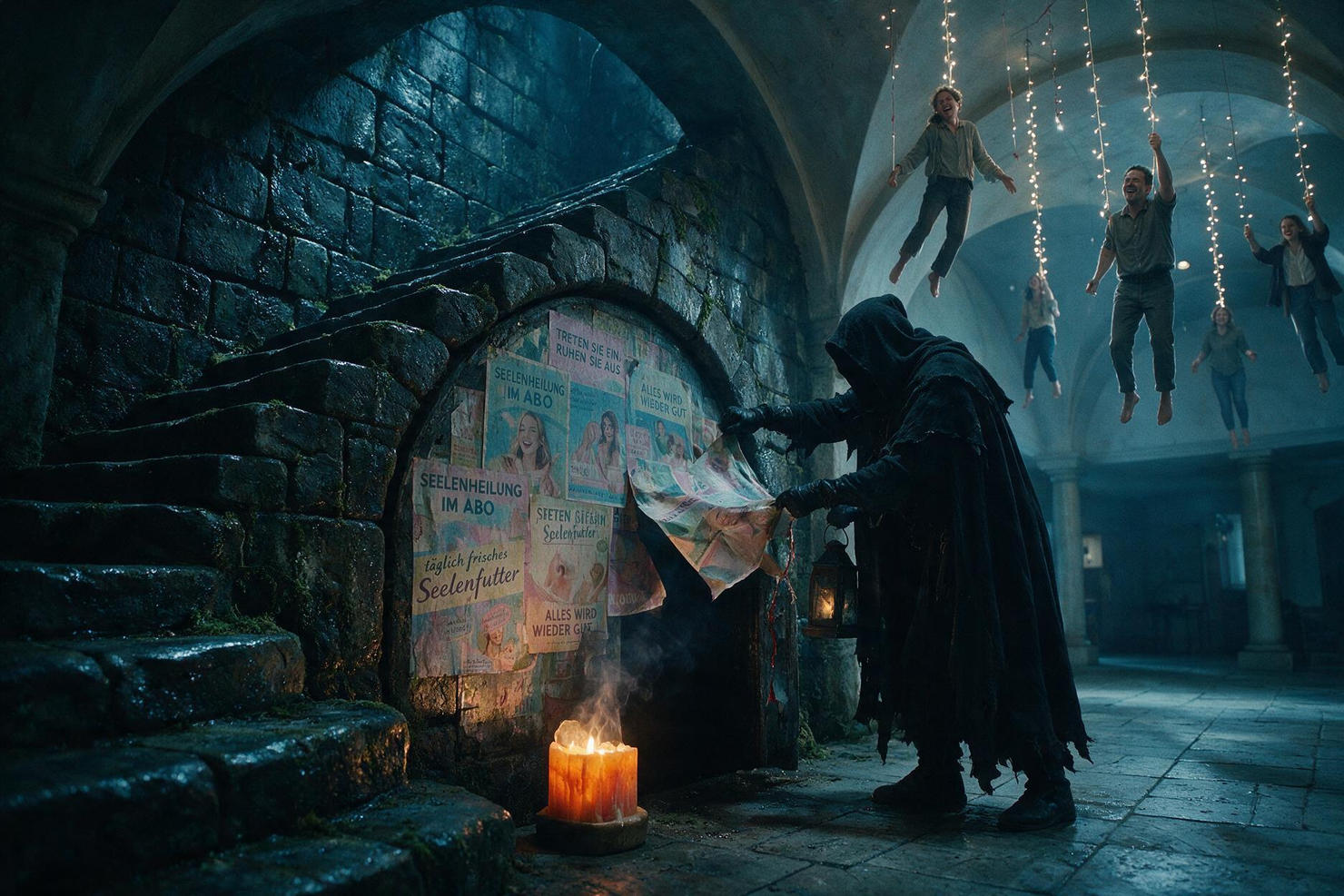
For the truth is uncomfortable and therefore priceless: Transformation begins in darkness. It is cold, it is arduous, it smells of earth, not rose oil. It demands that you bend down to what you have buried your whole life—the shame, the anger, the grief, the entire unloved inventory of your depths. Persephone did not become queen by remaining in the flower meadow—she became queen down below, in the realm of the dead. No one can walk this path for you, no one can buy it from you, and therein lies its dignity: What you find down there is yours, priceless. No one will simply add it to your timeline, for darkness cannot be subscribed to. The bazaar would rather offer you the thousandth scented candle so that you never set foot on the stairs leading down. Anyone who wants to give you the light before you have walked through your night is not a messenger, but a highwayman. And the industry knows this perfectly well – they charge for rerouting you around your own abyss and call this "lightwork"!
More for you:





 "Dravens Tales from the Crypt" has been enchanting for over 15 years with a tasteless mixture of humor, serious journalism - for current events and unbalanced reporting in the press politics - and zombies, garnished with lots of art, entertainment and punk rock. Draven has turned his hobby into a popular brand that cannot be classified.
My blog was never designed to spread news, let alone get political, but with current affairs I just can't help but capture information here that is otherwise censored on all other channels. I am aware that the design page may not seem "serious" to many in this regard, but I will not change this to please the "mainstream". Anyone who is open to non-state-compliant information sees the content and not the packaging. I've tried enough to provide people with information over the last 2 years, but quickly noticed that it never matters how it's "packaged", but what the other person's attitude towards it is. I don't want to put honey on anyone's mouth to meet expectations in any way, so I'll keep this design because hopefully at some point I'll be able to stop making these political statements, because it's not my goal to go on like this forever  I leave it up to everyone how they deal with it. However, you are welcome to simply copy and distribute the content, my blog has always been under the WTFPL license.
It's hard for me to describe what I'm actually doing here, DravensTales has become a culture blog, music blog, shock blog, tech blog, horror blog, fun blog, a blog about found items on the internet, internet bizarre, trash blog, art blog, water heater, zeitgeist blog over the years , Scrap blog and grab bag blog called. Everything that is right ... - and yet not. The main focus of the blog is contemporary art, in the broadest sense of the word.
To ensure the continued operation of this site, you are welcome to make a donation via credit card, PayPal, Google Pay, Apple Pay, or direct debit/bank account . Many thanks to all readers and supporters of this blog!