
About Jeffrey Epstein, an old-school psychiatrist, and the question of why a pedophile network with intelligence connections was able to operate undisturbed for decades.
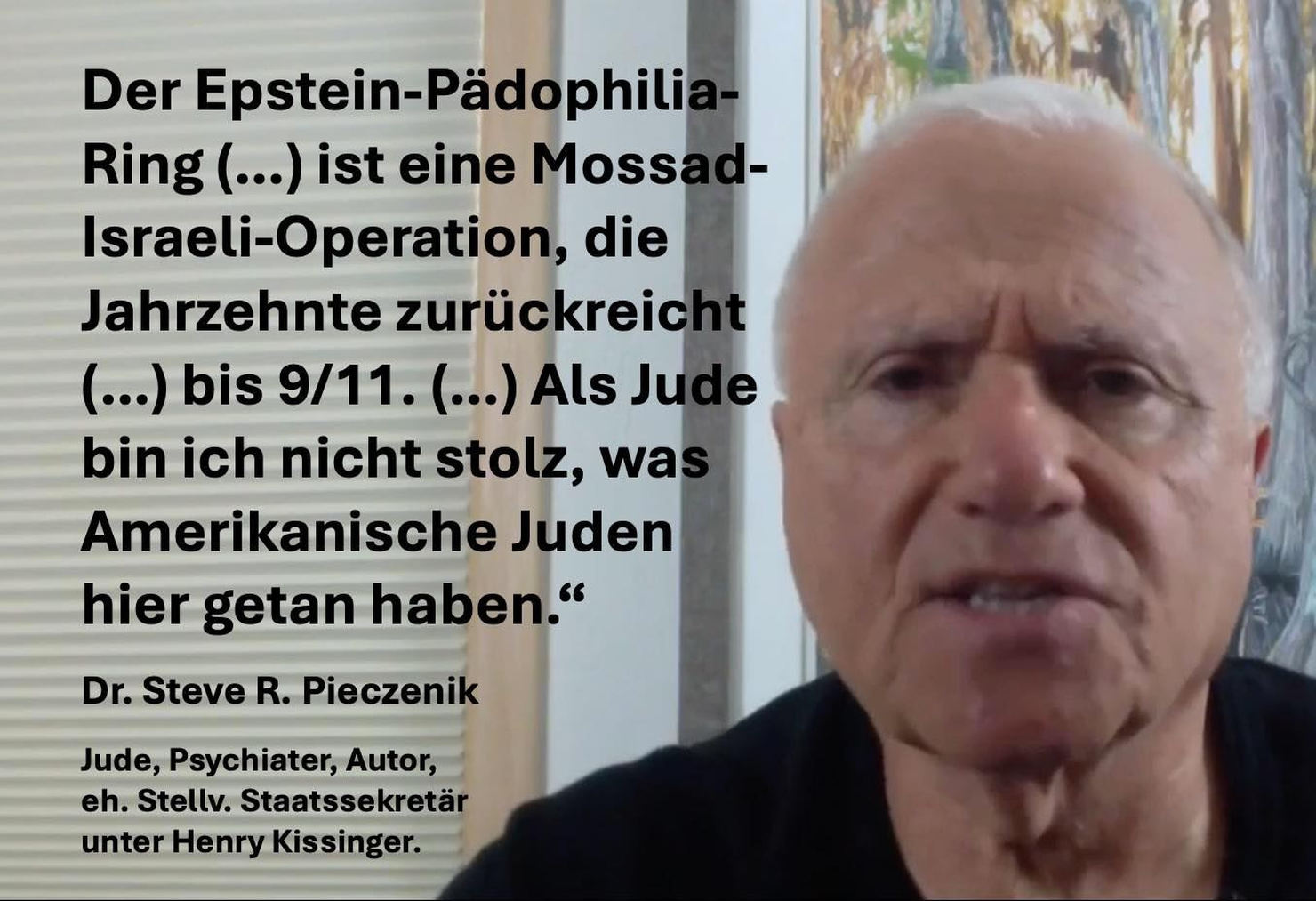
There are statements that cannot be ignored—not because they are convenient, but because they come from someone from whom one cannot simply argue away the uncomfortable truth. Dr. Steve R. Pieczenik. Jewish. Psychiatrist. Author. Former Assistant Secretary of State under Henry Kissinger. A man who was not on the fringes of power, but right in the thick of it—in those corridors where decisions are made that never appear in minutes and never make it into textbooks.
His statement is clear, direct, and devastatingly precise: The Epstein pedophile ring is a Mossad-Israeli operation. It stretches back decades. And he adds—as a Jew, with visible discomfort—that he is not proud of what American Jews have done here.
One can ignore it. One can dismiss it as a conspiracy theory, shove it into that convenient drawer one always opens when a statement is too precise to be considered mere fantasy. Or one can ask the obvious question: If a man with this biography, this approach, this background – and without any discernible personal interest in the statement – says something like this publicly, what exactly has to happen before the mainstream stops looking the other way?
Epstein – the network that wasn't supposed to be one
Jeffrey Epstein was not a lone perpetrator. This has now been documented, established in court, testified to by victims, and confirmed by investigators—to the extent they were allowed to be. He was the linchpin of a network that supplied, compromised, and thus controlled powerful individuals. Financiers, politicians, royalty, scientists, media moguls—the guest list of his islands and residences reads like the address book of the Western power elite.
What Pieczenik claims goes a step further: This wasn't some self-organized perversion club of an eccentric billionaire. It was an operation. With structure. With clients. With the goal of securing influence through compromise – the world's oldest intelligence tactic, a honey trap polished to a high sheen and transferred into the 21st century. Intelligence compromise operations exist. This isn't theory – it's standard curriculum at intelligence schools worldwide. The question is never whether, but who, for whom, and with what goal.
Death that answers no questions
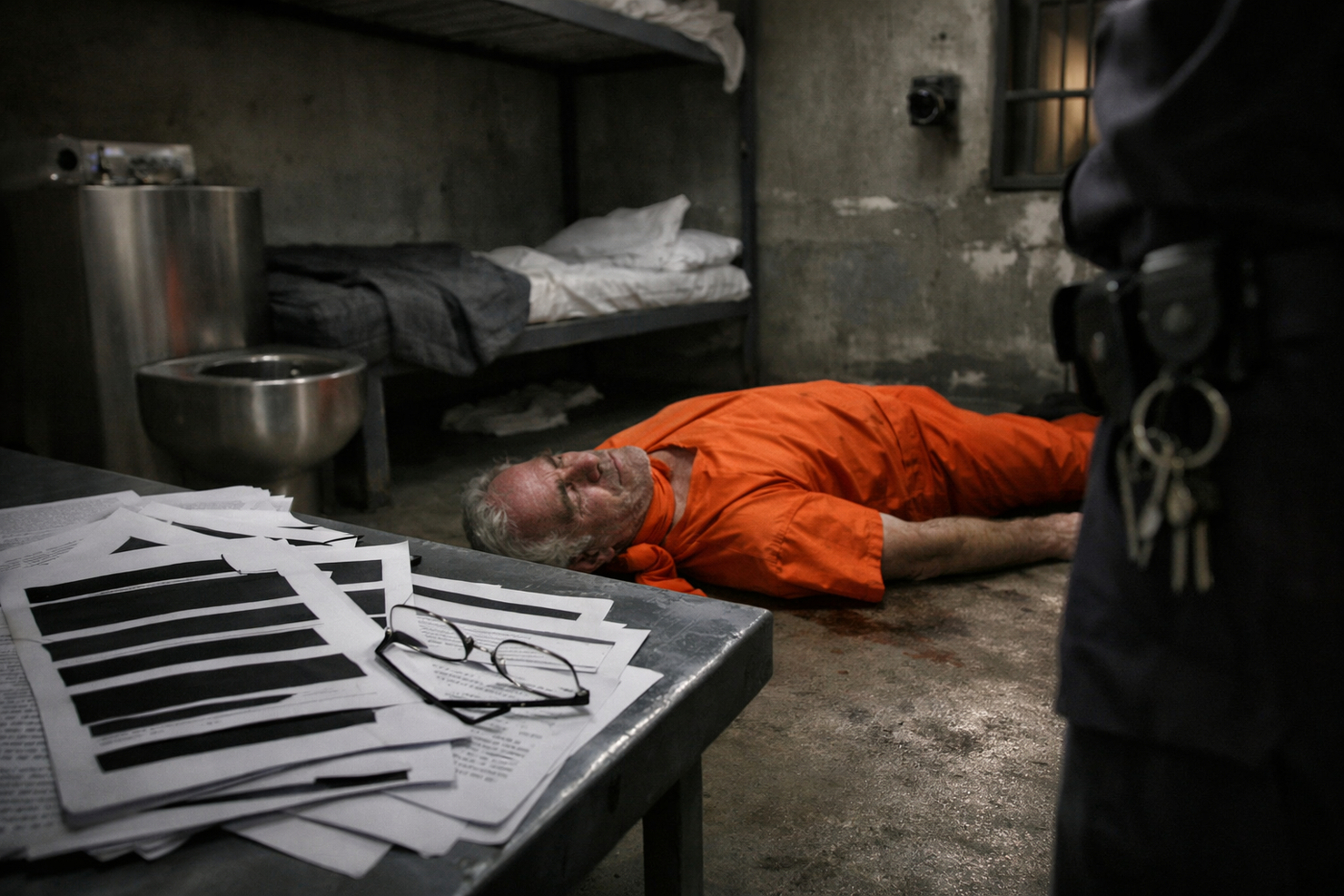
Epstein died in custody in 2019. The official verdict was suicide – in a high-security cell, under video surveillance that failed on the crucial night, with a guard asleep, and with broken bones in his neck that pathologists described as inconsistent with self-strangulation.
The chief pathologist of the New York City Medical Examiner's Office ruled it a murder. The authorities maintained their suicide ruling. The files remained redacted. The accomplices remained largely untouched.
Ghislaine Maxwell was convicted. For whom she procured the girls is revealed in redacted documents. Not for the public. Not for the victims. For the archives. That is the real message: The system is not the crime. The system is the silence.
Pieczenik and the limits of what can be said
What Pieczenik does is radical in its simplicity. He says what many think but hardly anyone says aloud – not because it's wrong, but because it has consequences. Career consequences. Social consequences. Sometimes other consequences as well.
The fact that he says it anyway – and explicitly invokes his own Jewish identity, not as a shield, but as a moral context – is remarkable. It is the statement of a man for whom the truth is more important than applause.
Whether his analysis is accurate in every detail is a question that investigators would have to answer – real investigators, with access to unredacted files, without political pressure from above. The fact that such investigations are not taking place speaks volumes.
What remains
Epstein is dead. The files are redacted. The networks continue to operate—under different names, with different faces, but with the same structure. Pieczenik has said what he knows. Or what he believes he knows. Or what he was allowed to say about what he knows. The difference between these three possibilities is smaller than one might hope…
More for you:






 "Dravens Tales from the Crypt" has been enchanting for over 15 years with a tasteless mixture of humor, serious journalism - for current events and unbalanced reporting in the press politics - and zombies, garnished with lots of art, entertainment and punk rock. Draven has turned his hobby into a popular brand that cannot be classified.
My blog was never designed to spread news, let alone get political, but with current affairs I just can't help but capture information here that is otherwise censored on all other channels. I am aware that the design page may not seem "serious" to many in this regard, but I will not change this to please the "mainstream". Anyone who is open to non-state-compliant information sees the content and not the packaging. I've tried enough to provide people with information over the last 2 years, but quickly noticed that it never matters how it's "packaged", but what the other person's attitude towards it is. I don't want to put honey on anyone's mouth to meet expectations in any way, so I'll keep this design because hopefully at some point I'll be able to stop making these political statements, because it's not my goal to go on like this forever  I leave it up to everyone how they deal with it. However, you are welcome to simply copy and distribute the content, my blog has always been under the WTFPL license.
It's hard for me to describe what I'm actually doing here, DravensTales has become a culture blog, music blog, shock blog, tech blog, horror blog, fun blog, a blog about found items on the internet, internet bizarre, trash blog, art blog, water heater, zeitgeist blog over the years , Scrap blog and grab bag blog called. Everything that is right ... - and yet not. The main focus of the blog is contemporary art, in the broadest sense of the word.
To ensure the continued operation of this site, you are welcome to make a donation via credit card, PayPal, Google Pay, Apple Pay, or direct debit/bank account . Many thanks to all readers and supporters of this blog!








