
A lubricant crisis is hitting American agriculture – and no sooner is the problem apparent than the technocrats already have the solution ready: synthetic food from bioreactors, protein from the air, and meat from the lab. What a coincidence.
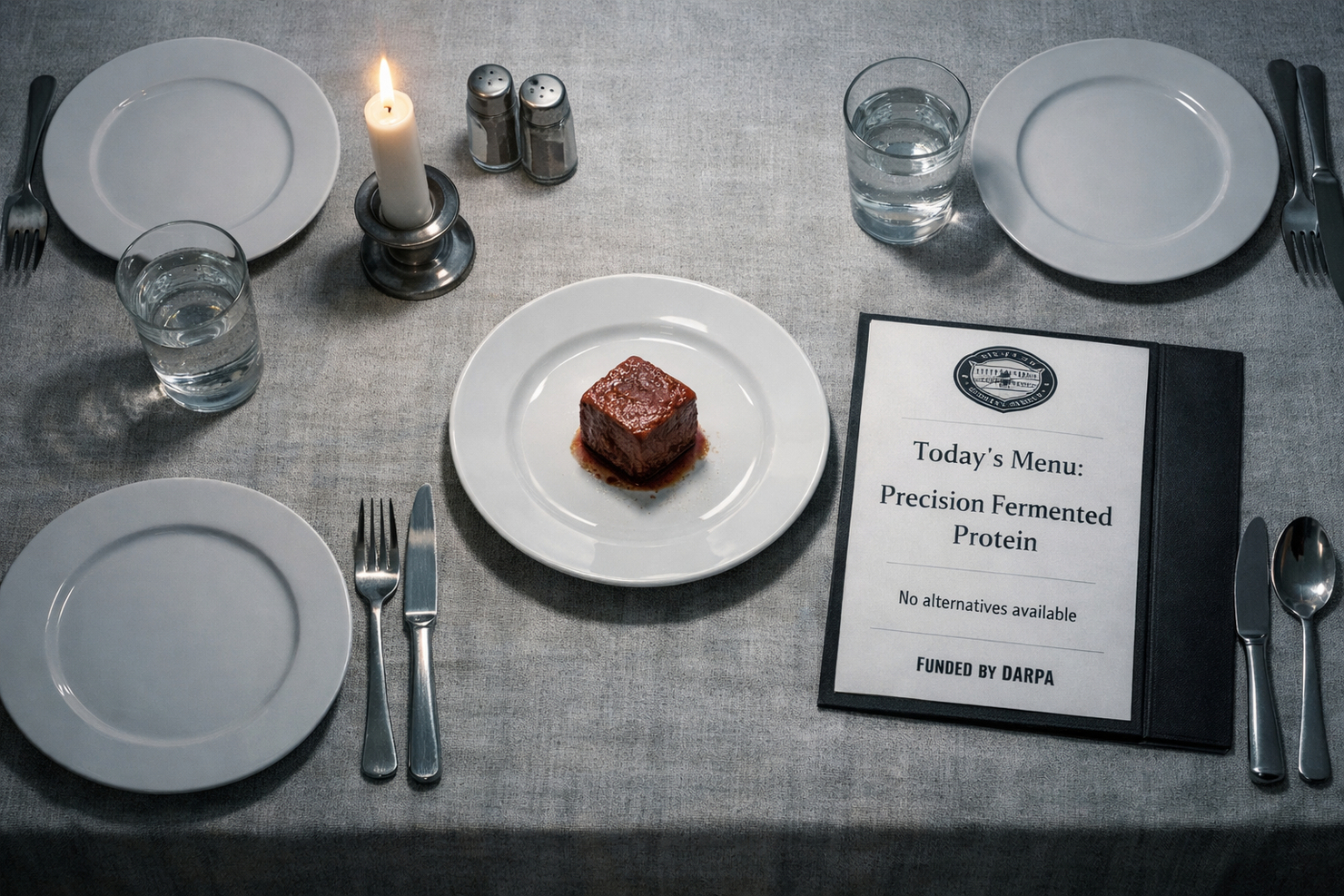
When the Strait of Hormuz closed in March, the Independent Lubricant Manufacturers Association (ILMA) immediately contacted the Department of Energy: approval for force majeure clauses, immediate crisis analysis for transportation, agriculture, defense, and industry. This wasn't hysteria, but a matter-of-fact consequence of a serious supply problem. The US sources approximately 44% of its Group 3 lubricants from the Middle East – South Korea, another supplier, is also affected because its entire pipeline uses the same crude oil from the region. This portion is now completely offline.
No oil, no food
Three months later, the cracks in the supply chain became visible. Toyota sent a memo to its dealers: no more high-quality synthetic motor oil was available; what little remained was to be diluted with inferior material. Nissan followed two days later, informing them that dealers would receive only 55% of the previous year's volume this year—regardless of what they ordered or actually needed. The situation reached its peak with a leaked internal memo from the AutoZone CEO: "This is a historic event. The shelves will be empty, and people will go ballistic if they can't find oil for their machines." This was followed by a passage outlining how AutoZone intended to capitalize on the situation—as a "solution provider for everyone facing empty shelves." Simultaneously, Shell, Valvoline, and O'Reilly warned their investors: lubricant prices were skyrocketing, and the supply chain for synthetic motor oil was collapsing.
Agriculture under the hammer
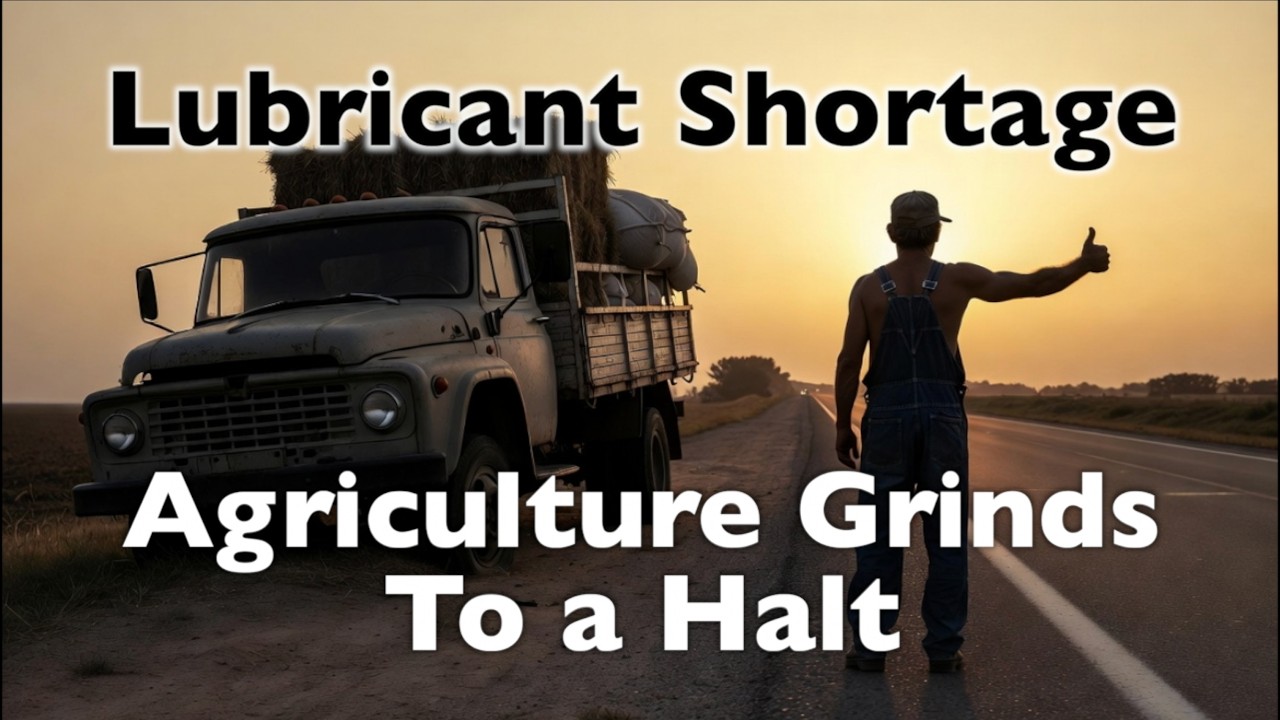
Anyone who thinks this only affects drivers is underestimating the structural impact. Around 70% of American freight transport is by road. No motor oil, no trucks on the road – no animal feed, no harvest at the dealer, no food in the stores. Irrigation systems in large agricultural areas run on diesel engines that operate nonstop throughout the season and require regular maintenance. If the lubricating oil for these pumps isn't available, the water is shut off – and without water, there's no harvest. Tractors, combine harvesters, sprayers, and loaders need engine oil for their drives and hydraulic oil for all their implements and attachments. After the harvest, grain dryers, conveyor belts, and elevators are used in the silos – all machines, all with the same lubrication and maintenance requirements. A 44% cut in Group 3 lubricants doesn't affect just one point in the food chain, but every sector simultaneously and without exception.
The solution was already there, ready in the drawer.
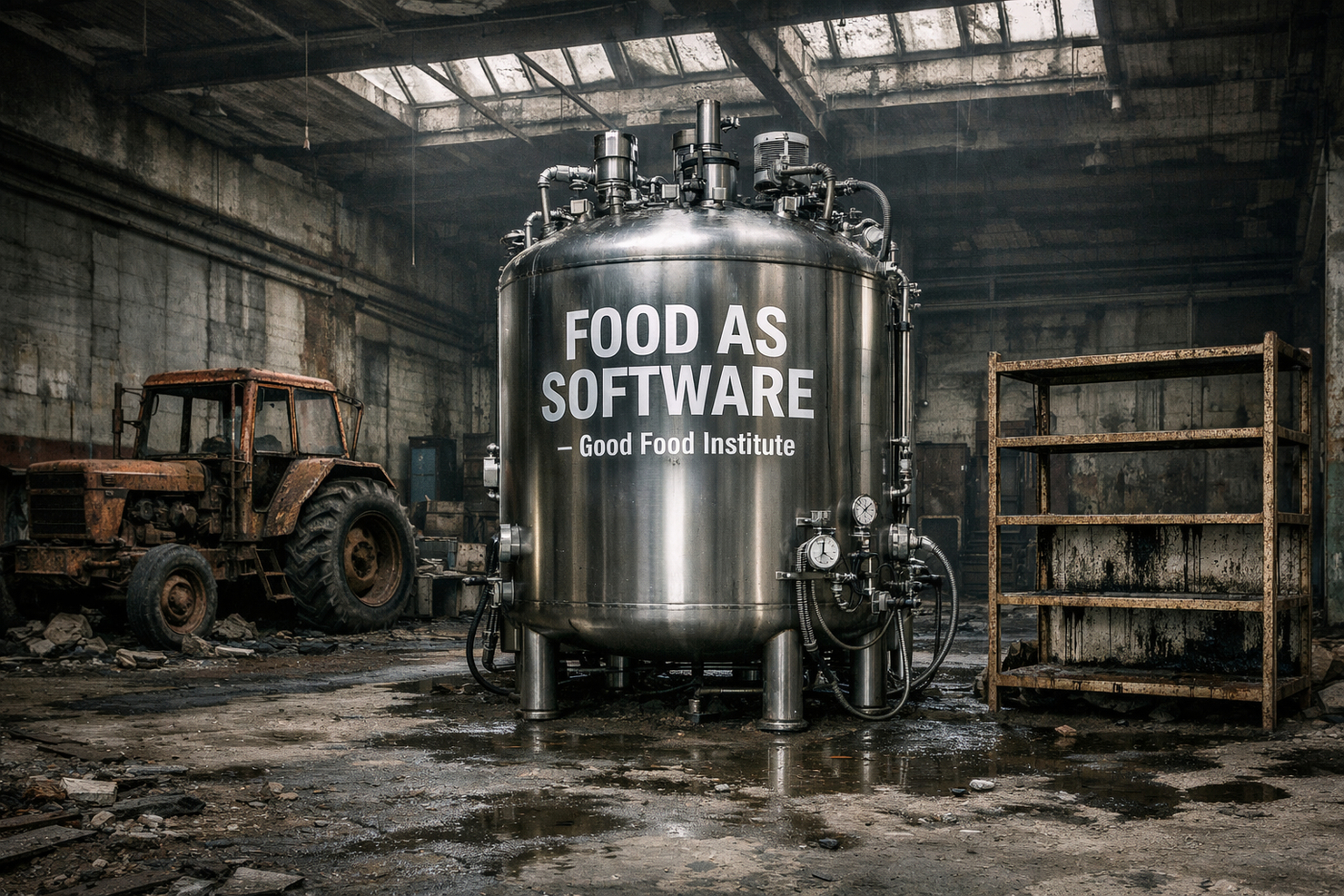
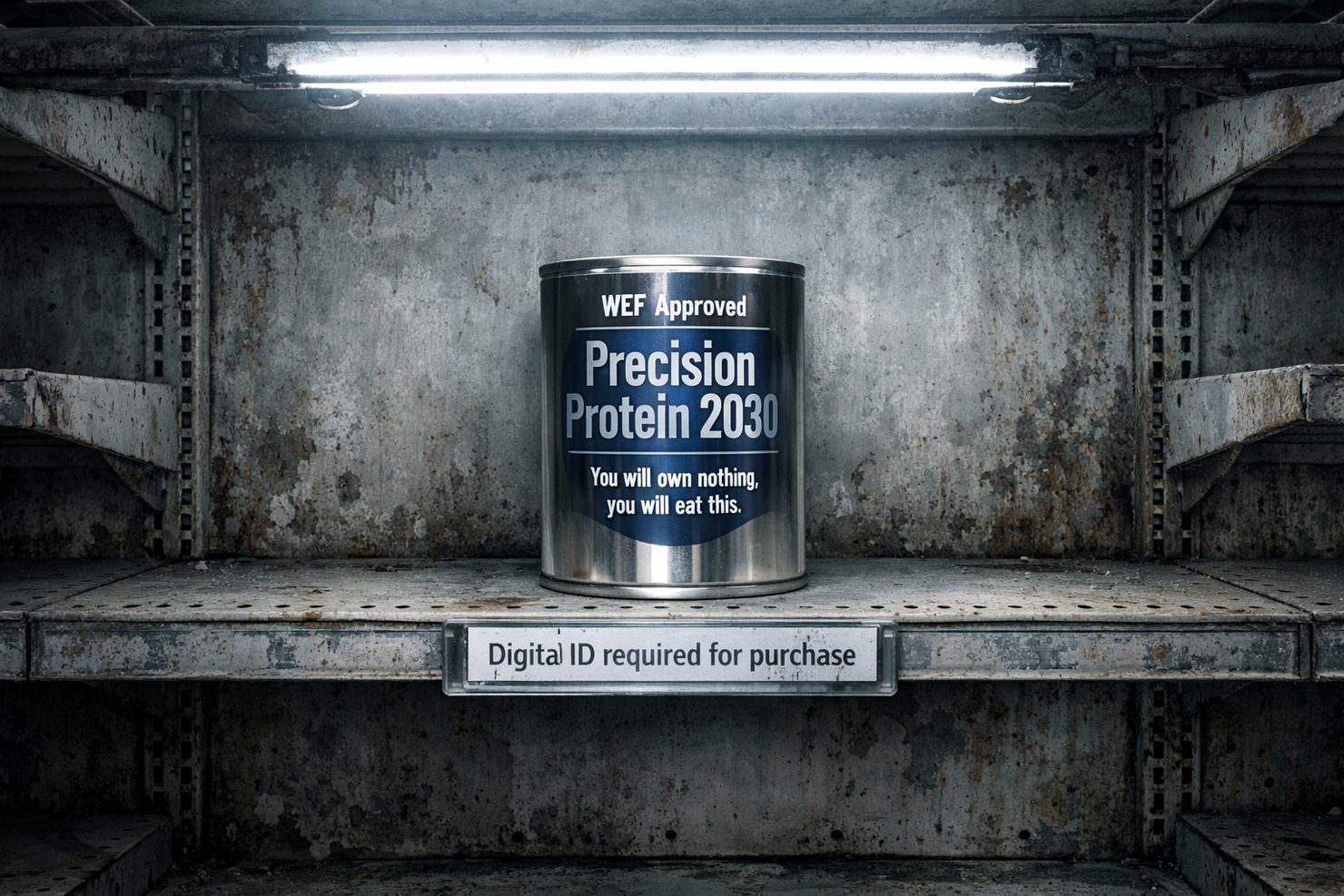
Then comes the part that turns your stomach. The Good Food Institute—one of the driving forces behind lab-grown meat, precision fermentation, and vertical farming—published its "State of the Industry" report on alternative proteins in early 2026. It stated that precision fermentation was particularly attractive because it could produce specific animal proteins—explicitly "in the event of supply chain problems and other product shortages." The lubricant crisis hadn't even fully made its mark on the media, and the answer was already there in print. At the same time, the Rethink initiative was promoting the concept of "Food as Software": AI analyzes the genome of crops, rewrites it, and creates variants that are supposed to be more resistant to pests and climate fluctuations. Just a few days ago, the Pentagon approved ten million dollars for a company that is literally producing protein out of thin air—using precision fermentation in industrial bioreactors. This is the propagated vision: large vats, cells in nutrient solution, and from this emerges what will henceforth be sold as food.
Collapse as a strategy
Anyone who looks at the past few years will easily recognize the pattern. Traditional agriculture is being put under economic pressure, restricted by regulations, and demonized in the media. Nitrogen bans in the Netherlands, ESG requirements for farms in the EUdSSR, subsidy cuts for conventional farms, CO₂ taxes on livestock farming – this has been going on for years, and it's deliberate. Now, when a geopolitically triggered supply crisis brings agricultural infrastructure to a standstill, the technocrats are ready with pre-made alternatives. Lab-grown meat. Insect protein. Precision-fermented milk without cows. Protein from air. A collapse for which the solution was developed, financed, and promoted years in advance – and which is now being packaged as an unavoidable necessity for which there is no alternative.
The alternative has long been on the table and is as old as civilization itself: decentralized supply, regenerative agriculture, local self-sufficiency, and the exchange of seeds within the community. These are methods that have kept humanity alive for millennia – and which are now dismissed as backward, inefficient, and unscalable because they cannot be digitized or controlled in a bioreactor.
Tumors growing in vats are intended to replace the food culture of the next few centuries – and a geopolitical crisis provides the perfect pretext to accelerate the transition! Whoever controls the lubricants controls the harvest, whoever controls the harvest controls hunger, and whoever controls hunger controls the people! That the Pentagon is funding this transition with millions while farmers in the Netherlands were forced to abandon their farms – and then calls the whole thing "Food Transition" – is no coincidence: it's by design. The question isn't whether synthetic food will arrive, but whether enough people will still know how to grow a potato when the ultimate answer to real hunger is swimming in a bioreactor!
More for you:





 "Dravens Tales from the Crypt" has been enchanting for over 15 years with a tasteless mixture of humor, serious journalism - for current events and unbalanced reporting in the press politics - and zombies, garnished with lots of art, entertainment and punk rock. Draven has turned his hobby into a popular brand that cannot be classified.
My blog was never designed to spread news, let alone get political, but with current affairs I just can't help but capture information here that is otherwise censored on all other channels. I am aware that the design page may not seem "serious" to many in this regard, but I will not change this to please the "mainstream". Anyone who is open to non-state-compliant information sees the content and not the packaging. I've tried enough to provide people with information over the last 2 years, but quickly noticed that it never matters how it's "packaged", but what the other person's attitude towards it is. I don't want to put honey on anyone's mouth to meet expectations in any way, so I'll keep this design because hopefully at some point I'll be able to stop making these political statements, because it's not my goal to go on like this forever  I leave it up to everyone how they deal with it. However, you are welcome to simply copy and distribute the content, my blog has always been under the WTFPL license.
It's hard for me to describe what I'm actually doing here, DravensTales has become a culture blog, music blog, shock blog, tech blog, horror blog, fun blog, a blog about found items on the internet, internet bizarre, trash blog, art blog, water heater, zeitgeist blog over the years , Scrap blog and grab bag blog called. Everything that is right ... - and yet not. The main focus of the blog is contemporary art, in the broadest sense of the word.
To ensure the continued operation of this site, you are welcome to make a donation via credit card, PayPal, Google Pay, Apple Pay, or direct debit/bank account . Many thanks to all readers and supporters of this blog!








