
There are moments when the political class acts so brazenly that even seasoned cynics have to pause for a moment. Not out of outrage—outrage requires a certain amount of surprise, and that's long since been exhausted. But rather out of a kind of stunned admiration for the audacity with which people who have never earned a single franc themselves vote on the expenditure of trillions of other people's money.
The European Parliament has just voted on the multiannual financial framework for 2028–2034. Ursula von der Leyen had proposed 1,8 trillion euros. 1,8 trillion. A number that takes any normal person a moment to count the zeros. The Parliament—that institution which sees itself as the direct representative of European citizens' interests, thus delivering one of the most brazen self-descriptions in political history—found this insufficient.
Insufficient.
The conservative-social democratic-liberal-green majority – that lively cartel of apparent opposites which always manages to unite in a single, unanimous "yes" on fundamental issues – voted for 2 trillion. Ten percent more than von der Leyen had requested. Two hundred billion on top, because 1,8 trillion simply isn't enough to solve "the most pressing problems of our time."
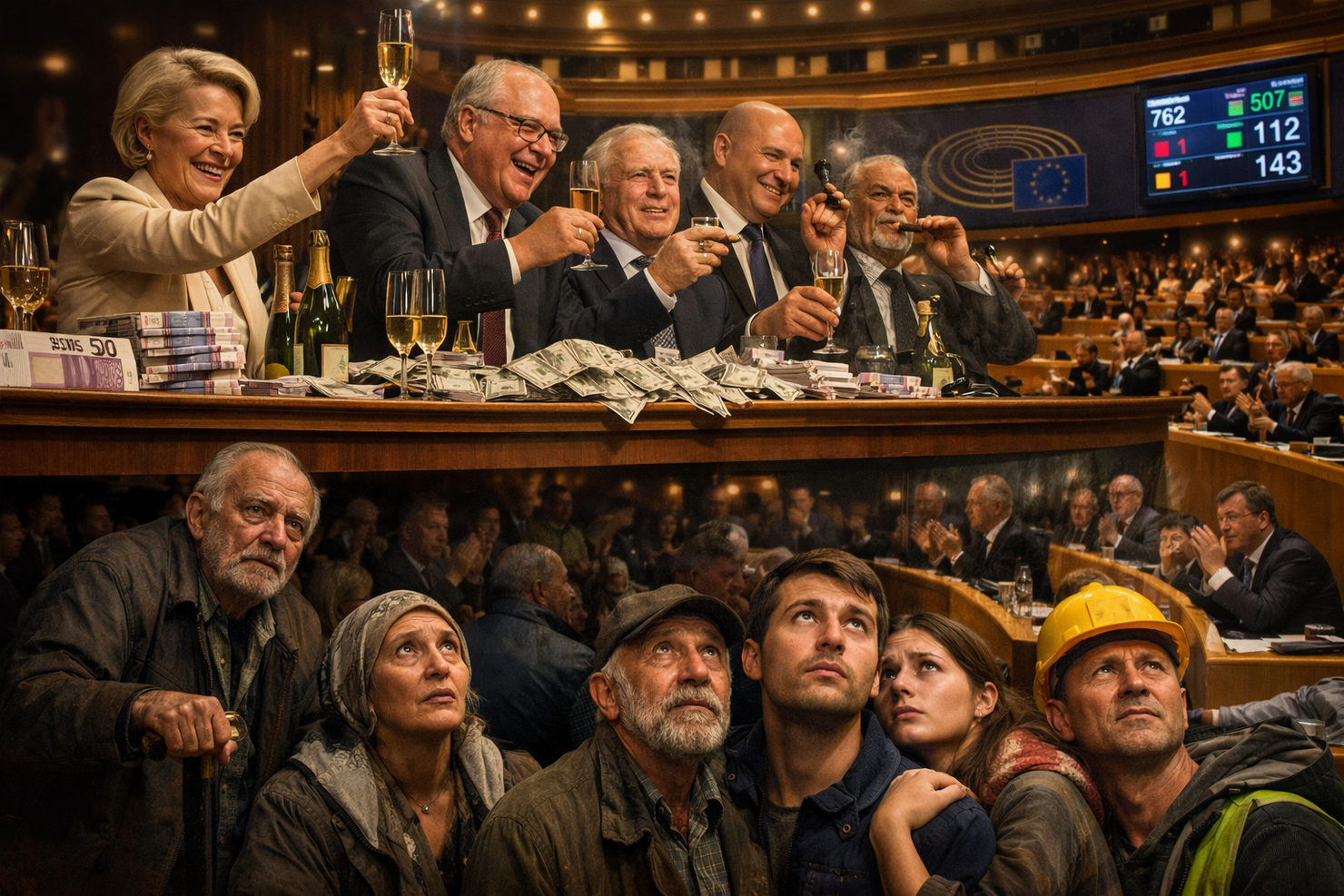
Let that sink in for a moment. The same institutions, the same people, the same political families that have systematically deindustrialized Europe over the past ten years, driven energy prices to unaffordable levels, fueled inflation, ruined the middle class, and brought public trust in democratic institutions to historic lows – these are the people who are now declaring that they need an additional 200 billion euros to fix the consequences of their own bad decisions.
This isn't irony. This is a business model.
Where does the money go? Climate – that category under which anything that can't withstand any detailed explanation can be hidden. Ukraine – which doesn't refer to the Ukrainian population, but rather to the arms industry that profits from this war and happens to employ the same lobbyists who sip tea in Brussels corridors. And "competitiveness" – the word that always pops up in EU documents when large corporations are to receive subsidies that can't be directly identified for what they are to the average citizen.
Von der Leyen herself is a figure of almost literary consequence in this context. Her text message correspondence with Pfizer CEO Albert Bourla about vaccine contracts worth billions was declared subject to mandatory disclosure by order of the European Court of Justice—whereupon the Commission declared that the messages could no longer be found. Vanished. Gone. As if a mobile phone didn't have a data backup function, which even grandmothers with smartphones now use.
The EU court called this "illegal." Von der Leyen was nevertheless re-elected. Anyone looking for an explanation for this contradiction will find it in the fundamental structure of the system: those who distribute the billions are elected by those who benefit from the distribution. This is not a flaw in the system. This is the system.
Where do the 2 trillion come from? From taxpayers – directly, through contributions from member states. Indirectly, through inflation, which devalues the money citizens save. And through sacrifice, as correctly stated in the original text – because every euro spent in Brussels is a euro that is not available for schools, hospitals, infrastructure, pensions, or simply for basic necessities.
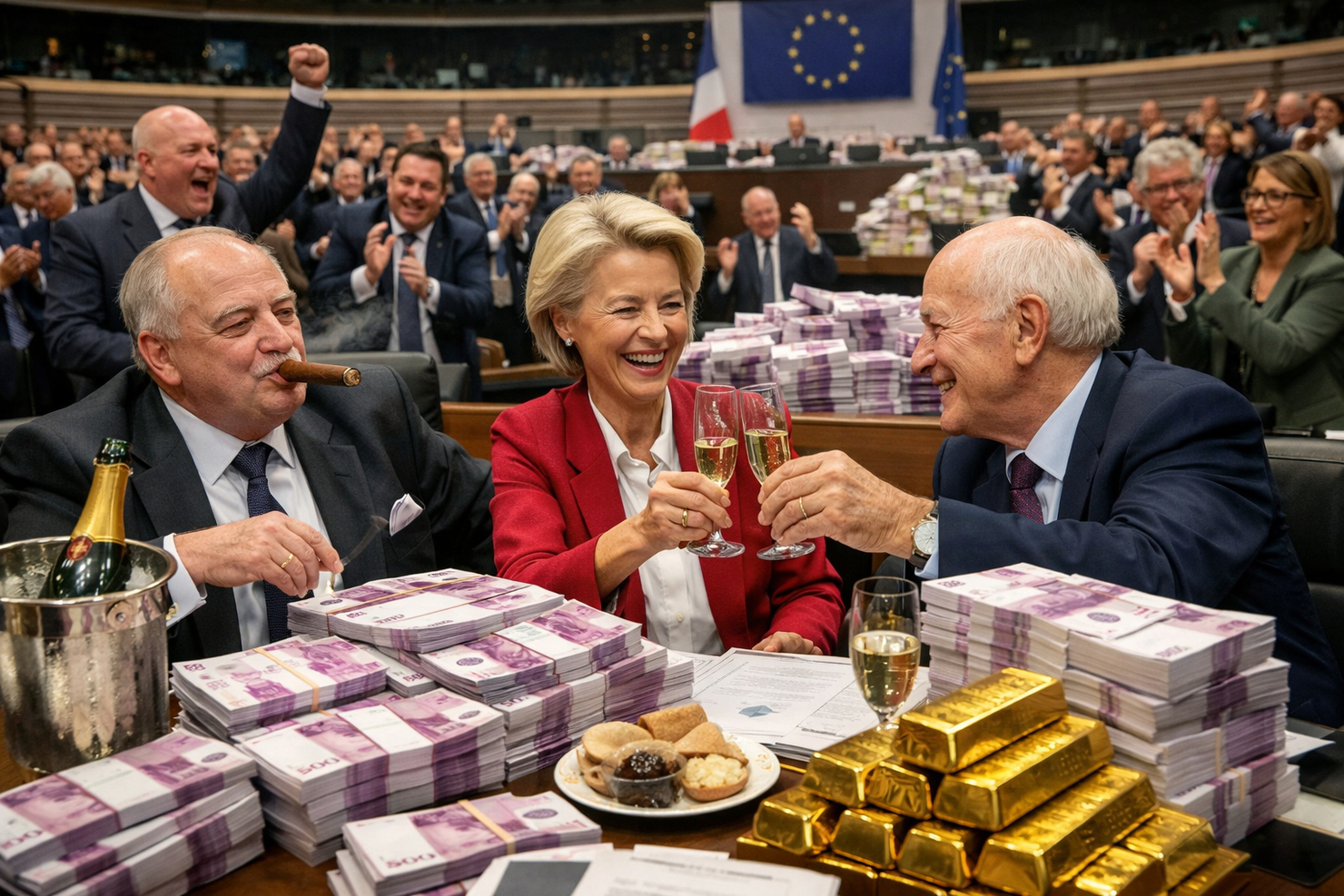
Politico magazine, a mouthpiece for transatlantic big business and co-financed by Axel Springer, celebrated the vote in a podcast with the line: "We're going to be spending those trillies, baby." In other words: We're going to spend these trillions, baby. It was delivered with the enthusiastic tone of an influencer embarking on a company-funded trip to Bali.
This statement is the most honest commentary ever made about the EU budget from Brussels circles. Not because it's cynical—cynicism requires a certain degree of self-awareness—but because it's completely authentic. These people genuinely enjoy spending trillions. And why shouldn't they? It's not their money. It's yours.
One could point to the control mechanisms designed to ensure that EU funds are used appropriately. The European Court of Auditors – the very agency that has been publishing annual reports for decades documenting billions in misuse of funds, without any consequences. The anti-fraud office OLAF, which initiates proceedings that drag on for years while the accused remain in office. And the transparency registers, which lobbyists are required to register in and which are designed to contain as little information as possible.
This is the control system. Two trillion euros, overseen by institutions that are structurally unable or unwilling to exercise effective control – and staffed by the same political majorities that also decide the budget.
What to do? The question arises anew each time, and the answer is always more unsatisfactory than the last. Nation-states that want to withdraw from the mechanism are subjected to economic pressure. Parties that fundamentally question the model are labeled populists, extremists, or Putin apologists. Citizens who protest are registered.
Those EU people are crazy. But they're crazy systematically, consistently, and with your money.
The only thing they truly fear is the cessation of payments. There hasn't been a vote on that yet…
(via Martin Sonneborn)
More for you:






 "Dravens Tales from the Crypt" has been enchanting for over 15 years with a tasteless mixture of humor, serious journalism - for current events and unbalanced reporting in the press politics - and zombies, garnished with lots of art, entertainment and punk rock. Draven has turned his hobby into a popular brand that cannot be classified.
My blog was never designed to spread news, let alone get political, but with current affairs I just can't help but capture information here that is otherwise censored on all other channels. I am aware that the design page may not seem "serious" to many in this regard, but I will not change this to please the "mainstream". Anyone who is open to non-state-compliant information sees the content and not the packaging. I've tried enough to provide people with information over the last 2 years, but quickly noticed that it never matters how it's "packaged", but what the other person's attitude towards it is. I don't want to put honey on anyone's mouth to meet expectations in any way, so I'll keep this design because hopefully at some point I'll be able to stop making these political statements, because it's not my goal to go on like this forever  I leave it up to everyone how they deal with it. However, you are welcome to simply copy and distribute the content, my blog has always been under the WTFPL license.
It's hard for me to describe what I'm actually doing here, DravensTales has become a culture blog, music blog, shock blog, tech blog, horror blog, fun blog, a blog about found items on the internet, internet bizarre, trash blog, art blog, water heater, zeitgeist blog over the years , Scrap blog and grab bag blog called. Everything that is right ... - and yet not. The main focus of the blog is contemporary art, in the broadest sense of the word.
To ensure the continued operation of this site, you are welcome to make a donation via credit card, PayPal, Google Pay, Apple Pay, or direct debit/bank account . Many thanks to all readers and supporters of this blog!








