
Imagine a Nobel laureate invents a box the size of a shipping container that wrings a thousand liters of drinking water a day from bone-dry desert air – and the world reacts with a polite shrug and the next water justice conference.
This is where we'll be in 2026. According to the UN, around 2,2 billion people lack reliable access to clean drinking water, half of humanity experiences severe water shortages for at least a month each year, and a UN institute is now speaking of an impending "water bankruptcy" because the word "crisis" has become too weak. And at precisely this moment, news breaks that, technically, the problem might no longer even exist.

When chemistry becomes elegant, it becomes uncomfortable.
The man in question is a chemistry professor at an elite Californian university, the founder of an entire discipline called reticular chemistry, and, since 2025, a newly minted Nobel laureate. His device extracts water vapor from the air even when the relative humidity drops below twenty percent—precisely where conventional dehumidifiers give up and desalination plants can never reach anyway, because there's no ocean in sight. The device wasn't tested in a climate-controlled laboratory, but in Death Valley, the place where nature has been demonstrating for millennia how to dispose of living beings without water.
At its core are metal-organic frameworks, or MOFs for short – nanocrystalline structures designed at the atomic level to attract only water molecules into their microscopic cavities, while keeping pollutants, microplastics, and the notorious PFAS chemicals right out. A single gram of this material has an internal surface area roughly equivalent to an entire football field. Imagine: a spoonful of powder that looks like baby powder folds up the surface area of a stadium just to squeeze out the air. Physics doesn't joke around; it's serious.
The catch that the celebratory reports tend to gloss over.
Now for the part that the euphoric headlines conveniently omit: the wonder box doesn't yet operate completely without electricity. The commercial, industrially viable version uses electricity to accelerate the process – only a second, separate design is intended to eventually operate completely off-grid, powered solely by solar energy. That's the difference between "works on the grid today" and "will work completely off-grid someday." Both sentences often appear in the same press release, separated by a sheepish comma that's best read twice.
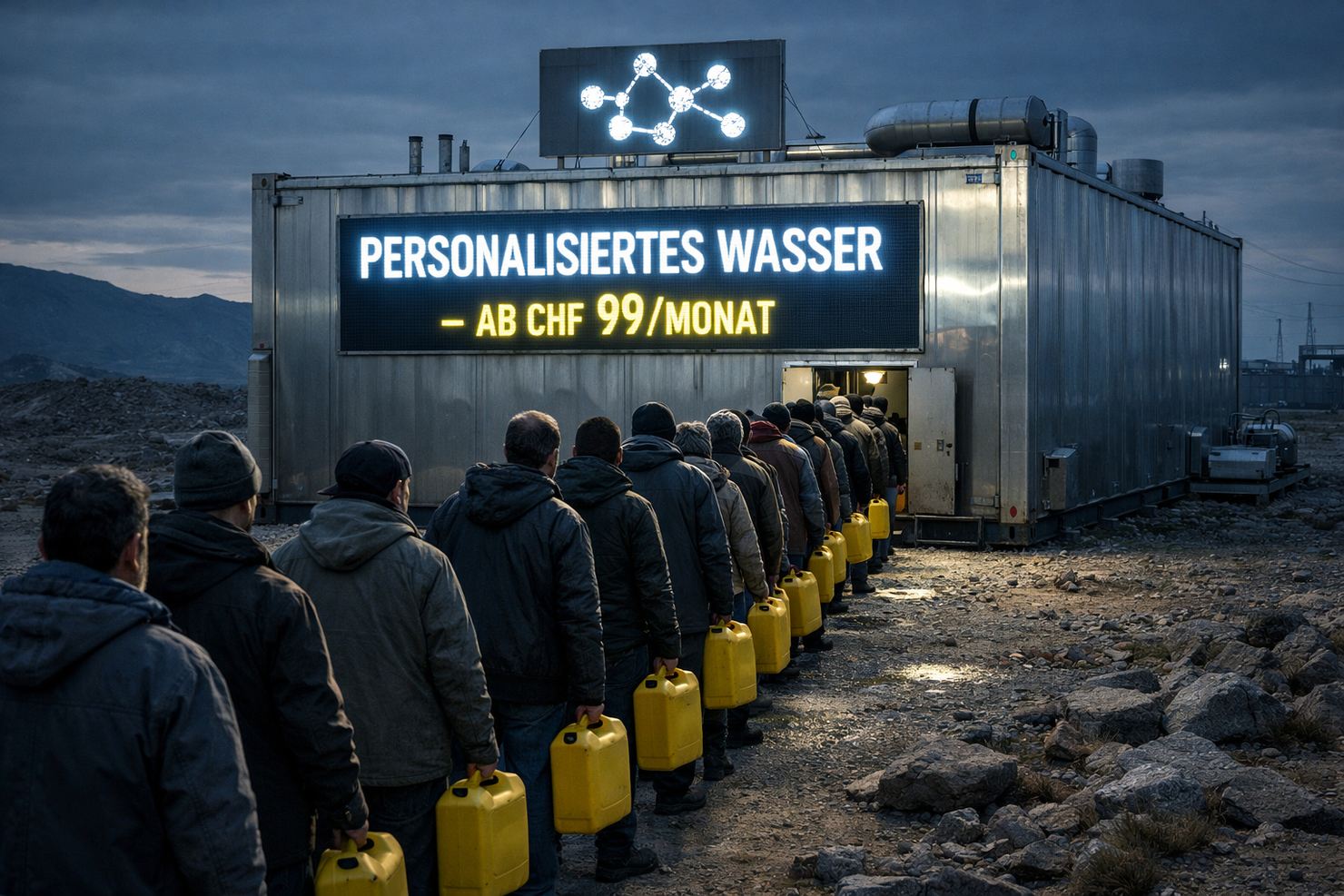
And the inventor isn't the only one who senses this gold rush. A competitor has already installed MOF water generators in Texas and the United Arab Emirates and is announcing further units. The desert air is thus being commercially parceled out. Where just moments ago there was nothing, a market is emerging – and the inventor himself speaks quite openly of "personalized water," just as households generate their own solar power. Sounds like freedom. But it also sounds like a world in which even the humidity of the atmosphere will soon become a business model with a subscription model.
The water is there, but the will is sold out.
What's remarkable isn't the machine itself. What's remarkable is that the solution exists, has been tested, works – and that the real obstacle is no longer technical, but human. "The science is there; what we need is the courage to scale these solutions," says the inventor during a field test. In other words: The capability is there, but the will is lacking. And it's precisely this lack of will that has caused all the well-intentioned UN goals to fail in recent decades – clean water for all by 2030, agreed upon, applauded, and ultimately missed.
Because the same species that pumps billions into share buybacks, defense budgets, and the next streaming platform can't find the means to deliver crates to regions where over a thousand children die every day from contaminated water. It's not that we couldn't. We simply choose to prioritize elsewhere and call that "complex geopolitical circumstances."
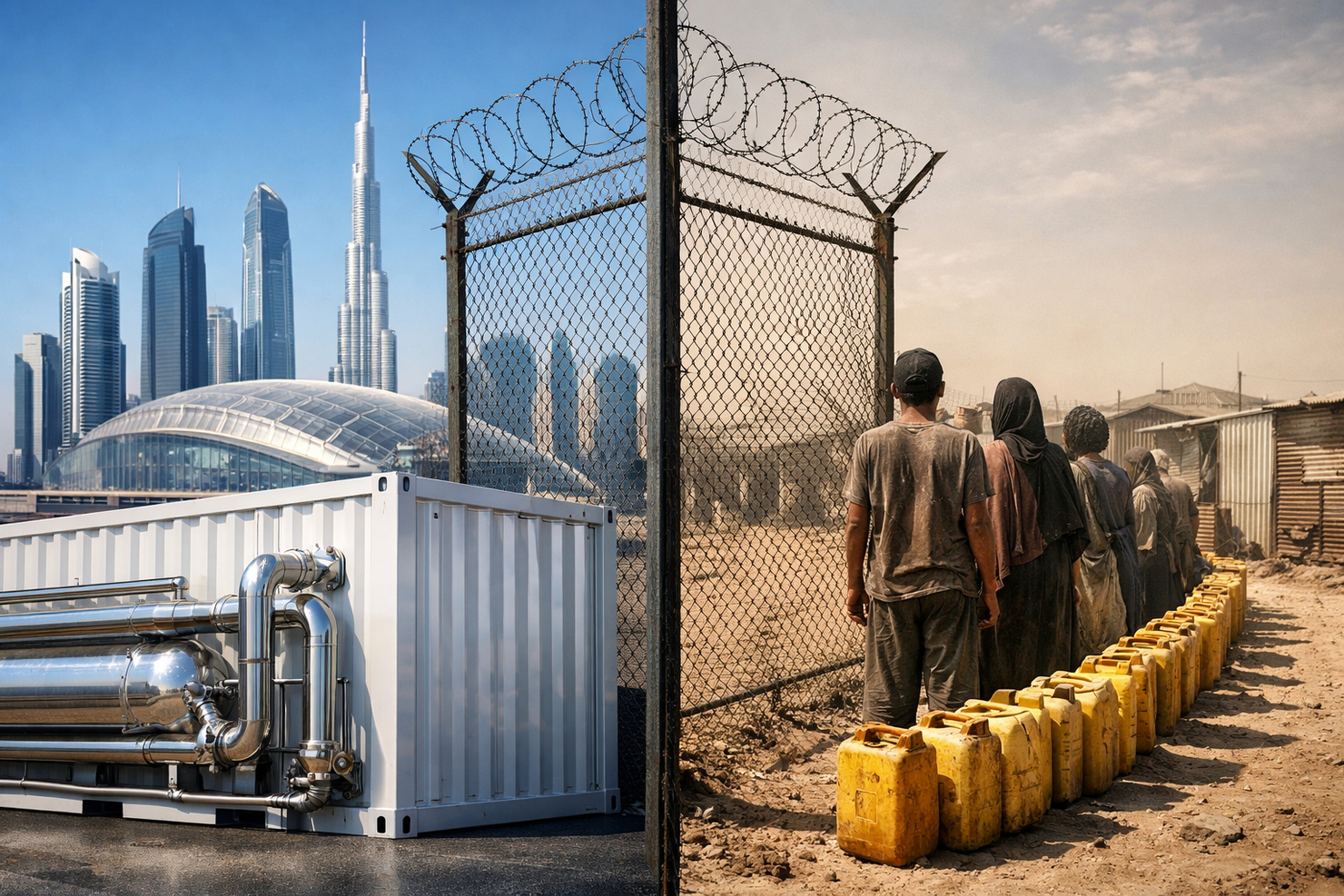
You don't have to be a cynic to guess how this story will continue. The containers will first be located where affluent customers are thirsty – in the air-conditioned desert metropolises of the Gulf States, next to the indoor ski slopes. The climate-vulnerable island nations and disaster areas, for which the device is supposedly designed, will only receive their units once a funding application has passed through seven committees and the pilot report has been evaluated.
In the end, an old truth remains, freshly distilled: Humankind is inventive enough to wrest water from the air, but too stingy to distribute it fairly. We have solved the desertification problem and preserved the distribution problem. A machine that transforms nothing into drinking water is a miracle—a humanity that hoards such miracles is a disgrace! And while professors wrest the last drops from the air, the next conference solemnly proclaims what it never intended to deliver in the first place, and calls this failure "sustainable water governance"!

 "Dravens Tales from the Crypt" has been enchanting for over 15 years with a tasteless mixture of humor, serious journalism - for current events and unbalanced reporting in the press politics - and zombies, garnished with lots of art, entertainment and punk rock. Draven has turned his hobby into a popular brand that cannot be classified.
My blog was never designed to spread news, let alone get political, but with current affairs I just can't help but capture information here that is otherwise censored on all other channels. I am aware that the design page may not seem "serious" to many in this regard, but I will not change this to please the "mainstream". Anyone who is open to non-state-compliant information sees the content and not the packaging. I've tried enough to provide people with information over the last 2 years, but quickly noticed that it never matters how it's "packaged", but what the other person's attitude towards it is. I don't want to put honey on anyone's mouth to meet expectations in any way, so I'll keep this design because hopefully at some point I'll be able to stop making these political statements, because it's not my goal to go on like this forever  I leave it up to everyone how they deal with it. However, you are welcome to simply copy and distribute the content, my blog has always been under the WTFPL license.
It's hard for me to describe what I'm actually doing here, DravensTales has become a culture blog, music blog, shock blog, tech blog, horror blog, fun blog, a blog about found items on the internet, internet bizarre, trash blog, art blog, water heater, zeitgeist blog over the years , Scrap blog and grab bag blog called. Everything that is right ... - and yet not. The main focus of the blog is contemporary art, in the broadest sense of the word.
To ensure the continued operation of this site, you are welcome to make a donation via credit card, PayPal, Google Pay, Apple Pay, or direct debit/bank account . Many thanks to all readers and supporters of this blog!








