
There is one unmistakable indicator that a measure has nothing to do with its stated purpose: it is called "child protection." Hardly any other term in the history of Western democracies has pushed through more freedom-restricting laws, legitimized more surveillance infrastructure, and silenced more critical voices than this one. And Ursula von der Leyen, the woman who transferred billions via text message with the Pfizer contract and was convicted by the European Court of Justice for a lack of transparency, has now dusted it off again.
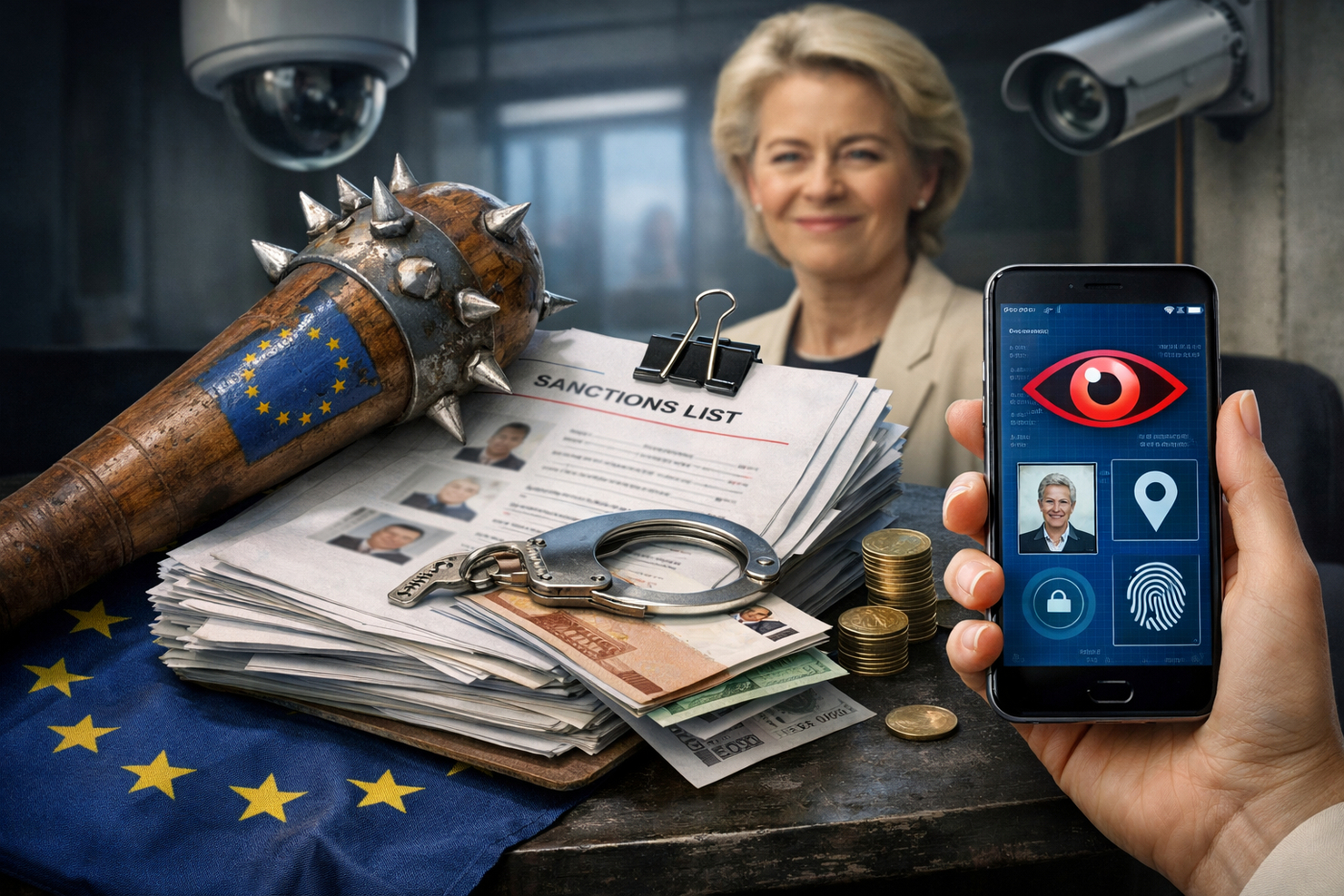
The new EU age verification app, which von der Leyen presented last week with the smug expression of a teacher who has just silenced a class, is to be implemented in all member states by the end of 2026. The concept: Every EU citizen who wants to use the internet must link their identity to a digital wallet. No ID, no access. The pretext: Young people must be protected from pornography. The reality: Whoever knows who you are also knows what you write.
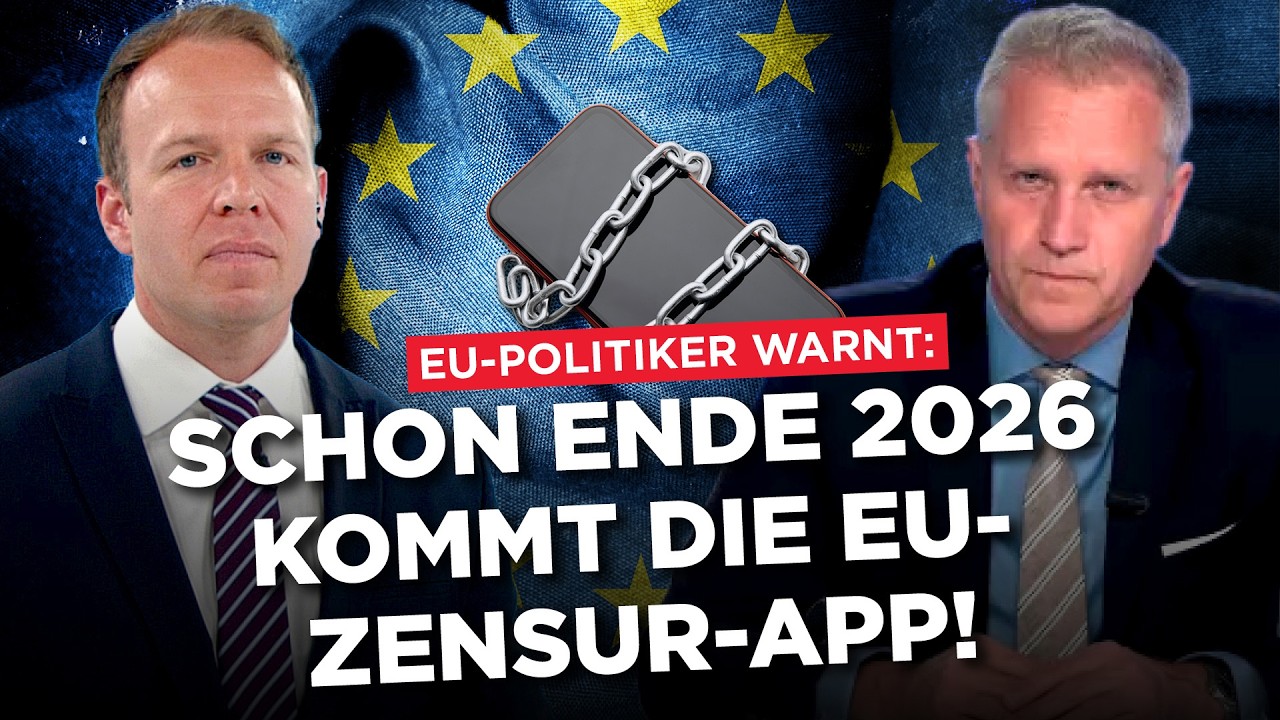
EU Parliamentarian Petr Bystron, reporting from the European Parliament in Brussels – aptly calling it "the lion's den" – sums it up perfectly: Linking personal identity to internet access is not step two of a censorship plan. It is step one. Step two follows automatically: Anyone who writes a critical comment and is identifiable can be tracked. This isn't paranoia. This is the logic of the system.
NGOs as experts, journalists as enemies
What is remarkable is how this system is being prepared. When experts on internet surveillance were invited to the EU committee, a representative from HateAid appeared – an NGO that is fed by the Soros ecosystem and whose main competence lies in disguising censorship demands with humanitarian rhetoric.
This is no coincidence. It's a deliberate strategy. The European Parliament isn't involved; it's manipulated. First, NGO campaigns run in mainstream media, then NGO representatives appear as "experts" in committees, and finally, members of parliament are brought into line. Wyssmann, from the Swiss context, is familiar with this pattern from the e-ID referendum. Brussels has scaled it up to an industrial level.
In parallel, the US Congress, under Jim Jordan, evaluated eleven years of communication between the European Commission and major tech companies – Meta, Twitter, YouTube. The result: systematic pressure and blackmail by the Commission to force the platforms to censor European users according to EU wishes. Two motions to address the issue in the European Parliament have already been rejected by the Commission. They want to sweep it under the rug. Transparency ends where personal responsibility begins.
Sanctions against one's own citizens: The new tool
But what truly reveals the nature of the system is the use of EU sanctions lists against its own citizens. Originally developed against Russian oligarchs, they are now used against journalists and critics who have committed no crime. The Swiss national Jacques Baud is one of the most prominent cases: no bank account, banned from working, barely able to feed himself. And all this without charges, without trial, without any legal basis.
German citizens are also affected. Imagine this: an EU member state under EU sanctions, within the EU, without a court ruling. No one can give these people orders or transfer money to them without committing a crime themselves. This isn't the rule of law with minor flaws. This is Potemkin villages disguised as legal technicalities.
The Nazi club as a universal tool
Those who haven't yet been silenced by sanctions are now feeling the effects of the second instrument: the reflexive Nazification of any critic. Bystron himself was fined €11,300 for a political collage – on the grounds that a photo of Angela Merkel waving, which he had used, constituted a Hitler salute. The same photo with which his lawyers had successfully fended off an earlier charge a year earlier. Bystron waves: Hitler salute. Merkel waves: Not a Hitler salute. Bystron uses a photo of Merkel waving: Hitler salute.
In Hamburg, fifty house searches took place in a single day – against people who had written Facebook posts. Fifty violations of the constitution in one day, in one city. House searches because of expressions of opinion for which the Basic Law explicitly provides protection. The Tagesschau (Germany's main evening news program) didn't report it.
What will be in place by the end of 2026?
The architecture is visible: an app that links identity and internet access; a DSA regime that forces platforms to censor; sanctions lists that silence critics without trial; prosecutors who prosecute memes as crimes; NGOs that advise parliaments; and, presiding over it all, a Commission President who, according to the former President of the European Council, is usurping powers that are not hers while neglecting what she is actually responsible for.
Pavel Durov, the head of Telegram, was lured to Paris under the pretext of a meeting with Macron and met at the airport by intelligence agents who tried to blackmail him into making Telegram content accessible and implementing censorship. Elon Musk was summoned to Paris. Anyone who doesn't submit to the Brussels censorship regime receives a visit.
The internet's most fundamental achievement – freedom and anonymity – is set to become history by the end of 2026. Not through a coup. Through an app. With child protection as an accompanying text.
Anyone who still believes this is about the children is welcome to explain why it's necessary to record the identities of 450 million adults for this purpose.
More for you:



 "Dravens Tales from the Crypt" has been enchanting for over 15 years with a tasteless mixture of humor, serious journalism - for current events and unbalanced reporting in the press politics - and zombies, garnished with lots of art, entertainment and punk rock. Draven has turned his hobby into a popular brand that cannot be classified.
My blog was never designed to spread news, let alone get political, but with current affairs I just can't help but capture information here that is otherwise censored on all other channels. I am aware that the design page may not seem "serious" to many in this regard, but I will not change this to please the "mainstream". Anyone who is open to non-state-compliant information sees the content and not the packaging. I've tried enough to provide people with information over the last 2 years, but quickly noticed that it never matters how it's "packaged", but what the other person's attitude towards it is. I don't want to put honey on anyone's mouth to meet expectations in any way, so I'll keep this design because hopefully at some point I'll be able to stop making these political statements, because it's not my goal to go on like this forever  I leave it up to everyone how they deal with it. However, you are welcome to simply copy and distribute the content, my blog has always been under the WTFPL license.
It's hard for me to describe what I'm actually doing here, DravensTales has become a culture blog, music blog, shock blog, tech blog, horror blog, fun blog, a blog about found items on the internet, internet bizarre, trash blog, art blog, water heater, zeitgeist blog over the years , Scrap blog and grab bag blog called. Everything that is right ... - and yet not. The main focus of the blog is contemporary art, in the broadest sense of the word.
To ensure the continued operation of this site, you are welcome to make a donation via credit card, PayPal, Google Pay, Apple Pay, or direct debit/bank account . Many thanks to all readers and supporters of this blog!








