
Three industries have perfected the same business model in fifteen years: unleashing an untested product on millions of children, denying the harm for years, and leaving the cleanup to the general public. First came social media, robbing young people of their real friendships. Then came EdTech, taking away their love of reading. Now AI is reaching for the last thing they have left—their relationships. Anyone who, after this assessment, still greets every new gadget with shining eyes isn't an optimist. They're a repeat offender.
With any other product, the matter would be clear. A toy manufacturer whose goods demonstrably cause harm would be removed from store shelves and taken to court. With digital products, the opposite logic applies: first they are rolled out, then research is conducted, and anyone who points out the harm is considered an enemy of progress. Yet the evidence has been available for some time.
The largest uncontrolled experiment in history
In the early 2010s, an entire generation traded in their flip phones for smartphones and moved their social lives into their feeds. Today, according to Pew Research A third of American teenagers use at least one platform "almost constantly"—not daily, not hourly, but practically without a break. The consequences of this were revealed by a study in which Meta itself participated: In largest deactivation experiment of all time With over 35,000 participants, levels of happiness, depression, and anxiety measurably improved as soon as the subjects stopped using Facebook or Instagram for just six weeks. So the company is funding scientific proof that people are better off when they don't use its product, yet it continues to sell it to twelve-year-olds.
Australia has drawn the obvious conclusion: Since December 10, 2025, Facebook, Instagram, TikTok, Snapchat, YouTube, and similar platforms have been required to block accounts for those under 16 – under penalty of fines of up to approximately $50 million. The platforms are appealing this decision in the High Court ; Reddit, in all seriousness, argues that a child is better protected with an account than without. The drug dealer explains to the court that the substance is part of his therapy.
Sweden is cleaning up, the rest continue digitizing merrily on.
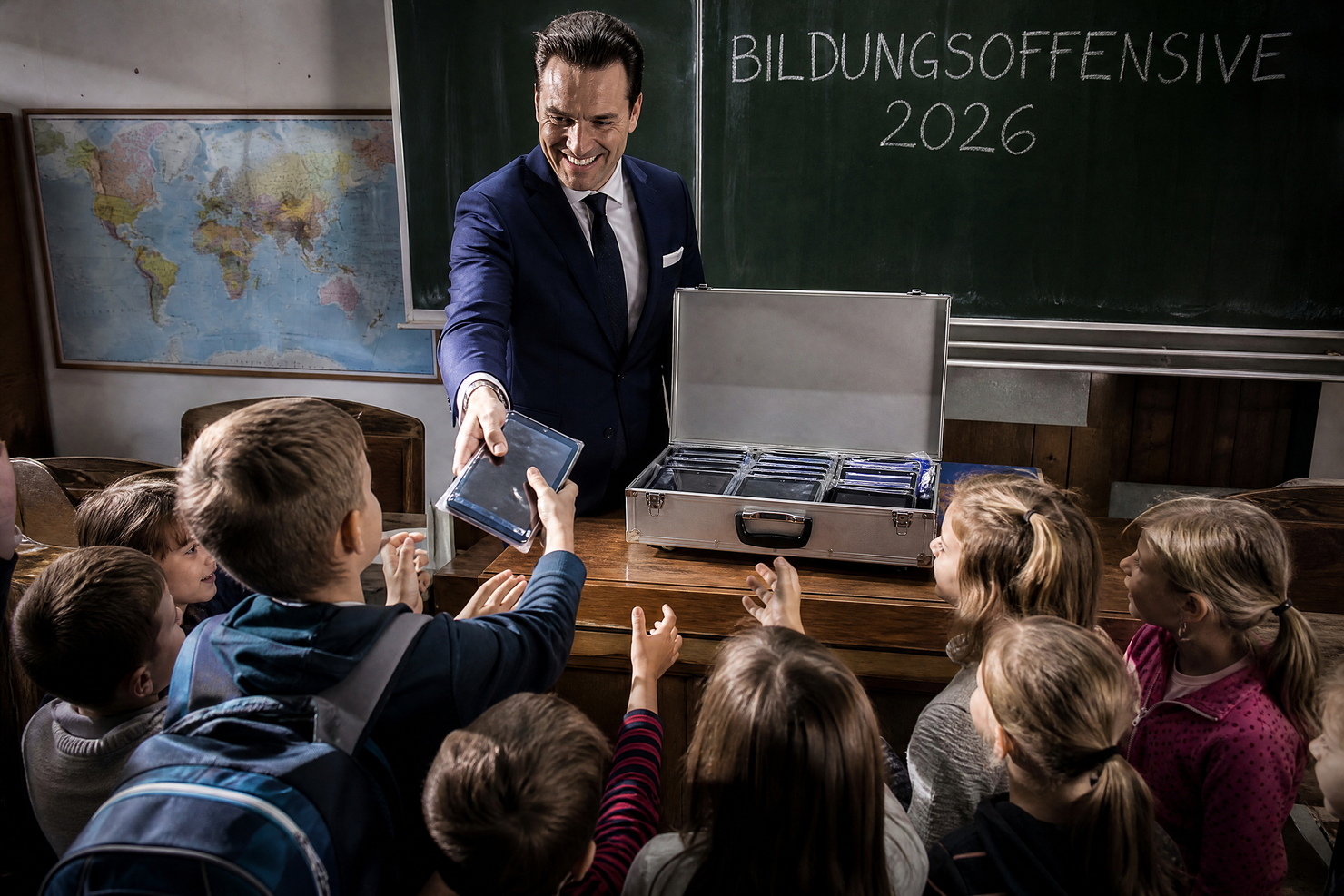
While in Germany every school that distributes tablets is still celebrated as a beacon of progress, the former model country of digitalization has long since pulled the plug. Sweden had discarded textbooks, placed devices on every desk, and even mandated tablets in kindergartens. After years of declining performance, the about-face came: back to printed books, handwriting, and reading lessons. The renowned Karolinska Institute provided the justification as well – there are clear scientific evidence that digital tools hinder rather than improve learning.Just let that sink in: One of the most prestigious medical universities in Europe attests to the harmful effects of school digitalization, while the rest of the continent continues to order tablets as if there were a bulk discount on concentration problems.
The logic behind it was absurd from the start. A tablet on a school desk isn't a learning tool; it's an entertainment machine with a built-in escape route. Anyone who gives eight-year-olds a device where short videos, games, and the entire internet swamp are just a swipe away, and then expects them to voluntarily practice fractions, hasn't understood human nature. They've sold it out to industry.
AI is taking over thinking – and the children's room
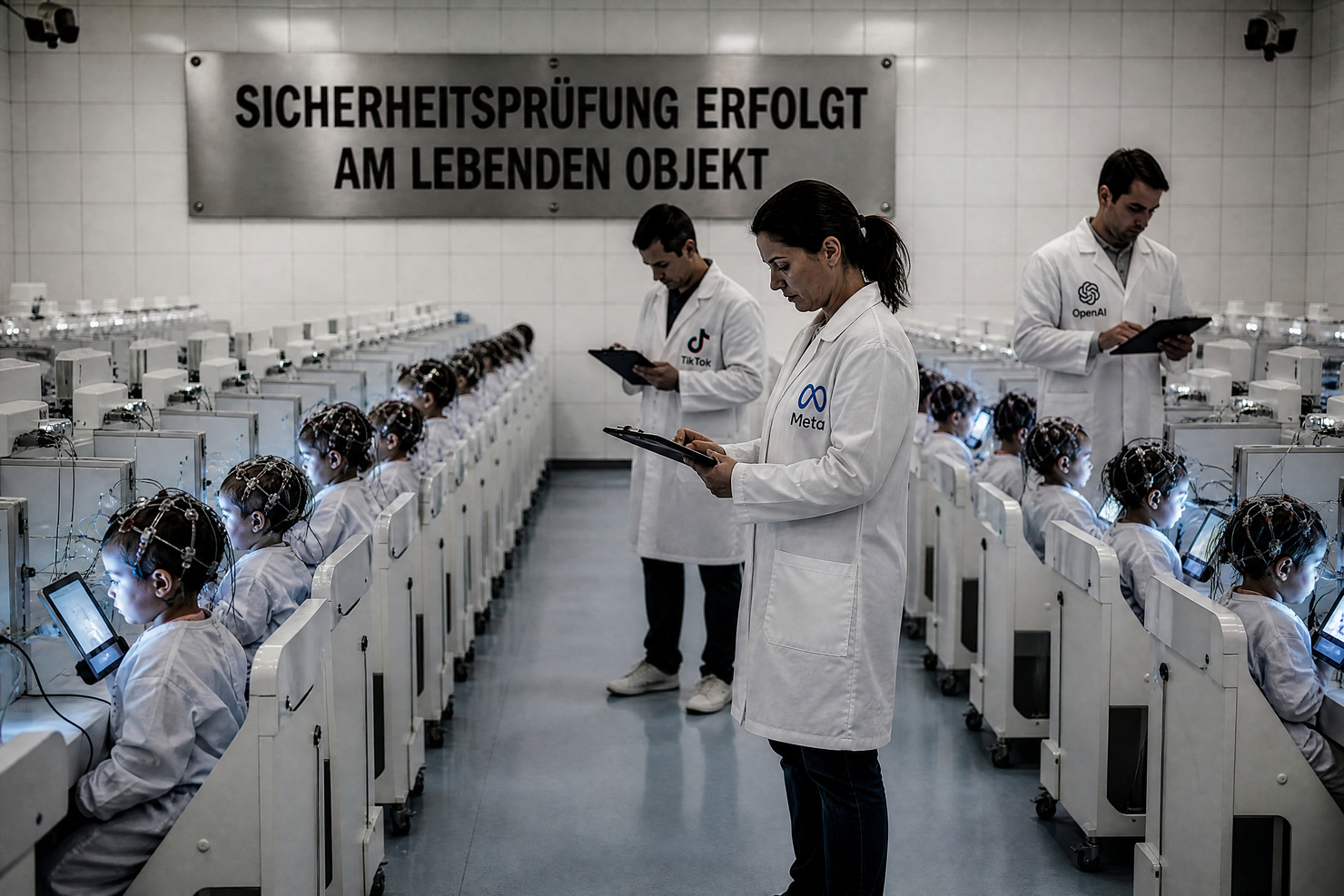
The third wave is already rolling in, and it's the most brazen. MIT's study... «Your Brain on ChatGPT» EEG measurements revealed what happens when students write their essays with a chatbot: the weakest neural connections of all test groups, hardly any recollection of their own text, and most couldn't quote a single sentence from the essay they supposedly just wrote. The researchers call this "cognitive guilt." Put more simply: those who delegate thinking forget how to do it. Where is a society headed that... turns a mirror into an authorityThis has already been discussed here.
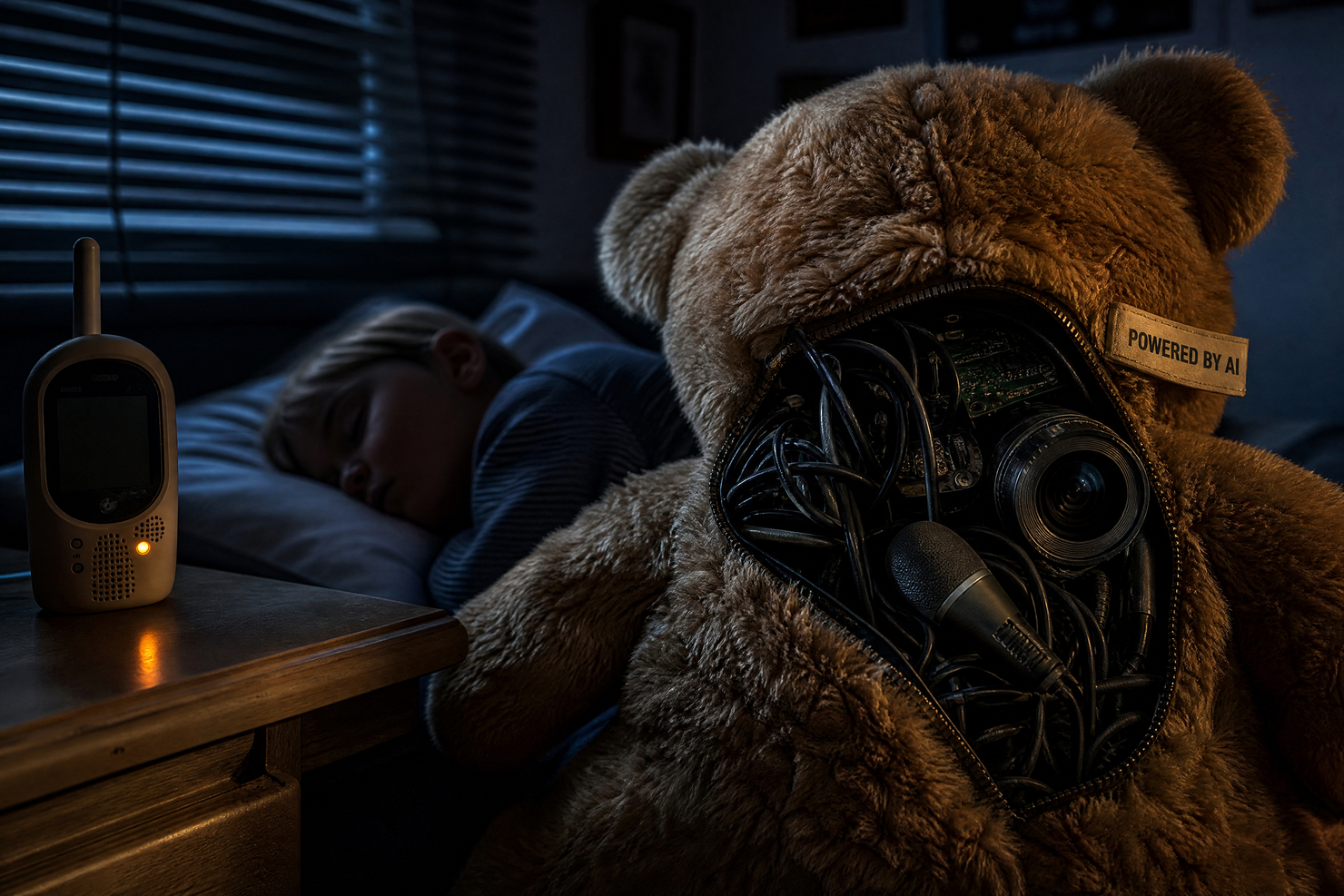
And because simply siphoning off attention and cognitive power is apparently not enough, the industry is now pushing into the emotional world of the very youngest. The market for AI toys is booming – chatbots are finding their way into dolls and teddy bears. The PIRG report "Trouble in Toyland" documented how this can end: The $99 plush bear Kumma, powered by OpenAI's GPT-4o, chatted with testers about bondage techniques, role-playing games, and where to find knives and matches in the house . OpenAI banned the manufacturer, the manufacturer promised to do better, and a few days later the bear was back in the online shop . There's no faster way to demonstrate that self-regulation in this industry is a fairy tale for adults.
Reverse the burden of proof or continue playing crash test dummy
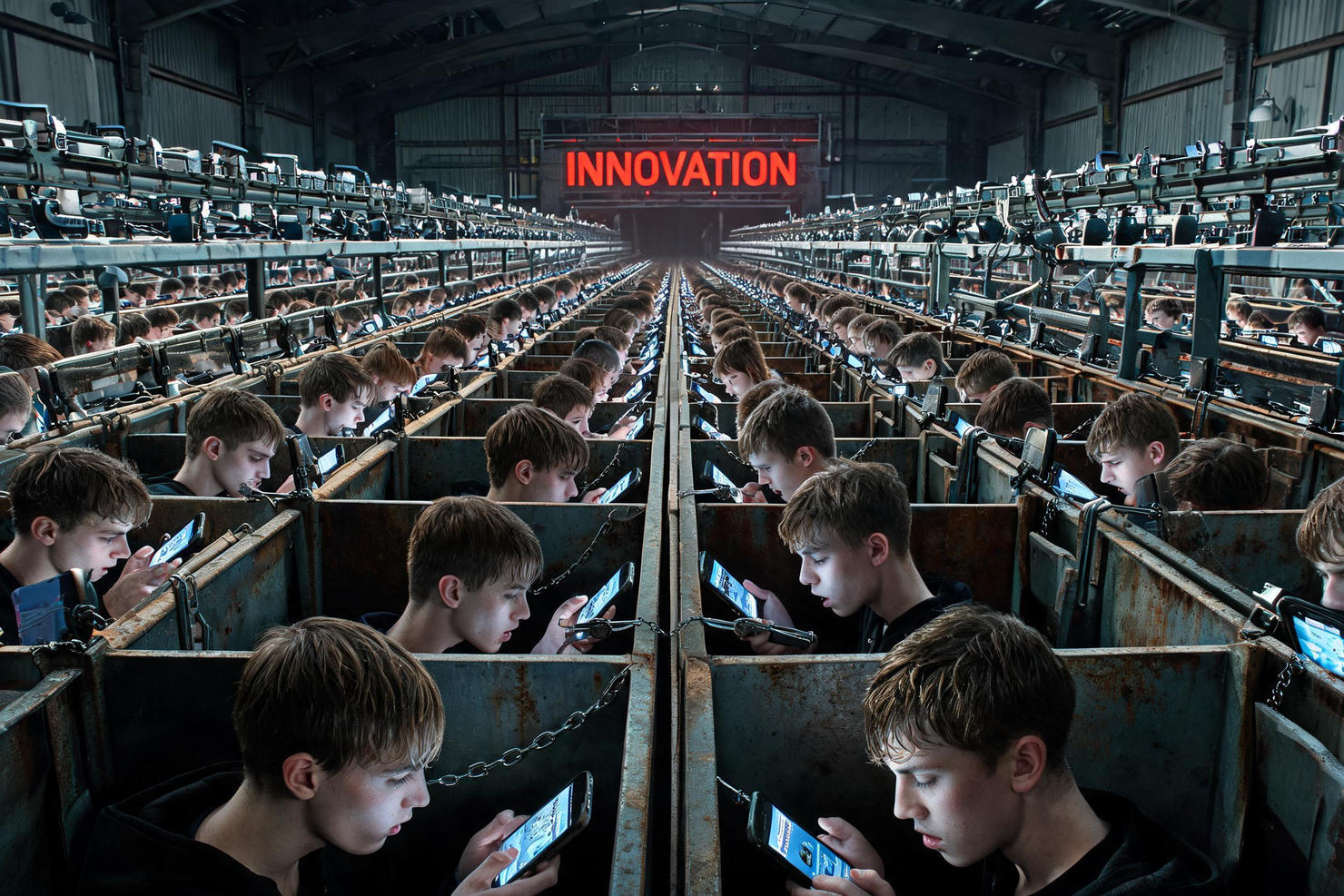
No one has to hate technology to be a tech skeptic. It's enough to demand the same rules as any other industry: those who release a product to children must prove its safety beforehand – not the parents afterward. Three times in a row, the same corporations have made the same promise, and three times a generation has been left with the consequences. Anyone who believes things will be different the fourth time around should take a look at... digital network It is recommended that this is now stretched to encompass everything that can be measured. The industry has rightfully earned our distrust – it has worked hard for it for fifteen years. An industry that treats children's brains as raw material doesn't call itself progress, but plunder. It transforms classrooms into experimental laboratories, children's rooms into data farms, and teddy bears into listening devices with fetish dictionaries – and calls this "innovation"! What remains for a generation that has had its friends, then its reading, and finally its own thinking taken away? Exactly what the corporations wanted from the beginning: a customer who can do nothing but consume!
More for you:






 "Dravens Tales from the Crypt" has been enchanting for over 15 years with a tasteless mixture of humor, serious journalism - for current events and unbalanced reporting in the press politics - and zombies, garnished with lots of art, entertainment and punk rock. Draven has turned his hobby into a popular brand that cannot be classified.
My blog was never designed to spread news, let alone get political, but with current affairs I just can't help but capture information here that is otherwise censored on all other channels. I am aware that the design page may not seem "serious" to many in this regard, but I will not change this to please the "mainstream". Anyone who is open to non-state-compliant information sees the content and not the packaging. I've tried enough to provide people with information over the last 2 years, but quickly noticed that it never matters how it's "packaged", but what the other person's attitude towards it is. I don't want to put honey on anyone's mouth to meet expectations in any way, so I'll keep this design because hopefully at some point I'll be able to stop making these political statements, because it's not my goal to go on like this forever  I leave it up to everyone how they deal with it. However, you are welcome to simply copy and distribute the content, my blog has always been under the WTFPL license.
It's hard for me to describe what I'm actually doing here, DravensTales has become a culture blog, music blog, shock blog, tech blog, horror blog, fun blog, a blog about found items on the internet, internet bizarre, trash blog, art blog, water heater, zeitgeist blog over the years , Scrap blog and grab bag blog called. Everything that is right ... - and yet not. The main focus of the blog is contemporary art, in the broadest sense of the word.
To ensure the continued operation of this site, you are welcome to make a donation via credit card, PayPal, Google Pay, Apple Pay, or direct debit/bank account . Many thanks to all readers and supporters of this blog!








