
There's a Swiss specialty that no other country masters quite so virtuously: ceremoniously proclaiming grand promises and then leaving the implementation to the level that was consulted last and is ultimately held accountable. The electronic identity card, marketed under the quaintly invented name Swiyu, is the latest prime example of this genre: grandly announced, technically shaky, already postponed twice, and ultimately met with nothing but a shrug of the shoulders.

A recent survey of around 700 municipalities – nearly a third of all 2100+ in Switzerland – reveals a picture that could politely be described as a damning indictment: Seven out of ten participating municipalities admit to simply not knowing enough to prepare for the transition. This is remarkable. Not because the municipalities are overwhelmed, but because they are precisely the entity that will ultimately be sitting across from citizens and explaining how this marvel of technology works.
The federal government delegates and calls it participation.
When asked about its obligation to provide information, the Federal Office of Justice refers to "Regular video conferences", in which "interested parties from all sectors" could participate. Translated into plain English, this means: Anyone who wants to know what's coming their way should piece it together themselves. The director of the municipal association dryly sums up the mood: They had expected us to be contacted earlier. Instead, there's a vacuum in which the lowest administrative level is puzzling over what technical and organizational measures are even necessary. This isn't leadership. This is leadership in the subjunctive mood.
Ironically, the Federal Office itself now admits that the planned December 2026 launch could once again be in jeopardy. Anyone familiar with the history of this project can only smile wearily: the first draft legislation was rejected at the ballot box in 2021, a new attempt was made, a new law was passed, a razor-thin "yes" vote of 50,39 percent was achieved in September 2025 , then the launch was postponed from summer to December 2026, and now there's another wavering start. In this bureaucratic world, deadlines are not considered binding commitments, but rather non-binding expressions of opinion.

If the security is only provided later
One might argue that a bit of bureaucratic chaos is the price of any digitalization. The problem runs deeper. The Swiss Federal Audit Office, the top auditors of the federal government, came to this conclusion in its Final reportthat key security components are still missing or underdeveloped. End-to-end encryption, the feature that prevents unauthorized access, was not fully implemented from the outset but is intended to be added later. For access by authorities and organizations, a simple login with username and password was sufficient for a time. For a government-issued ID card that is supposed to open a bank account online and check criminal records, this is about as reassuring as a safe filled with Japanese shoji screens.
The responsible authorities naturally don't entirely share this assessment and invoke the "agile approach," in which open issues are simply addressed step by step. In practice, agile means: we build the thing while we're already selling it and fix the security issues along the way. That might be acceptable for a weather app. But when it comes to the digital identity of eight million people, it's a promise of trust that no one has reciprocated.
The indelible memory
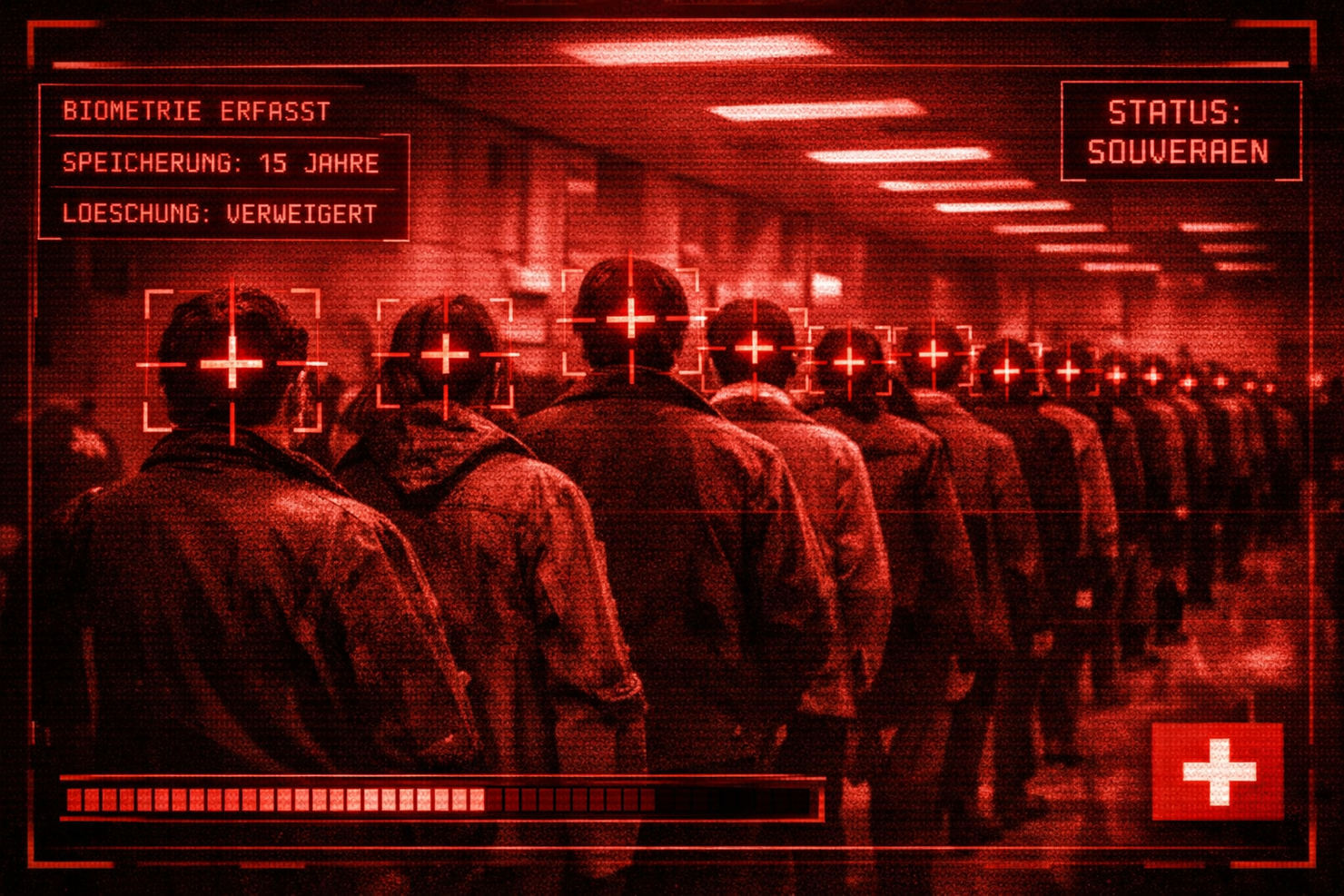
Things get really comfortable when you look at the data. The biometric information from the online verification – a facial video submitted to the federal government with the application – is stored for up to 15 yearsFive years beyond the expiration date of the e-ID, which is valid for a maximum of ten years. A deletion request? Not provided for. You can invalidate your e-ID at any time by deleting the app from your phone, but the stored facial video remains dutifully in a federally owned cloud until the deadline expires. The implementation of online verification went for up to 12,8 million Swiss francs to an IT company in western Switzerland, awarded for over eleven years. The ISO security certification of the data center, believe it or not, had only been granted verbally at the time of research.
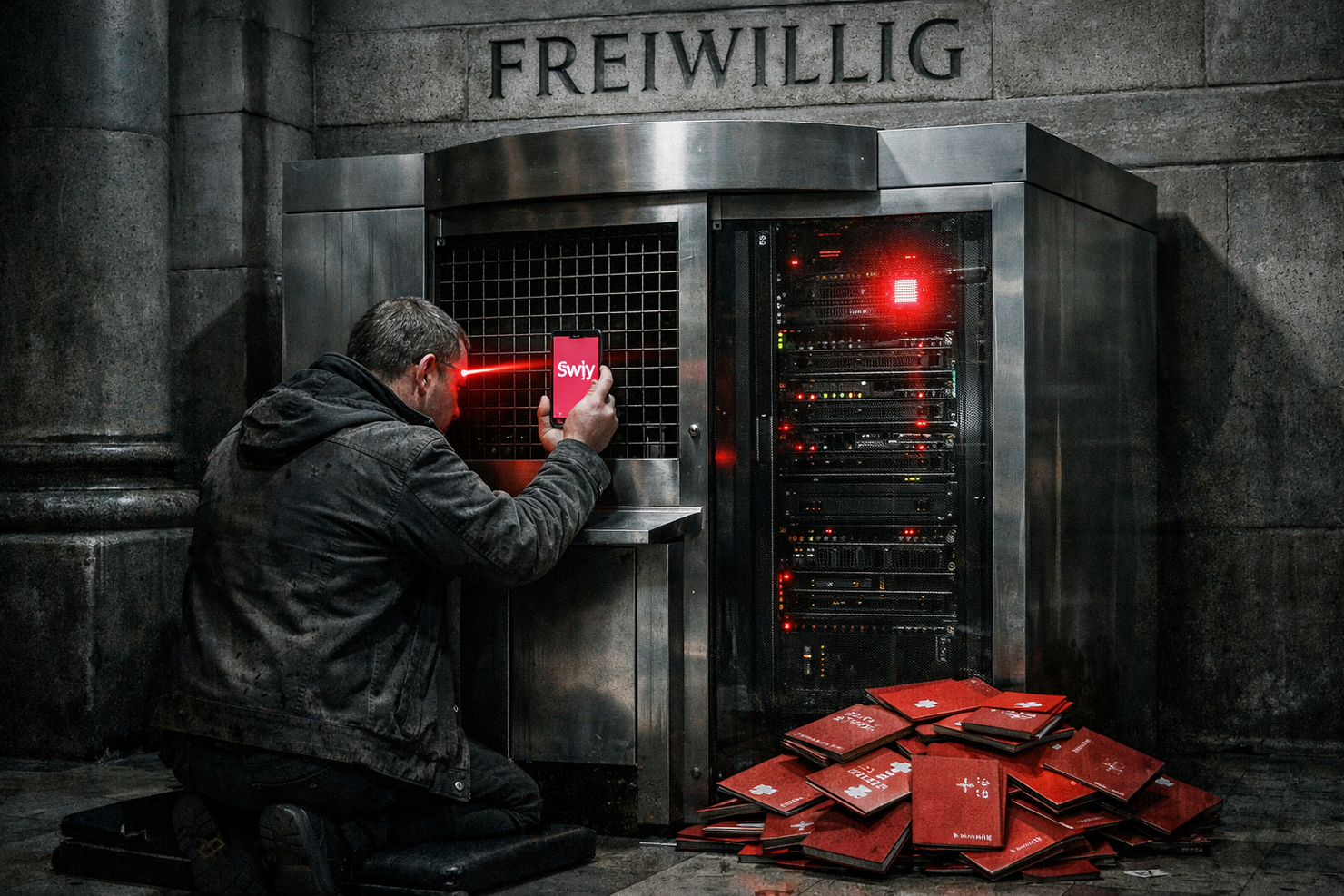
The fact that facial video identification is being made the central element adds a particular note. As early as 2022, the Chaos Computer Club demonstrated how such auto-verification systems can be deceived with manipulated videos and replays. The federal government's response to this vulnerability wasn't to abandon the procedure, but rather to extend the storage of the evidence even further. In other words, they didn't close the security gap; they simply installed a surveillance camera and extended the recording period to 15 years.
Failure is not inevitable, but rather the shrugging of the shoulders afterwards.
Anyone looking for a mole in the federal government won't have to dig long – the Vulnerability of authorities to leaks It's documented. And anyone who wants to know where this is all headed will find the logic. from owner to mere user This has been described long ago. The e-ID is technically not rocket science, it has been politically decided upon, and is desired by a majority, albeit grudgingly. What's missing is the simplest of all virtues: administrative discipline. A binding roadmap, clear responsibilities, a central office that answers questions instead of referring them to committees.
The disaster isn't inevitable because the project is too complicated. It's inevitable because no one at the top wants to lead, and no one at the bottom has complained that they wanted to assess their own needs first.
In the end, the federal government will announce a major project, delegate its implementation to the lowest levels of government, and then be genuinely surprised when criticism comes from precisely where the implementation needs to take place. They will hoard the biometric data of eight million people for 15 years in a cloud whose security seal was granted verbally – and call this "digital sovereignty"! And once the server recognizes every face, no one will ask who is actually allowed to view it – it's enough that they can!
More for you:






 "Dravens Tales from the Crypt" has been enchanting for over 15 years with a tasteless mixture of humor, serious journalism - for current events and unbalanced reporting in the press politics - and zombies, garnished with lots of art, entertainment and punk rock. Draven has turned his hobby into a popular brand that cannot be classified.
My blog was never designed to spread news, let alone get political, but with current affairs I just can't help but capture information here that is otherwise censored on all other channels. I am aware that the design page may not seem "serious" to many in this regard, but I will not change this to please the "mainstream". Anyone who is open to non-state-compliant information sees the content and not the packaging. I've tried enough to provide people with information over the last 2 years, but quickly noticed that it never matters how it's "packaged", but what the other person's attitude towards it is. I don't want to put honey on anyone's mouth to meet expectations in any way, so I'll keep this design because hopefully at some point I'll be able to stop making these political statements, because it's not my goal to go on like this forever  I leave it up to everyone how they deal with it. However, you are welcome to simply copy and distribute the content, my blog has always been under the WTFPL license.
It's hard for me to describe what I'm actually doing here, DravensTales has become a culture blog, music blog, shock blog, tech blog, horror blog, fun blog, a blog about found items on the internet, internet bizarre, trash blog, art blog, water heater, zeitgeist blog over the years , Scrap blog and grab bag blog called. Everything that is right ... - and yet not. The main focus of the blog is contemporary art, in the broadest sense of the word.
To ensure the continued operation of this site, you are welcome to make a donation via credit card, PayPal, Google Pay, Apple Pay, or direct debit/bank account . Many thanks to all readers and supporters of this blog!








