
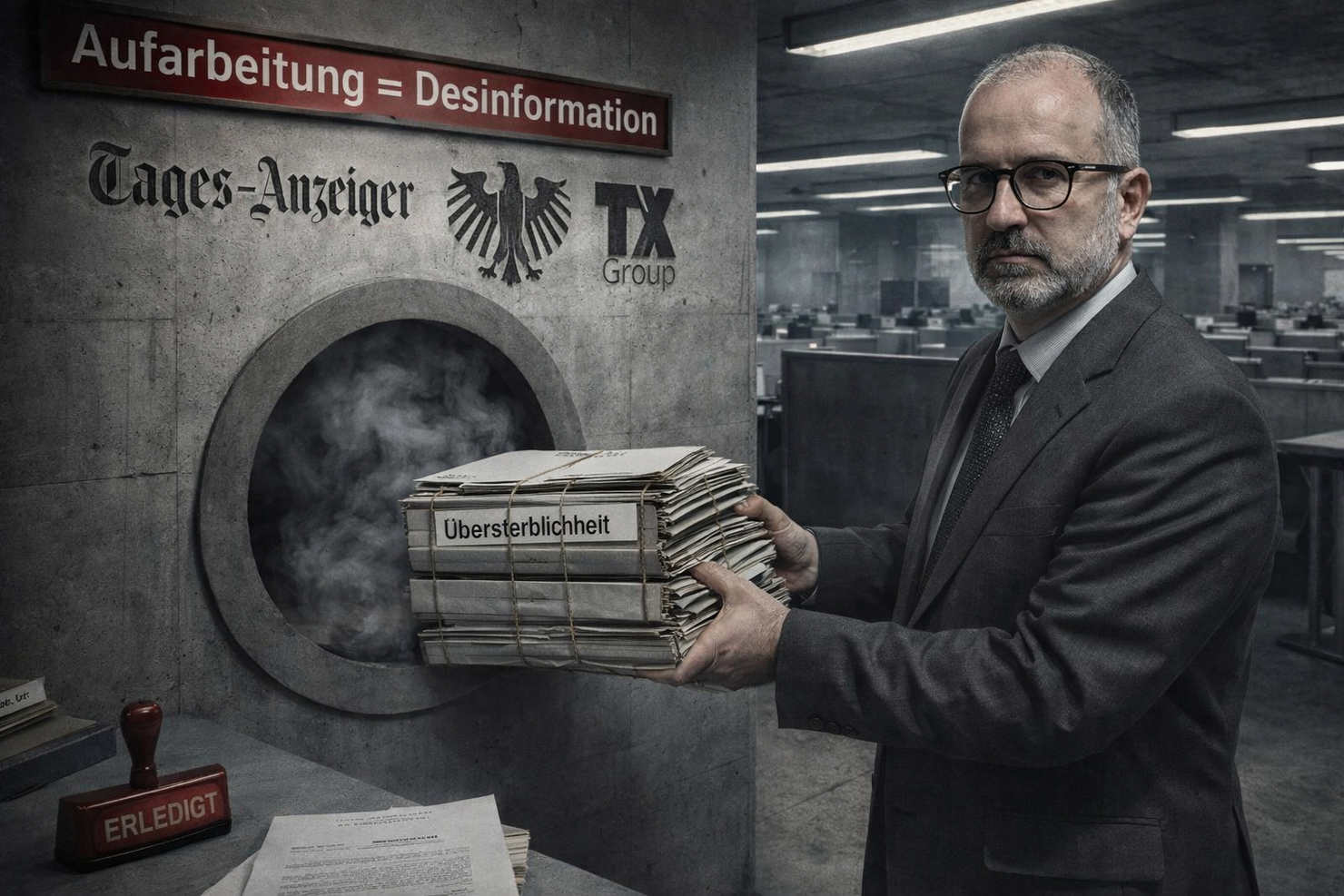
Felix Straumann has seen the documentary "The Hype"—and promptly gasps for air. The deputy head of science and medicine at the TX Group isn't offering a film review, but rather a clinically pure demonstration of how the press and politicians react to the one word they fear more than any new coronavirus variant—analysis.
That's the real point of his text. Anyone who reacts to a critical documentary with such irritation, thin skin, and hyperventilation doesn't prove that the film is bad. They prove that the film has hit a nerve. And that nerve isn't the facts. It's responsibility.
The usual suspects are never enough
Straumann dutifully lists the well-known critics – Beda Stadler, Pietro Vernazza, Konstantin Beck, Wolfgang Wodarg, John Ioannidis – and dismisses them with a single wave of his hand, relegating them to the realm of the disreputable. Contradictory mask recommendations, systematically false-positive PCR tests, dramatically inaccurate predictions, embarrassing false statements by individual figures: all supposedly biased and simplistic. He fails to notice that these are precisely the same points raised by critical voices throughout the entire pandemic – only to be labeled conspiracy theorists back then. Or perhaps he doesn't want him to. For Straumann, there is only one correct way to analyze the pandemic – namely, none at all. He only recognizes analysis if it arrives at the same conclusion as the dogma it is meant to address. What a serious engagement with the film would look like... I already described this in the post about the film..
The sacred academic blessing
He particularly gleefully attacks the journalists Catherine Riva and Serena Tinari. He finds it bizarre that a linguist and a woman without a university degree dare to criticize computer models and epidemiologists. As if a medical degree were the only ticket to critical thinking. Whether someone is right doesn't depend on their degree, but on their argument—every first-year student understands that, except apparently a science journalist. Clearly, a title counts for more than an argument, at least for those who have run out of arguments. The hypocrisy is breathtaking: The same author who has been passing moral high ground against others for years is now outraged that someone without the hallowed halls of academic glory takes a well-founded stance. It's self-evident who is arguing so bizarrely here.
A critique without a single piece of evidence
What is truly remarkable is what is missing from Straumann's verdict. declares the film to be not fact-based —and offers virtually no factual support for his claim. He doesn't point out which statement in the film is demonstrably false. He cites no source that contradicts it. He doesn't identify any omitted information. Instead, he criticizes the choice of protagonists and the perspective—precisely what the director explicitly stated he wanted: to give a voice to those who were underrepresented during the pandemic. He leaves the serious accusation that epidemiologists Christian Althaus and Richard Neher are being "veritable defamation" completely unsubstantiated. A concrete example? None.
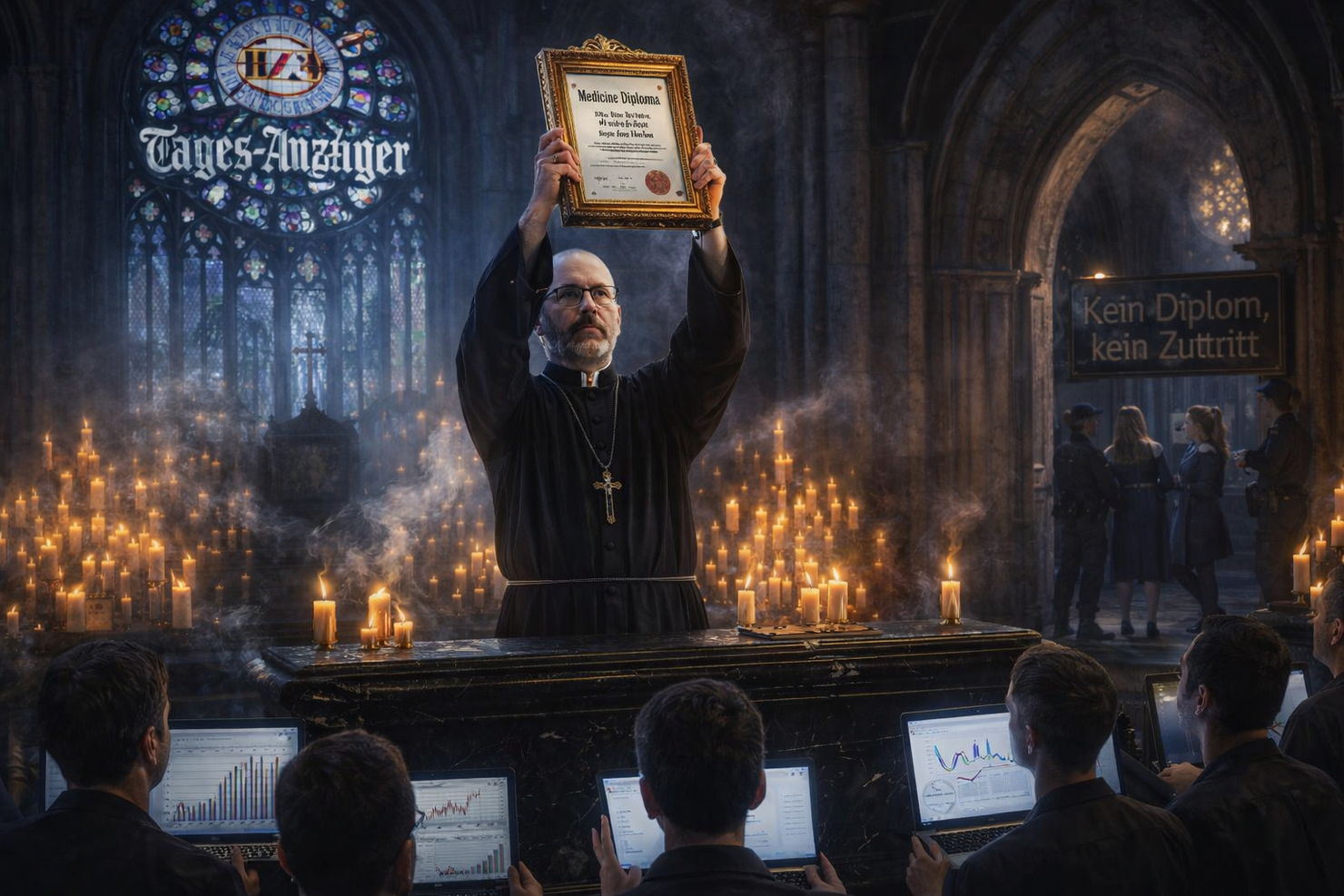
And he doesn't touch on the core question at all: Was the societal, media, and political reaction to Covid-19 excessive? Excess mortality, hospitalizations, risk groups, collateral damage from the measures, the cost-benefit ratio of individual interventions, international comparisons – none of this is mentioned. Anyone wanting to recalculate the figures presented by the model prophets can find them elsewhere . They won't find any of it in Straumann's work. He demonstrates that he considers the film one-sided. He provides no evidence whatsoever that its central theses are wrong. This isn't film criticism. This is an investigation – against the critic.
The reckoning that nobody wants
This is precisely the crux of the matter, so beautifully exposed by Straumann's hyperventilation. A genuine reckoning wouldn't stop at a few misguided model calculations. It would ask why critics were summarily dismissed as cranks, why dissenting studies disappeared, why mask mandates, school closures, and vaccination pressures were never objectively evaluated. It would target the newsrooms that branded any doubt a threat to public health. And it would target those politicians who abolished fundamental rights with the stroke of a pen and now prefer to remember nothing at all. No wonder, then, that a science editor, of all people, gasps for air as soon as someone focuses a camera on those years. Those who played along don't want an endgame. They want to be forgotten.
Why the gasping
The entire text follows the same old pattern: instead of engaging with the content, the aim is to ridicule the film and its protagonists with smug disparagement. No counterarguments, no new insights, no depth – just the same old tired phrases from back then, this time presented as media scaremongering by someone who accuses others of this very same scaremongering. The reason is banal. An honest reckoning would be the only thing the press and politicians couldn't survive, because they weren't just on the sidelines, they were right in the thick of it. Anyone who supported the narrative for years can't possibly want an investigation that asks who knew what and when, and why no one contradicted it. So, instead of refuting the film, the messenger is silenced.
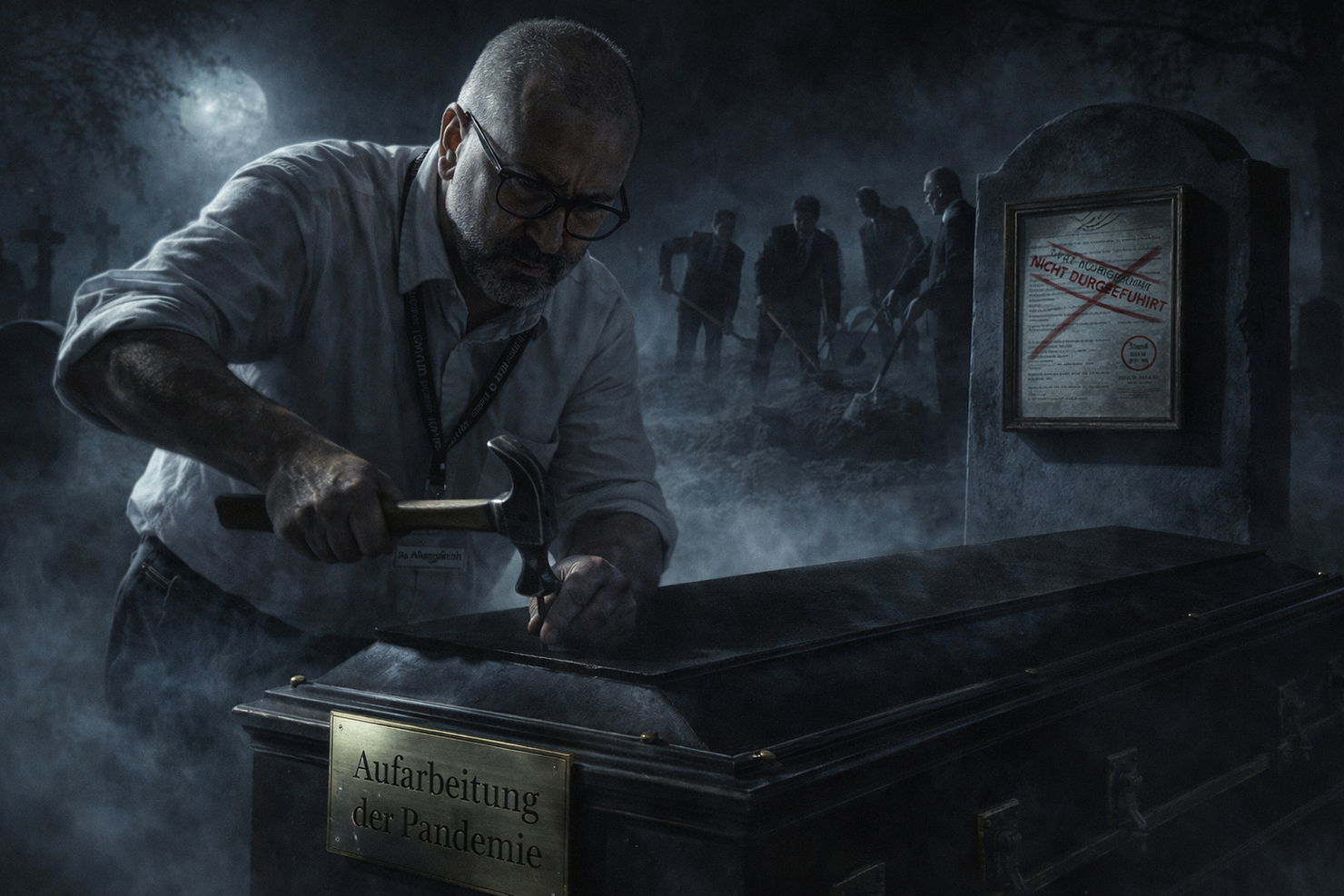
What remains is a sincere thank you to Felix Straumann for the best free publicity "The Hype" could have received – his superficial review piqued more people's interest in the film than any poster ever could. What can we learn from this? That a film review without a single refuted fact reveals more about its author's fear than about the film itself. That for the press and politicians, dealing with the pandemic isn't an open chapter, but a nailed-shut coffin. That dissenting voices are no longer refuted, but silenced – and this is called "serious journalism"! Anyone who fears a documentary film this much has already passed judgment on themselves!
More for you:





 "Dravens Tales from the Crypt" has been enchanting for over 15 years with a tasteless mixture of humor, serious journalism - for current events and unbalanced reporting in the press politics - and zombies, garnished with lots of art, entertainment and punk rock. Draven has turned his hobby into a popular brand that cannot be classified.
My blog was never designed to spread news, let alone get political, but with current affairs I just can't help but capture information here that is otherwise censored on all other channels. I am aware that the design page may not seem "serious" to many in this regard, but I will not change this to please the "mainstream". Anyone who is open to non-state-compliant information sees the content and not the packaging. I've tried enough to provide people with information over the last 2 years, but quickly noticed that it never matters how it's "packaged", but what the other person's attitude towards it is. I don't want to put honey on anyone's mouth to meet expectations in any way, so I'll keep this design because hopefully at some point I'll be able to stop making these political statements, because it's not my goal to go on like this forever  I leave it up to everyone how they deal with it. However, you are welcome to simply copy and distribute the content, my blog has always been under the WTFPL license.
It's hard for me to describe what I'm actually doing here, DravensTales has become a culture blog, music blog, shock blog, tech blog, horror blog, fun blog, a blog about found items on the internet, internet bizarre, trash blog, art blog, water heater, zeitgeist blog over the years , Scrap blog and grab bag blog called. Everything that is right ... - and yet not. The main focus of the blog is contemporary art, in the broadest sense of the word.
To ensure the continued operation of this site, you are welcome to make a donation via credit card, PayPal, Google Pay, Apple Pay, or direct debit/bank account . Many thanks to all readers and supporters of this blog!








