
There are careers that seem like something out of a textbook on systemic immortality. No matter what happens, no matter what decisions are made, no matter what the consequences are. Some people don't fall. They rise. Lukas Bruhin is one such person.
The man who materialized from the administrative fog at the beginning of 2020 and suddenly became Switzerland's top pandemic manager. Not through a democratic process, not through a transparent selection, but elegantly bypassing the pandemic commission that was actually responsible. An administrative back door, through which one apparently gains power faster than through any official entrance.
Under his supervision, task forces, studies, billion-dollar contracts, and, of course, the omnipresent certainty that there was no alternative were created. Science was no longer questioned, but proclaimed. Measures were not discussed, but executed. And the press? It was not an observer. It was an amplifier.
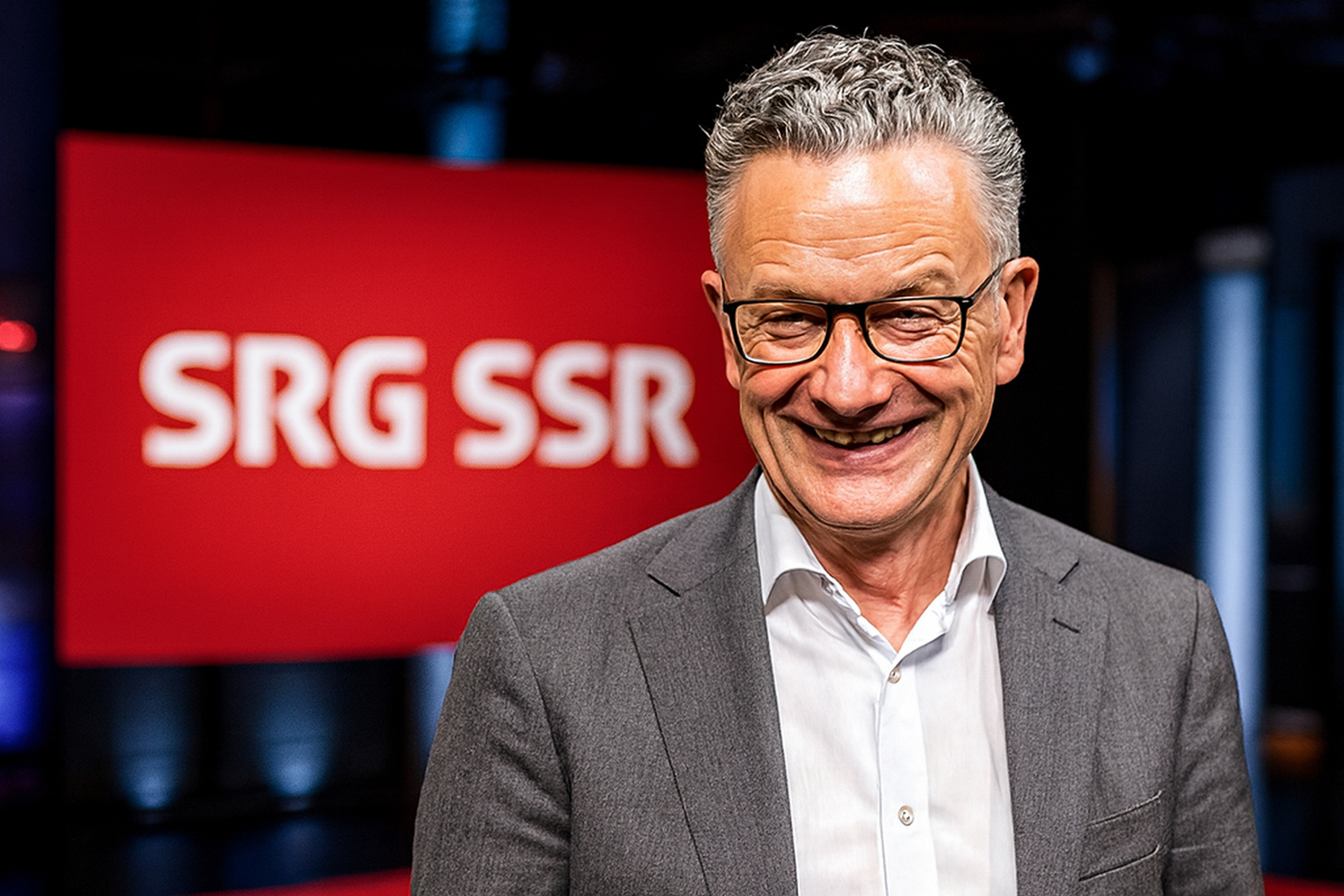
And now, years later, this very same man sits on the board of directors of the SRG. That's not irony. That's systemic logic.
For who would be better suited to oversee the media's handling of the pandemic than someone who helped shape its operational architecture? Who could provide a more credible account of what happened than someone who personally decided what was allowed to happen? It's as if the architect of a building were appointed head of damage analysis after its collapse.
During the pandemic, the public became acquainted with a new form of journalism. A journalism that no longer questioned, but confirmed. That no longer verified, but disseminated. That no longer monitored, but synchronized. Critical voices were not refuted, but marginalized. Doubts were not discussed, but delegitimized. Questions were not answered, but classified as threats.
The press became the moral accompaniment to political decisions. And now, one of the key figures of that era sits on the board of directors of the very institution that, back then, was instrumental in ensuring that official reality was seamlessly transmitted into people's living rooms. It's a remarkably closed circle.
What's particularly interesting is the elegance with which responsibilities became blurred. External law firms reviewed licensing documents. Institutes commissioned evaluations of their own measures. Contracts were signed whose scale astonished even seasoned observers. All in the name of urgency. Urgency is the most powerful argument in the history of power. It suspends doubt. It accelerates decisions. It neutralizes resistance. And the press played its part perfectly.
Today, in 2026, the official historical narrative begins. The pandemic is being categorized. Analyzed. Explained. And coincidentally, those very people who defined the reality being reported back then now occupy key positions. The SRG (Swiss Broadcasting Corporation) speaks of the future. Of trust. Of transformation.
But trust is a fragile thing. Especially when those who once made the decisions now help shape the institutions that mediate their evaluation. This creates the impression of a system that protects itself. Not through open defense, but through structural continuity. The same names. The same networks. The same voices.
The press, which once covered the measures, now covers their memory. And memory is malleable. Not through outright lies, but through selection, emphasis, and omission.
In the end, it's not the truth that remains. What remains is the version that survives – and those who tell it…
More for you:






 "Dravens Tales from the Crypt" has been enchanting for over 15 years with a tasteless mixture of humor, serious journalism - for current events and unbalanced reporting in the press politics - and zombies, garnished with lots of art, entertainment and punk rock. Draven has turned his hobby into a popular brand that cannot be classified.
My blog was never designed to spread news, let alone get political, but with current affairs I just can't help but capture information here that is otherwise censored on all other channels. I am aware that the design page may not seem "serious" to many in this regard, but I will not change this to please the "mainstream". Anyone who is open to non-state-compliant information sees the content and not the packaging. I've tried enough to provide people with information over the last 2 years, but quickly noticed that it never matters how it's "packaged", but what the other person's attitude towards it is. I don't want to put honey on anyone's mouth to meet expectations in any way, so I'll keep this design because hopefully at some point I'll be able to stop making these political statements, because it's not my goal to go on like this forever  I leave it up to everyone how they deal with it. However, you are welcome to simply copy and distribute the content, my blog has always been under the WTFPL license.
It's hard for me to describe what I'm actually doing here, DravensTales has become a culture blog, music blog, shock blog, tech blog, horror blog, fun blog, a blog about found items on the internet, internet bizarre, trash blog, art blog, water heater, zeitgeist blog over the years , Scrap blog and grab bag blog called. Everything that is right ... - and yet not. The main focus of the blog is contemporary art, in the broadest sense of the word.
To ensure the continued operation of this site, you are welcome to make a donation via credit card, PayPal, Google Pay, Apple Pay, or direct debit/bank account . Many thanks to all readers and supporters of this blog!








