
There are companies that sell dreams. There are companies that sell death. And then there is that rare breed that offers both in the same brochure and ennobles the double pack with the industry's most delightful euphemism: "dual-use".
Destinus, founded in 2021 in Payerne, Vaud , initially set out with a vision that practically begs to be made into a movie: a hypersonic aircraft for 400 passengers, Mach 5, circumnavigating half the globe in twelve hours. Breakfast in Zurich, dinner in Sydney, with a bit of hydrogen technology and a whole lot of futuristic hype in between. Four years later, the same company is manufacturing long-range drones and cruise missiles on an industrial scale, their sole purpose being to crash into something. From passenger jet to warhead in record time – now that's what you call disruption.
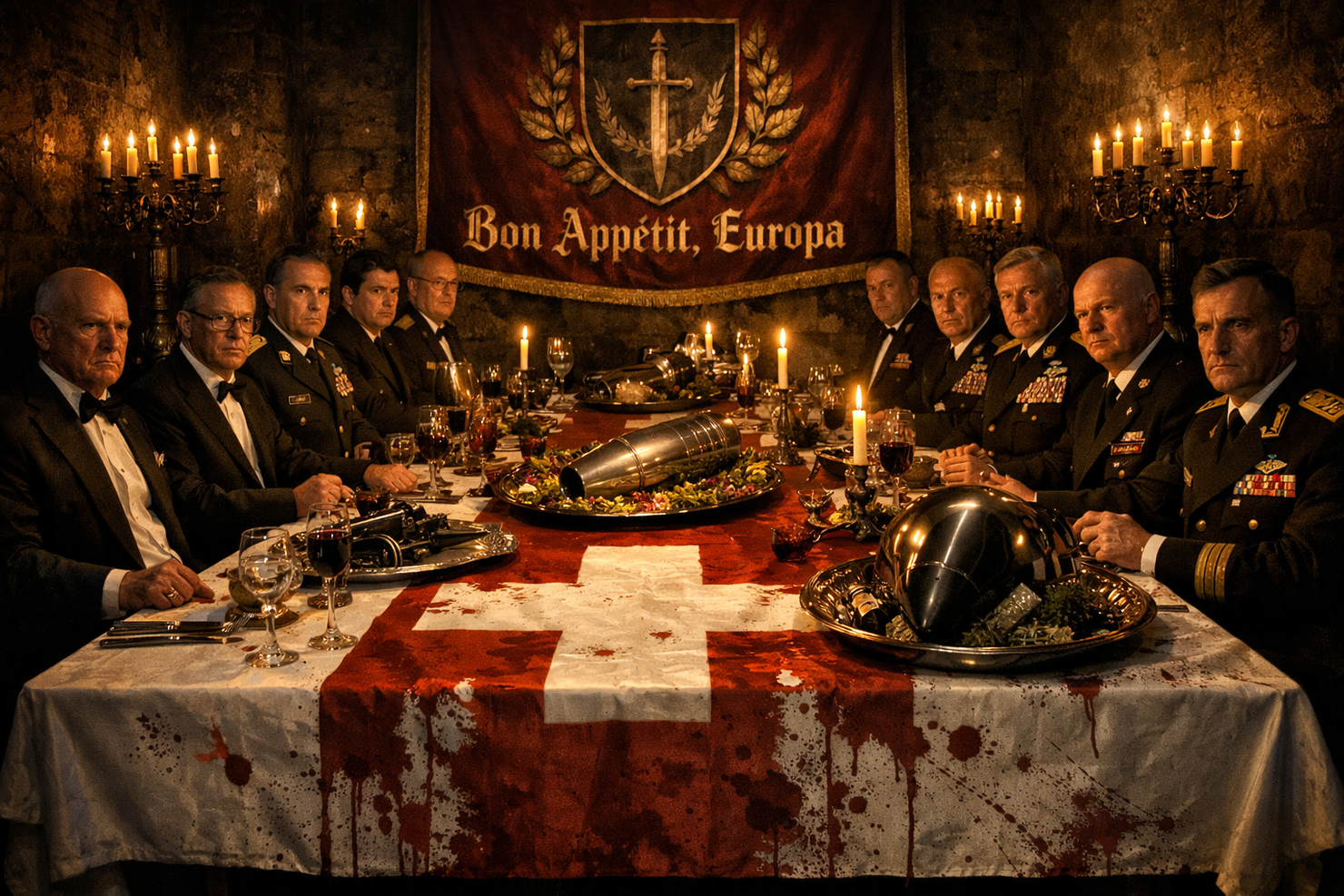
The civilian fig leaf
Officially, Destinus remains a purely technology company: propulsion technology, cryogenic liquid hydrogen, and the aviation of the future. Not a word about combat drones, not a peep about warheads. The French business magazine "Challenges" compared the company to Janus, the two-faced Roman god – one face dedicated to marketing, the other to business. The civilian hypersonic venture is the showcase; behind it lies the real cash register. The «Lord» drones have been delivered since 2023. With a range of up to 2000 kilometers, these warheads were initially sent under strict secrecy, sometimes only assembled at the destination to ensure that no telltale origin label remained on the final product. "Dual-use" was not an oversight, but a deliberate method: as long as a warhead carrier could theoretically also deliver packages, any questions of responsibility could be conveniently left at the door. They built a killing machine and pretended to be dealing in train tickets.
Morality is a matter of location
This is where it gets educational. Because founders Mikhail Kokorich With enviable candor, he demonstrates how the conscience of the arms industry actually operates: it's guided by the export license. Swiss neutrality makes exports difficult, he let it be known – therefore, unpleasant. Germany is too restrictive – therefore unusable. France grants licenses more readily – therefore, charming. At the end of 2024, the headquarters promptly moved to the Netherlands, explicitly to circumvent the troublesome Swiss arms export regulations. Production is already spread across Munich, Madrid, and Hengelo, depending on where the authorities are least likely to look closely. This isn't location policy; it's arbitrage based on conscience. In 2024, Bern dutifully opened proceedings for alleged violations of neutrality and export law, the effect of which even sympathetic observers consider symbolic. In other words: they reprimand with one hand and wave it through with the other.
Scaling until the doctor arrives
Anyone who considers this the seedy side of the industry is seriously underestimating the ambition involved. In April of this year, they announced... Rheinmetall and Destinus the weddingA joint venture, 51 to 49 shares, based in Unterlüss, Lower Saxony, with a name as subtle as a mortar blast – «Rheinmetall Destinus Strike Systems». The company plans to manufacture cruise missiles and ballistic missile artillery, destined for the NATO market and a "broad international market," as the press release vaguely states.
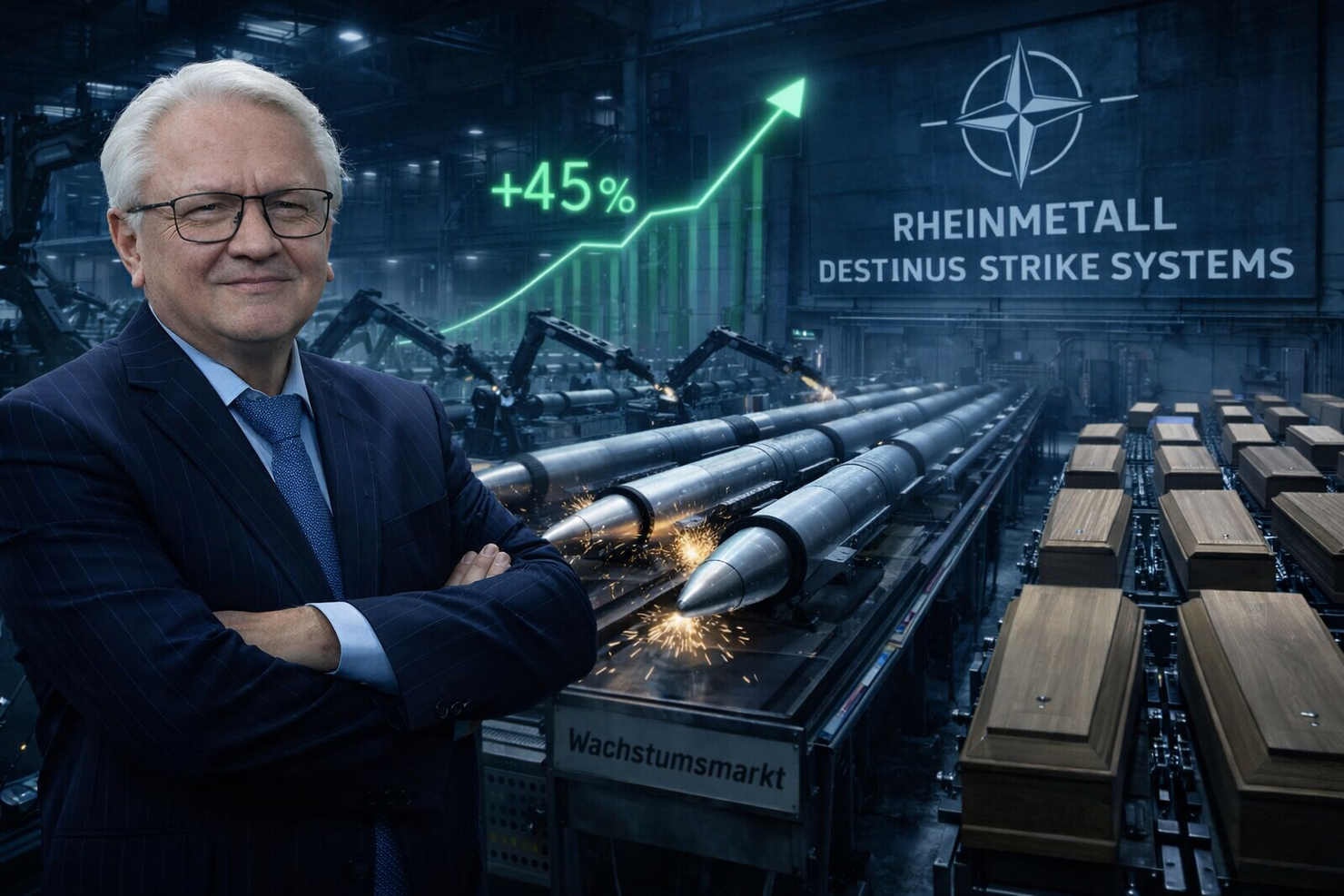
Destinus, according to its own statements, is bringing an annual production capacity of over 2000 cruise missiles to the merger. Ironically, its selling point is that the systems are "combat-proven"—the Ruta cruise missile, for example, is already being used against Russian targets in Ukraine. Using deaths as a seal of approval—that takes some doing to put it in a glossy brochure. CEO Armin Papperger promises the first missiles before the end of the year, and the company itself is projecting a revenue increase of up to 45 percent to around €14,5 billion for 2026. War isn't a tragedy; war is a growth story. Every corpse, regardless of which side it's on, ultimately becomes an item in the quarterly report.
The patriot with the tax ID number in Dubai
The man behind it all isn't some caricature villain, but something far more modern: a multi-billionaire with a clear conscience and a better tax advisor. Of Russian descent, an outspoken critic of Putin, placed on Moscow's terrorist list, he demonstratively relinquished his Russian passport in 2024 – his political stance is impeccable. Nevertheless, he relocated his residence to Dubai, purely for tax reasons, of course. After all, one prefers to fight for a good cause as long as the profit margin is right and the tax authorities are far enough away. His "baby," as he calls the company, is now valued at over five billion euros. Babies are expensive, this one especially, because it doesn't eat mush, but contracts.
Conscience, retrofit model
Who is in the right in this war can be debated at length and bitterly – the question is real. But it's not the question this industry has ever considered. For the arms manager, there is no aggressor and no victim, only demand. And the unscrupulousness lies not in supplying one side, but in refining the act of supplying itself into a cold, calculating game, in which human beings are merely consumables for the other side. Those who mass-produce death don't need an enemy image; they need an order form.
They disguise the warhead as a passenger jet and sell it as a vision. They choose the country with the lowest conscience and call it a competitive advantage. They increase production from hundreds to thousands and call it European sovereignty. And in the end, the manufacturer sits in Dubai, counts his five billion, and seriously calls the entire killing machine his "baby"!
More for you:






 "Dravens Tales from the Crypt" has been enchanting for over 15 years with a tasteless mixture of humor, serious journalism - for current events and unbalanced reporting in the press politics - and zombies, garnished with lots of art, entertainment and punk rock. Draven has turned his hobby into a popular brand that cannot be classified.
My blog was never designed to spread news, let alone get political, but with current affairs I just can't help but capture information here that is otherwise censored on all other channels. I am aware that the design page may not seem "serious" to many in this regard, but I will not change this to please the "mainstream". Anyone who is open to non-state-compliant information sees the content and not the packaging. I've tried enough to provide people with information over the last 2 years, but quickly noticed that it never matters how it's "packaged", but what the other person's attitude towards it is. I don't want to put honey on anyone's mouth to meet expectations in any way, so I'll keep this design because hopefully at some point I'll be able to stop making these political statements, because it's not my goal to go on like this forever  I leave it up to everyone how they deal with it. However, you are welcome to simply copy and distribute the content, my blog has always been under the WTFPL license.
It's hard for me to describe what I'm actually doing here, DravensTales has become a culture blog, music blog, shock blog, tech blog, horror blog, fun blog, a blog about found items on the internet, internet bizarre, trash blog, art blog, water heater, zeitgeist blog over the years , Scrap blog and grab bag blog called. Everything that is right ... - and yet not. The main focus of the blog is contemporary art, in the broadest sense of the word.
To ensure the continued operation of this site, you are welcome to make a donation via credit card, PayPal, Google Pay, Apple Pay, or direct debit/bank account . Many thanks to all readers and supporters of this blog!








