
There comes a moment when a CEO and a federal councillor become indistinguishable – and that moment is right now. Implenia CEO Jens Vollmar emails his employees a "no" vote, Lombard-Odier partner Frédéric Rochat circulates it on the intranet, and in Bern, Beat Jans, Ignazio Cassis, and Martin Pfister ensure that the risks of the proposal are never even discussed. Different business cards, identical maneuver. And both sides, without batting an eye, call it "protecting our democracy."
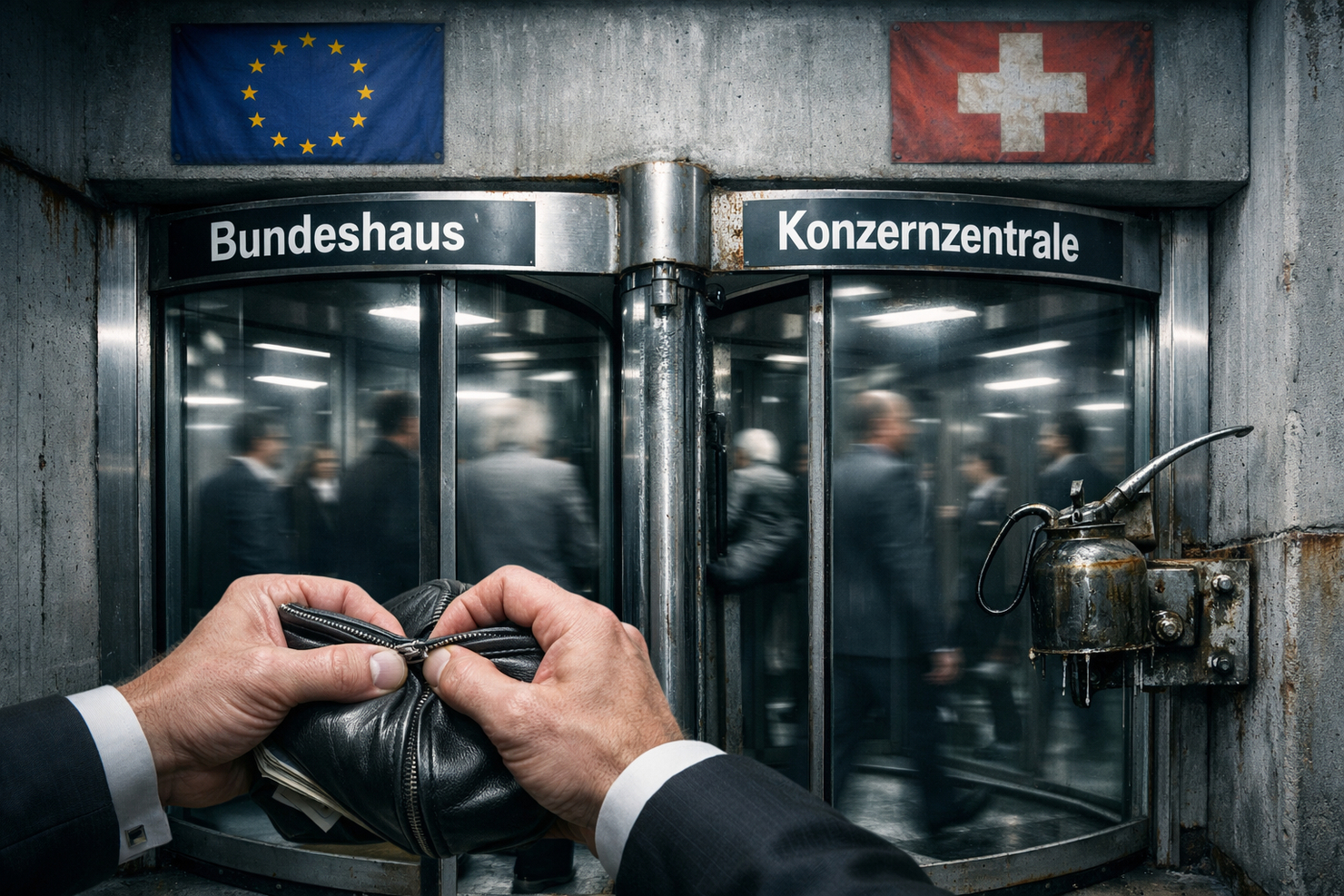
Integrity, trust, pride, honor – the words these people use to adorn themselves on Sundays have a surprisingly short lifespan on weekdays. Because anyone who looks closely sees not true believers, but rather cash cows. The construction company needs cheap labor from overseas assembly lines, the private bank needs talent and wealth for its trading books, and the Federal Council needs a Switzerland that obediently stays in line with the EUdSSR and keeps the revolving door of the asylum industry oiled. At the end of this chain, it's always the same: a full wallet, disguised as concern for the fatherland.
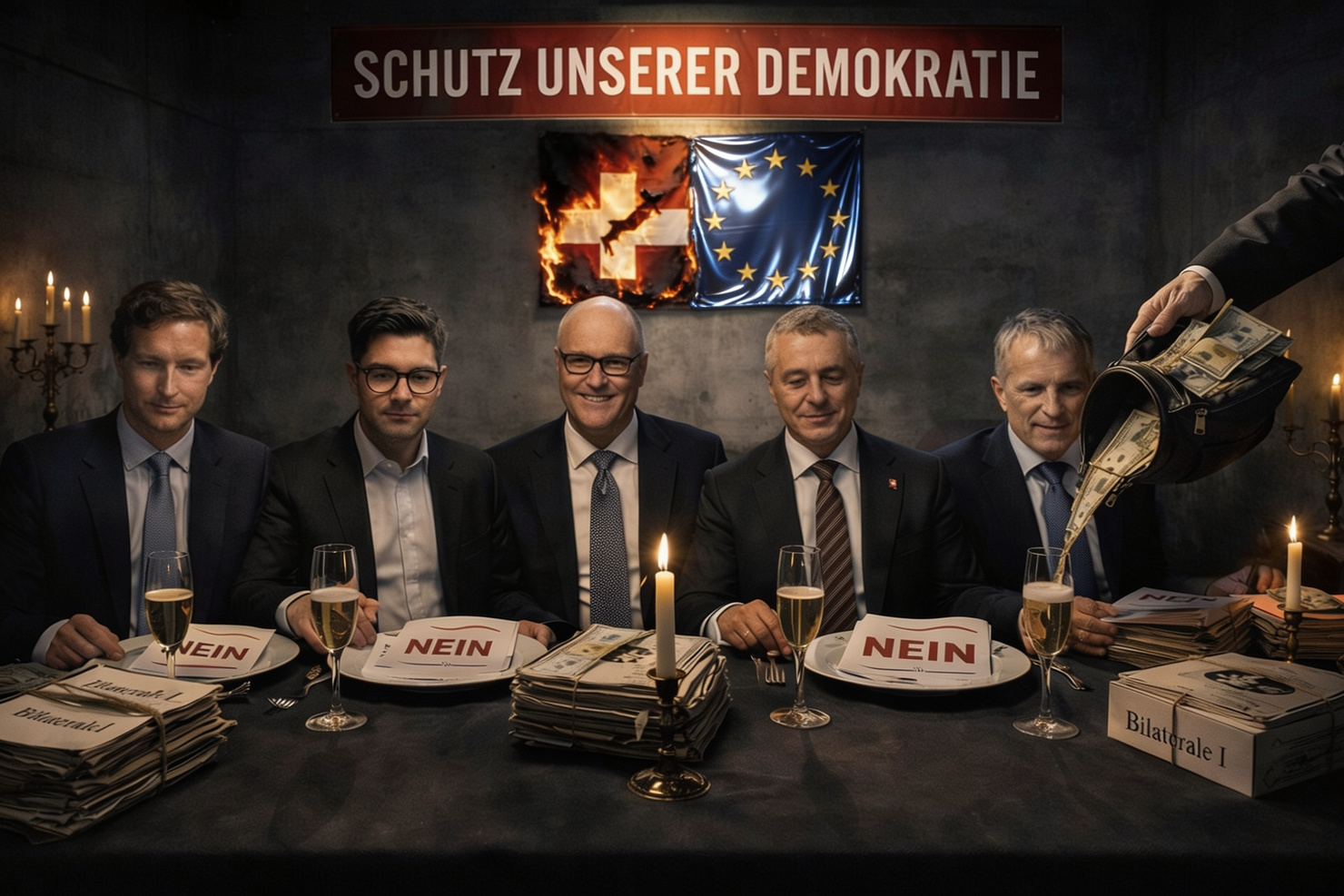
The sacred neutrality that isn't one
On June 14, Switzerland will vote on the SVP initiative "No 10-Million Switzerland." Implenia opens its appeal with the nice-sounding statement that the company is "and will remain politically neutral"—only to immediately include a link to the federal government's website, where it lays out its reasons against the initiative. Politically neutral, with an accompanying instruction manual for voting "no." This kind of double standard is quite something. Vollmar and Switzerland CEO Adrian Wyss sign the email sent to all employees, while at Lombard Odier, the group of partners around Rochat endorses the appeal, which publicly accuses the Swiss of Brexit-like sentiments and a perceived threat of losing control. The word "no" is nowhere to be found. But anyone who crafts a text in such a way that only one answer remains hasn't omitted the word, they've deliberately left it out. An insider says he has "truly never seen" such an appeal surrounding a referendum.
When the boss decides where the cross goes
It's perfectly within the rights of business associations to issue a slogan – Economiesuisse and the Geneva Financial Center have openly endorsed a "no" vote. It's quite another matter, however, when employers directly access the email inboxes of employees, the very people whose dependence on wages empowers them to make the freest possible choice. The construction worker, who knows full well that his company prefers to import cheaper labor, is supposed to vote "no" so that the company can continue doing so. The bank employee is expected to defend his institution's profit margin against his own vote. This is free opinion-forming in the workplace, Vollmar and Rochat style.
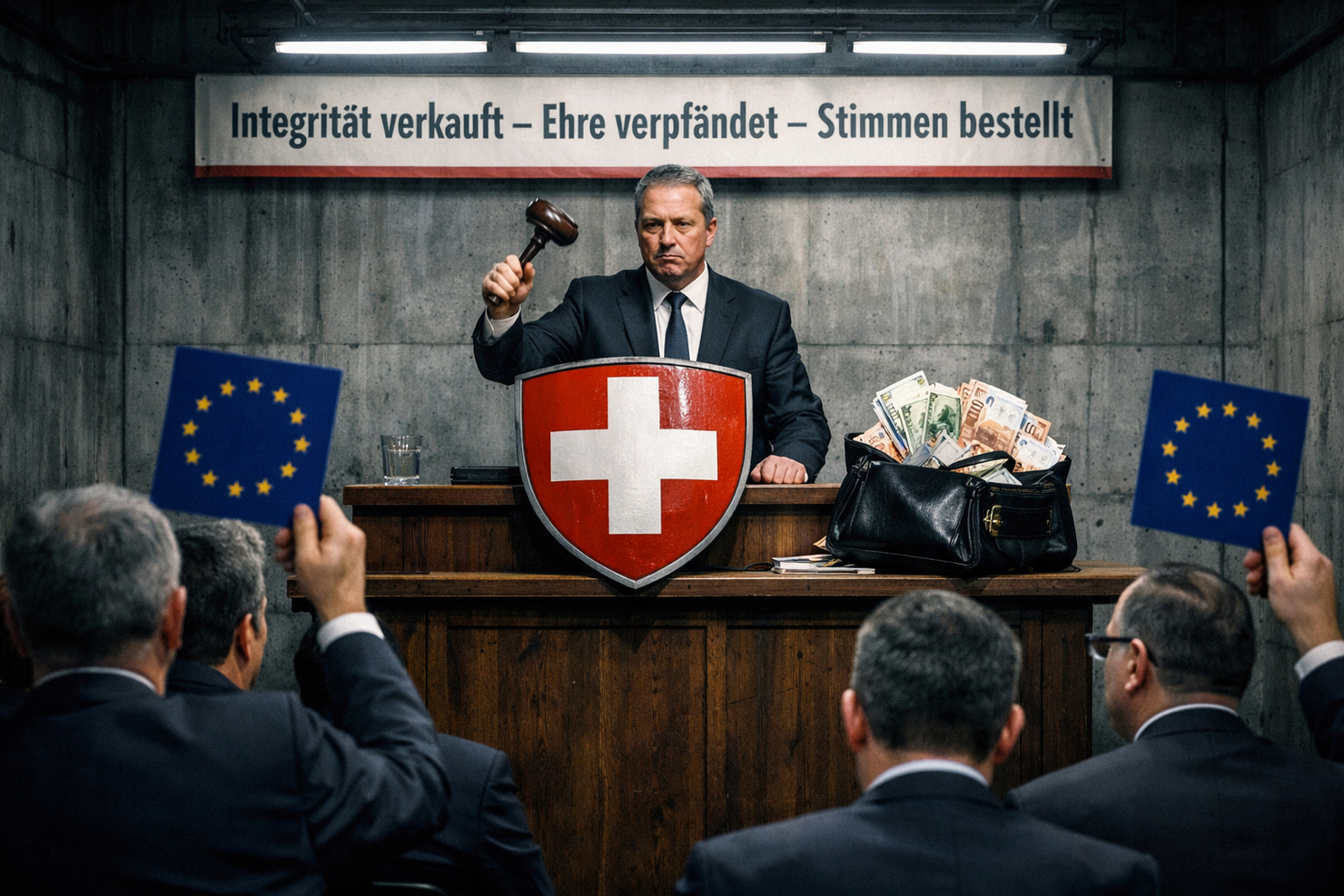
The real joke lies deeper. The same people who otherwise invoke "our democracy" at every opportunity treat the sovereign like a workforce that can be brought into line via email. For them, democracy is a word for Sunday banquets, not for Monday intranet meetings.
The document that nobody in Bern read
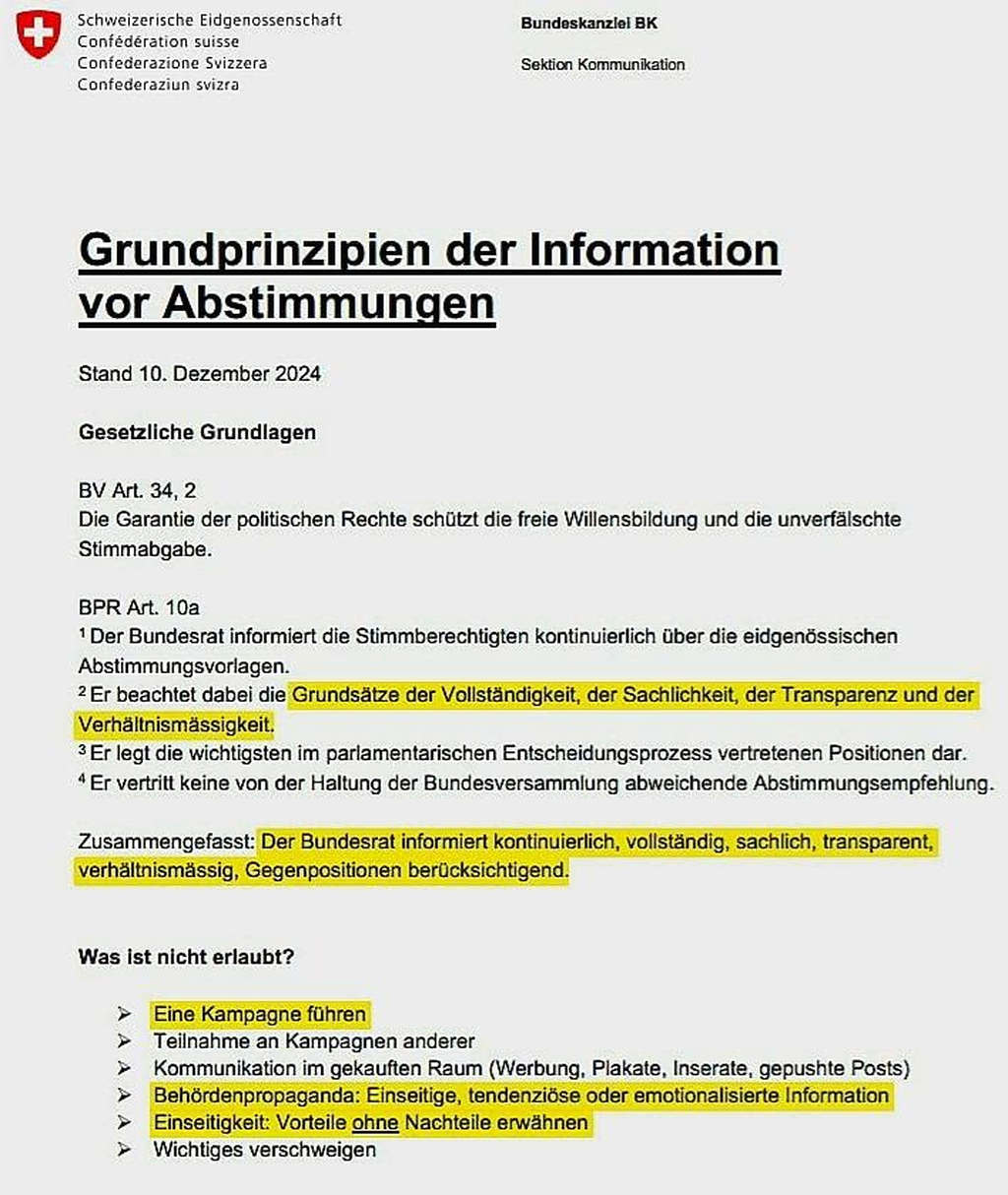
There is a document that clearly defines the rules of the game. The Federal Chancellery, under the title "Basic Principles of Information Before Votes," stipulates that the Federal Council must provide continuous, complete, objective, transparent, and proportionate information – taking opposing viewpoints into account. This document obviously never reached Jans, Cassis, and Pfister. Or perhaps it wasn't understood. Maybe Beat Furrer, the spokesperson for the political right, should personally drop by and read it aloud, word for word. Slowly. Because under "What is not permitted?" it states in black and white: "Concealing important information" and "One-sidedness: Mentioning advantages without disadvantages." Precisely the list of requirements that the federal government is currently working through point by point – only backwards.
The shock doctrine as a business model
A more critical interpretation is circulating, and it cannot be dismissed. The Federal Council is deliberately steering the debate away from the substance of the matter – instead of openly addressing the consequences of its adoption for the Bilateral Agreements I, it is focusing on the real, but secondary, shortage of skilled workers. The accusation is that this is a calculated move: the initiative is being deliberately allowed to "fail" so that, in the event of a "yes" vote, the resulting turmoil will be so severe that EU membership will later appear to be the only option. This is known as a shock doctrine – creating a crisis, then selling the solution as the savior, a solution that no one would have wanted under normal circumstances.
This cannot be proven, and to be fair: the nursing shortage is real, the construction deficit is documented, and demographics are exacerbating both. Anyone who denies this is lying. But anyone who systematically downplays a guillotine clause that could overturn the entire bilateral agreement package within six months is deliberately shortening the debate – and doing exactly what their own Federal Chancellery document forbids.
The pattern is global, the reflex is the same.
Switzerland is not a special case here, just a particularly well-documented one. Wherever elites invoke the banner of "protecting democracy," they strikingly often mean protecting it from their own people. Sometimes the tool is called fact-checkers, sometimes platform regulation, sometimes the "fight against disinformation," sometimes a direct appeal to employers just days before the election. The label changes, but the reflex remains: anyone who might give the wrong answer is brought into line as a precaution. Sovereignty is desirable as long as it decides the desired outcome.
There remains the defiant hope that the plan will backfire. Polls show 47 percent in favor and 52 percent against – and nothing mobilizes the Swiss more reliably than the feeling of being directed from above.
The Federal Chancellery mandates complete, objective, and transparent information – yet three Federal Councillors do the opposite, calling it "protecting democracy." CEOs like Vollmar and Rochat hijack their employees' email inboxes, calling it "political neutrality." Where once pride, honor, and a modicum of decency reigned, today there stands a balance sheet that requires more staff and an agenda that points toward Brussels. And in the end, the same people who are now playing their cards close to their chest will declare EU membership to the electorate as "without alternative" – and then sell this very betrayal as democracy!
More for you:





 "Dravens Tales from the Crypt" has been enchanting for over 15 years with a tasteless mixture of humor, serious journalism - for current events and unbalanced reporting in the press politics - and zombies, garnished with lots of art, entertainment and punk rock. Draven has turned his hobby into a popular brand that cannot be classified.
My blog was never designed to spread news, let alone get political, but with current affairs I just can't help but capture information here that is otherwise censored on all other channels. I am aware that the design page may not seem "serious" to many in this regard, but I will not change this to please the "mainstream". Anyone who is open to non-state-compliant information sees the content and not the packaging. I've tried enough to provide people with information over the last 2 years, but quickly noticed that it never matters how it's "packaged", but what the other person's attitude towards it is. I don't want to put honey on anyone's mouth to meet expectations in any way, so I'll keep this design because hopefully at some point I'll be able to stop making these political statements, because it's not my goal to go on like this forever  I leave it up to everyone how they deal with it. However, you are welcome to simply copy and distribute the content, my blog has always been under the WTFPL license.
It's hard for me to describe what I'm actually doing here, DravensTales has become a culture blog, music blog, shock blog, tech blog, horror blog, fun blog, a blog about found items on the internet, internet bizarre, trash blog, art blog, water heater, zeitgeist blog over the years , Scrap blog and grab bag blog called. Everything that is right ... - and yet not. The main focus of the blog is contemporary art, in the broadest sense of the word.
To ensure the continued operation of this site, you are welcome to make a donation via credit card, PayPal, Google Pay, Apple Pay, or direct debit/bank account . Many thanks to all readers and supporters of this blog!








