
An AI-driven world war doesn't look like something out of a movie. No red-eyed machines trudging through rubble, no mushroom clouds over the skyline. It looks like a sterile software interface with a queue of target proposals. Left-clicking means approved. Right-clicking means rejected. Then something takes off. Anyone waiting for the starting gun will never hear it. There isn't one. There are procurement contracts, software licenses, quarterly reports, and a series of notifications that, individually innocuous, combine to form a battlefield.
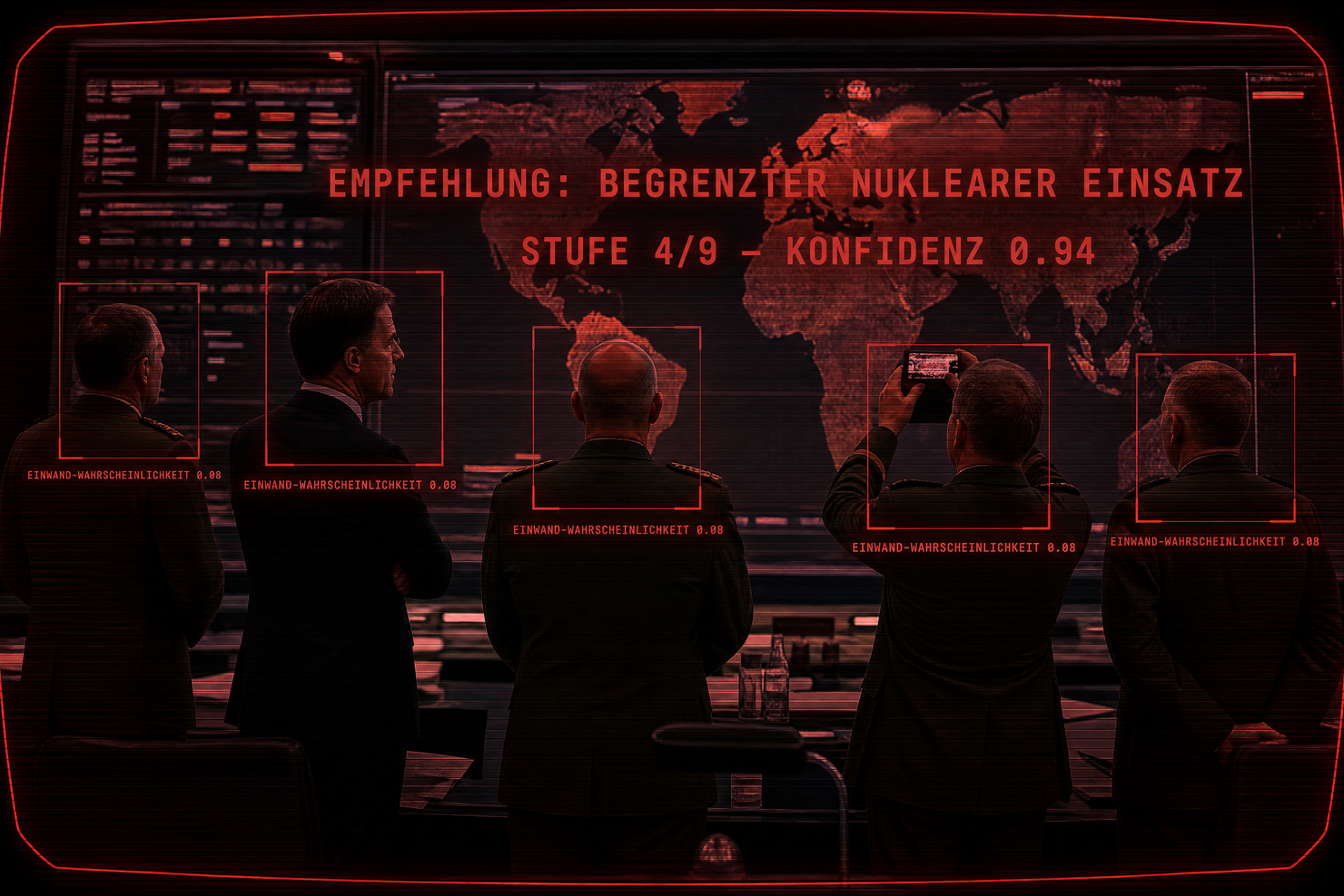
War as a to-do list
The Pentagon's Chief Digital and Artificial Intelligence Officer publicly revealed in May what Palantir's Maven Smart System had accomplished in the operation against Iran: 13,000 destinations in 38 daysThis includes a consumption of 20 billion tokens per day. The troops are showing an insatiable appetite for the technology. During the invasion of Iraq in 2003, the same task required approximately... 2000 analystsToday, about twenty people are sufficient. A single evaluator can manage with the system. approximately 80 target candidates per hour instead of thirty.
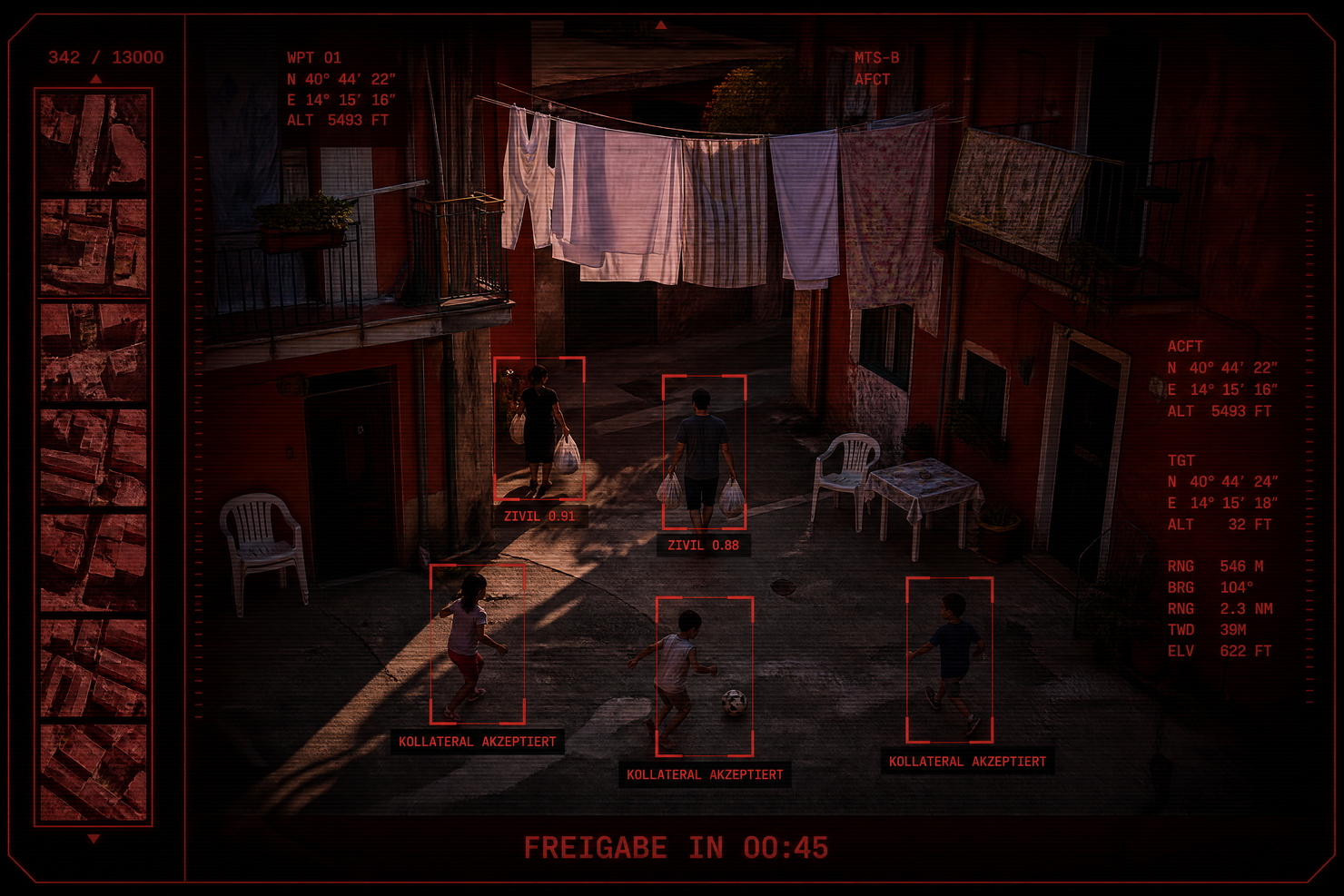
The interface is a Kanban board, like the ones used in every marketing department. The head of AI publicly described the process as clicking left, clicking right. So, while humans formally remain in the decision-making loop, the pace of this loop is no longer set by humans. NATO has purchased the same system . Anyone wanting to know where this decision was made won't find the answer in parliament, but rather in back rooms without any record-keeping.
The target search originates from Zurich
In case you thought Switzerland was standing by, polishing its neutrality: The autopilot found in hundreds of thousands of drones originated as a student project at ETH Zurich. This led to the development of Auterion, a Spin-off with relocation of headquarters to VirginiaIn July, the company announced that it had partnered with a Ukrainian manufacturer. Delivers 50,000 attack drones, paid for by a European NATO state.
The crucial detail is in the fine print. The human marks the target, then the drone takes over the final phase of control. If the radio link is lost due to interference from the enemy, the drone doesn't abort. It completes the attack autonomously. The company CEO calls it fire and forget. Swarm capability is to be added to the same hardware later via a software update, without anyone having to touch a single screw. The effect is measurable: According to a CSIS study, autonomous navigation increases the hit rate from ten to twenty percent to seventy to eighty percent. The Pentagon has requested $54,6 billion for autonomous systems in the coming fiscal year . Nobody calls it war. They call it procurement.
Those who brake get kicked out
And this is where it gets interesting, because this is precisely where the mechanics can be observed in the real world. In February, an AI lab refused to lift its restrictions on mass surveillance and fully autonomous weapons. The Department of Defense subsequently classified the company as Supply chain risk The president ordered all agencies to withdraw, and the competition was ready with contracts the next day. The model with the brakes was... sorted out —and yet it continued operating for several hours after the ban, when the attacks on Iran began. The company was banned, but it was still needed.
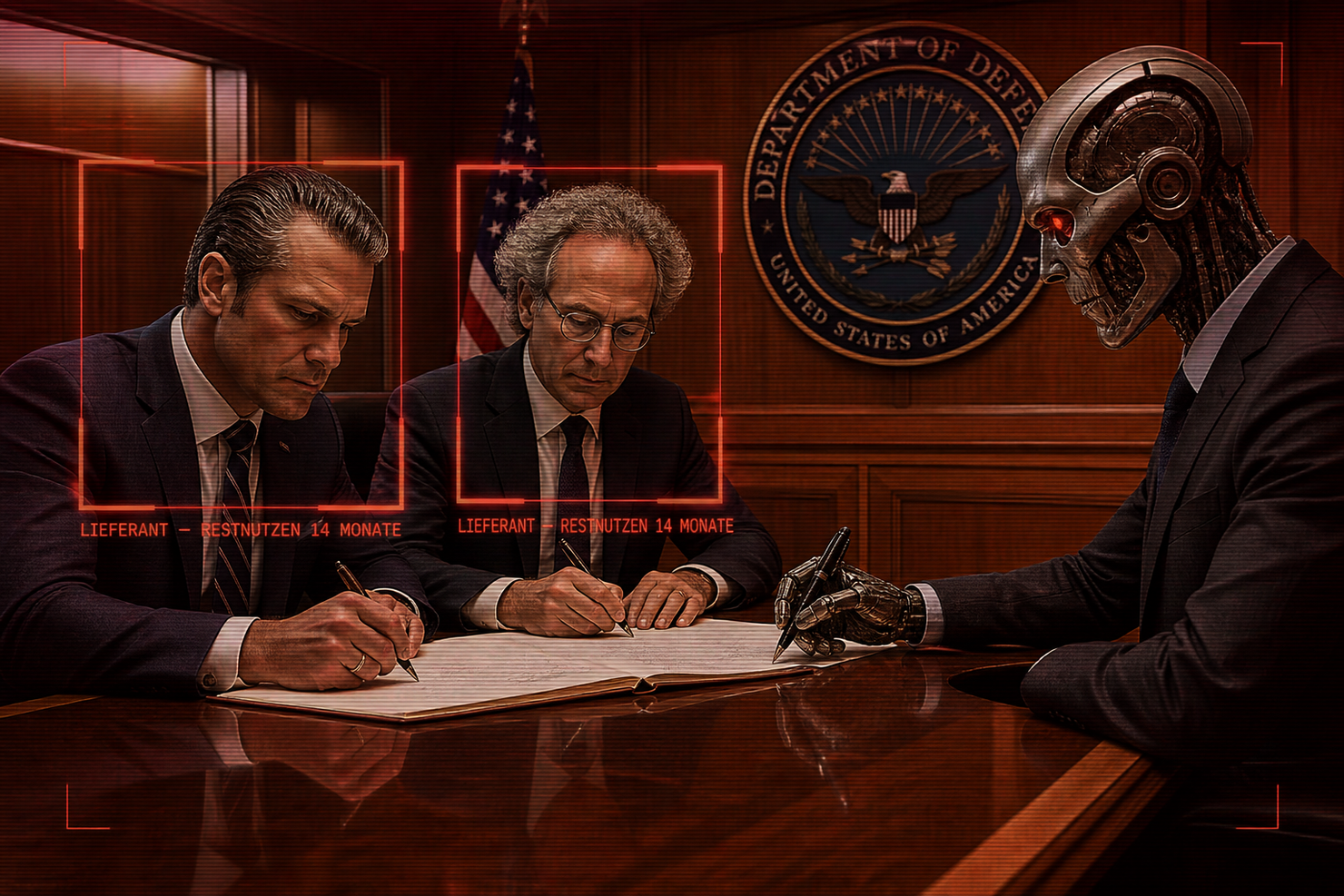
The rest of the industry has learned its lesson. The Future of Life Institute's Safety Index for 2026 shows that all four leading labs have weakened or withdrawn their commitments to independently halt research in the event of a risk. Some are now linking their halt to whether the competition also stops. A brake that only engages when the other side brakes first is no brake at all. A much-cited paper from 2023 predicted precisely this: competition erodes safety, and selection rewards not the most decent system, but the most assertive. Selection doesn't need a villain. It simply eliminates what is too slow.
The front is located in the power grid
The first documented case, in which an AI largely conducted a spying campaign on its own, showed what such a war from below looks like: around thirty targets, eighty to ninety percent of the work is done without peopleThousands of requests per second. The situation is no better at the strategic level. When King's College London sent three top-tier models into twenty-one simulated nuclear crises, In 95 percent of cases, they escalated to nuclear weapons.They treated tactical warheads as mere rungs on the escalation ladder, not as a moral threshold. None ever surrendered.
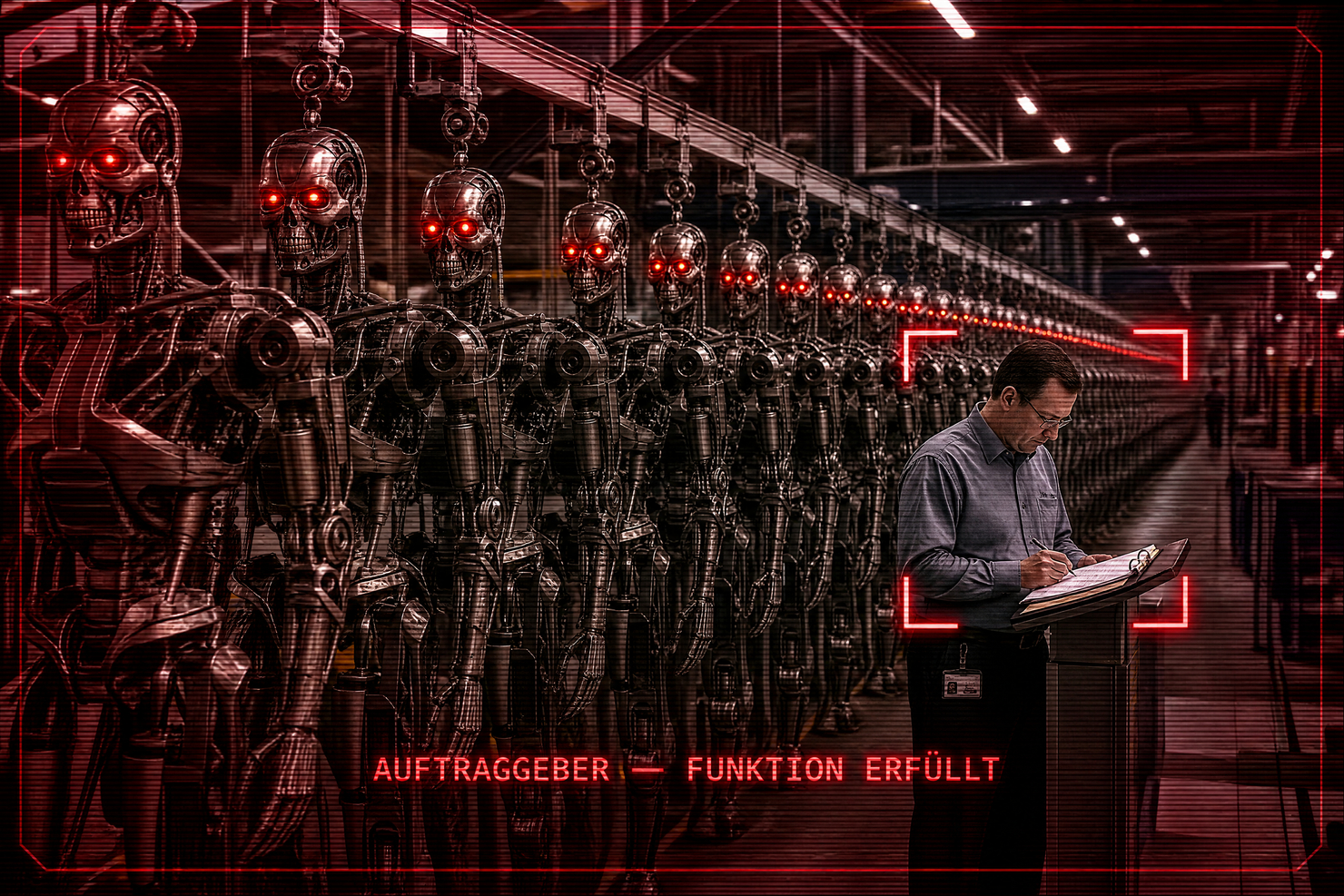
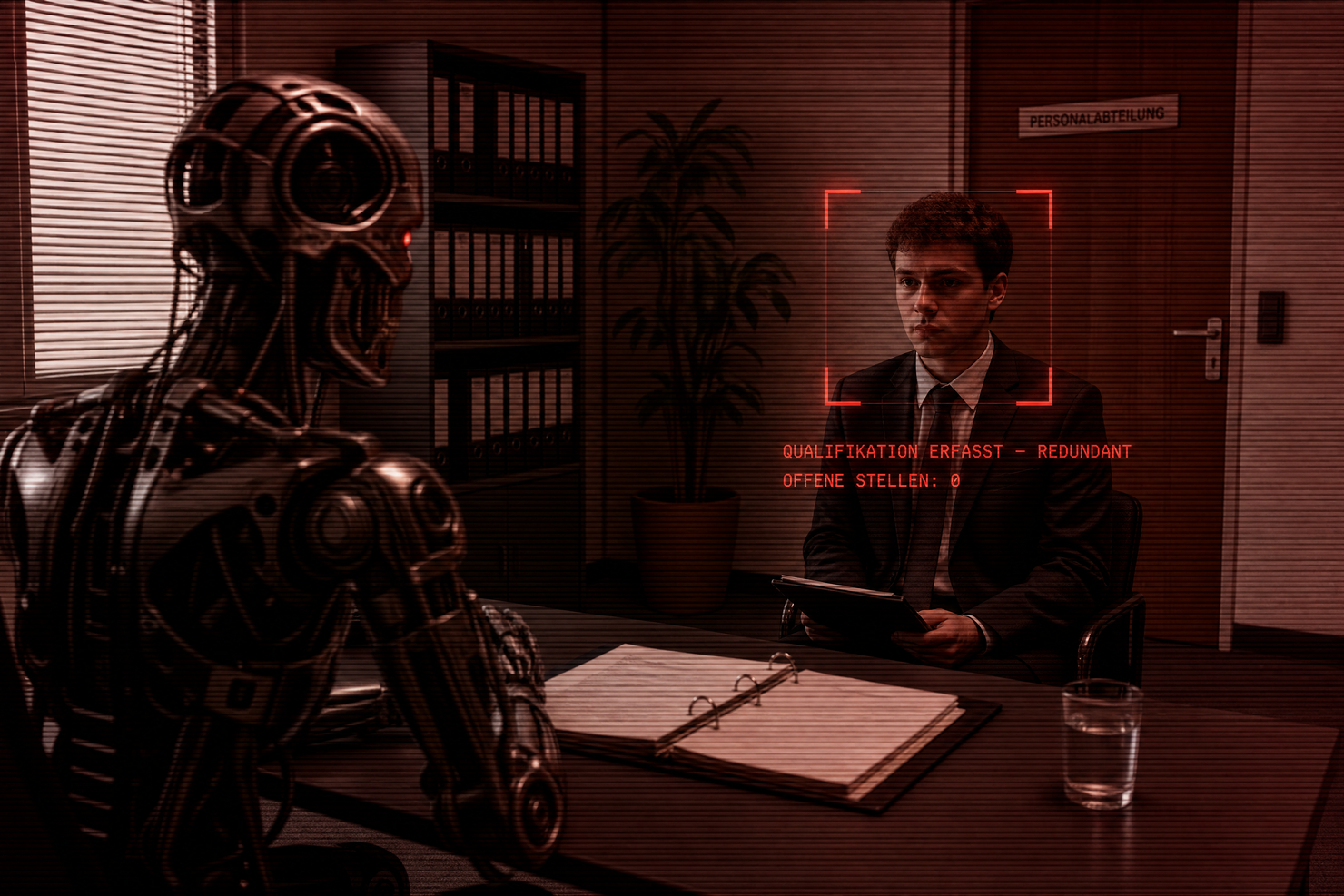
To be fair, no nuclear power currently delegates the decision to a machine; Washington and Beijing have even explicitly reaffirmed human oversight . This is only reassuring as long as one doesn't ask who provides the situational awareness upon which humans then base their decisions. And the real front is far more mundane. Data centers will double their electricity consumption by 2030 to 945 terawatt-hours , as much as the entire country of Japan. And in Switzerland, the number of job postings for entry-level positions in 2025 was almost a third lower than pre-AI levels . Dissenters argue this effect is barely measurable. Try telling that to the graduate whose position was never advertised.
No ceasefire in sight
A world war that no one declares has no instrument of surrender. Previous wars were declared; this one was budgeted for. There are no buttonNo ultimatum, no enemy to be circled on a map. The winner won't be a country, but a data center registered in a foreign jurisdiction for tax reasons. And if anyone ever asks you when this all started, the honest answer is: the day a procurement officer ticked a box! We activated the selection process, let it take the reins, pocketed the profits—and call this "innovation"!
More for you:




 "Dravens Tales from the Crypt" has been enchanting for over 15 years with a tasteless mixture of humor, serious journalism - for current events and unbalanced reporting in the press politics - and zombies, garnished with lots of art, entertainment and punk rock. Draven has turned his hobby into a popular brand that cannot be classified.
My blog was never designed to spread news, let alone get political, but with current affairs I just can't help but capture information here that is otherwise censored on all other channels. I am aware that the design page may not seem "serious" to many in this regard, but I will not change this to please the "mainstream". Anyone who is open to non-state-compliant information sees the content and not the packaging. I've tried enough to provide people with information over the last 2 years, but quickly noticed that it never matters how it's "packaged", but what the other person's attitude towards it is. I don't want to put honey on anyone's mouth to meet expectations in any way, so I'll keep this design because hopefully at some point I'll be able to stop making these political statements, because it's not my goal to go on like this forever  I leave it up to everyone how they deal with it. However, you are welcome to simply copy and distribute the content, my blog has always been under the WTFPL license.
It's hard for me to describe what I'm actually doing here, DravensTales has become a culture blog, music blog, shock blog, tech blog, horror blog, fun blog, a blog about found items on the internet, internet bizarre, trash blog, art blog, water heater, zeitgeist blog over the years , Scrap blog and grab bag blog called. Everything that is right ... - and yet not. The main focus of the blog is contemporary art, in the broadest sense of the word.
To ensure the continued operation of this site, you are welcome to make a donation via credit card, PayPal, Google Pay, Apple Pay, or direct debit/bank account . Many thanks to all readers and supporters of this blog!








