
A single figure dominates the climate debate like a curse: 97 percent of all scientists supposedly agree that climate change is man-made. Anyone who asks where this figure comes from is branded a heretic before they've even finished their sentence. But the most famous source didn't count scientists at all, but rather summaries of studies, and of nearly 12,000 of these, two-thirds remained completely silent on the cause.
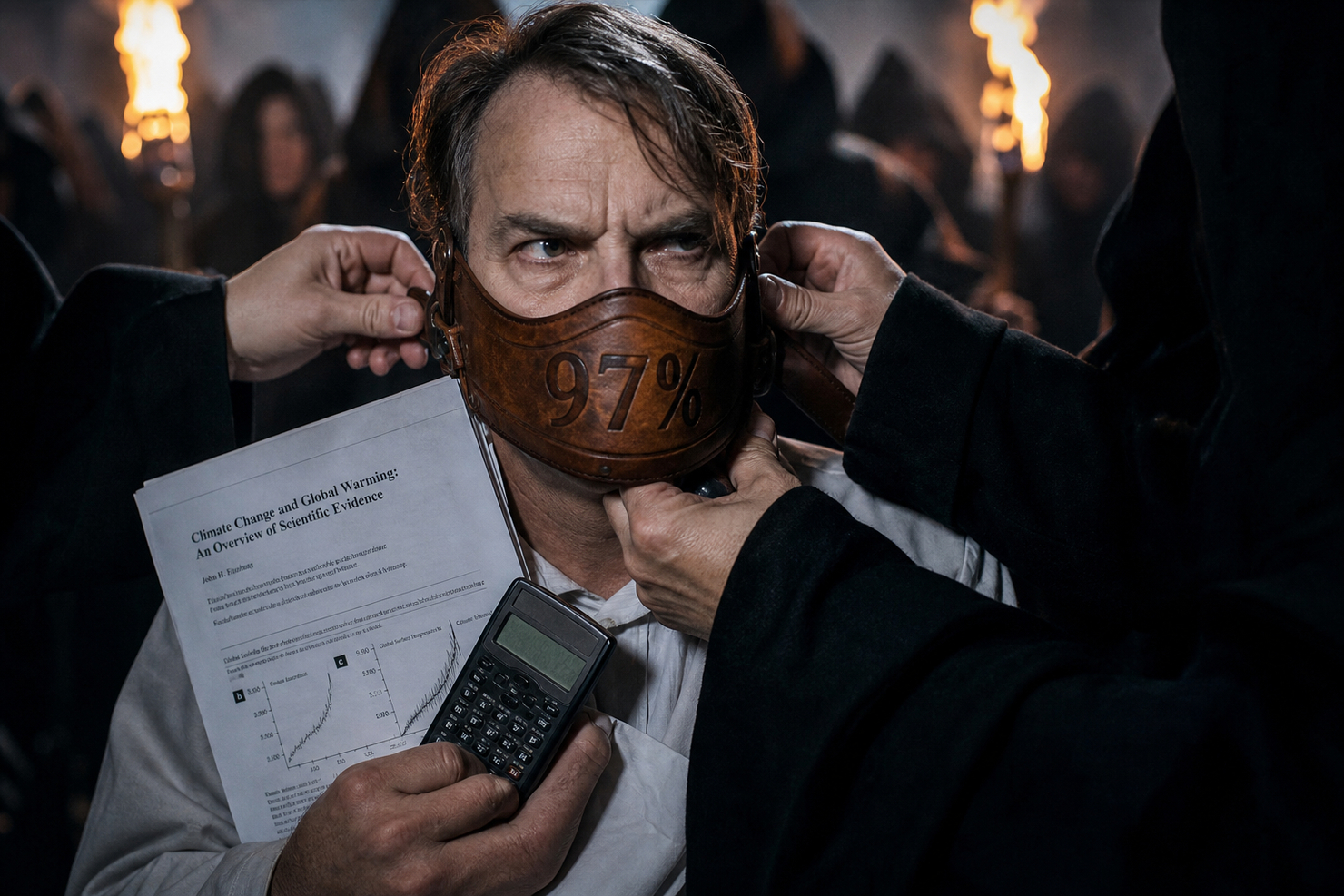
The figure used by governments to shut down industries and newsrooms to excommunicate dissenters comes from a 2013 analysis by Australian communications researcher John Cook. His team sifted through nearly 12,000 abstracts of scientific papers on "global warming" or "climate change" from 1991 to 2011. The result reads far less triumphantly than the headline it generated: 66,4 percent of the abstracts took no position at all, 0,7 percent disagreed, and 0,3 percent were uncertain. That left roughly a third that took a stance—and of that third, 97 percent acknowledged some form of human influence. The original study can be found here , for those who prefer primary sources to gut feeling.
The question that was never carefully asked
Cook didn't ask whether humans are the dominant cause. Not whether climate models are reliable. Not whether the predicted catastrophe will occur, or whether it's wise to dismantle entire economies in pursuit of it. What was measured was a banality: Does human activity contribute to warming in any way? Even the most hardened skeptic would agree to this question over breakfast without batting an eye. The truly contentious issues—how large the human contribution really is, how reliable 100-year forecasts are when even the weather of the day after tomorrow remains a guessing game, whether emergency measures will do more harm than good—Cook allowed to vanish into the fog with remarkable elegance.
When a subordinate clause becomes a "yes"
The trick becomes even more intriguing when you look at what Cook actually counted as agreement. The largest group in his slashed third is "implicit agreement"—abstracts that don't actually investigate human influence but merely assume it in passing. A biologist researching an animal population who writes in a half-sentence "against the backdrop of climate change" ends up in the consensus pot without ever having said a word about the cause. Cook's own evaluators even classified sentences like "methane contributes to warming" as agreement. as Richard Tol documented in his follow-up analysisA footnote becomes a confession, a subordinate clause a voice in the broad consensus.
From the lab directly to the president's account
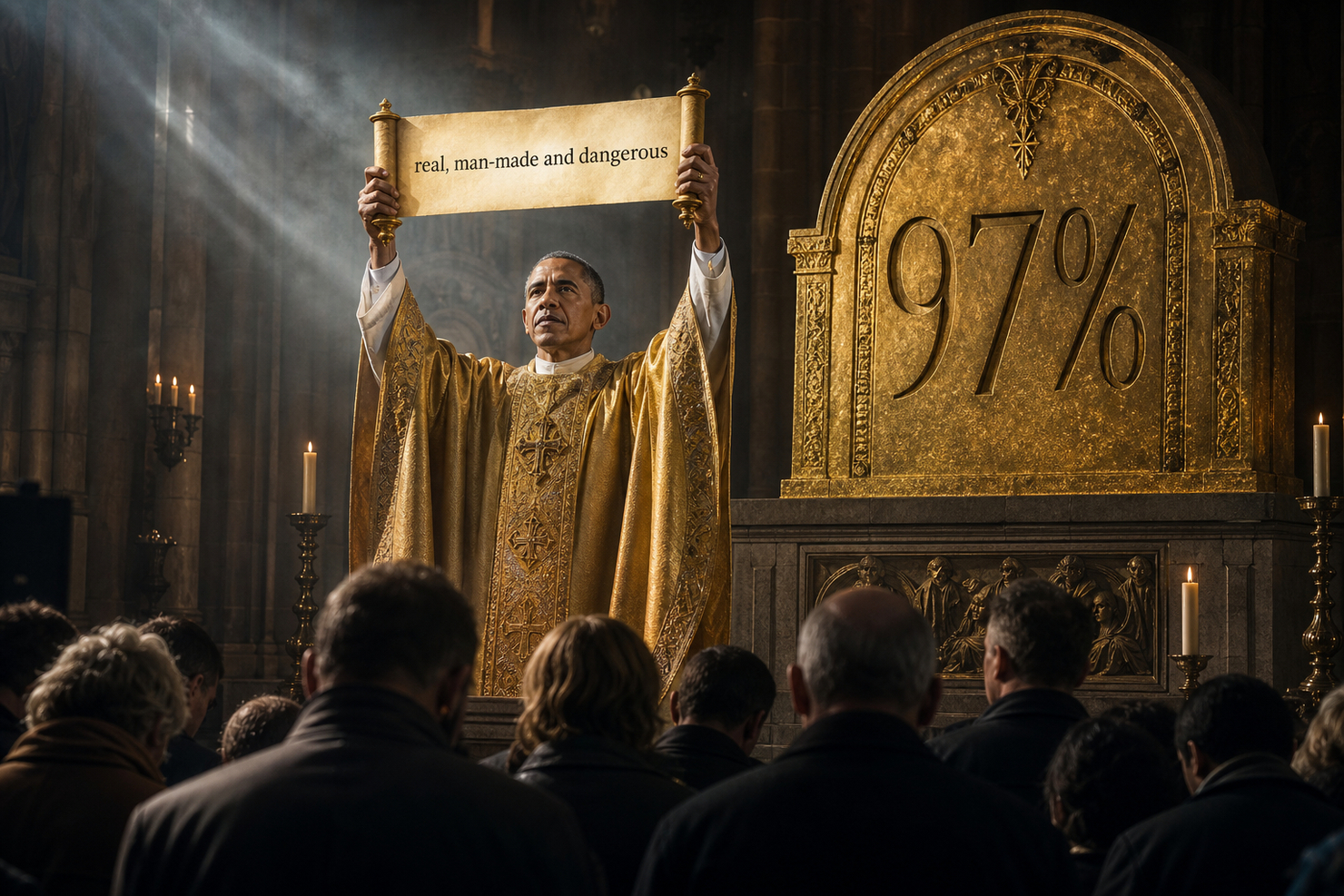
What happened next is a textbook example of political manipulation. Just two days after its release, Barack Obama's account announced to his millions of followers that 97 percent of scientists agreed: Climate change is "real, man-made, and dangerous." That's what it says in the tweet Three words, three simple actions. Abstracts became scientists. "Contributes" became "man-made." And "dangerous," the one word that legitimizes every trillion-dollar policy, was simply nowhere to be found in Cook's study. This is called the fallacy of ambiguity: The same label, "97 percent," suddenly means something completely different, and nobody notices the shift. The world's governments adopted the figure, the mainstream media reprinted it, and the axiom was complete, one that no one could dare to challenge from then on.
The pickpocket on the other side
Now it would be convenient to trot out the opposing faction's favorite statistic: that the "true" consensus actually lies below one percent. This 0,5 percent calculation circulates in the critics' journals and is precisely the same trick, just reversed – those who want to downplay the figure define "consensus" so narrowly that almost nothing remains. Anyone who does the math seriously arrives at a different conclusion. The economist Richard Tol, certainly no climate alarmist, dissected Cook's methodology in a separate academic publication and still didn't arrive at zero, but rather at 33 to 63 percent, depending on whether one includes those who remain silent. That was his comment in the journal. And the large consensus synthesis, in which Cook and colleagues combined six independent surveys, finds 90 to 100 percent agreement with its basic statement among climate researchers who actually publish. This too is documentedIn plain terms: That humans contribute to global warming is a matter of broad consensus among experts. The famous 97 percent figure wouldn't have required all the abstract manipulation – which only makes the trick more revealing.
Why distort the truth when the truth suffices?
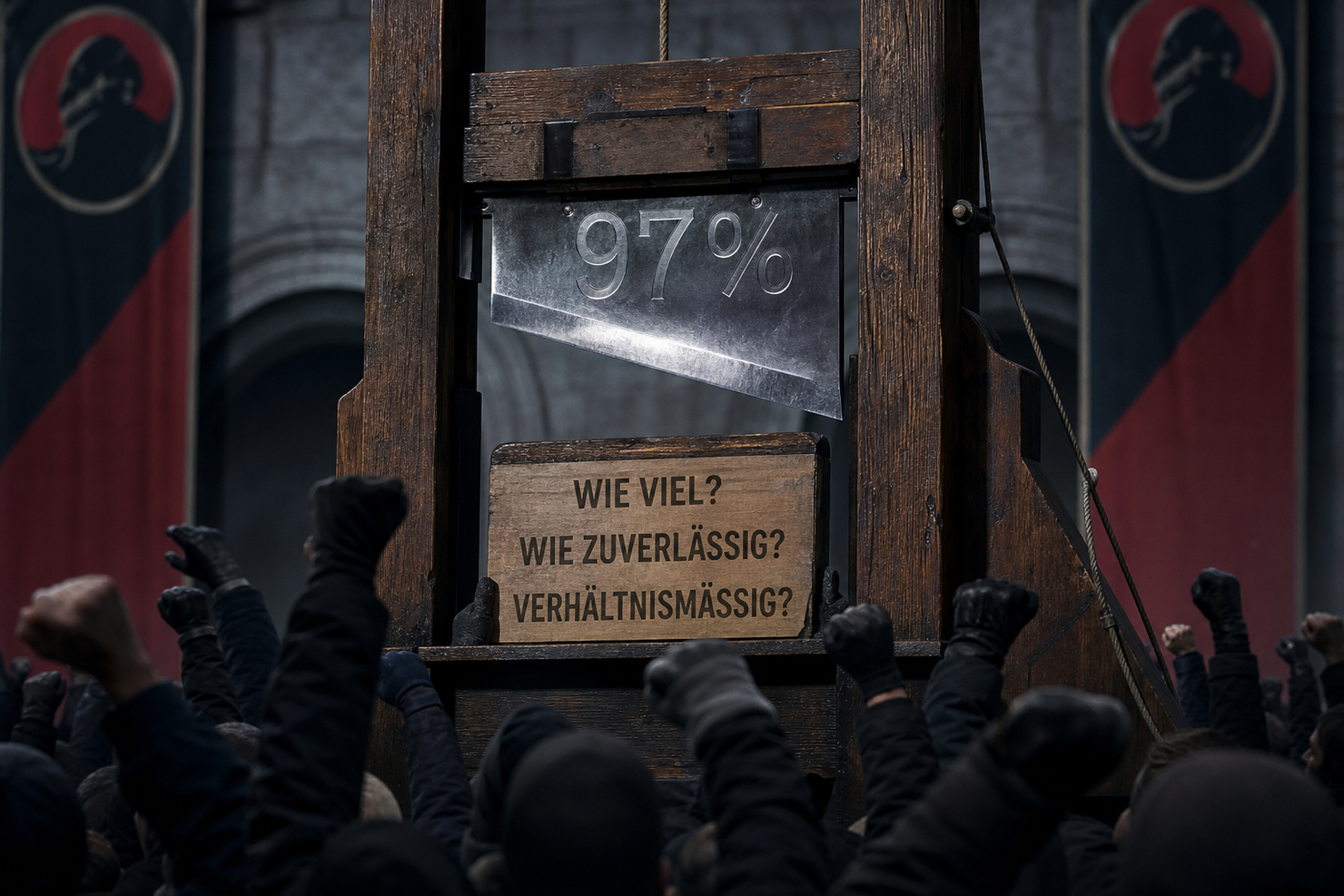
And this is precisely where things get interesting. If the consensus on the mere "whether" already exists, why construct a study that consistently ignores everything that is actually being debated? Because "97 percent" was never intended as information, but rather as a way to end the debate. It's the rhetorical guillotine that beheads any uncomfortable question about extent, model accuracy, and proportionality before it's even posed. The same machine hums along when "attribution research" dutifully attributes every heat wave to CO₂ via press release— Science as a legal and political weapon, built exactly like that. It purrs even when a WHO commission appoints its own supervisory board members as "independent experts" and its own papers as "Consensus science" It ennobles. The mechanism is always identical: First, sanctify a number, then burn anyone who touches it.

"Follow the Science" – by those who don't know any.
"Follow the science" is shouted loudest by those who understand the least about science. No reasonable person denies that human activity impacts the environment and climate—this was already the case when Europe deforested its land in the Middle Ages, with the rest of the world following suit somewhat later. And even the most oblivious person understands that energy should not be wasted. But turning climate change into a religion with sinners, indulgences, and heresy trials is the work of those who understand neither science nor economics—and who, for whatever reason, indulge in the same totalitarian reflex that collectivists have always cultivated. The resulting piles of corpses (Mao, Stalin) have always been ignored in the name of the "higher goal."
Who finances the church
The question remains: who actually pays the high priests of this consensus? Leading climate research is dependent on political and economic institutions whose budgets, mandates, and business models are directly tied to the perpetuation of alarm – from funding programs and emissions markets to "transition finance." Anyone who believes this has no influence on which results are funded, published, and cited has never written a grant application. It's an open secret of the system: the right buzzwords – "man-made," "climate crisis," "net zero" – open doors and coffers, while peer review becomes surprisingly lenient when the message is agreeable. And that falsified studies and shoddy journals... long since a thriving business These facts complete the picture. One doesn't have to deny climate change to see that an apparatus that thrives on alarm cannot be a neutral arbiter of that alarm.
Consensus is not a muzzle
Anyone who dissects the 97 percent figure isn't denying climate change. They're doing what science is all about: asking questions about the origin of the number, what it actually measures, and who is using it and for what purpose. This very skepticism is being persecuted as blasphemy – ironically, by those who have never even read the methodology. A global scientific consensus has been conjured from a third of published abstracts. A statement that "contributes" has been turned into "dangerous," and a scholarly article has been branded with a curse. A genuine agreement on the "whether" of climate change has been misused to prohibit any questions about the "how much" and the "why." And anyone who still recalculates is considered not a scientist, but a heretic – and this gag order is what they actually call "science"!
More for you:






 "Dravens Tales from the Crypt" has been enchanting for over 15 years with a tasteless mixture of humor, serious journalism - for current events and unbalanced reporting in the press politics - and zombies, garnished with lots of art, entertainment and punk rock. Draven has turned his hobby into a popular brand that cannot be classified.
My blog was never designed to spread news, let alone get political, but with current affairs I just can't help but capture information here that is otherwise censored on all other channels. I am aware that the design page may not seem "serious" to many in this regard, but I will not change this to please the "mainstream". Anyone who is open to non-state-compliant information sees the content and not the packaging. I've tried enough to provide people with information over the last 2 years, but quickly noticed that it never matters how it's "packaged", but what the other person's attitude towards it is. I don't want to put honey on anyone's mouth to meet expectations in any way, so I'll keep this design because hopefully at some point I'll be able to stop making these political statements, because it's not my goal to go on like this forever  I leave it up to everyone how they deal with it. However, you are welcome to simply copy and distribute the content, my blog has always been under the WTFPL license.
It's hard for me to describe what I'm actually doing here, DravensTales has become a culture blog, music blog, shock blog, tech blog, horror blog, fun blog, a blog about found items on the internet, internet bizarre, trash blog, art blog, water heater, zeitgeist blog over the years , Scrap blog and grab bag blog called. Everything that is right ... - and yet not. The main focus of the blog is contemporary art, in the broadest sense of the word.
To ensure the continued operation of this site, you are welcome to make a donation via credit card, PayPal, Google Pay, Apple Pay, or direct debit/bank account . Many thanks to all readers and supporters of this blog!








