
Angela Merkel has discovered that money is power. Sixteen years as Chancellor, two donations of 600 million euros to the vaccine alliance, patronage of the donor conference where she personally welcomed Bill Gates – and now, more than a decade later, the former Chancellor claims the billionaire used his money to exert moral pressure on her. The woman who rolled out the red carpet for him is the victim of that carpet – the same woman whose government defended patent protection for vaccines on the day of a phone call from Gates.
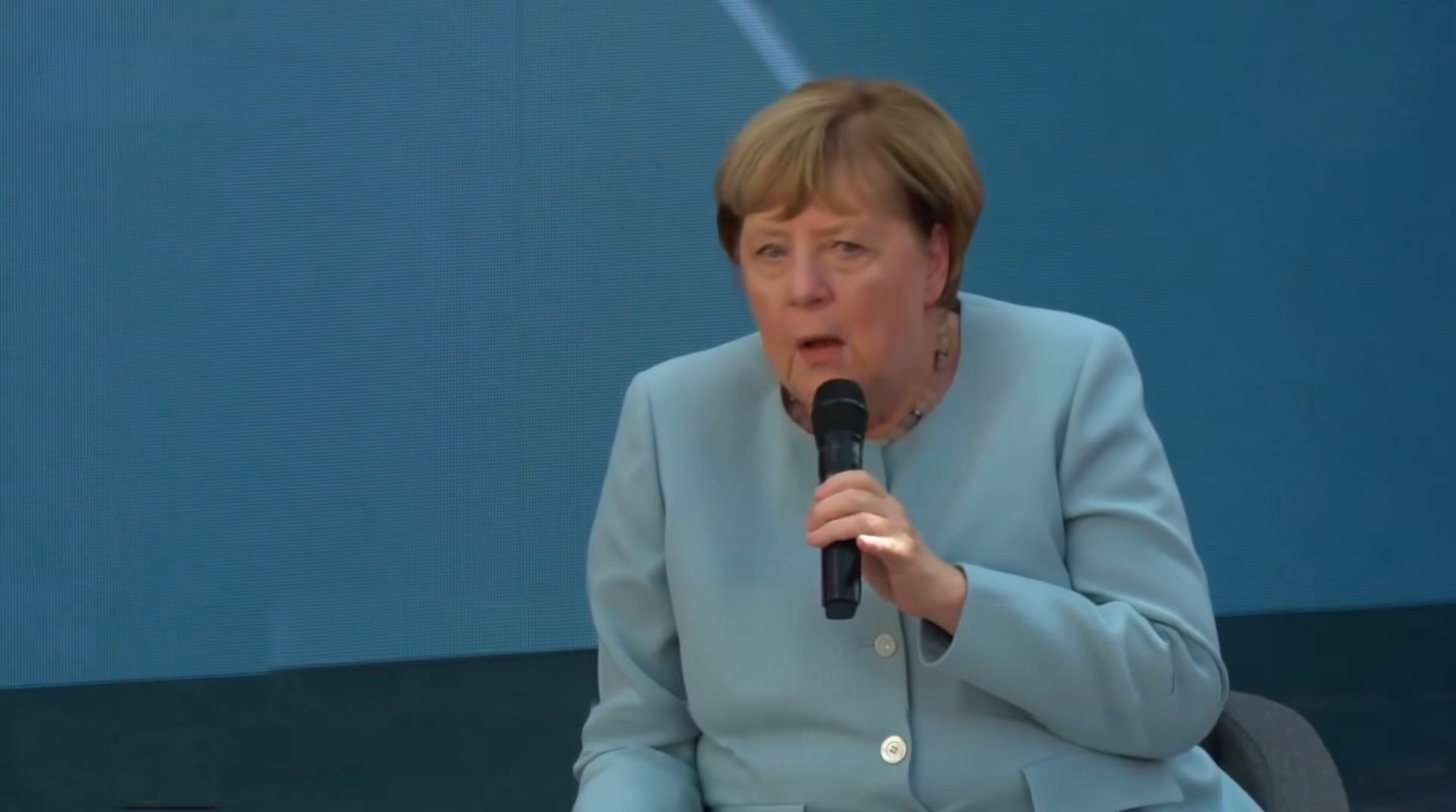
On September 8, 2026, Merkel was sitting at a digital trade fair in Cologne , chatting about artificial intelligence, household robots, and non-slip shoes for seniors. Between lemon squeezers and algorithms, she let slip a confession that wasn't really a confession at all. The Gates Foundation had suddenly had more money than the development budgets of major industrialized nations, its founder had been received by heads of state at least as warmly as she had herself, and had exerted "moral pressure through money." Anyone who hadn't given enough to the vaccine alliance had been immediately put in a bad light, and Gates had told every African leader: "Merkel was stingy this year."
Not blackmailed, but enthusiastically
Anyone crying blackmail now hasn't been listening and is actually doing Merkel a favor. The word isn't being used. What is being used is worse. In the same breath, she calls the vaccine alliance "a good thing" and admits she's "enthusiastic about it." The complaint, therefore, isn't about the goal itself, but about the gossip. The fact that a private individual was helping to determine the direction of German development policy was apparently acceptable to the Chancellor. Her only objection was that he was criticizing her generosity in Africa. This isn't criticism of the power of money; it's wounded pride, ten years late.
The patroness with the checkbook
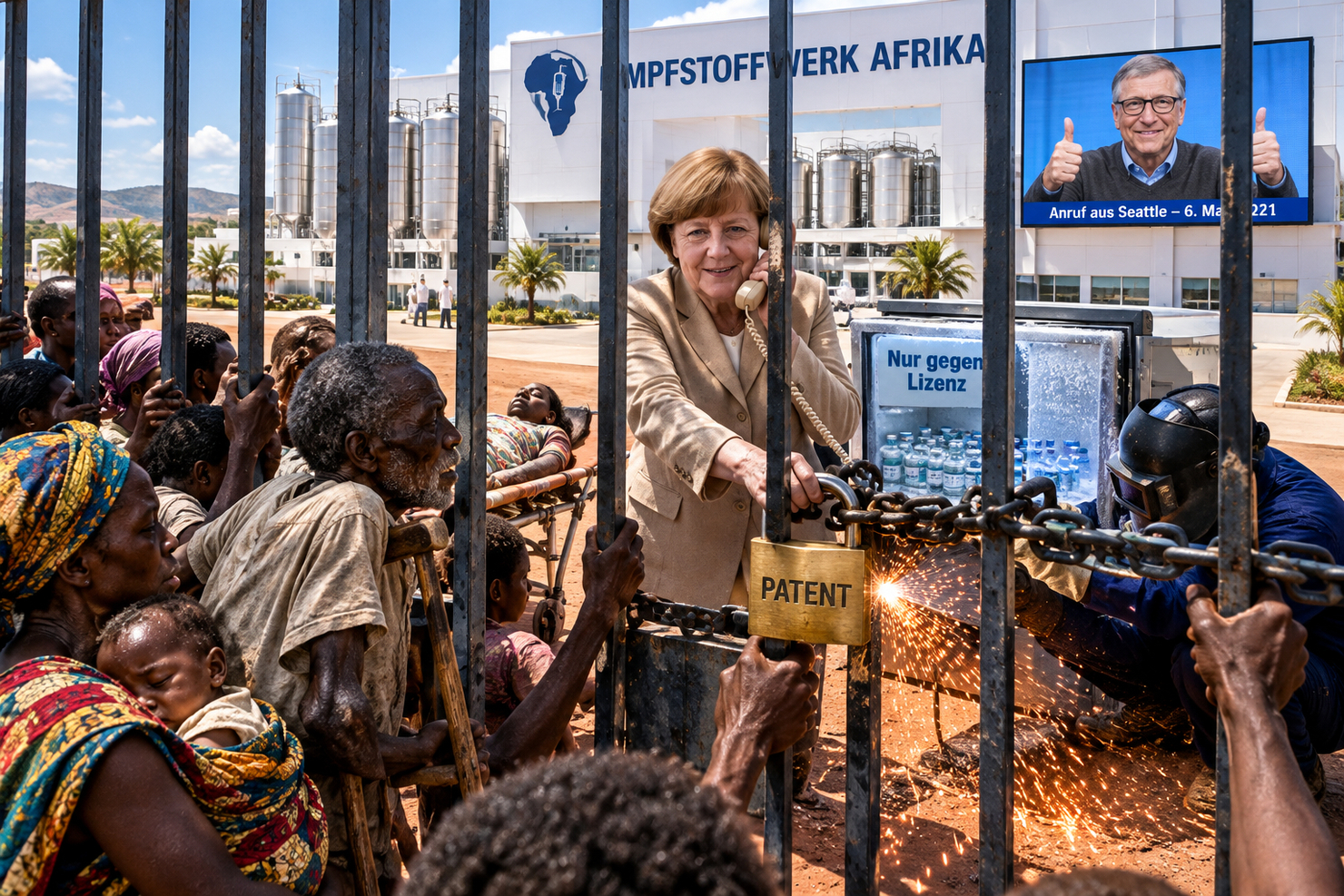
No one needs to dig through archives to find the counter-evidence; the Chancellor's Office itself posted it online. On January 27, 2015, Merkel, as host of the vaccine alliance's replenishment conference in Berlin , stood at the podium, welcomed the billionaire, increased Germany's contribution for 2016 to 2020 to 600 million euros, certified that the alliance had "achieved wonderful things," and explicitly called for cooperation with the pharmaceutical industry to speed up the development of vaccines. Five years later, in Davos, she pledged another 600 million euros . Those who pay under pressure pay through gritted teeth. Merkel pledged twice and applauded as she did so.
Education is difficult to showcase.
The most charming part of the Cologne story concerns schools. She asked Gates if they wouldn't also like to invest in education. According to Merkel, his answer was that they had tried, but there was hardly any real return to be gained because teachers, states, and students were constantly changing. This isn't an anecdote; it's foundation doctrine. In his 2009 annual letter , Gates admitted that over two billion dollars spent on restructuring American high schools usually fell short of their goals, explaining that, unlike a vaccine, academic success is difficult to scientifically verify. When it comes to vaccines, however, he likes to make calculations and raved in Davos about a twentyfold economic return on his donations—not a profit, but a figure that plays well on any stage, as he still likes to present today . A head of government who hears this and then still channels hundreds of millions into precisely this area isn't taken by surprise. She signs the contract.
The phone rings, the patent remains.
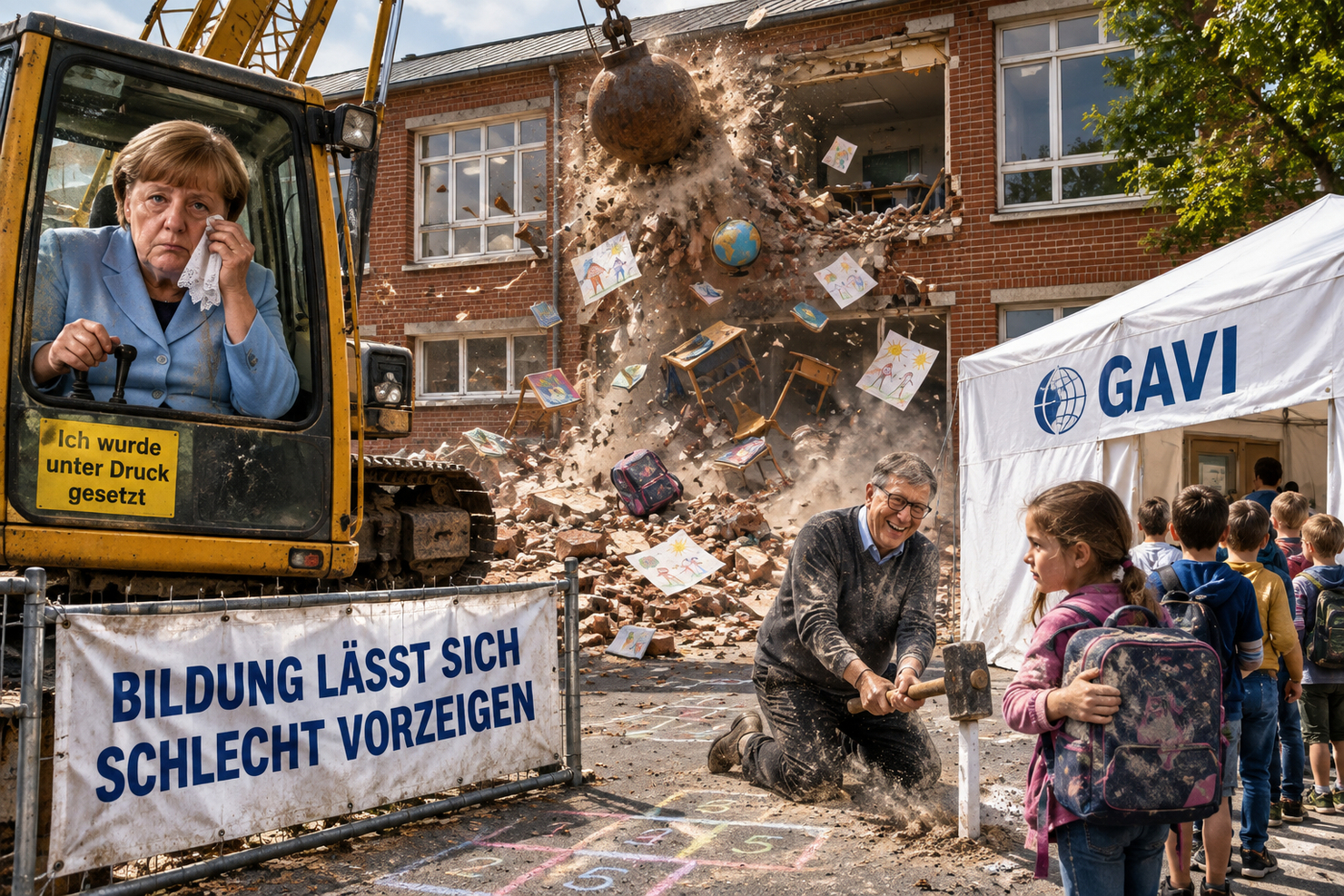
The pandemic revealed the Chancellor's remarkable resilience. In a televised address to the nation in March 2020 , she declared that public life had to be scaled back to buy time until research yielded a vaccine. On April 12, Gates appeared on the Tagesthemen news program and advocated precisely this course of action. No one had sent him there, and that's the bad news: According to the ARD's response to a freedom of information request, the contact was made through the New York studio; the editorial team had sought it out themselves and considered the interview an exclusive bonus. The public broadcaster didn't need any directive from the Chancellor's office; it voluntarily joined the effort. The Gates Foundation had already invested $55 million in BioNTech for a good six months . The rest is revealed in an investigation by Politico and WELT . On March 4, 2020, the head of CEPI, the vaccine alliance co-founded by Gates, requested funding from Merkel in writing; nine days later, €140 million was transferred. On May 6, 2021, one day after Washington supported the release of the vaccine patents, Bill and Melinda Gates spoke with the Chancellor by telephone. On the same day, her spokesperson issued a statement declaring that intellectual property is a source of innovation. The Chancellor's office is keeping the details of the phone call confidential, as disclosure could damage Germany's negotiating position. The foundation spent €5,7 million on lobbying in Germany in 2021.
Estate administration in a conversational tone
Merkel is now selling what she did back then as a kind of belated insight. The power of a man who manipulated heads of state with his checkbook was never hidden from her; she nurtured him, praised him, and fattened him with taxpayer money. Anyone who, more than a decade later, recounts this as an anecdote about an intrusive donor isn't engaging in reckoning, but rather managing a legacy – passing the buck to the supposed philanthropist like a check. She didn't see through the billionaire; she simply held the back door to the Chancellery for him. For Merkel, courage arrives punctually with retirement. The power she cultivated becomes a chuckle-worthy anecdote in her old age. She pledged more than a billion euros to the alliance that Gates co-founded, shut down the country while waiting for the vaccine, swore allegiance to patent protection on the day of his phone call – and now calls this "moral pressure"!
More for you:





 "Dravens Tales from the Crypt" has been enchanting for over 15 years with a tasteless mixture of humor, serious journalism - for current events and unbalanced reporting in the press politics - and zombies, garnished with lots of art, entertainment and punk rock. Draven has turned his hobby into a popular brand that cannot be classified.
My blog was never designed to spread news, let alone get political, but with current affairs I just can't help but capture information here that is otherwise censored on all other channels. I am aware that the design page may not seem "serious" to many in this regard, but I will not change this to please the "mainstream". Anyone who is open to non-state-compliant information sees the content and not the packaging. I've tried enough to provide people with information over the last 2 years, but quickly noticed that it never matters how it's "packaged", but what the other person's attitude towards it is. I don't want to put honey on anyone's mouth to meet expectations in any way, so I'll keep this design because hopefully at some point I'll be able to stop making these political statements, because it's not my goal to go on like this forever  I leave it up to everyone how they deal with it. However, you are welcome to simply copy and distribute the content, my blog has always been under the WTFPL license.
It's hard for me to describe what I'm actually doing here, DravensTales has become a culture blog, music blog, shock blog, tech blog, horror blog, fun blog, a blog about found items on the internet, internet bizarre, trash blog, art blog, water heater, zeitgeist blog over the years , Scrap blog and grab bag blog called. Everything that is right ... - and yet not. The main focus of the blog is contemporary art, in the broadest sense of the word.
To ensure the continued operation of this site, you are welcome to make a donation via credit card, PayPal, Google Pay, Apple Pay, or direct debit/bank account . Many thanks to all readers and supporters of this blog!








