Of course. It's just a joint. Relaxation. After-work vibes. Youth culture. It's always been done this way. And besides, they've legalized it, so it can't be that bad. Wonderful. Now let's talk briefly about cell biology.
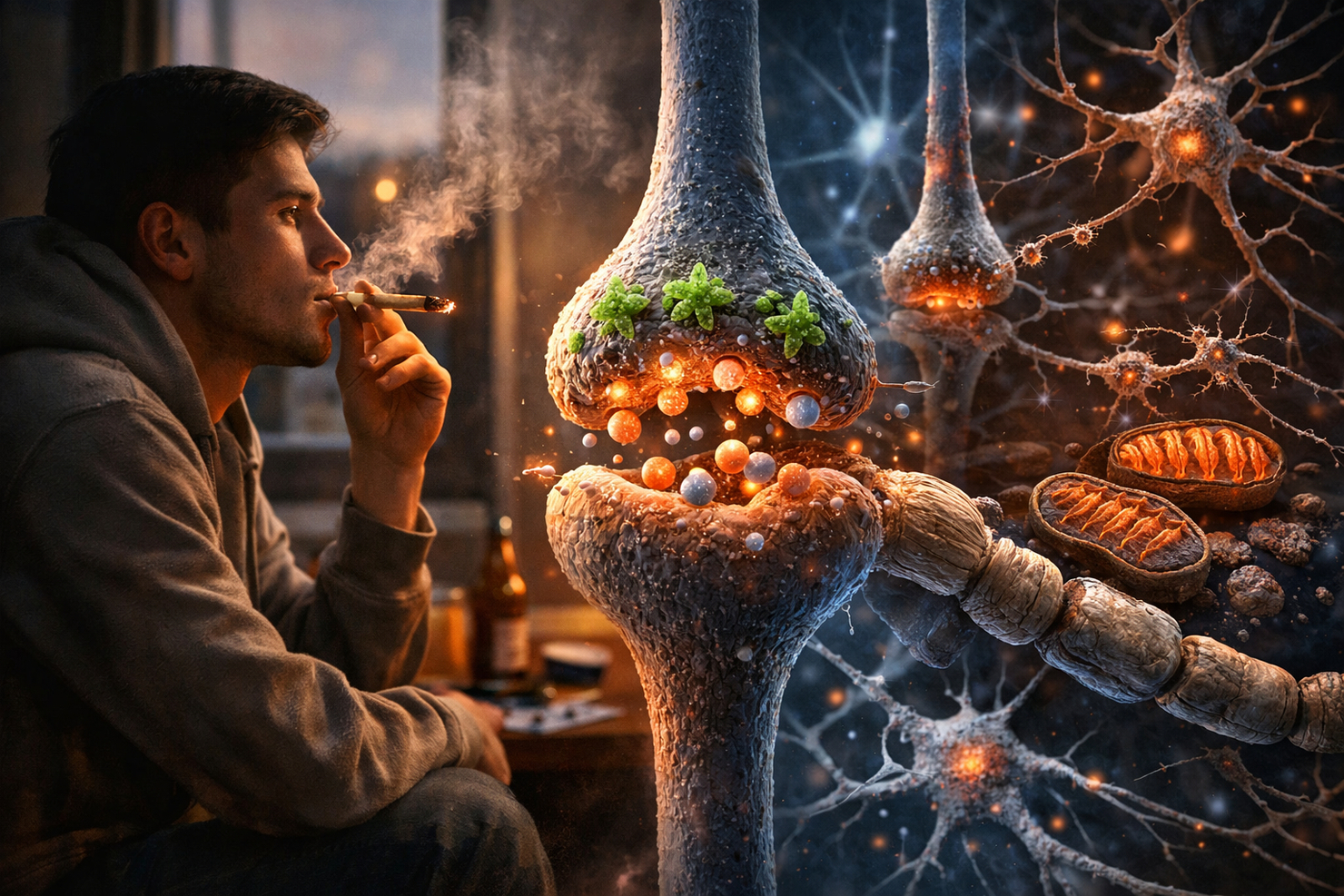
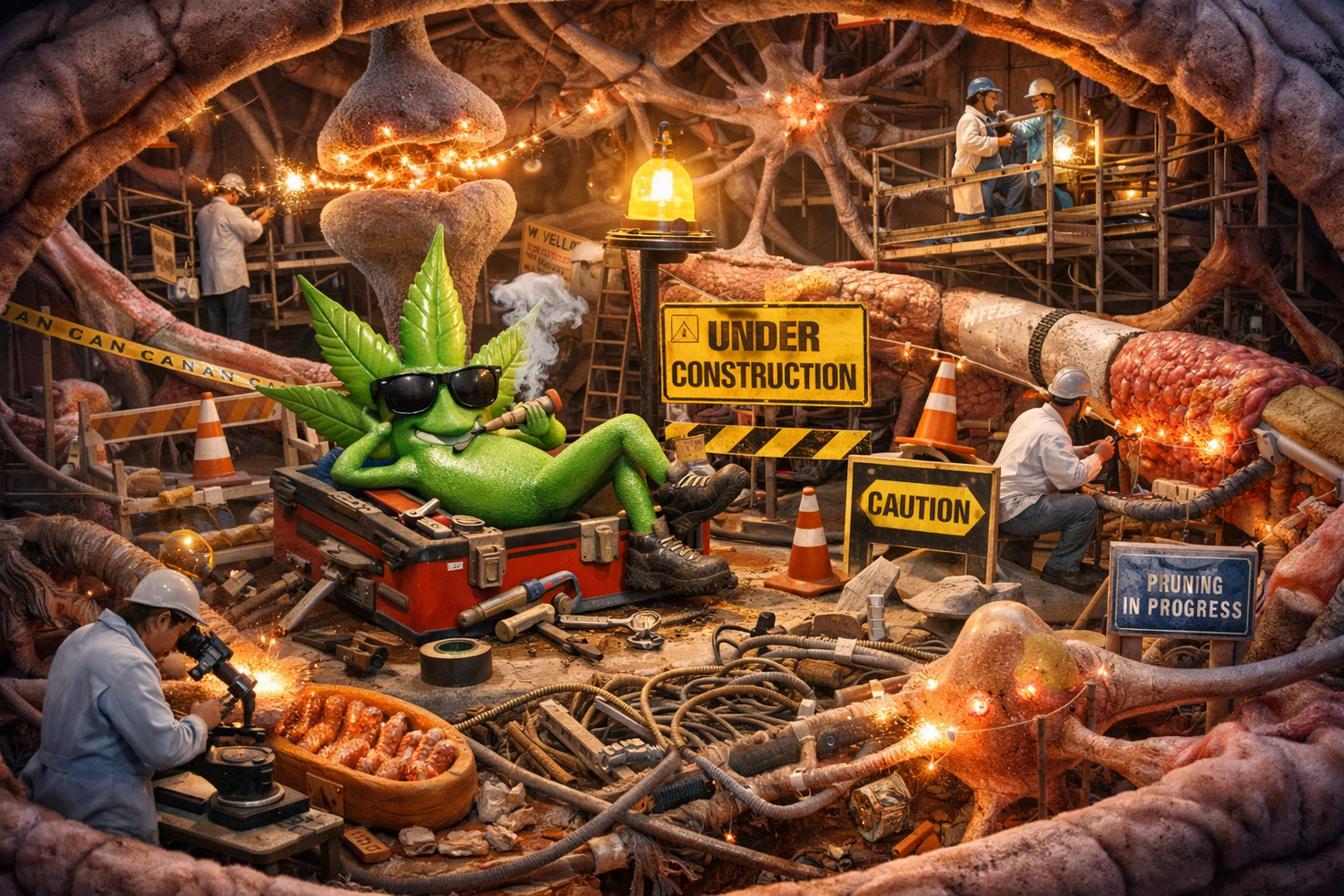
The adolescent brain is not a finished organ that is occasionally used and then put away. It is an active construction site. Synapses are built and pruned. Axons are strengthened. Nerve pathways are insulated. Signaling pathways are trained. Networks learn in real time what to retain and what to discard. This is not a metaphor. This is real neurobiology, which takes place between roughly twelve and twenty-five years of age, whether you are interested in it or not.
And it is precisely into this construction site that THC stumbles, sits down on the toolbox and disturbs the builder.
The first intervention: Communication
Neurons don't communicate randomly. They communicate in precisely timed patterns. An electrical impulse is triggered, neurotransmitters are released at the synapse, and this results in what we later experience as attention, memory, motivation, or inner peace.
THC binds to cannabinoid receptors and delays the release of these neurotransmitters. When glutamatergic signaling is altered, the system loses its ability to generate clean excitation. If GABA is disrupted, the brain's natural brake becomes unreliable. What feels subjectively like a pleasant calming effect is, at the cellular level, a distortion of signal strength, timing, and precision. The brain doesn't become calmer; it becomes improperly regulated. A subtle but crucial difference that is rarely noticeable in the moment.
The second intervention: The architecture
During adolescence, a process called synaptic pruning takes place. The brain doesn't sever connections indiscriminately, but actively selects and eliminates them. Unused synapses are removed, while important pathways are stabilized and strengthened. Later in life, it's not the quantity of connections that determines the quality of thinking, but rather the right selection.
This selection process is based on usage, activity, and relevance. However, when brain activity patterns are permanently altered by repeated THC exposure, the system makes its decisions on a distorted basis. Some connections remain intact, even though they should have been pruned. Other pathways lose stability, even though they would have been needed for later clarity. This isn't just a subtle impairment. It's a structural shift. And it surfaces years later as something many no longer connect to its origin: reduced mental acuity, less concentration, less efficient processing of stimuli. Simply... somehow shallower.
The third intervention: The pipes
Nerve pathways not only need to develop, but also be accelerated. Myelin, an insulating layer that surrounds axons, ensures that signals are transmitted quickly and with minimal loss. Without delay. Without noise.
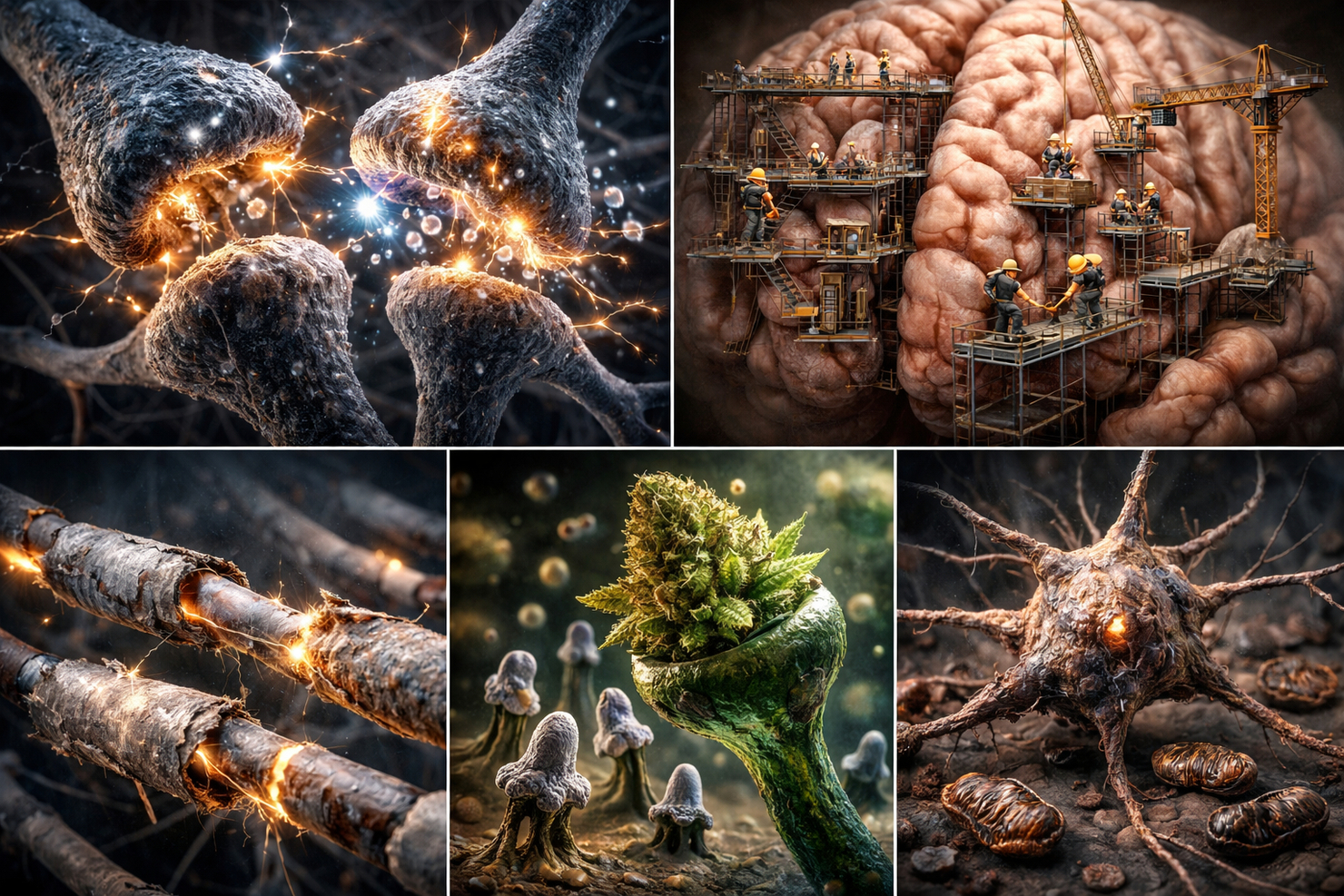
This myelination is particularly important in the networks that connect feeling, impulse, and reason—precisely where the brain must learn to regulate itself, not just react. THC can also influence this process. Not as a sudden block, but as a brake during a phase when maximum precision should be developing. The result isn't immediately visible. But you feel it later. The accelerator of emotions reacts in real time, the brake of reason engages with a delay. Impulses arise instantly, but their processing lags behind. That strange inner blurriness, a mixture of irritability and numbness, of hypersensitivity and delay.
The fourth intervention: The system itself
The brain itself produces cannabinoids. The endocannabinoid system is involved in growth, adaptation, stress management, plasticity, and internal balance. It's not a peripheral phenomenon; it's a conductor.
When THC is regularly introduced from the outside, this internal regulator is overridden. The receptors are constantly stimulated. And like any living system, the brain protects itself from overstimulation: The receptors become less sensitive. In some cases, they are even reduced. This is biological protective logic, not a defect. But the consequence is well-known: When the external stimulus disappears, what was previously artificially supplied is suddenly missing. Calmness no longer arises organically. Joy is harder to elicit. Motivation seems duller. One's own inner life feels strangely distant. Not because someone has failed in terms of character, but because their antennae for subtle inner adjustments have become quieter due to constant external stimulation.
The fifth intervention: The energy
Neurons are among the most energy-hungry cells in the body. They require a constant supply of ATP, provided by the mitochondria. A young brain, constantly remodeling, networking, selecting, and accelerating, demands peak performance at this level. When THC influences calcium signaling, mitochondrial activity, and cellular control processes, it affects not only signal transmission but also the overall efficiency of a nerve cell's function. Cellular metabolism then tends to operate in energy-saving mode, even though it needs to be running at full capacity for this remodeling process.
The result is a brain that functions, but not with the precision, energy, and resilience that should actually be developed during this phase of life.
And now?
Cannabis use in the young brain is not a state. Not a feeling. Not a lifestyle choice made in a vacuum. It is an intervention at the cellular level, affecting signaling pathways, synapses, myelin, receptors, energy, and architecture.
The crucial question, therefore, is not whether something feels pleasant in the moment. The crucial question is what is being constructed in the background while this effect takes hold. The brain constructs once. And it constructs with what is already available…
More for you:






 "Dravens Tales from the Crypt" has been enchanting for over 15 years with a tasteless mixture of humor, serious journalism - for current events and unbalanced reporting in the press politics - and zombies, garnished with lots of art, entertainment and punk rock. Draven has turned his hobby into a popular brand that cannot be classified.
My blog was never designed to spread news, let alone get political, but with current affairs I just can't help but capture information here that is otherwise censored on all other channels. I am aware that the design page may not seem "serious" to many in this regard, but I will not change this to please the "mainstream". Anyone who is open to non-state-compliant information sees the content and not the packaging. I've tried enough to provide people with information over the last 2 years, but quickly noticed that it never matters how it's "packaged", but what the other person's attitude towards it is. I don't want to put honey on anyone's mouth to meet expectations in any way, so I'll keep this design because hopefully at some point I'll be able to stop making these political statements, because it's not my goal to go on like this forever  I leave it up to everyone how they deal with it. However, you are welcome to simply copy and distribute the content, my blog has always been under the WTFPL license.
It's hard for me to describe what I'm actually doing here, DravensTales has become a culture blog, music blog, shock blog, tech blog, horror blog, fun blog, a blog about found items on the internet, internet bizarre, trash blog, art blog, water heater, zeitgeist blog over the years , Scrap blog and grab bag blog called. Everything that is right ... - and yet not. The main focus of the blog is contemporary art, in the broadest sense of the word.
To ensure the continued operation of this site, you are welcome to make a donation via credit card, PayPal, Google Pay, Apple Pay, or direct debit/bank account . Many thanks to all readers and supporters of this blog!