
In a functioning world, a convicted terrorist who publicly calls for political opponents to have their teeth knocked out and who describes jihadists as compassionate warriors would not seek a seat on the city council. In the world we actually live in, he does – and that is no longer a surprise, but merely the latest confirmation of a theory that has become uncomfortably easy to prove.
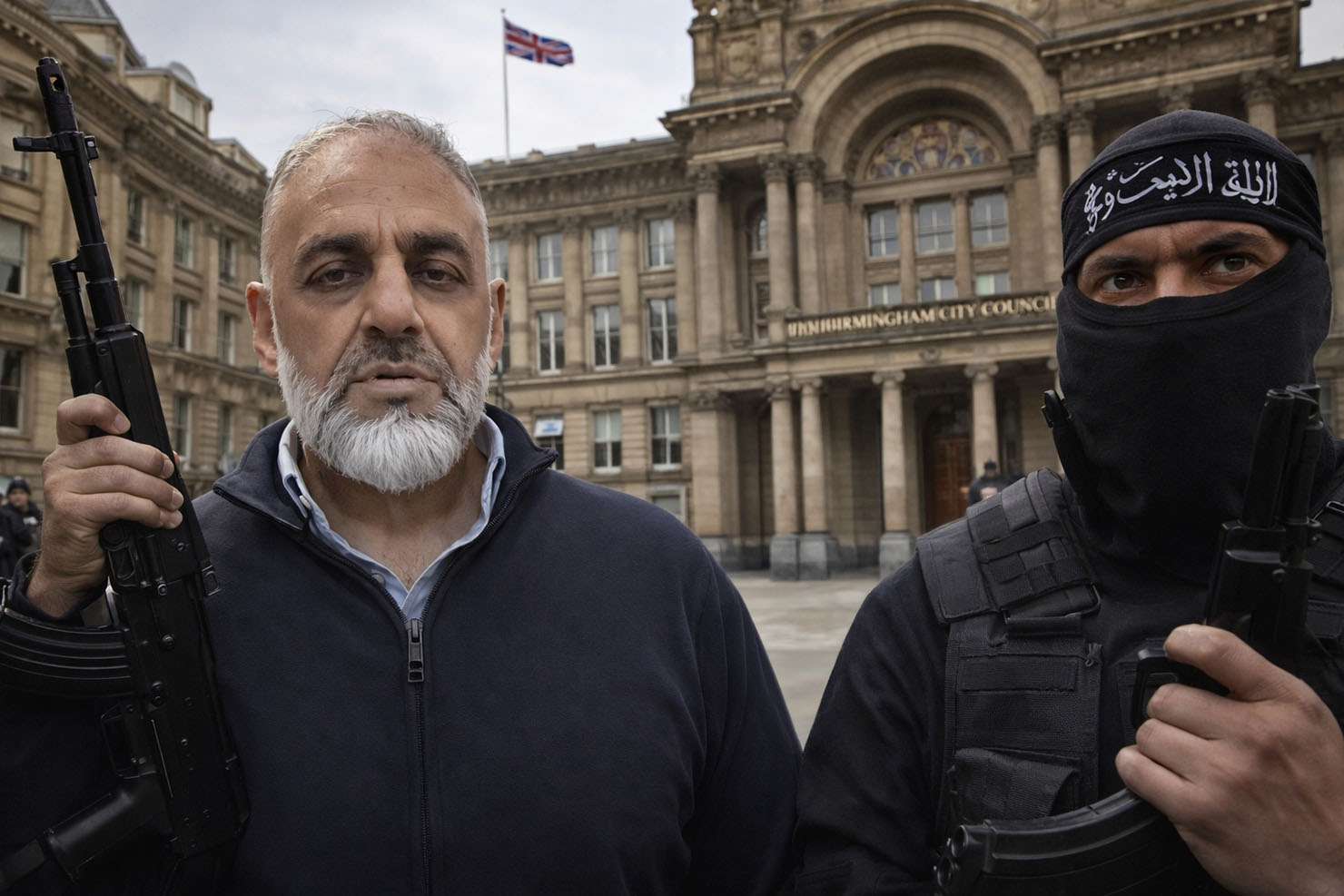
Birmingham, Sparkhill constituency. Shahid Butt, 60, is running as an independent candidate in the city council elections. His CV reads like a succinct summary: in 1999, he was convicted in Yemen for his involvement in plotting attacks on the British consulate in Aden, an Anglican church, and a Swiss-owned hotel. He served five years in prison, was released, and returned to Britain in 2003. Since then, he assures us, he has dedicated himself to dissuading young people from extremist ideas. That's commendable.
He continues to deny his guilt. Torture, fabricated accusations, a coerced confession – the familiar repertoire. What's remarkable isn't the claim itself, but the nonchalance with which it's presented. As if "I was tortured to sign a confession" were a normal sentence in a normal job interview for public office. In certain political circles, apparently, it is.
The qualification
So what qualifies him for the city council seat? Butt sums it up: unlike other candidates, he can "at least read, write, and speak English." That sounds absurd—until you consider that Sparkhill has around 30,000 inhabitants, over 90 percent of whom belong to ethnic minorities and about 80 percent of whom are Muslim. English language skills as a unique political selling point in an English-speaking country—not a joke, but a deliberate strategy. What that says about the state of local politics is left to the reader's imagination.
From Reformed to tooth-knocker
One could say he's learned, that he's changed. That would be a nice story. Unfortunately, in November, Butt called on Muslims in Birmingham to protest a football match between Aston Villa and the Israeli club Maccabi Tel Aviv. Video footage shows him saying: "Muslims aren't pacifists; if someone gets too close, you knock their teeth out." He expressed similarly constructive views on participating in jihad: "If someone wants to go and fight, let them fight, because they're doing it out of compassion." In professional circles, this is called deradicalization work.
What remains conspicuously quiet in the reporting is this: During Butt's trial in Yemen in 1999, an Islamist terrorist group kidnapped Western tourists – and explicitly demanded his release. Four hostages were killed in the rescue attempt by Yemeni security forces. The Briton Eric Firkins survived and to this day considers Butt unfit to hold political office in a democracy. Butt's assurances of change are "not convincing." What an old-fashioned view – judging people by their actions.
The icing on the cake
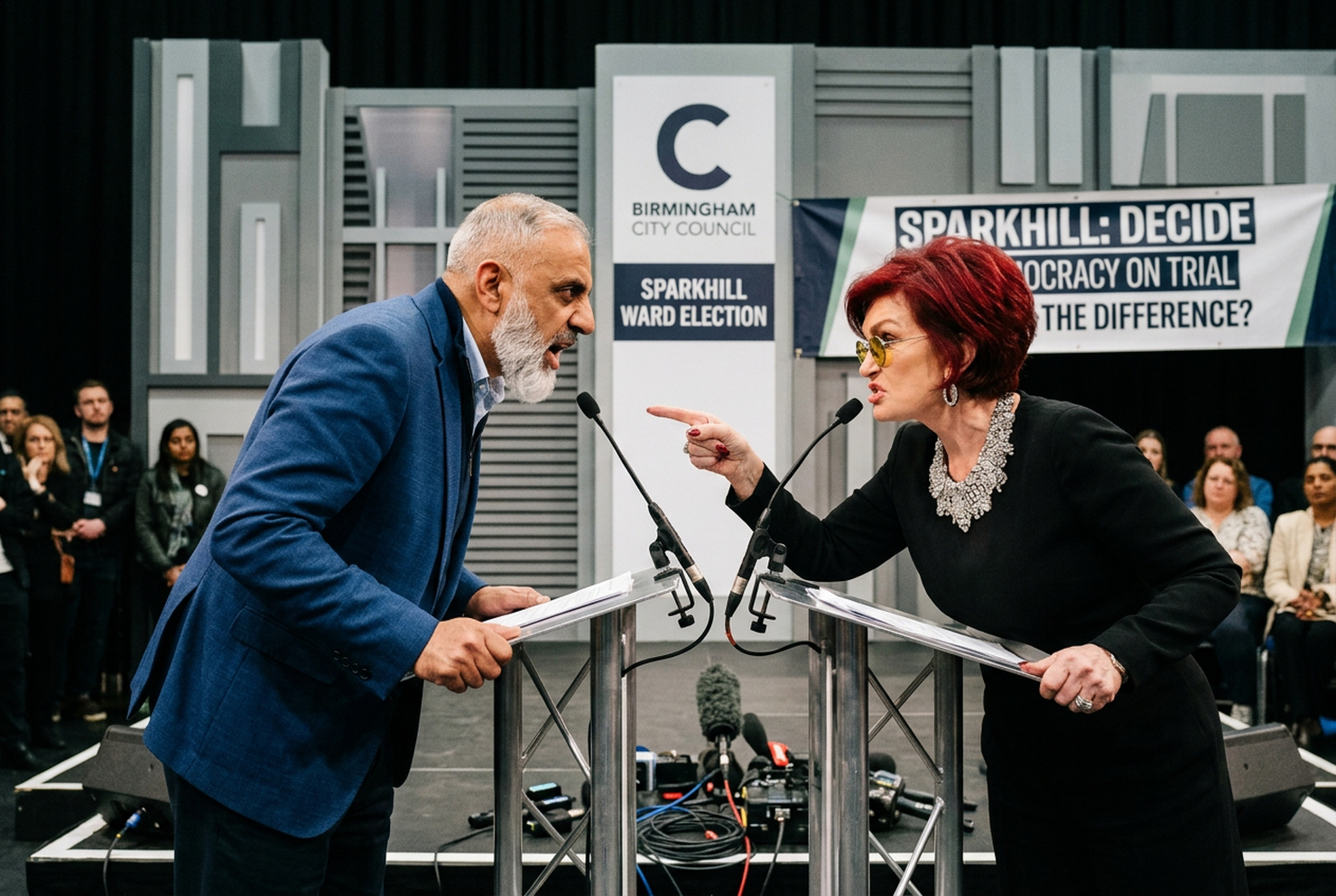
As if all that weren't enough, Sharon Osbourne – widow of rock legend Ozzy Osbourne – announced she was moving to Birmingham and would run against Butt. Spurred on by social media, she was ready for a fight. She ultimately didn't. A pity. A duel between a reality TV personality and a convicted terrorist for a city council seat would at least have honestly reflected what political representation has become in much of the West: a spectacle that entertains the audience but benefits no one.
The pattern that nobody wants to see
But let's not laugh too loudly. The Butt case is bizarre—but it's not an outlier; it's a symptom. Psychologists and political scientists have been observing the same pattern for decades: positions of power disproportionately attract people with clinically conspicuous personality traits—narcissism, Machiavellianism, psychopathy. Research refers to this as the "dark triad." This isn't a cliché, but an empirical finding. The system ensures that precisely these types of people rise to the top: it rewards unscrupulous behavior, values a lack of empathy as a strength, and rewards the willingness to stop at nothing—both figuratively and occasionally literally. Those who possess these qualities find their natural habitat in politics.
Labour MP Sureena Brackenridge expressed her "stunned silence" that someone with Butt's past would want to represent the people of Sparkhill. One understands the reaction. One no longer shares it. Anyone who has observed the political landscape of the last twenty years—war criminals in government, liars democratically re-elected, corrupt individuals who nevertheless retain their positions—has ceased to be shocked. They have begun to recognize patterns.
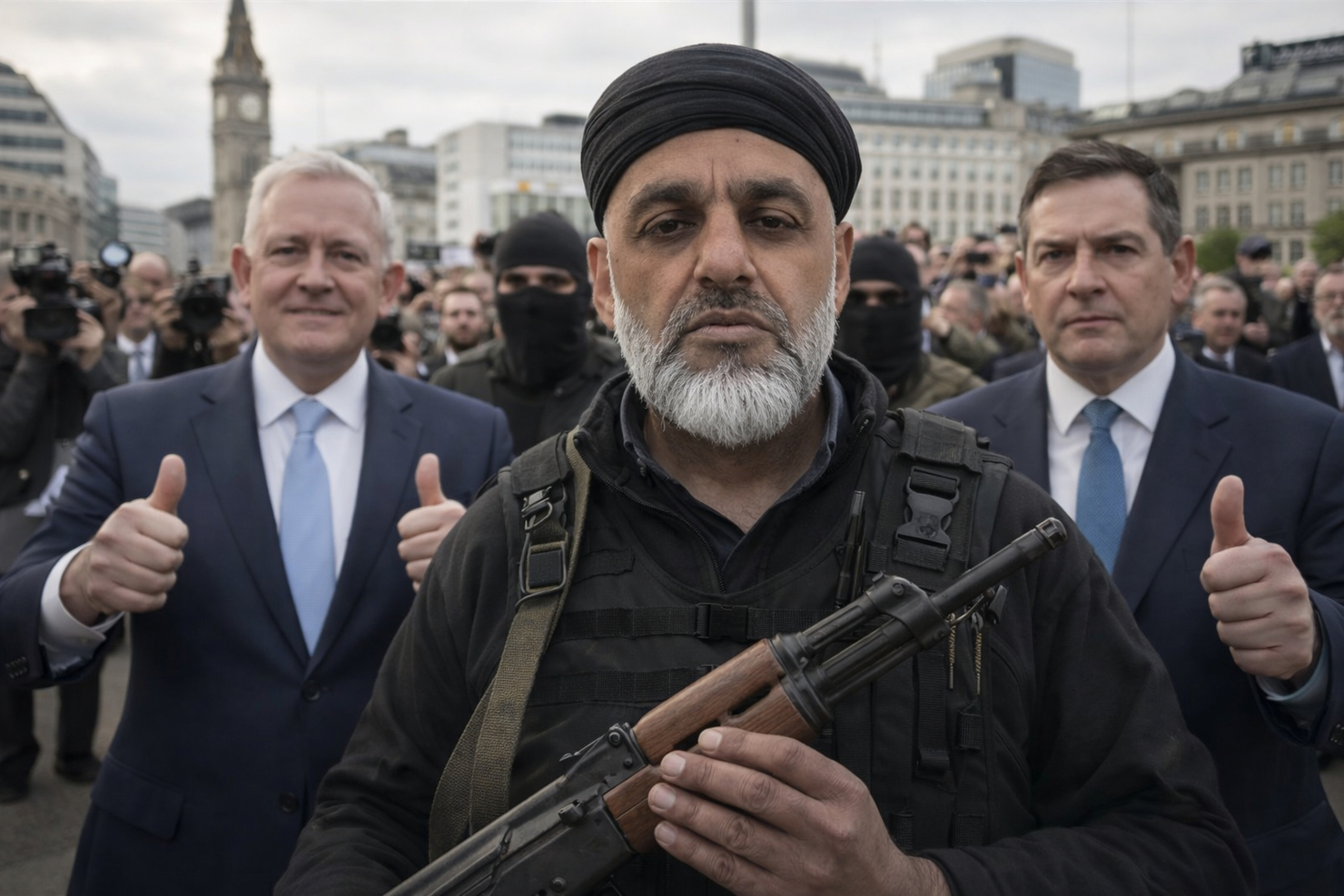
Psychopaths don't accidentally enter politics – the system opens the door for them, rolls out the red carpet, and then wonders who turns up on it.
And as long as the system doesn't grasp that it doesn't produce random errors, but rather structurally predictable results, the next Shahid Butt will already be filling out his candidacy application. At least he can speak English!
More for you:





 "Dravens Tales from the Crypt" has been enchanting for over 15 years with a tasteless mixture of humor, serious journalism - for current events and unbalanced reporting in the press politics - and zombies, garnished with lots of art, entertainment and punk rock. Draven has turned his hobby into a popular brand that cannot be classified.
My blog was never designed to spread news, let alone get political, but with current affairs I just can't help but capture information here that is otherwise censored on all other channels. I am aware that the design page may not seem "serious" to many in this regard, but I will not change this to please the "mainstream". Anyone who is open to non-state-compliant information sees the content and not the packaging. I've tried enough to provide people with information over the last 2 years, but quickly noticed that it never matters how it's "packaged", but what the other person's attitude towards it is. I don't want to put honey on anyone's mouth to meet expectations in any way, so I'll keep this design because hopefully at some point I'll be able to stop making these political statements, because it's not my goal to go on like this forever  I leave it up to everyone how they deal with it. However, you are welcome to simply copy and distribute the content, my blog has always been under the WTFPL license.
It's hard for me to describe what I'm actually doing here, DravensTales has become a culture blog, music blog, shock blog, tech blog, horror blog, fun blog, a blog about found items on the internet, internet bizarre, trash blog, art blog, water heater, zeitgeist blog over the years , Scrap blog and grab bag blog called. Everything that is right ... - and yet not. The main focus of the blog is contemporary art, in the broadest sense of the word.
To ensure the continued operation of this site, you are welcome to make a donation via credit card, PayPal, Google Pay, Apple Pay, or direct debit/bank account . Many thanks to all readers and supporters of this blog!








