
There are recessions. There are financial crises. And then, according to Catherine Austin Fitts, there's the really big one: the "Central Banking Reset." Not a downturn, not a minor economic hiccup—but a historic restart, the kind that supposedly only happens every 80 to 120 years. Sounds less like economics and more like an apocalyptic movie script.
Fitts, former Under Secretary of Housing and Urban Development and founder of the Solari Report, says: Since August 2019, the "Going Direct Reset" has been underway. This time, everything is different than in the past 500 years. Why? Technology. Programmable money. Stablecoins. Asset tokens. In other words, those friendly little financial building blocks that promise to make everything more efficient, faster, and more modern. According to Fitts, however, this isn't an upgrade. It's a takeover.
If central banks introduce digital currencies with programmable functions, they argue, then traditional currency will end and the age of transaction control will begin. Money that not only pays but also obeys. Money that knows conditions. Money that decides what you're allowed to use it for. Sounds futuristic. Or like a control center with a citizen interface.
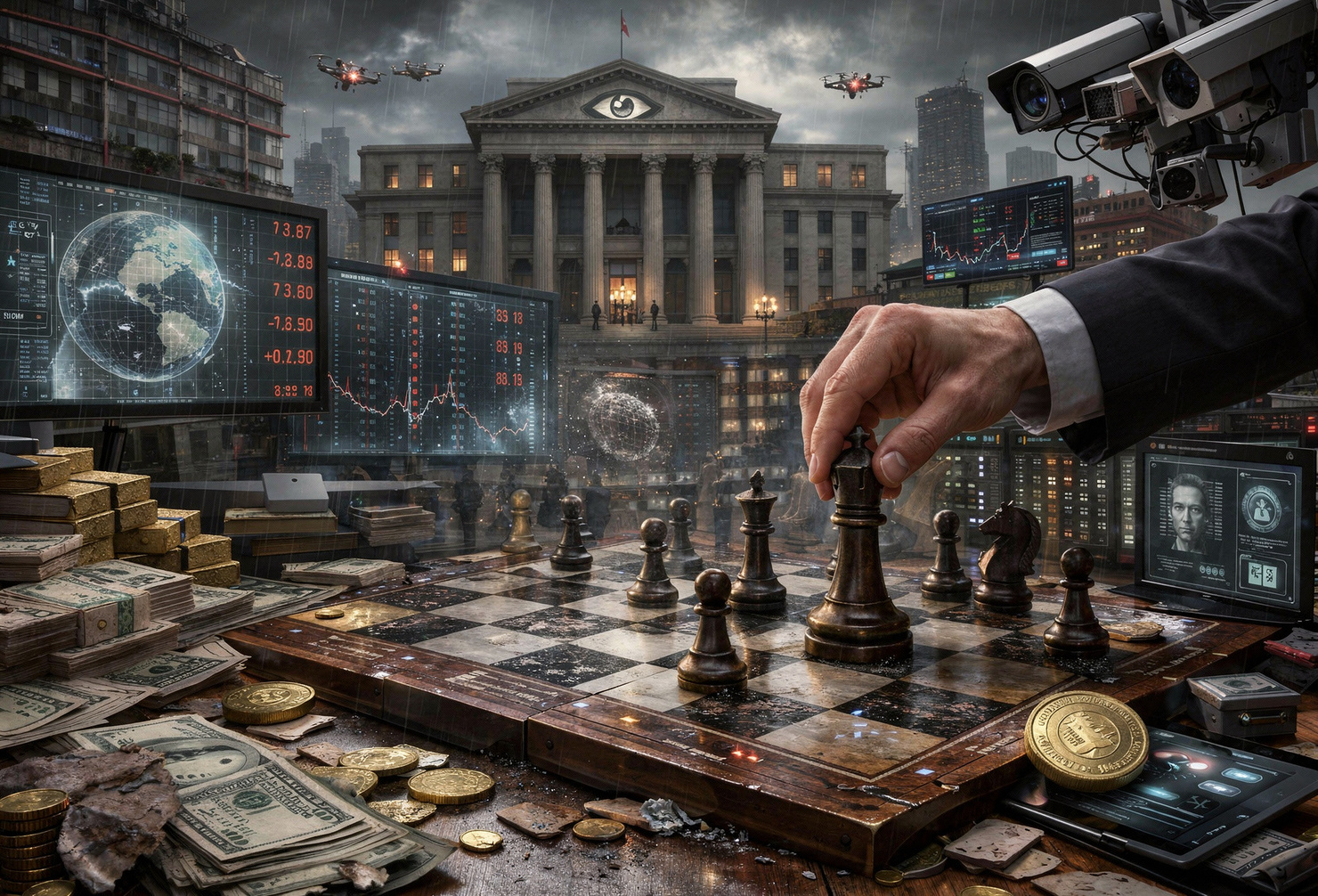
For Fitts, this isn't an economic reform process, but a constitutional breach. A kind of coup d'état by code. Instead of a republic: an oligarchy. Instead of a market: management. Whoever controls the flow of money controls the playing field. And with programmable money, the playing field becomes a remotely controlled chessboard.
In parallel, legislative initiatives such as the Genius Act, the Clarity Act, and the Responsible Financial Innovation Act are underway in the US. These are regulatory frameworks for stablecoins and asset tokens. It sounds technical. And it is. But Fitts sees them as the infrastructural foundation for a new financial regime. Target date: 2030.
And then comes the bubble. If all this is implemented, Fitts says, we won't be at the peak, but somewhere in the lower third of the speculation curve. A bubble that makes everything that came before seem like child's play. Provided it works.
She herself says: Maybe it won't work. Hopefully not. But if it does, then we're not talking about inflation or interest rate policy. We're talking about a structural redefinition of power. Whether you consider Fitts visionary or alarmist is a matter of opinion. More interesting is the core question: If money becomes programmable, will it still remain neutral? Or will it become a political tool?
2030 sounds far away. In legal terms, it's only a few votes away…
(via Sense Receptor)
More for you:






 "Dravens Tales from the Crypt" has been enchanting for over 15 years with a tasteless mixture of humor, serious journalism - for current events and unbalanced reporting in the press politics - and zombies, garnished with lots of art, entertainment and punk rock. Draven has turned his hobby into a popular brand that cannot be classified.
My blog was never designed to spread news, let alone get political, but with current affairs I just can't help but capture information here that is otherwise censored on all other channels. I am aware that the design page may not seem "serious" to many in this regard, but I will not change this to please the "mainstream". Anyone who is open to non-state-compliant information sees the content and not the packaging. I've tried enough to provide people with information over the last 2 years, but quickly noticed that it never matters how it's "packaged", but what the other person's attitude towards it is. I don't want to put honey on anyone's mouth to meet expectations in any way, so I'll keep this design because hopefully at some point I'll be able to stop making these political statements, because it's not my goal to go on like this forever  I leave it up to everyone how they deal with it. However, you are welcome to simply copy and distribute the content, my blog has always been under the WTFPL license.
It's hard for me to describe what I'm actually doing here, DravensTales has become a culture blog, music blog, shock blog, tech blog, horror blog, fun blog, a blog about found items on the internet, internet bizarre, trash blog, art blog, water heater, zeitgeist blog over the years , Scrap blog and grab bag blog called. Everything that is right ... - and yet not. The main focus of the blog is contemporary art, in the broadest sense of the word.
To ensure the continued operation of this site, you are welcome to make a donation via credit card, PayPal, Google Pay, Apple Pay, or direct debit/bank account . Many thanks to all readers and supporters of this blog!








