
A stick of RAM that cost around $200 in the summer of 2025 is on the shelf for over $1100 a year later . The official explanation fits on a beer mat: AI has devoured everything. And it's true. But a beer mat isn't a situation report, and anyone who reads the price list without looking at the night flights over Ukraine and a factory floor in Shanghai has only read the first page.
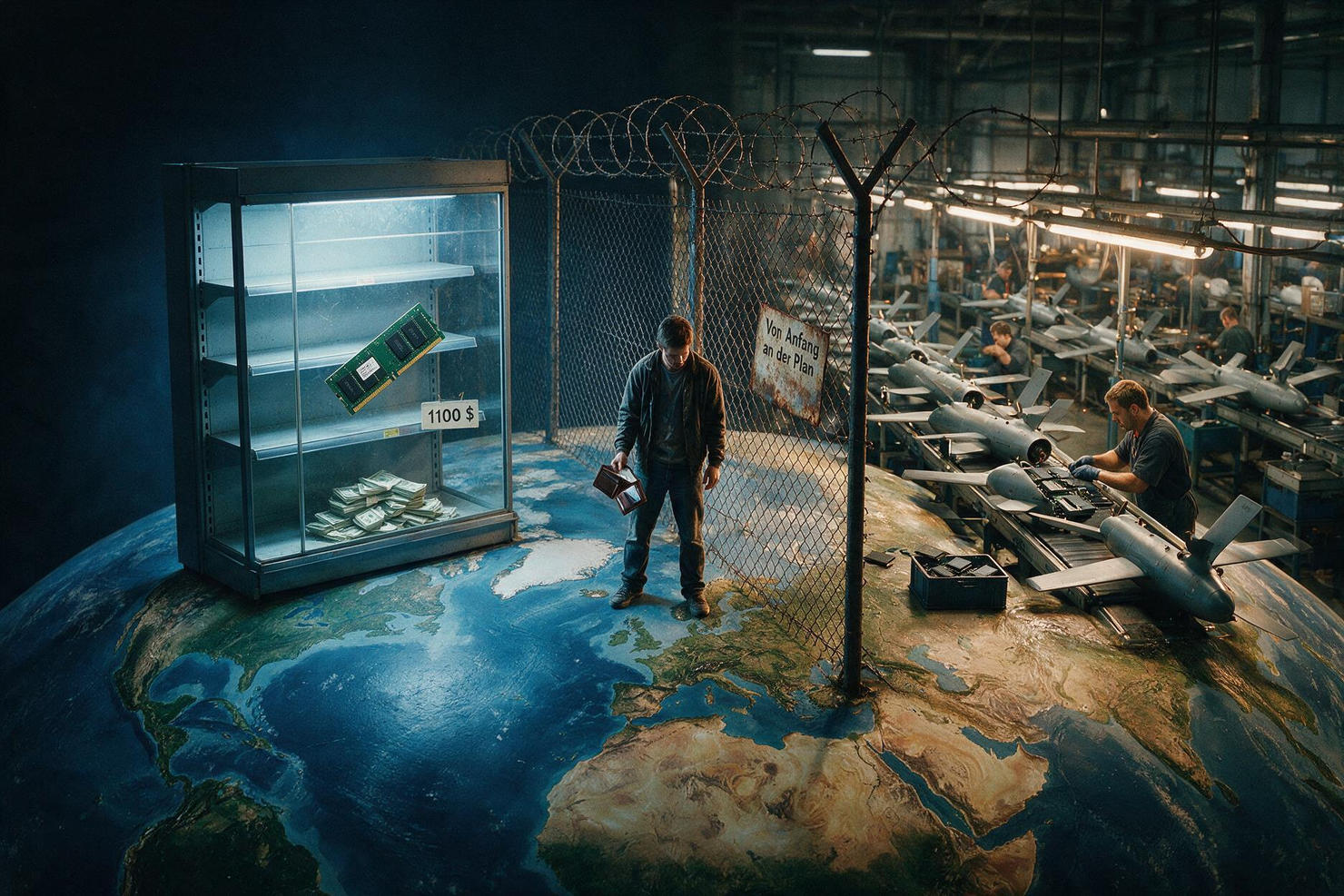
The figures are as brutal as they are boring. According to TrendForce, contract prices for conventional DRAM rose by roughly 93 to 98 percent in the first quarter of 2026 alone, with the industry raking in nearly $97 billion in three months. Tom's Hardware's price index shows that even the supposedly reliable DDR4 has doubled or tripled in price within three months. Gartner predicts a combined 130 percent increase in memory and SSD prices by the end of the year, along with the steepest decline in PC sales in over ten years.
According to the official version, the AI eats everything.
The mechanism behind this is no secret; it's in every quarterly report. Three corporations manufacture almost all of the world's DRAM, and all three are pushing their wafers toward High Bandwidth Memory because data centers are willing to pay any price for it. TrendForce estimates The HBM share of total DRAM wafer usage is expected to reach around 18 percent by the end of 2025, 22 percent by the end of 2026, and 30 percent by the end of 2027. One gigabyte of HBM occupies the wafer area of approximately four gigabytes of standard memory. Therefore, anyone wanting to upgrade a gaming PC will be competing with the same HBM options. Data centers that, incidentally, drain entire cities dry And he loses this competition every single day. That's the story everyone tells. It's true. It's just not the whole story.
The factor that nobody addresses
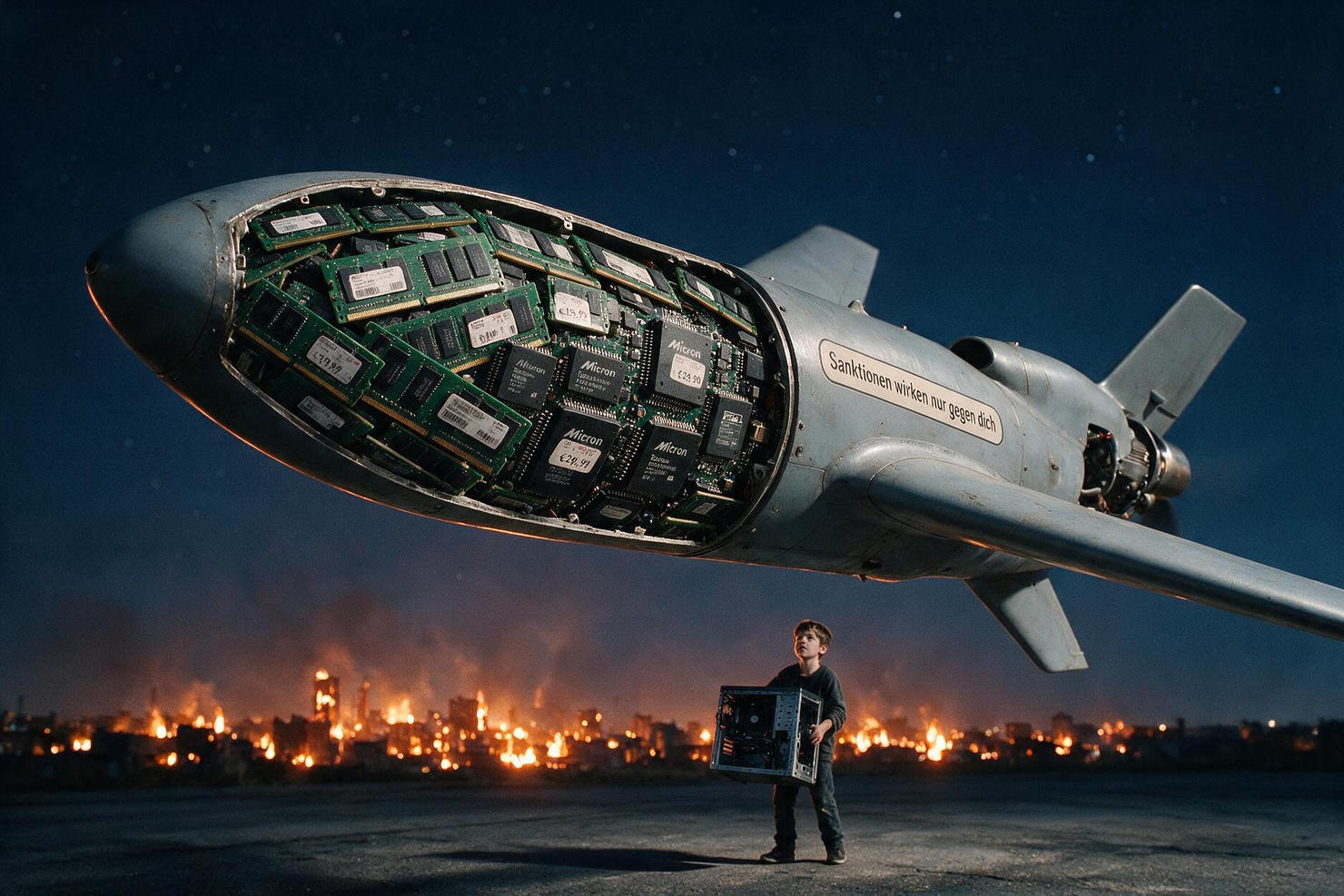
Semiconductors are not being bought in Ukraine, they are being burned. According to an analysis by the Ukrainian Air Force, Over 32,000 Russian Shahed drones by 2025 In the country, another 4600 will be deployed in the first six weeks of 2026. Each one contains electronics that will never return to a stable system after impact. The Ukrainian military intelligence service is cataloging them on its War&Sanctions portal. Over 5500 foreign components from 190 Russian weapon systems and in the new Geran-4 he found, among other things a memory chip from Micron, that is, from one of the three corporations that are currently burying your rearmament plan. This is the pro side of the argument: A war economy that treats chips as consumables is a permanent drain on an already depleted market.
The opposing view is no less compelling. A kamikaze drone flies with microcontrollers, signal processors, and memory chips from the Stone Age, not with DDR5 modules. Around 75 identified foreign components are found in a Geran-2, including microcontrollers, memory, and signal processors, but none of them are used on the production lines where HBM and DDR5 compete for space. To this day, no one—neither analysts nor intelligence agencies—has provided a figure for what percentage of the world's DRAM bits disappear into military equipment. The mechanics are documented, but the scale is not.
The sanction that never reaches the enemy
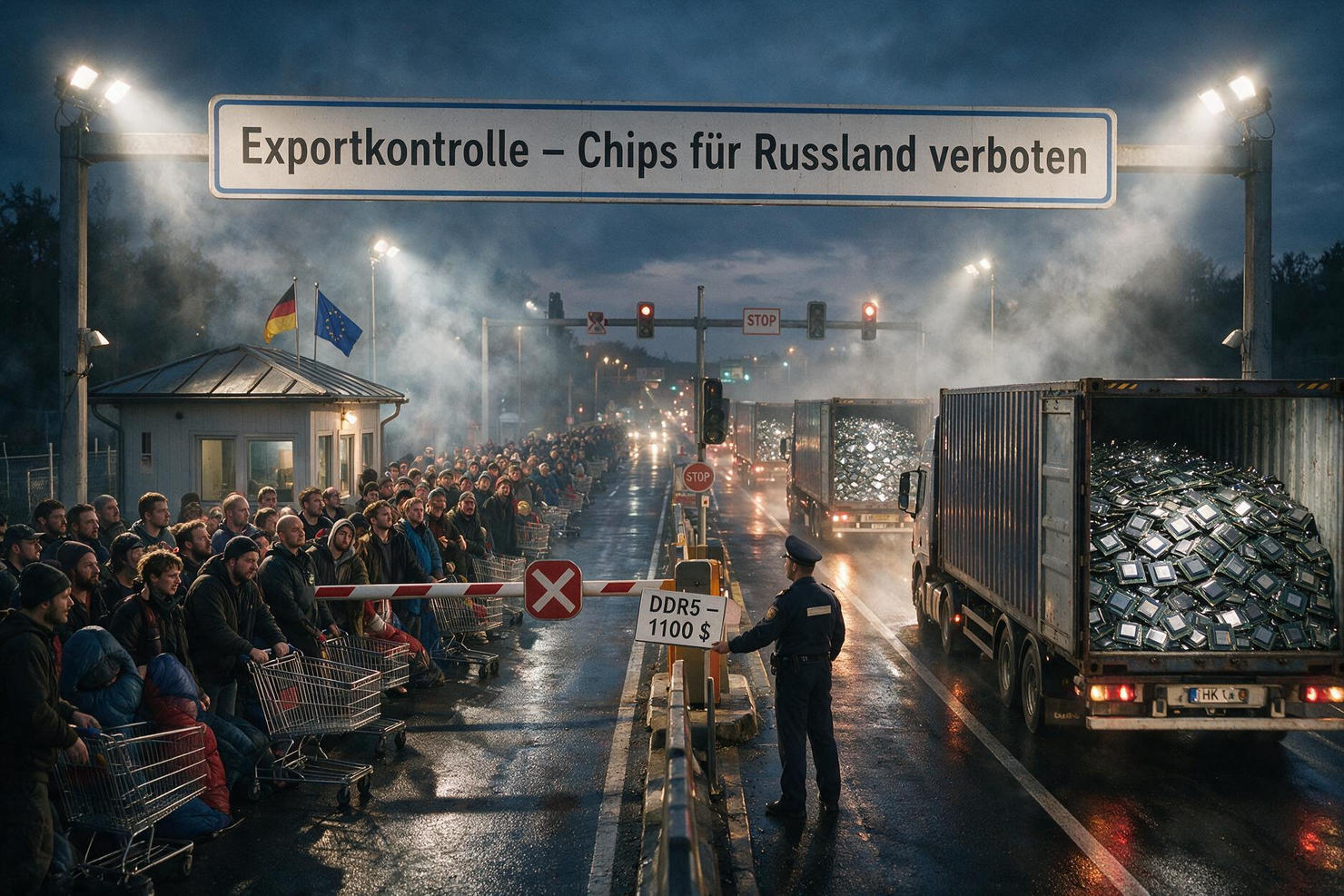
More interesting than the quantity is the direction. Western export controls are intended to cut Moscow off from chips, and a tight, expensive market would perfectly complement this. The catch: the chips are still getting through. Ukrainian sanctions commissioner Vlasiuk demonstrated in Washington that Shaheds from March 2026 US components from late 2025 The components were already installed, so the supply chain via China and Hong Kong can reach the warhead from the factory in just a few months. The only one feeling the effects of the price war is the Western customer, who pays 17 percent more for the computer. Whether three memory companies are controlling their allocation based on geopolitical calculations or simply on profit margins is impossible to prove and doesn't matter to your wallet. The result is the same: the enemy keeps buying, and you foot the bill.
The front, where things really get heated
Because the real war isn't about storage, but about the machines that print it. This was reported in December. Reuters about an EUV prototype device in a high-security laboratory in Shenzhen, built by former ASML engineers using parts from used ASML equipment. It generates EUV light, but not yet a single chip; the target is 2028, realistically 2030. In July, Beijing followed suit: An unknown state-owned company called Aishengna began series production of its own immersion DUV machines for SMIC, Hua Hong, and the storage manufacturer CXMT. Five units this year, approximately 20 next year, with key components from Japan. ASML shares fell by around eight percent Before the analysts could even calculate, it was clear: China accounts for roughly 16 percent of ASML's revenue and continues to buy DUV systems in bulk. The monopoly hasn't been broken, it's under threat. The difference between these two statements is the difference between analysis and headline.
Two worlds, one empty wallet
The question, therefore, is not whether China will supply Russia's drone fleets with storage; the supply chain already does that, with Western chips and Chinese intermediaries. The question is whether a single global market will become two technological spheres with their own standards, and who will pay the price in this division. The idea of a divided market is not a pipe dream; the sanctions policy practically forces it upon them, and Beijing's machine tools are proof of it. You can already see the cost in the price tag today. The AI war is not fought with Terminators, but with supply chains. is being led. The chip that used to go into the game now goes into the data center or a warhead, and the player pays for both. They restrict your memory while simultaneously upgrading your opponent – and call this "sanctions policy." The West is building high fences around a technology that's currently being replicated on the secondhand market. And when, in two years, two chip worlds exist side by side, you'll be told that this was the plan from the beginning – but who actually asked who it was for?

More for you:






 "Dravens Tales from the Crypt" has been enchanting for over 15 years with a tasteless mixture of humor, serious journalism - for current events and unbalanced reporting in the press politics - and zombies, garnished with lots of art, entertainment and punk rock. Draven has turned his hobby into a popular brand that cannot be classified.
My blog was never designed to spread news, let alone get political, but with current affairs I just can't help but capture information here that is otherwise censored on all other channels. I am aware that the design page may not seem "serious" to many in this regard, but I will not change this to please the "mainstream". Anyone who is open to non-state-compliant information sees the content and not the packaging. I've tried enough to provide people with information over the last 2 years, but quickly noticed that it never matters how it's "packaged", but what the other person's attitude towards it is. I don't want to put honey on anyone's mouth to meet expectations in any way, so I'll keep this design because hopefully at some point I'll be able to stop making these political statements, because it's not my goal to go on like this forever  I leave it up to everyone how they deal with it. However, you are welcome to simply copy and distribute the content, my blog has always been under the WTFPL license.
It's hard for me to describe what I'm actually doing here, DravensTales has become a culture blog, music blog, shock blog, tech blog, horror blog, fun blog, a blog about found items on the internet, internet bizarre, trash blog, art blog, water heater, zeitgeist blog over the years , Scrap blog and grab bag blog called. Everything that is right ... - and yet not. The main focus of the blog is contemporary art, in the broadest sense of the word.
To ensure the continued operation of this site, you are welcome to make a donation via credit card, PayPal, Google Pay, Apple Pay, or direct debit/bank account . Many thanks to all readers and supporters of this blog!








