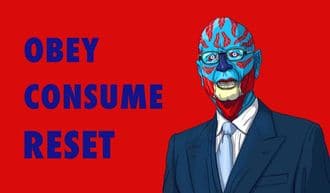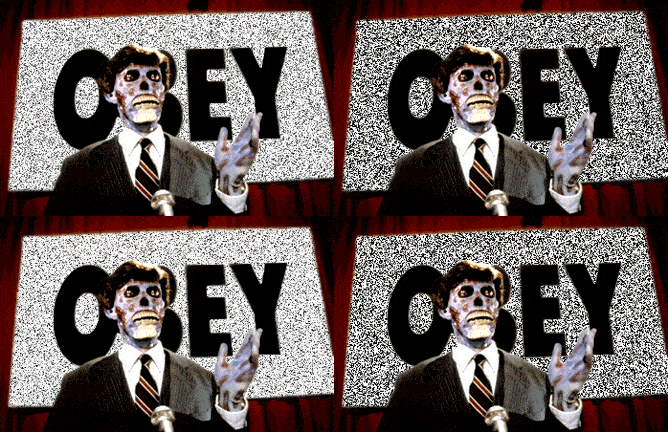
In Great Britain, since April 29, 2026, a person's birthdate determines what they can legally buy until their last breath. Anyone born on or after January 1, 2009, will never be allowed to purchase tobacco in this country—not at 18, not at 40, not at 80. This isn't public health policy. This is the gradual erosion of the age of majority, neatly wrapped in the guise of welfare.

A law that sorts by birth certificate
The Tobacco and Vapes Act 2026 It has received royal approval and is therefore British law. Health Secretary Wes Streeting is celebrating the shifting age limit as the greatest preventative measure of a generation; the underlying report bears the delightful title "Making Smoking Obsolete." The mechanism takes effect on January 1, 2027: the sales threshold increases by twelve months each year, so that those born in 2009 will be permanently excluded. Imagine two adults at the same checkout counter, both of legal age, both tax-paying, both of sound mind. One is allowed to buy their legal drug, the other never will be – solely because there's a cutoff date between their birth certificates. Anyone who talks about equality before the law here hasn't read the fine print.
The practical implementation is almost beyond belief in its absurdity. In the year 2070, a cashier will demand identification from a gray-haired, sixty-one-year-old to verify that the gentleman is indeed the right kind of old man. Anyone who sells him anyway risks fines and a sales ban of up to a year. So, the responsible citizen isn't persuaded; he's simply liquidated – and the cashier does the dirty work.
Role model sought, role model overturned.
The idea isn't even original. New Zealand had already passed the world's first generational ban in 2022, with the exact same effective date. The country was considered a shining example – until the new government fast-tracked the law again in early 2024. collected, before it even came into effect, among other things to offset tax cuts. The construct was first actually implemented by an island nation rarely cited for its liberal principles: The Maldives London implemented the ban in 2025, also starting with the 2009 vintage. So London is adopting a model that its own inventor rejected as unsustainable. If the original is gathering dust on the shelf, you simply buy the knock-off – as long as the label promises health benefits.
What reliably emerges from this is something every prohibition experiment in history has produced: a black market. Anyone born after 2027 will only know cigarettes as contraband from car trunks, without labels, age verification, or quality control. Consumers become delinquents overnight, without the cigarette or the people themselves having changed in the slightest. The state forgoes the revenue, retains the problem, and calls it a victory for public health.

From ashtray to plate
Anyone who thinks the mechanism will remain obediently focused on cigarettes hasn't grasped the principle. A logic of prohibition, once accepted as a legitimate tool, seeks out the next consumer good currently deemed irrational. The candidate is already at the counter: meat. Denmark will be the first country in the world to tax it starting in 2030. Methane emissions from his livestockA single cow will initially cost around 96 euros, rising to approximately 241 euros from 2035 onwards, all in the name of a climate target of minus 70 percent. For now, this is a levy, not a ban. But apply the British logic of tobacco to the carbon footprint of a schnitzel, and the script writes itself: To relieve the burden on the healthcare system and save the planet, a future generation – let's say everyone born after 2015 – would simply never be allowed to legally buy industrially produced meat again. Sounds absurd? The same judgment was made just a few years ago about a lifelong ban on cigarettes based on birth year. Today, it's law.
The citizen as a statistical anomaly
Here, the tobacco law becomes intertwined with a larger framework. Under the banner of the 2030 Agenda, the international community is selling the regulation of private behavior as nachhaltigen Fortschritt Health as goal three, responsible consumption as goal twelve; the justification for every conceivable intervention is already readily available. In this accounting system, humans are no longer treated as responsible subjects who can be empowered to make better decisions through education, but rather as risk factors to be controlled through legal barriers. It is the same thinking that elsewhere... Linking ownership to a score A company that only pays out if the employee's behavior is satisfactory. Legal maturity on probation, granted from above, and terminable at any time.
And the pattern isn't new. It's the same script a French provincial town used to put its own children under nighttime house arrest during the World Cup : entire year groups under general suspicion, across the board, as a precaution, naturally for their own good. First the emergency, then the pretext, and in the end, a date in the legal text suffices. The toolbox remains the same; it just becomes more commonplace with every use.
Those who applaud this salami-slicing approach to tobacco regulations because they don't smoke anyway are signing a blank check for everything that lands on the list next. Today it's cigarettes, tomorrow schnitzel, the day after tomorrow the internal combustion engine – and each time, an entire generation is excluded from the rights of others by birth certificate. In this way, a society trades personal responsibility for a points system managed by someone else. In this way, the free citizen becomes a data record, managed for one's own benefit – and this is called "welfare"! Thus, freedom doesn't die with a bang, but with a cut-off date buried in the fine print!

More for you:





 "Dravens Tales from the Crypt" has been enchanting for over 15 years with a tasteless mixture of humor, serious journalism - for current events and unbalanced reporting in the press politics - and zombies, garnished with lots of art, entertainment and punk rock. Draven has turned his hobby into a popular brand that cannot be classified.
My blog was never designed to spread news, let alone get political, but with current affairs I just can't help but capture information here that is otherwise censored on all other channels. I am aware that the design page may not seem "serious" to many in this regard, but I will not change this to please the "mainstream". Anyone who is open to non-state-compliant information sees the content and not the packaging. I've tried enough to provide people with information over the last 2 years, but quickly noticed that it never matters how it's "packaged", but what the other person's attitude towards it is. I don't want to put honey on anyone's mouth to meet expectations in any way, so I'll keep this design because hopefully at some point I'll be able to stop making these political statements, because it's not my goal to go on like this forever  I leave it up to everyone how they deal with it. However, you are welcome to simply copy and distribute the content, my blog has always been under the WTFPL license.
It's hard for me to describe what I'm actually doing here, DravensTales has become a culture blog, music blog, shock blog, tech blog, horror blog, fun blog, a blog about found items on the internet, internet bizarre, trash blog, art blog, water heater, zeitgeist blog over the years , Scrap blog and grab bag blog called. Everything that is right ... - and yet not. The main focus of the blog is contemporary art, in the broadest sense of the word.
To ensure the continued operation of this site, you are welcome to make a donation via credit card, PayPal, Google Pay, Apple Pay, or direct debit/bank account . Many thanks to all readers and supporters of this blog!