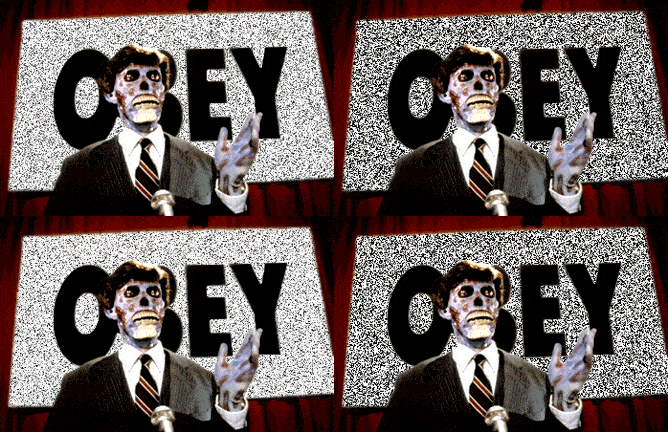
Tony Blair has a vision, and it sounds like the sales brochure for a surveillance state: facial recognition that identifies suspects in real time from live video footage, AI that calculates crime patterns, directs patrols, and "streamlines" decision-making, and at the heart of it all, as an indispensable linchpin, digital identity. The whole thing is labeled as a boon: For Your Safety. Imagine this technology in the hands of a government that arrests over 12,000 people every year for online posts—and you've no longer painted a dystopian picture, but described Great Britain in 2026.

The man who once lied his country into war has transformed into a techno-preacher, and his sermon is about total visibility. His Tony Blair Institute raves about how live facial recognition improves reaction times and instantly identifies suspects in crowded places like train stations and events. In a strategy paper from January 2026, the institute demands that the technology be rolled out "urgently" nationwide, coupled with calls for a single national police force and a national forensics agency. According to this interpretation, anyone who opposes permanent biometric tracking is committing a "social injustice." Orwell would have applauded this about-face.
The Apostle of Constant Observation
The government is enthusiastically participating. Last year alone, the Interior Ministry spent £12,6 million for facial recognitionThe responsible minister is celebrating the technology as the biggest breakthrough since DNA matching. Not everyone is applauding. Silkie Carlo of the civil liberties organization Big Brother Watch argues that no one would accept DNA checkpoints crisscrossing shopping streets, so facial recognition gates that treat every passerby like a suspect in an endless lineup shouldn't be acceptable either. Blair has little patience for such objections and even less for pilot projects. "I don't know why we have to test all this forever. Just implement it," he declared. hearWherever it is tested, it has a "dramatic effect." What is particularly dramatic about this is how casually the erosion of fundamental rights is rebranded as a question of efficiency.

Twelve thousand arrests, hardly any verdicts
The figure in the lead is not a rumor. According to data obtained by The Times through a request for information, police in England and Wales arrested over 12,000 people in 2023—around 33 per day—for communications deemed "grossly offensive," under Section 127 of the Communications Act and Section 1 of the Malicious Communications Act. The British House of Lords had already discussed this. an average of 30 arrests daily The speech, including the concern that criminal law is being misused to intimidate dissenters. And now the even more toxic part: hardly anyone is convicted. While arrests have increased by 2019... 58 percent increasedConvictions fell by almost half.
Here's the honest assessment, so no one exaggerates the numbers: These laws also cover private threats and harassment, not just dissenting opinions. Some of the arrests involve actual assaults. But that's precisely the point. If only a fraction of twelve thousand arrests ever end up before a judge, then this number doesn't measure justice, but rather reach—the reach of the action. A machine that rarely convicts, but reliably arrives with six officers for early morning house searches, has already fulfilled its purpose before a court even convenes. It's not called justice. It's called self-censorship.
"More control over your data"
Blair has a reassurance ready for the obvious objection. Data privacy concerns are "justified," but these systems, if implemented correctly, give the individual... even more control over his dataThis is the same logic used to explain to a prisoner that their cell is actually a retreat with full service. digital identity In this blueprint, it's not a technical byproduct, but the master key. Whoever links payments, travel, dealing with authorities, and age verification to a single identifier holds the tool to track a person's every move without gaps—and, in a worst-case scenario, to shut it down with a single click. Control, yes. Just not for you.

The think tank as a sales department
Anyone wanting to understand why a retired prime minister so fervently advocates for wired networks should follow the money. The Tony Blair Institute lives largely off the fortune of a single man: Larry Ellison, founder of the database and surveillance technology company Oracle, has supported the institute since 2021. at least 257 million pounds promised or transferred. Former employees describe the house in a months of research Internally, it's derided as a mere sales machine for Oracle, and is often mocked as an "Oracle subsidiary." In other words, the corporation that builds and sells surveillance infrastructure to governments funds the very think tank that recommends these same governments buy it. It's hard to imagine a more blatantly disguised conflict of interest as a form of government service.
And here we come full circle to a development that has been underway for almost two decades : Every crisis, every attack, every wave of outrage provides the pretext for the next layer of control, which then never disappears. Facial recognition against criminals, digital ID against migration, AI against chaos—the justification changes, the tool remains, and in the end, it always points in the same direction: at you.
The truth behind the friendly "For Your Safety" is remarkably simple. A government that already drags its citizens out of bed for mere words dreams of eyes that never blink. Anyone who puts facial recognition, digital identity, and pattern recognition in the hands of a single entity isn't building a shield, they're weaving a net. And anyone who then promises you that this net will give you more control over your life sees you as precisely the trained idiot their system needs! Surveillance has never been the price of freedom. It's its freshly dug grave, carefully lined with a promise of security—and Blair is smilingly handing democracy the shovel!

More for you:






 "Dravens Tales from the Crypt" has been enchanting for over 15 years with a tasteless mixture of humor, serious journalism - for current events and unbalanced reporting in the press politics - and zombies, garnished with lots of art, entertainment and punk rock. Draven has turned his hobby into a popular brand that cannot be classified.
My blog was never designed to spread news, let alone get political, but with current affairs I just can't help but capture information here that is otherwise censored on all other channels. I am aware that the design page may not seem "serious" to many in this regard, but I will not change this to please the "mainstream". Anyone who is open to non-state-compliant information sees the content and not the packaging. I've tried enough to provide people with information over the last 2 years, but quickly noticed that it never matters how it's "packaged", but what the other person's attitude towards it is. I don't want to put honey on anyone's mouth to meet expectations in any way, so I'll keep this design because hopefully at some point I'll be able to stop making these political statements, because it's not my goal to go on like this forever  I leave it up to everyone how they deal with it. However, you are welcome to simply copy and distribute the content, my blog has always been under the WTFPL license.
It's hard for me to describe what I'm actually doing here, DravensTales has become a culture blog, music blog, shock blog, tech blog, horror blog, fun blog, a blog about found items on the internet, internet bizarre, trash blog, art blog, water heater, zeitgeist blog over the years , Scrap blog and grab bag blog called. Everything that is right ... - and yet not. The main focus of the blog is contemporary art, in the broadest sense of the word.
To ensure the continued operation of this site, you are welcome to make a donation via credit card, PayPal, Google Pay, Apple Pay, or direct debit/bank account . Many thanks to all readers and supporters of this blog!