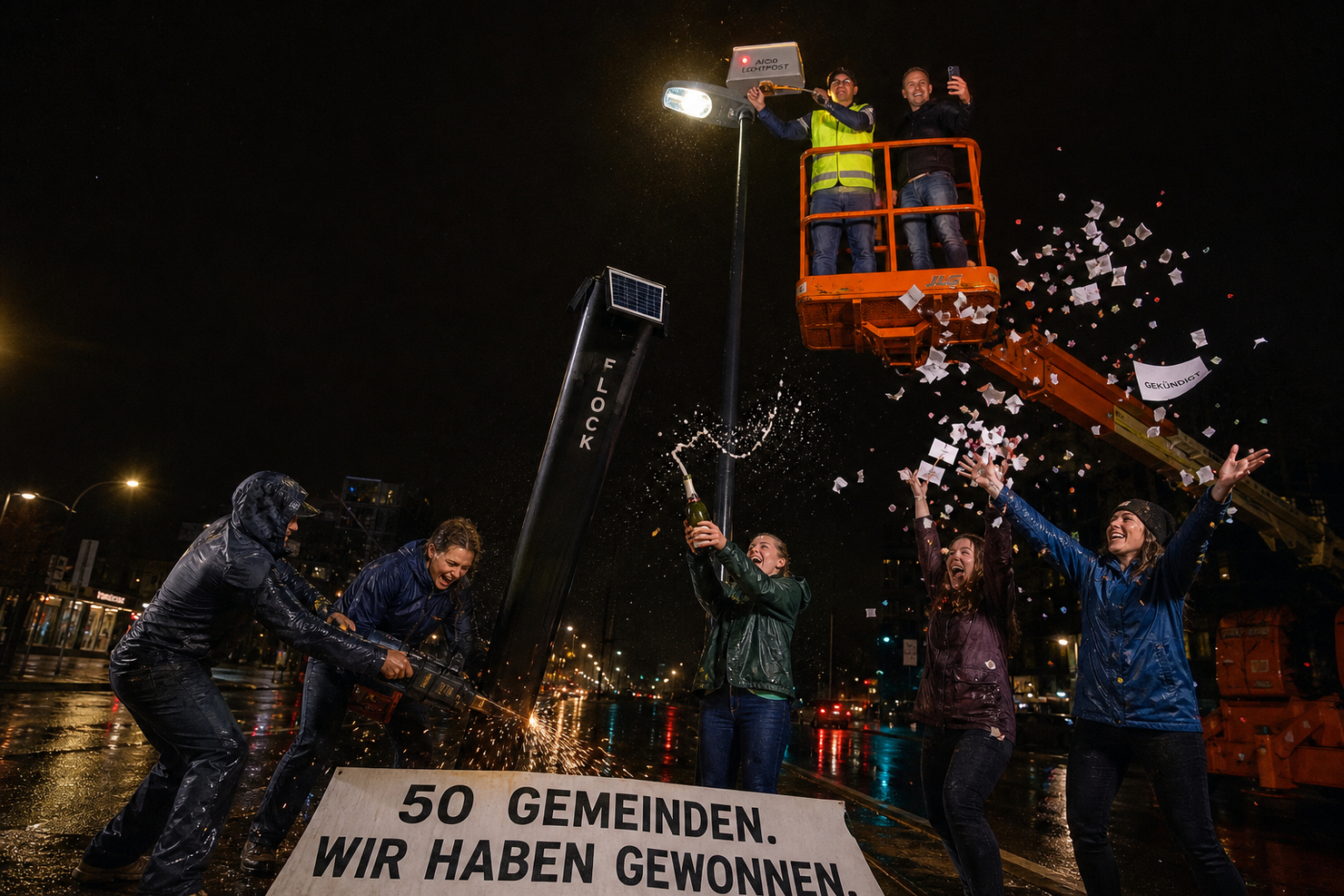
The resistance has won. Black pillars have been spray-painted, sawn down, and their contracts terminated; over 50 municipalities have canceled, deactivated, or never even authorized their license plate scanners since the beginning of 2026. And while the activists were still popping champagne corks, a technician was screwing the next generation into the socket of the streetlamp above our heads. Fifteen meters higher, no application, no pole, no target for the spray can.
The lamp on your street has a standardized socket at the top, the NEMA seven-pin socket. For sixty years, a dusk-to-dawn sensor has been plugged in there, switching the lamp on in the evening and off in the morning. Now, a device that doesn't switch a lamp on and off, but monitors you, fits perfectly into this socket.
The twilight switch that eats license plates
The device is called the Axon Lightpost, built in collaboration with the lantern specialist Ubicquia. The manufacturer advertises it in the headline of its own product page with... «Deploy in minutes», while three paragraphs below on the same page it says "in under an hour". Anyone who can't consistently display their own installation time on one page will surely be meticulous about data storage. The power comes from the municipal grid (up to 480 volts), with a built-in cellular module for communication. No solar panel, no trench, no building permit, no public notice. The camera unit is from Axis It reads license plates at speeds up to 250 km/h from a distance of up to 100 meters. The catch is stated in the data sheet: the 100 meters applies in daylight, 50 meters in the dark, and the full 100 meters are only available with an optional infrared illuminator. Furthermore, the 250 km/h speed applies to a single lane.
One screen, all eyes
The camera is the boring part. It gets interesting where the images converge, because that convergence is precisely what makes it so interesting. actual productThe company acquired Fusus, the platform that powers real-time police situation centers. According to an analysis by the Electronic Frontier Foundation, of the 135 such centers documented in the US, only one used Fusus. about one fifth This platform launched in 2023. Using the "Community Connect" function, individuals and businesses can connect their own cameras. voluntary with the same card. 404 Media counted over 200,000 cameras In this network, the doorbell you bought to prevent package theft is now a sensor in a network that films you as you walk to the mailbox. It's the most elegant cost-cutting measure in police history.

How a cancellation becomes an order
The case study is Denver. After audit logs showed that the data from the city's cameras between June 2024 and April 2025 more than 1400 times The old contract expired at the end of March 2026, with around 690 searches conducted after January 2025 using the search terms "ICE" or "Immigration." These searches were carried out primarily by police forces from other cities. Instead of a complete withdrawal, the old contract was changed suppliers. The city council approved the new supplier with... 7 to 6 votes through, 50 cameras for $150,000 for one year. The widespread narrative that no one protested is simply false: A coalition of civil rights organizations wrote a letter to the council. BriefThere was a hearing, two postponements, and a contested vote. The protest was there. It simply lost. The justification for the new provider was disarmingly honest: they were already working with them anyway. Just a few months earlier, the same city had... Five-year contract worth $27 million Approvals have been granted for approximately 2550 body cameras and over 2170 electroshock weapons. Those operating the police's evidence cloud no longer need to worry about tenders.
Honesty requires a two-way street. The new solution stores data for 21 days instead of 30 , foregoes the nationwide search function, and the police chief assures that neither federal authorities nor other agencies will have access. Stolen vehicles can indeed be found faster with this system. However, a promise is not a guarantee. What is technically possible will eventually be politically desired, and the data retention period is a line in a contract, not a law of nature.

The number you dial in an emergency
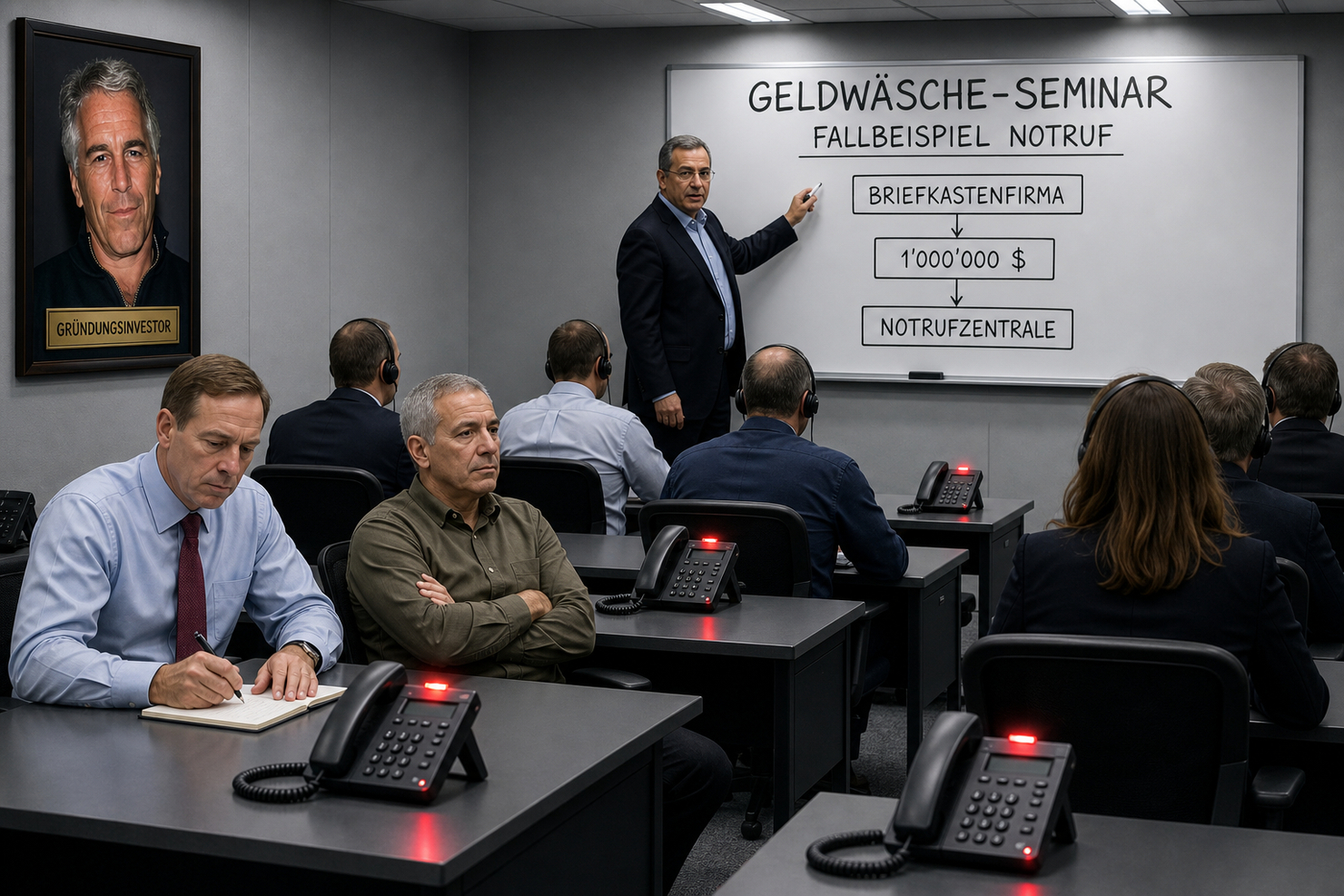
For 625 million dollars The same corporation has acquired Carbyne, the company behind the emergency call system for hundreds of agencies worldwide. Founded by Israeli technology and security experts, headquartered in New York, development in Tel Aviv. sat on the board of directors Pinhas Buchris, formerly commander of Unit 8200, the Israeli equivalent of the NSA. Among the funders is former CIA Director David Petraeus. And the initial funding? It came in 2015 through an investment company established by former Prime Minister Ehud Barak, according to documents released by the Ministry of Justice. one million dollars from Jeffrey Pstein hidden behind a shell company. The founder claims to have known nothing about it; Barak left the board in 2019, and his estate no longer holds any shares. The conspiracy theory, therefore, doesn't hold water. Nevertheless, the finding is disturbing enough: anyone calling emergency services today is contacting an infrastructure whose early funding was secured through a scheme that could serve as a textbook example in a money laundering seminar.
And you think that's an American problem?
It isn't. Anyone who's been here The authorities' obsession with data collection Anyone who has followed this practice will recognize the pattern. The Federal Supreme Court ruled in October 2024 that automatic vehicle searches are permitted under the Lucerne Police Act. aufgehoben, because the cantons lack the authority to do so and the infringement on informational self-determination is serious. Meanwhile, the customs office is operating approximately 400 such cameras Further along the border. A court ruling is not a building ban. It's a task for the lawyers, and that task will be completed.
The multinational corporation understood what its predecessor never grasped: visible surveillance breeds resistance, invisible surveillance breeds habituation. Outrage needs an object, and if that object looks like a streetlamp, no one will protest. Thus, surveillance doesn't end with a bang, but with a $150,000 bill that no one reads. The camera you can't see is the only one you'll never fight against. And eventually, you'll be sitting in your car, driving past forty streetlights, dutifully registering your doorbell for the neighborhood surveillance program, and calling this "security"!
More for you:






 "Dravens Tales from the Crypt" has been enchanting for over 15 years with a tasteless mixture of humor, serious journalism - for current events and unbalanced reporting in the press politics - and zombies, garnished with lots of art, entertainment and punk rock. Draven has turned his hobby into a popular brand that cannot be classified.
My blog was never designed to spread news, let alone get political, but with current affairs I just can't help but capture information here that is otherwise censored on all other channels. I am aware that the design page may not seem "serious" to many in this regard, but I will not change this to please the "mainstream". Anyone who is open to non-state-compliant information sees the content and not the packaging. I've tried enough to provide people with information over the last 2 years, but quickly noticed that it never matters how it's "packaged", but what the other person's attitude towards it is. I don't want to put honey on anyone's mouth to meet expectations in any way, so I'll keep this design because hopefully at some point I'll be able to stop making these political statements, because it's not my goal to go on like this forever  I leave it up to everyone how they deal with it. However, you are welcome to simply copy and distribute the content, my blog has always been under the WTFPL license.
It's hard for me to describe what I'm actually doing here, DravensTales has become a culture blog, music blog, shock blog, tech blog, horror blog, fun blog, a blog about found items on the internet, internet bizarre, trash blog, art blog, water heater, zeitgeist blog over the years , Scrap blog and grab bag blog called. Everything that is right ... - and yet not. The main focus of the blog is contemporary art, in the broadest sense of the word.
To ensure the continued operation of this site, you are welcome to make a donation via credit card, PayPal, Google Pay, Apple Pay, or direct debit/bank account . Many thanks to all readers and supporters of this blog!