
It always starts the same way. First, you get applause. Then you get awards. Then you get invitations. And at some point, you get—silence. No criticism. No debate. Just this clean, clinical nothingness. The most elegant form of elimination in a society that considers itself free: You're not physically erased, you're administratively erased.
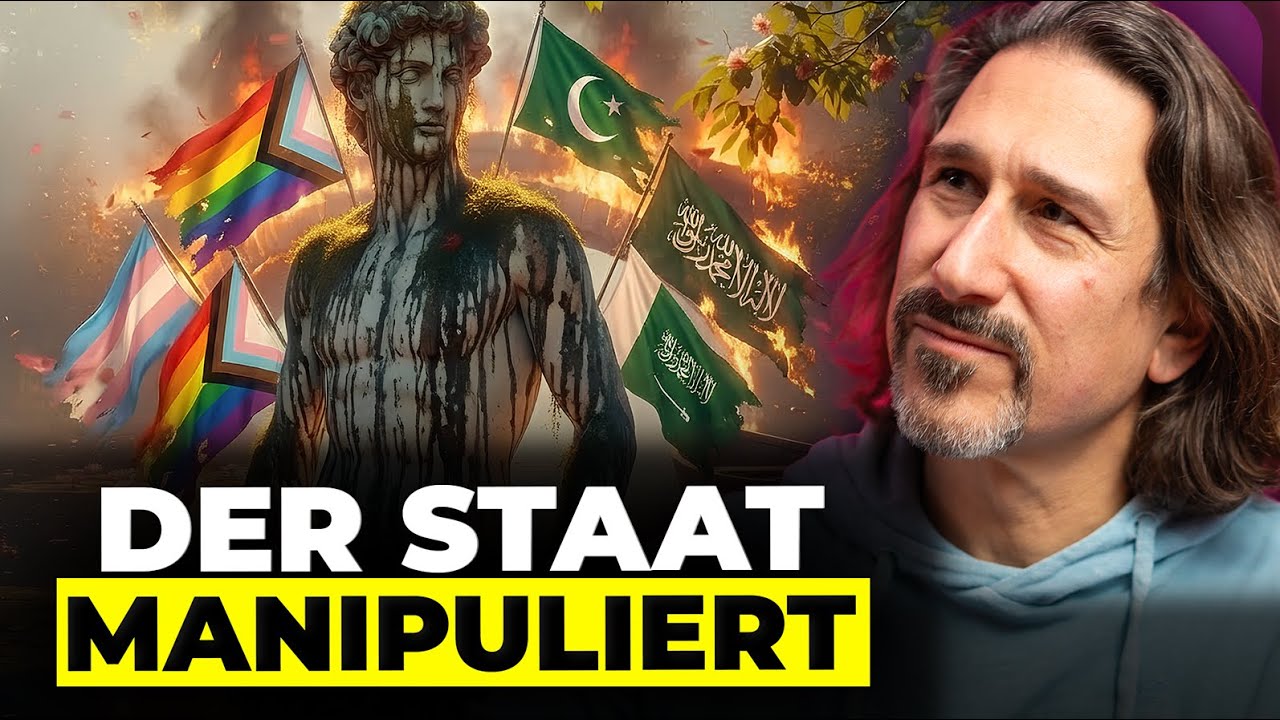
Andreas Thiel was once everywhere: stages, media, festivals. A satirist with a sharp scalpel and a dangerous habit: he actually used it. Not to garner applause, but to expose contradictions. And that's precisely where the problem begins. Satire is only welcome as long as it remains harmless. It can mock politicians as long as it doesn't touch upon established structures. It can provoke as long as it doesn't produce consequences. It can be free as long as it remains irrelevant.
The state loves art. Especially the harmless kind. The decorative kind. The subsidized kind. The curated kind. The taxpayer-funded affirmation of itself. Art is wonderful as long as it portrays the state as a benevolent gardener and not as the landscape architect of reality. Because subsidies are never neutral. Subsidies are selection. Selection is ideology. And ideology is nothing more than a polite form of control. Whoever pays, decides. And whoever isn't paid, disappears.
Thiel describes this invisible architecture of power with the dispassionate clarity of a man who has experienced its mechanics firsthand. It doesn't begin with bans. It begins with disinvitations. It begins with anonymous emails. With "concerns." With "risks." With "reputational issues." No one bans you. They simply decide collectively that they no longer need you. Cancel culture isn't a mob. It's an administration. An administration without letterhead.
The insidious thing about it is its efficiency. No one has to take responsibility. No one has to sign. No one has to explain. Theaters come under pressure. Promoters become afraid. The media become doubtful. And suddenly it turns out that freedom does exist, but only as long as it doesn't bother anyone with budgets. Modern censorship doesn't need police. It only needs fear. Fear of guilt by association. Fear of reputational damage. Fear of having the wrong name at the wrong time in the wrong place.
The system works so well because it doesn't coerce. It conditions. People begin to regulate themselves. To censor themselves. To remove themselves. Freedom doesn't die through violence. It dies through conformity. And conformity is sold as reason. The state doesn't have to define art. It only has to decide what gets funded. The rest takes care of itself. Markets disappear. Stages disappear. Spaces disappear. What remains is a cultural landscape that looks like diversity but functions like a greenhouse. Everything grows. But only what's permitted.
Thiel's perhaps greatest "crime" wasn't a statement. It was his independence. An artist outside state control is a systemic flaw. Not illegal. Just inconvenient. Because control works best through dependency. Those who are paid remain predictable. Those who are independent remain dangerous. And it's not hatred that's dangerous. It's independence. The system doesn't react to this with refutation, but with isolation. Character assassination replaces arguments. Suspicion replaces evidence. Repetition replaces truth. Eventually, something always sticks. Not because it's true. But because it's been said often enough.
The public prosecutor's office investigated Thiel for years and found nothing. No offense. No violation. No crime. The result? Meaningless. Because in the public perception, it's not the verdict that counts. It's the suspicion. The modern citizen no longer lives under censorship. He lives under surveillance. And surveillance generates conformity more efficiently than any law. The greatest achievement of modern power structures is not the suppression of criticism. It is the creation of an environment in which criticism becomes economically impossible.
You don't need to be banned. You just need to be rendered useless. The system doesn't need prisons for dissidents. It just needs a job market that no longer employs them. No bans. Just consequences. And so a satirist doesn't disappear because he said something wrong. But because he said something that should no longer be said. Not illegal. Just unwelcome.
Freedom still exists. On paper. In speeches. In constitutions. And sometimes even in podcasts. Just not on stage anymore…
More for you:






 "Dravens Tales from the Crypt" has been enchanting for over 15 years with a tasteless mixture of humor, serious journalism - for current events and unbalanced reporting in the press politics - and zombies, garnished with lots of art, entertainment and punk rock. Draven has turned his hobby into a popular brand that cannot be classified.
My blog was never designed to spread news, let alone get political, but with current affairs I just can't help but capture information here that is otherwise censored on all other channels. I am aware that the design page may not seem "serious" to many in this regard, but I will not change this to please the "mainstream". Anyone who is open to non-state-compliant information sees the content and not the packaging. I've tried enough to provide people with information over the last 2 years, but quickly noticed that it never matters how it's "packaged", but what the other person's attitude towards it is. I don't want to put honey on anyone's mouth to meet expectations in any way, so I'll keep this design because hopefully at some point I'll be able to stop making these political statements, because it's not my goal to go on like this forever  I leave it up to everyone how they deal with it. However, you are welcome to simply copy and distribute the content, my blog has always been under the WTFPL license.
It's hard for me to describe what I'm actually doing here, DravensTales has become a culture blog, music blog, shock blog, tech blog, horror blog, fun blog, a blog about found items on the internet, internet bizarre, trash blog, art blog, water heater, zeitgeist blog over the years , Scrap blog and grab bag blog called. Everything that is right ... - and yet not. The main focus of the blog is contemporary art, in the broadest sense of the word.
To ensure the continued operation of this site, you are welcome to make a donation via credit card, PayPal, Google Pay, Apple Pay, or direct debit/bank account . Many thanks to all readers and supporters of this blog!








