
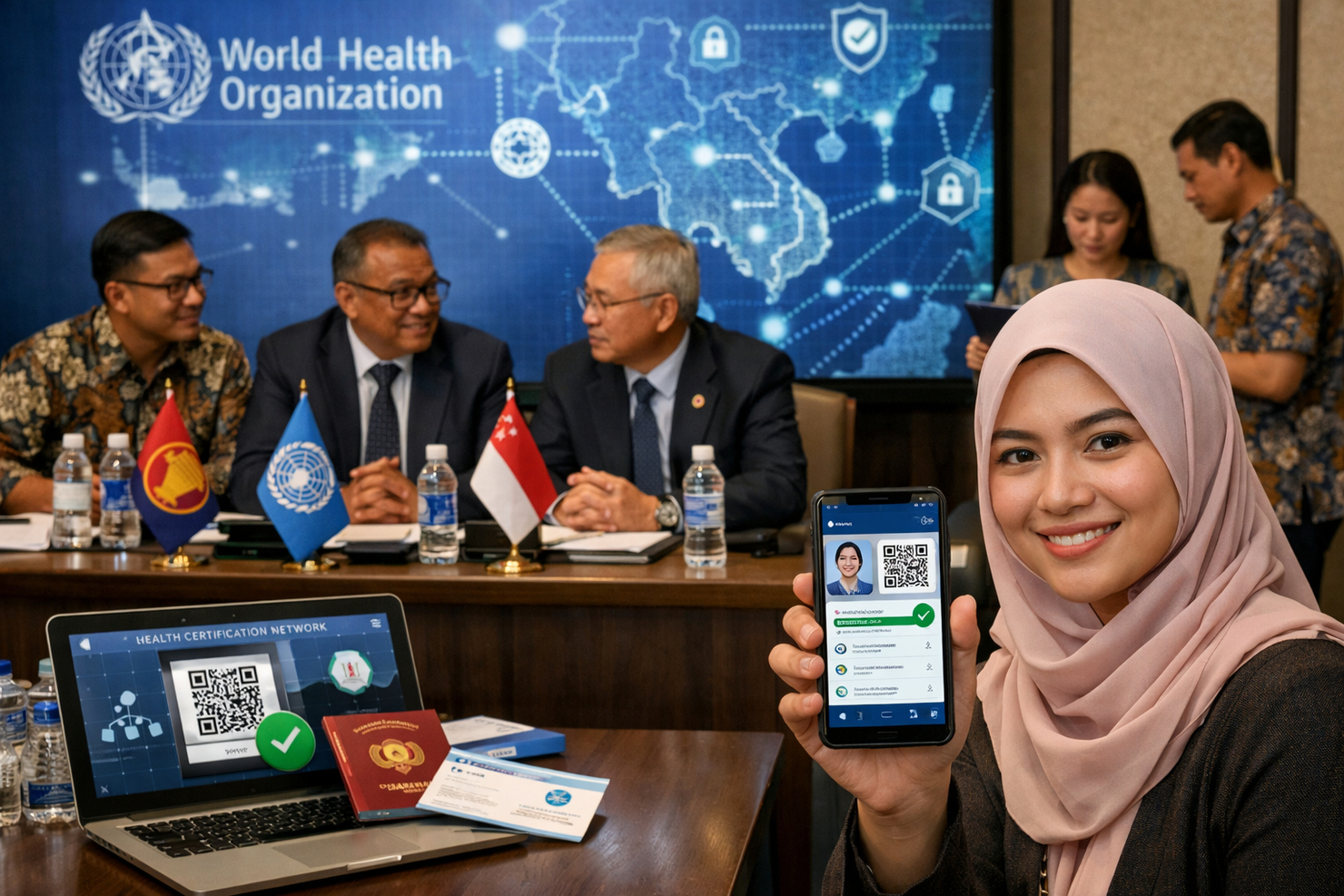
The World Health Organization, together with the Alliance for Health Policy and Systems Research and the Singapore-based Temasek Foundation, has launched a three-year initiative to replace paper-based medical records with digital health wallets across Southeast Asia. This will fundamentally change how personal medical data is collected, monitored, and managed, and raises questions about data privacy, surveillance, and the long-term consequences of transforming emergency systems into a permanent global health architecture.
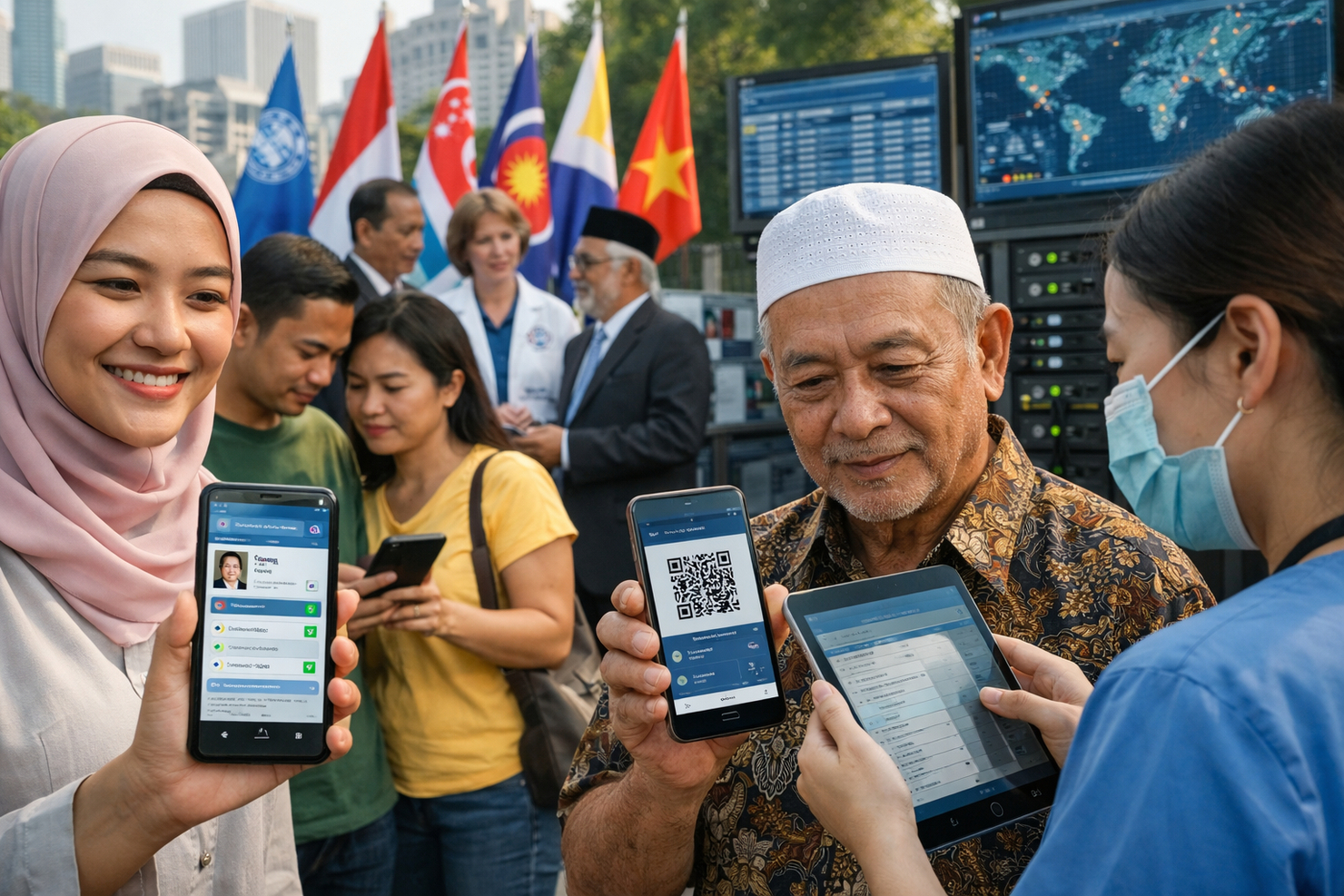
The system, based on the technology of vaccine passports from the pandemic era, allows individuals mobile, verified access to their health data while simultaneously and discreetly integrating millions of records into a centralized global digital control network. This rollout could fundamentally alter how personal medical data is collected, monitored, and managed, raising questions about privacy, surveillance, and the long-term consequences of transforming emergency COVID-19 systems into a permanent global health architecture.
The World Health Organization, its Alliance for Health Policy and Systems Research, and the Singapore-based Temasek Foundation have launched a three-year program to replace paper-based health records with digital health wallets across Southeast Asia. They have stated that their goal is to provide people with portable, verified access to their medical data.
The regional digitization initiative will embed millions of health records into a system shaped by the control mechanisms of the pandemic era. We must not forget that this is the same WHO that used the so-called COVID pandemic as a pretext to build a global censorship apparatus in collaboration with Silicon Valley, to push through vaccination passport systems that restricted citizens' freedom of movement, and to demand the power to monitor free speech. InfoWars reports : The organization now wants to be entrusted with the digital health data of hundreds of millions of people in the ASEAN region.
The program targets ASEAN member states, transitioning them from paper-based records such as vaccination certificates and child health booklets to cryptographically verified digital wallets processed through the WHO's Global Digital Health Certification Network (GDHCN). Countries will begin with digital vaccination certificates , then expand the system to include routine immunizations, maternal and child health data, and eventually more comprehensive personal health summaries. Each phase increases the scope of digitized, captured, and system- and border-verifiable data.
Mr. Kee Kirk Chuen, Head of Health and Wellbeing at the Temasek Foundation, said: “The COVID-19 pandemic has shown how important it is that health data is trustworthy, verifiable, and can be shared by people across borders.”
He added: “Through our partnership with the WHO, the Temasek Foundation aims to support countries in transitioning from fragmented paper records to secure digital health wallets that everyone can take anywhere. By piloting this approach in ASEAN member states, we want to demonstrate how trusted digital tools can strengthen health systems, improve continuity of care—including for families and children—and build the local capacity that governments need to implement these systems nationwide. If successful, this initiative can help translate global digital health standards into practical solutions that benefit communities across the region.”
The GDHCN underlying these digital wallets is not a new technology developed for a new purpose. The WHO adopted the European Union's framework for digital COVID-19 vaccination passports to create this global network of digital health certificates. The EU's COVID certificate system was issued to over 2,3 billion people and formed the backbone of a control society that tied basic freedoms—from entering a restaurant to boarding a plane—to vaccination status.
This system is now being repurposed and expanded far beyond its original purpose into a permanent platform for the digitization of all personal health data. What began as emergency infrastructure during the pandemic is evolving into the standard architecture for governments to manage citizens' health data. The WHO's role as guardian of this power warrants close scrutiny. During the pandemic, the WHO collaborated with YouTube, Facebook, Wikipedia, and other platforms to censor or label COVID-19 content it deemed "misinformation." YouTube alone deleted over 800,000 videos for contradicting WHO statements.
Many of these deletions involved content that later turned out to be true, including claims that vaccinated people could transmit COVID and the possibility that the virus had escaped from a laboratory.
The WHO's stance after the pandemic has done nothing to restore trust. A senior WHO official, Andy Pattison, has publicly advocated for a lasting partnership between global health authorities and major technology platforms , proposing a so-called "online health collective" to permanently and institutionally replicate the level of collaboration between companies during the COVID era. The stated goal is not merely the dissemination of information.
Pattison acknowledged that "the real proof of success... is behavioral change," thus making it clear that the WHO measures success not only by visibility but also by its influence on people's decisions. This organization is now calling on ASEAN member states to share their populations' health data with a system it controls.
(via Exposing The Darkness)
More for you:




 "Dravens Tales from the Crypt" has been enchanting for over 15 years with a tasteless mixture of humor, serious journalism - for current events and unbalanced reporting in the press politics - and zombies, garnished with lots of art, entertainment and punk rock. Draven has turned his hobby into a popular brand that cannot be classified.
My blog was never designed to spread news, let alone get political, but with current affairs I just can't help but capture information here that is otherwise censored on all other channels. I am aware that the design page may not seem "serious" to many in this regard, but I will not change this to please the "mainstream". Anyone who is open to non-state-compliant information sees the content and not the packaging. I've tried enough to provide people with information over the last 2 years, but quickly noticed that it never matters how it's "packaged", but what the other person's attitude towards it is. I don't want to put honey on anyone's mouth to meet expectations in any way, so I'll keep this design because hopefully at some point I'll be able to stop making these political statements, because it's not my goal to go on like this forever  I leave it up to everyone how they deal with it. However, you are welcome to simply copy and distribute the content, my blog has always been under the WTFPL license.
It's hard for me to describe what I'm actually doing here, DravensTales has become a culture blog, music blog, shock blog, tech blog, horror blog, fun blog, a blog about found items on the internet, internet bizarre, trash blog, art blog, water heater, zeitgeist blog over the years , Scrap blog and grab bag blog called. Everything that is right ... - and yet not. The main focus of the blog is contemporary art, in the broadest sense of the word.
To ensure the continued operation of this site, you are welcome to make a donation via credit card, PayPal, Google Pay, Apple Pay, or direct debit/bank account . Many thanks to all readers and supporters of this blog!








