
There are questions one shouldn't ask. Not because the answer would be dangerous—but because the question itself makes the questioner dangerous. "What is antisemitism today?" is such a question. Anyone who asks it immediately risks being labeled, a label that ends all further discussion. Unless, of course, one is an Israeli Jew and a filmmaker. Then it's permissible.
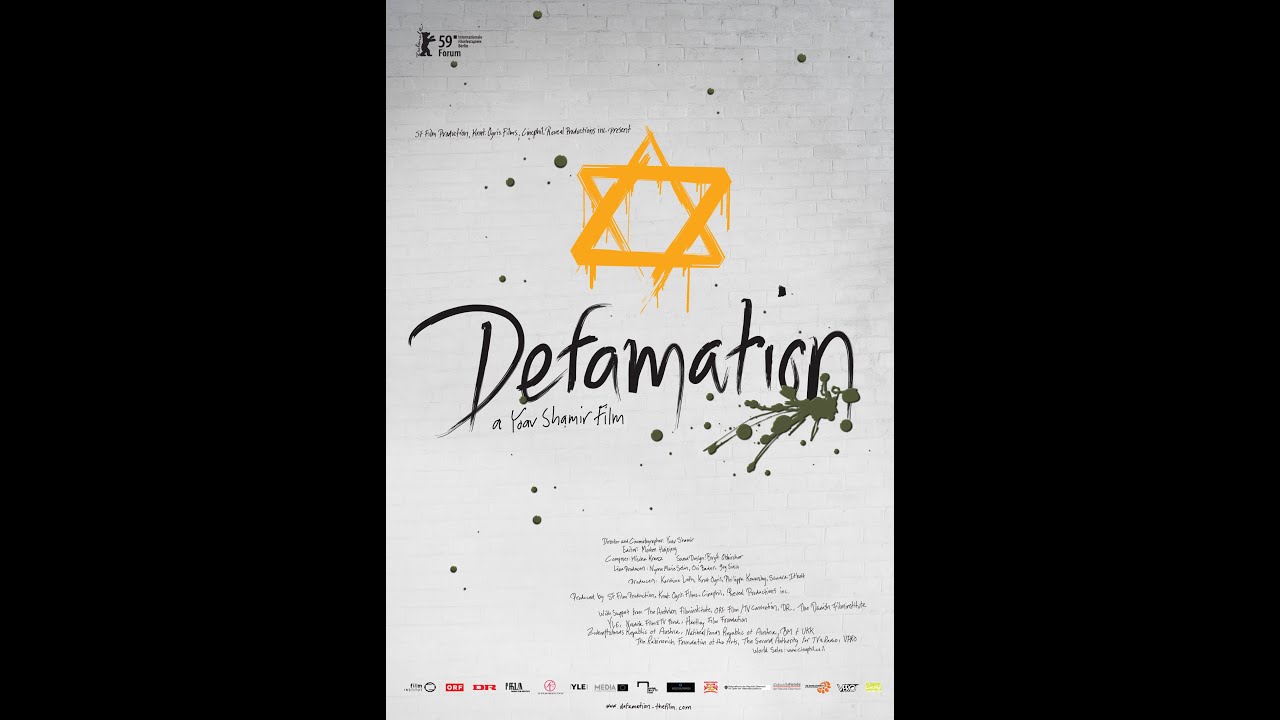
Yoav Shamir did it. His 2009 documentary "Defamation" is one of the most uncomfortable works that Jewish filmmaking has produced in recent decades – not because it downplays antisemitism, but because it takes it seriously. More seriously than many institutions that depend on it.
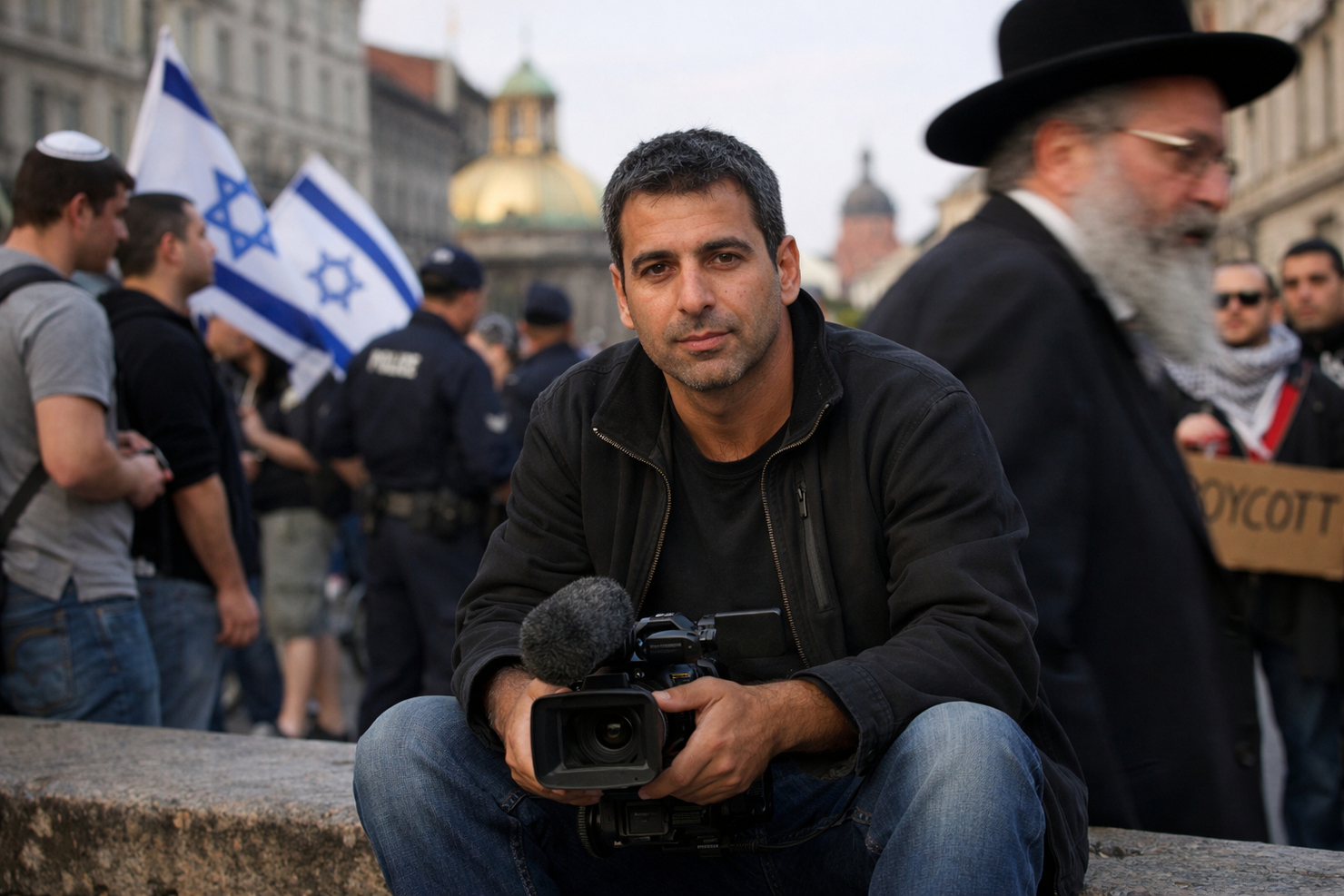
The ADL and its $70 million apparatus
Abe Foxman, longtime head of the Anti-Defamation League, an organization with an annual budget of over $70 million and 27 offices across the US, is the film's central figure. He is also its most unwitting comedian. Shamir accompanies him on international missions, where he meets with heads of state, ambassadors, and the Pope—not because he is politically elected or democratically legitimized, but because everyone believes the Jewish community wields enormous influence in Washington. Foxman knows this. He uses it. And he is honest enough to admit it: "They think we are more powerful than we are. We won't convince them otherwise."
This isn't antisemitism. This is realpolitik. But it's also precisely the image that antisemites use as proof of their global conspiracy theory. The difference lies in the context – and Foxman juggles this context professionally, while simultaneously causing an uproar over Polish lucky charm dolls shaped like Jews with banknotes.
Five cases in two weeks
The most illuminating moment in the film isn't the trip to Auschwitz. It's the scene in an ADL office in New York, where Shamir is searching for a suitable case to film—a concrete incident of antisemitism he can cover. What the ADL employee presents after two weeks of reviewing data: Someone had requested and received time off for Jewish holidays. Someone else had filed a complaint about a newspaper article with "antisemitic undertones." A police officer had said something derogatory on the phone—and then apologized.
Five cases. Two weeks. One of the most powerful influence structures in American civil society. The discrepancy between the constantly invoked threat and the actually documented reality is so vast that it cannot really be ignored. Yet almost everyone ignores it.
The Rabbi and the Question of Identity
The film's most pointed objection comes from none other than an Orthodox rabbi in Kyiv, someone who would be the easiest target for actual antisemitism: Religious Jews are less obsessed with antisemitism than secular Jews because their Jewish identity is rooted in prayer—not in hostility. "For many people, fighting antisemitism is the only expression of their Jewish identity." ADL missionary members unintentionally confirm this themselves: "The ADL gives us a forum to be Jewish."
A multi-billion dollar organization that primarily serves to maintain identity while simultaneously acting as a neutral threat monitoring agency – this is a conflict of interest of considerable magnitude.
Finkelstein and the Price of Dissent
Norman Finkelstein, son of Holocaust survivors and author of "Holocaust Industry," lost his university professorship. He was labeled a "self-hating Jew," a "Holocaust denier," and a "madman." Israel denied him entry and declared him a security risk—a remarkable assessment for a Jewish academic.
His argument is simple, which is why it is so fiercely opposed: The term "antisemitism" is being instrumentalized to discredit legitimate criticism of Israeli policies. Anyone who criticizes Israel is labeled an antisemite. The word thus loses its power to shock—and its meaning. This is precisely what harms Jewish communities worldwide, because if everything is labeled antisemitism, then genuine threats become invisible.
Walt and Mearsheimer, the authors of the "Israel Lobby" book—both respected professors, neither of them Jewish—simply told Shamir that during their entire trip through the US and Europe, they had encountered hardly any genuine antisemitism. They had, however, encountered plenty of criticism of Israeli policies.
What Auschwitz does to children
The most disturbing part of the film shows Israeli students in Poland. 30,000 go there every year – ten times more than in the 1980s. They return with the awareness of living in a world that wants to kill them. One girl says: "I'm glad I have an Israeli passport now." Another: "I'm afraid of every Pole." Israel as an insurance policy against the next massacre – that is the foundation on which a generation is built.
Shamir's unspoken question is: What does it do to a society when the present is constantly read through the lens of its worst past? When every critical comment, every instance of unkindness, every Polish souvenir is interpreted as a precursor to genocide?
What antisemitism is today
Real antisemitism exists. The man with the knife in the Moscow synagogue was no misunderstanding. The Rwandan radio station announcing cockroaches was not a metaphor. The Protocols of the Elders of Zion continue to circulate in the millions in parts of the world where they are read as factual accounts.
But a term that covers everything – from the grapevine as an antisemitic symbol to the synagogue knife attack – ultimately covers nothing. That's not Shamir's opinion. That's the logic of language.
"Defamation" is the film that deserves an honest debate about antisemitism. The fact that it needed an Israeli Jew as its author to be released without immediate condemnation already answers half the question posed in the title.
More for you:






 "Dravens Tales from the Crypt" has been enchanting for over 15 years with a tasteless mixture of humor, serious journalism - for current events and unbalanced reporting in the press politics - and zombies, garnished with lots of art, entertainment and punk rock. Draven has turned his hobby into a popular brand that cannot be classified.
My blog was never designed to spread news, let alone get political, but with current affairs I just can't help but capture information here that is otherwise censored on all other channels. I am aware that the design page may not seem "serious" to many in this regard, but I will not change this to please the "mainstream". Anyone who is open to non-state-compliant information sees the content and not the packaging. I've tried enough to provide people with information over the last 2 years, but quickly noticed that it never matters how it's "packaged", but what the other person's attitude towards it is. I don't want to put honey on anyone's mouth to meet expectations in any way, so I'll keep this design because hopefully at some point I'll be able to stop making these political statements, because it's not my goal to go on like this forever  I leave it up to everyone how they deal with it. However, you are welcome to simply copy and distribute the content, my blog has always been under the WTFPL license.
It's hard for me to describe what I'm actually doing here, DravensTales has become a culture blog, music blog, shock blog, tech blog, horror blog, fun blog, a blog about found items on the internet, internet bizarre, trash blog, art blog, water heater, zeitgeist blog over the years , Scrap blog and grab bag blog called. Everything that is right ... - and yet not. The main focus of the blog is contemporary art, in the broadest sense of the word.
To ensure the continued operation of this site, you are welcome to make a donation via credit card, PayPal, Google Pay, Apple Pay, or direct debit/bank account . Many thanks to all readers and supporters of this blog!








