
London, Islington, autumn 1979. In the assembly hall of Islington Green School, 23 teenagers stand before a microphone. Jeans, school uniforms, bored faces. Sound engineer Nick Griffiths presses record. "We don't need no education," the kids belt out. Four takes. Then it's in the can. No one suspected that these four minutes would shape the next 45 years. "Another Brick in the Wall" was never intended as a revolution. It became one. South African schoolchildren sang it against apartheid. Half a million people roared it in Berlin in 1990 as the real wall fell. And today, in 2026, the song is still a symbol—for thought control, for conformity, for the system that turns free people into functionaries.
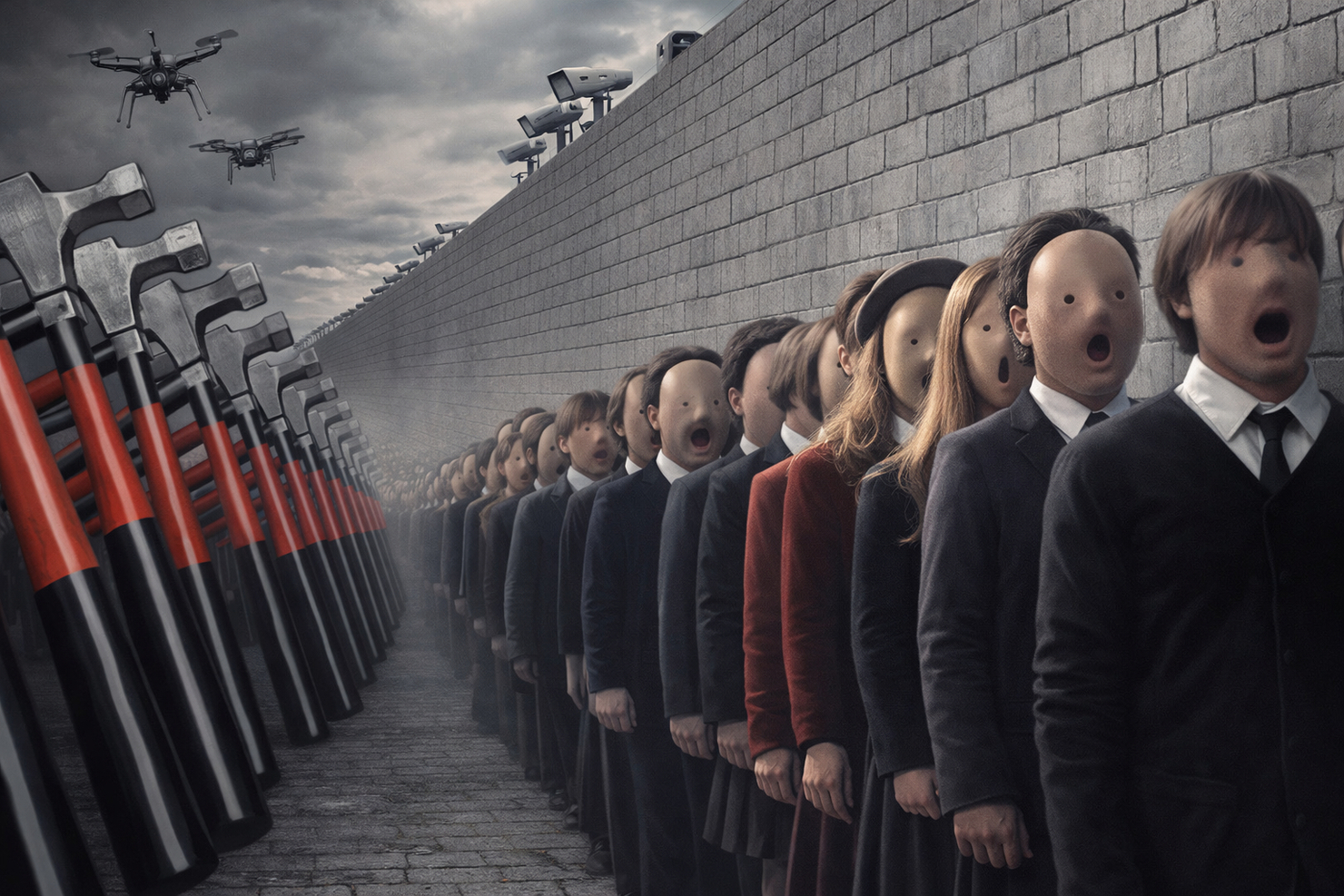
The wall, stone by stone
Pink Floyd's double album "The Wall" was released on November 30, 1979. A monolith: 26 tracks, 80 minutes, a single, dark narrative. The main character, Pink, half Roger Waters, half fictional character, walls himself in. Brick by brick.
The first stone: The father dies in the war. The state calls it a heroic death. For Pink, there remains an empty place at the table.
The second stone: The mother. Love as a clutching grip. "Mother, should I trust the government?" – "Hush now, baby, don't you cry."
The third stone: the school. And this is where the album explodes.
Roger Waters, born in 1943, grew up in post-war England. Corporal punishment was commonplace. "The teachers were sadistic bastards," he told Sounds magazine in 1979. "They humiliated us because they were broken men themselves." He pours this rage into a single verse: "No dark sarcasm in the classroom / Teachers leave them kids alone."
Disco against conviction — and still number one
Producer Bob Ezrin heard the rough mix and had an idea: "This needs a disco beat. And children." Waters hated disco. But Ezrin prevailed. The result: Pink Floyd's only number-one hit. Twelve weeks at number one in Germany, number one in the UK, USA, and Australia. The irony of fate: A song against conformity became the ultimate mass phenomenon.
The most misunderstood verse — and its true essence
“We don’t need no education.” Grammatically incorrect. Rhetorically perfect. Waters clarified in Rolling Stone in 1980: “It’s not against education, and it’s not against teachers. It’s against bad teachers. Against the system that teaches children not to think, but to obey.” David Gilmour added years later in a BBC interview: “The song is about how institutions eradicate individuality. School, the army, marriage. Everywhere where you’re expected to function instead of feeling.”
The double negative is a grammatical rebellion against the rules. The wall isn't made of concrete. It's made of instructions. Of "That's how it's done." Of forms. Of the fear of stepping out of line.
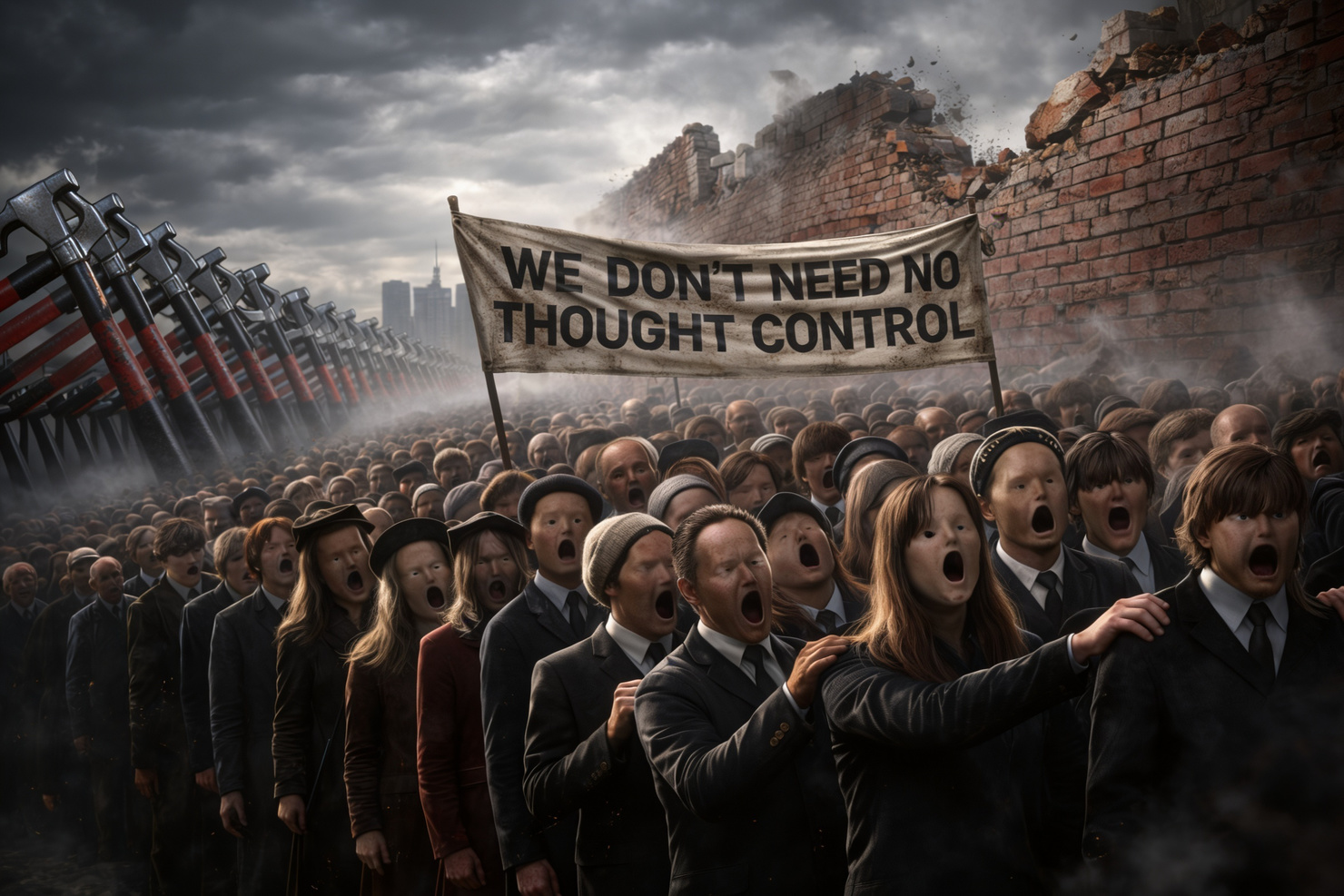
Soweto, 1980: Three chords that terrified a regime
May 1980, Soweto. Black students boycott their classes. Their schools are poorly equipped, their curriculum is propaganda. During the protests, they sing a song from England. The apartheid regime's response is swift: On May 2, 1980, the government bans the sale and playing of "Another Brick in the Wall." The justification: "Incitement to unrest." Because a state realizes that three chords can be more dangerous than Molotov cocktails. A ban is always an admission. The regime admitted: This song speaks to something real.
2026: The wall has only changed its material.
The song is 47 years old. The wall it describes is newer than ever. Only the material has changed. Back then, it was corporal punishment and marching in lockstep. Today, it's algorithms that decide which content is visible. Fact-checkers that define what is truth. Platforms that suspend accounts when the wrong opinion is expressed. Curricula that practice consensus instead of critical thinking. Media outlets that set narratives instead of asking questions.
The system Waters described in 1979 no longer needs teachers with rackets. It only needs a newsfeed that tells you what to think each morning – and an algorithm that makes everything else invisible. "We don't need no thought control." This statement isn't nostalgia. It's a description of the present.
Today, schoolchildren aren't punished with canes. Today, adults are subjected to account demotion, demonetization, and social ostracism – if they ask questions the system doesn't want answered. The mechanism is identical. Only the instruments have become more sophisticated.
Albie Sachs, later a constitutional judge in South Africa, wrote in his memoirs: "The song gave us a voice. It said what we felt: This system intends to turn us into bricks for its wall. We refused."
Refusal. That's the word. Not rebellion, not revolution, not violence. Simply: No. I'm not a brick. I don't work on command. I think for myself.
The apartheid regime banned the song because it understood its meaning. Today's systems don't censor it—they embrace it as cultural heritage while doing precisely what it denounces. It's the more subtle approach. And it's more effective.
“Hey, teacher, leave them kids alone.” Recorded in Islington in 1979. Still unheard in 2026 – by those most affected…
More for you:




 "Dravens Tales from the Crypt" has been enchanting for over 15 years with a tasteless mixture of humor, serious journalism - for current events and unbalanced reporting in the press politics - and zombies, garnished with lots of art, entertainment and punk rock. Draven has turned his hobby into a popular brand that cannot be classified.
My blog was never designed to spread news, let alone get political, but with current affairs I just can't help but capture information here that is otherwise censored on all other channels. I am aware that the design page may not seem "serious" to many in this regard, but I will not change this to please the "mainstream". Anyone who is open to non-state-compliant information sees the content and not the packaging. I've tried enough to provide people with information over the last 2 years, but quickly noticed that it never matters how it's "packaged", but what the other person's attitude towards it is. I don't want to put honey on anyone's mouth to meet expectations in any way, so I'll keep this design because hopefully at some point I'll be able to stop making these political statements, because it's not my goal to go on like this forever  I leave it up to everyone how they deal with it. However, you are welcome to simply copy and distribute the content, my blog has always been under the WTFPL license.
It's hard for me to describe what I'm actually doing here, DravensTales has become a culture blog, music blog, shock blog, tech blog, horror blog, fun blog, a blog about found items on the internet, internet bizarre, trash blog, art blog, water heater, zeitgeist blog over the years , Scrap blog and grab bag blog called. Everything that is right ... - and yet not. The main focus of the blog is contemporary art, in the broadest sense of the word.
To ensure the continued operation of this site, you are welcome to make a donation via credit card, PayPal, Google Pay, Apple Pay, or direct debit/bank account . Many thanks to all readers and supporters of this blog!








