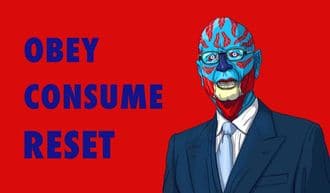
It sounds so noble: The peoples of the world, united against invisible enemies, relentlessly fighting viruses, fairly distributing vaccines, jointly shouldering the immense suffering of the next pandemic. In May 2025, after years of marathon negotiations, the WHO actually adopted a core text for a pandemic agreement. Applause, please. Except: The crucial part is missing. The annex, which stipulates who actually gets what – postponed until May 2026. Or later. Or never. Anyone wondering why only needs to look at what exactly is being argued about. Then it quickly becomes clear: It's about money. A lot of money.

PABS: The small word with the big price tag
The core of the agreement is called PABS – Pathogen Access and Benefit Sharing. It regulates how states share data and samples of dangerous pathogens and how vaccines, medications, and tests will later be distributed. The idea behind it is as simple as it is sensible: You send your virus samples to Geneva, the pharmaceutical industry develops a vaccine, and you get something in return. A fair exchange. Or at least it should be.
According to current proposals, manufacturers would have to provide 20 percent of their pandemic-relevant healthcare products – at least half of them as donations, the rest at preferential prices. Twenty percent. That sounds like an act of human generosity. But it's the bare minimum compromise after years of wrangling. And even this minimal compromise is apparently too much for Western Europe and the USA.
Raw material virus: Take it first, then pull your hand away.
Countries of the Global South accuse Western industrialized nations of profiting from shared virus data during the COVID-19 pandemic without later distributing vaccines fairly. This isn't a conspiracy theory. It's documented. When COVID-19 emerged, the genomic sequences dutifully flowed westward, the pharmaceutical giants developed their vaccines – and then the wealthy nations swooped in to control all the supplies. BioNTech and Pfizer supplied the African Union with 50 million doses – while Moderna sent a mere 0,2 percent of its total vaccine supply to low-income countries, Pfizer/BioNTech sent 0,4 percent. Africa serves as a raw material supplier for the next vaccine boom but doesn't even get the tip.

At the same time, gold literally fell from the sky for these corporations. Pfizer, BioNTech, and Moderna together generated around $1000 in profit every second at the height of the pandemic. Every single second. The pandemic spawned five new billionaires with a combined net worth of $35,1 billion. Congratulations on the plague.
Germany: Lobbyist in pinstripes
Germany's role in these negotiations is particularly instructive. In the negotiations with the WHO, the German federal government favored the interests of the pharmaceutical industry by demanding voluntary technology transfer for manufacturers. Voluntary. This means: The corporations should decide for themselves whether to share their knowledge. One can easily imagine how often they will do so. The result: Technology transfer remains voluntary. Germany had strongly advocated for this. The home country of BioNTech is championing BioNTech. Who would have thought it?
The so-called technology transfer clause – which would have allowed poorer countries to produce vaccines themselves – was also softened through negotiations. While lower-income countries favored stricter rules, wealthier countries and EU members insisted that technology transfer should be "voluntary and by mutual agreement." "Mutual agreement" between a corporation with billions in profits and a country that doesn't have a cold chain. Very balanced.
Postponed, diluted, sunk
It was to be expected that several commitments would be weakened or watered down. For example, both the requirements for transparency in public funding of research and development and the states' obligations regarding technology transfer were formulated more leniently than originally planned. Transparency in public research funding? Gone. Technology transfer? Voluntary. PABS annex? Postponed.
What remains is an agreement that sounds good but offers little in the way of real substance. Low-income countries will once again face delayed access to vaccines, diagnostics, and medications in the event of a future pandemic. This is not unintended collateral damage. It is the result of years of strategic negotiation with a clear objective: to secure the distribution of the benefits of the next pandemic as early as possible, before the first death is even recorded.
The real agreement behind the agreement has long since been signed. It's called patent protection, voluntary technology transfer, and twenty percent packaged as charity. While the next epidemic is still dormant on a bat's wing in Central Africa, negotiations are already underway in Geneva about who gets the profit margin.

More for you:





 "Dravens Tales from the Crypt" has been enchanting for over 15 years with a tasteless mixture of humor, serious journalism - for current events and unbalanced reporting in the press politics - and zombies, garnished with lots of art, entertainment and punk rock. Draven has turned his hobby into a popular brand that cannot be classified.
My blog was never designed to spread news, let alone get political, but with current affairs I just can't help but capture information here that is otherwise censored on all other channels. I am aware that the design page may not seem "serious" to many in this regard, but I will not change this to please the "mainstream". Anyone who is open to non-state-compliant information sees the content and not the packaging. I've tried enough to provide people with information over the last 2 years, but quickly noticed that it never matters how it's "packaged", but what the other person's attitude towards it is. I don't want to put honey on anyone's mouth to meet expectations in any way, so I'll keep this design because hopefully at some point I'll be able to stop making these political statements, because it's not my goal to go on like this forever  I leave it up to everyone how they deal with it. However, you are welcome to simply copy and distribute the content, my blog has always been under the WTFPL license.
It's hard for me to describe what I'm actually doing here, DravensTales has become a culture blog, music blog, shock blog, tech blog, horror blog, fun blog, a blog about found items on the internet, internet bizarre, trash blog, art blog, water heater, zeitgeist blog over the years , Scrap blog and grab bag blog called. Everything that is right ... - and yet not. The main focus of the blog is contemporary art, in the broadest sense of the word.
To ensure the continued operation of this site, you are welcome to make a donation via credit card, PayPal, Google Pay, Apple Pay, or direct debit/bank account . Many thanks to all readers and supporters of this blog!