
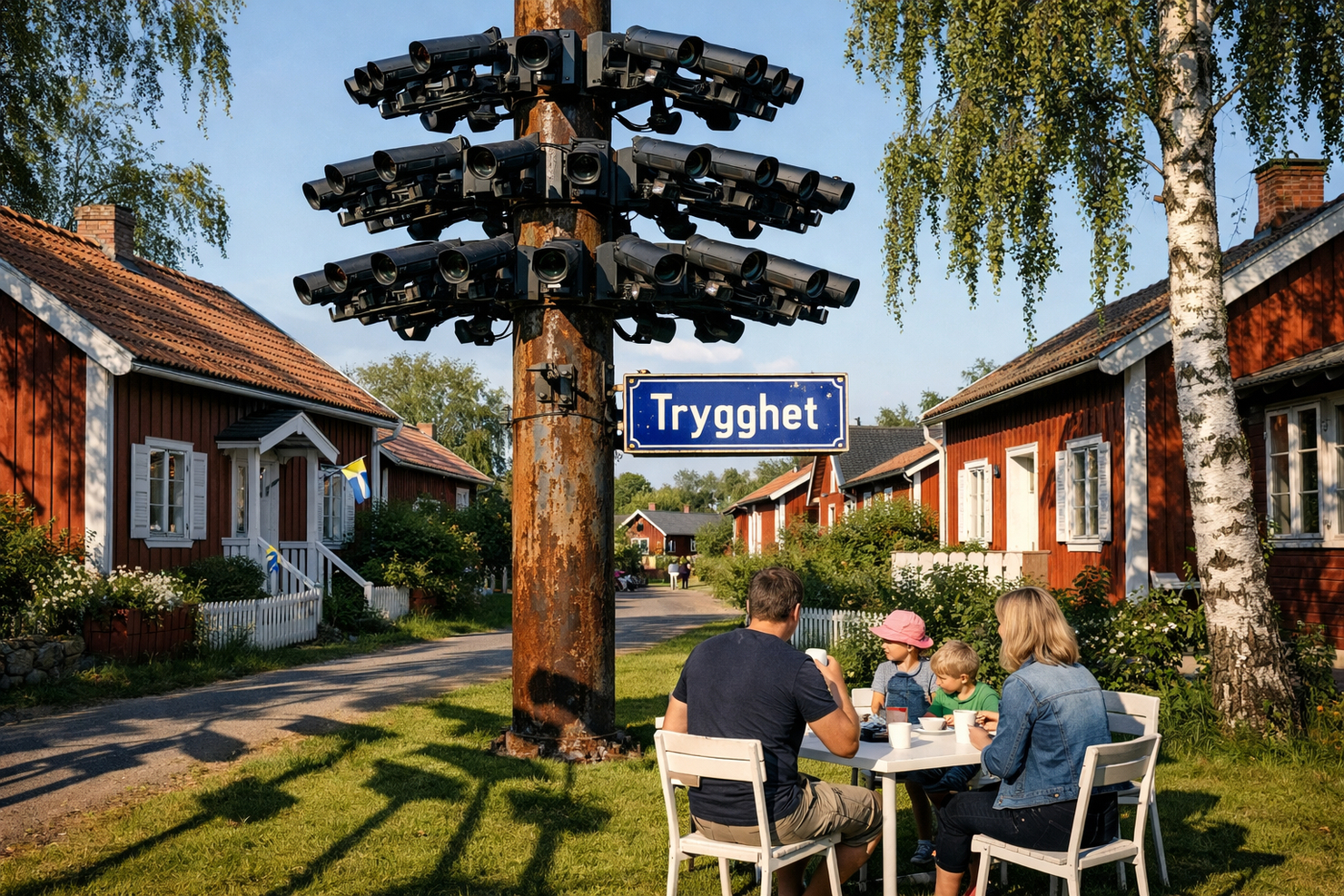
Sweden has achieved what Orwell could only write about: A country cultivates a gang war over a decade, watches as explosives become the standard acoustic backdrop of the suburbs – and then sells the surveillance state to a terrified population as salvation. Cameras on every street corner, security zones with random body searches, and, since May, real-time biometric facial recognition by parliamentary decree. Problem, reaction, solution – the oldest script of power politics is playing out in Stockholm not as a conspiracy theory, but as a proper legislative process with a file number.
How to cultivate a problem
In August 2014, the then Prime Minister Fredrik Reinfeldt addressed the nation and urged the Swedes to open their hearts – for the people who fled to Europe. A year later they applied approximately 163,000 people seeking asylum In a country with fewer than ten million inhabitants – a top figure per capita in Europe. The subsequent red-green government maintained this open-hearted approach precisely until November 2015, when border controls and stricter asylum rules were introduced. Morality had served its purpose; now reality could take over.
Meanwhile, others profited: Private operators of asylum accommodations raked in a series of tax-subsidized government contracts , most notably former immigration critic Bert Karlsson, whose accommodation company Jokarjo was marching toward billions in revenue . The newcomers were housed where no one else wanted to live: in the concrete silos of the multi-million-euro program, those technocratic Le Corbusier utopias of the 1960s, for which once-thriving old town centers were razed and which have since served as final resting places for all those who cannot afford anywhere else.
The Harvest: Bombs as Background Noise
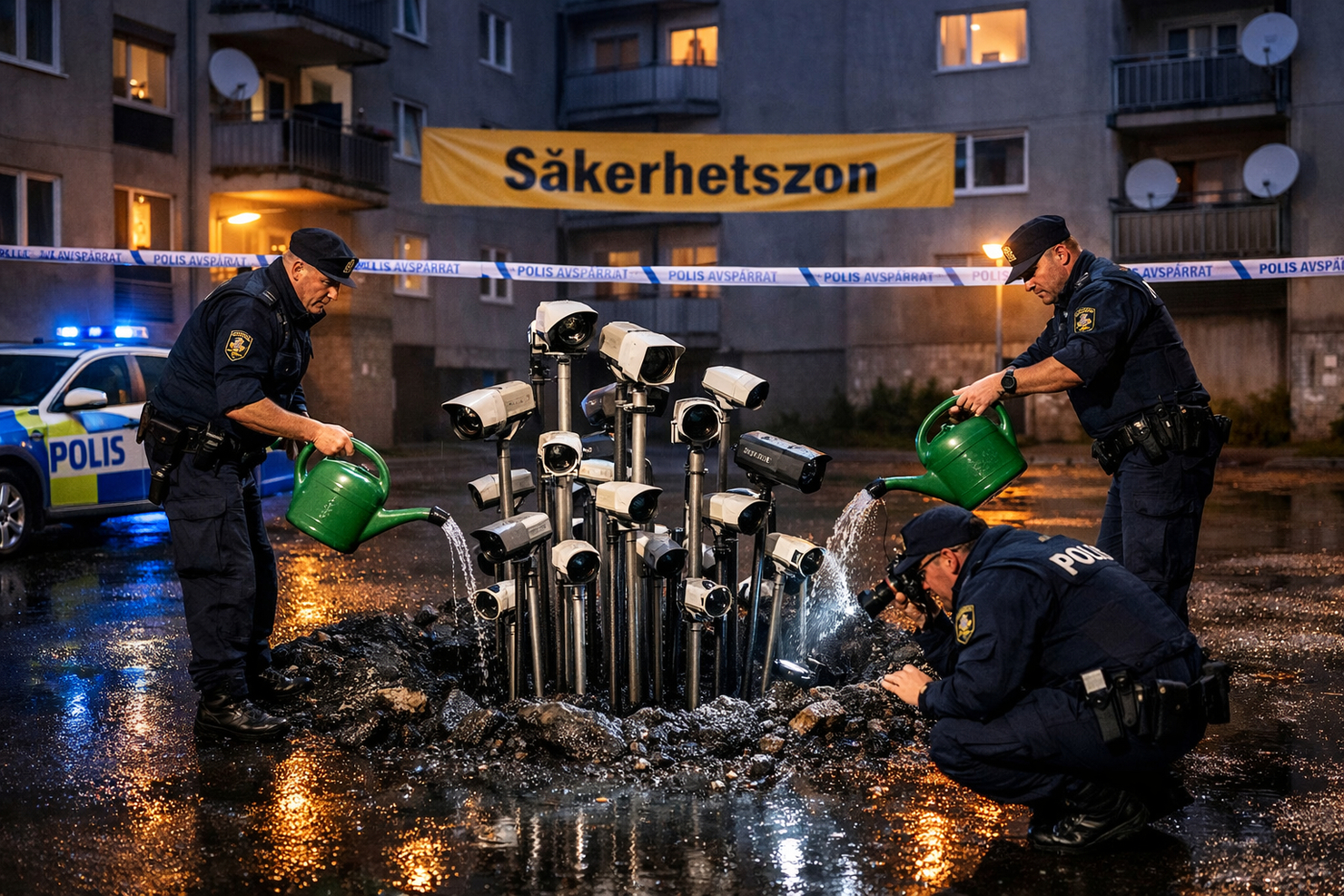
What thrives in such parallel worlds surprises no one except those in charge. In 2015, the police began officially designating dozens of neighborhoods as high-risk areas. Criminal networks like Foxtrot, led by the "Kurdish Fox" Rawa Majid, took over these areas and recruited minors as contract killers—children shoot more cheaply and serve shorter sentences. The figures from the state Crime Prevention Council read like a frontline report: Between 2018 and 2025, reported explosives offenses increased. from 162 to 621 per year – an increase of 289 percent. Sweden now leads Western European statistics on gun violence, in the last three years alone. 23 innocent bystanders died in the hail of bullets from the gangs.
The solution: A panopticon with a people's mandate
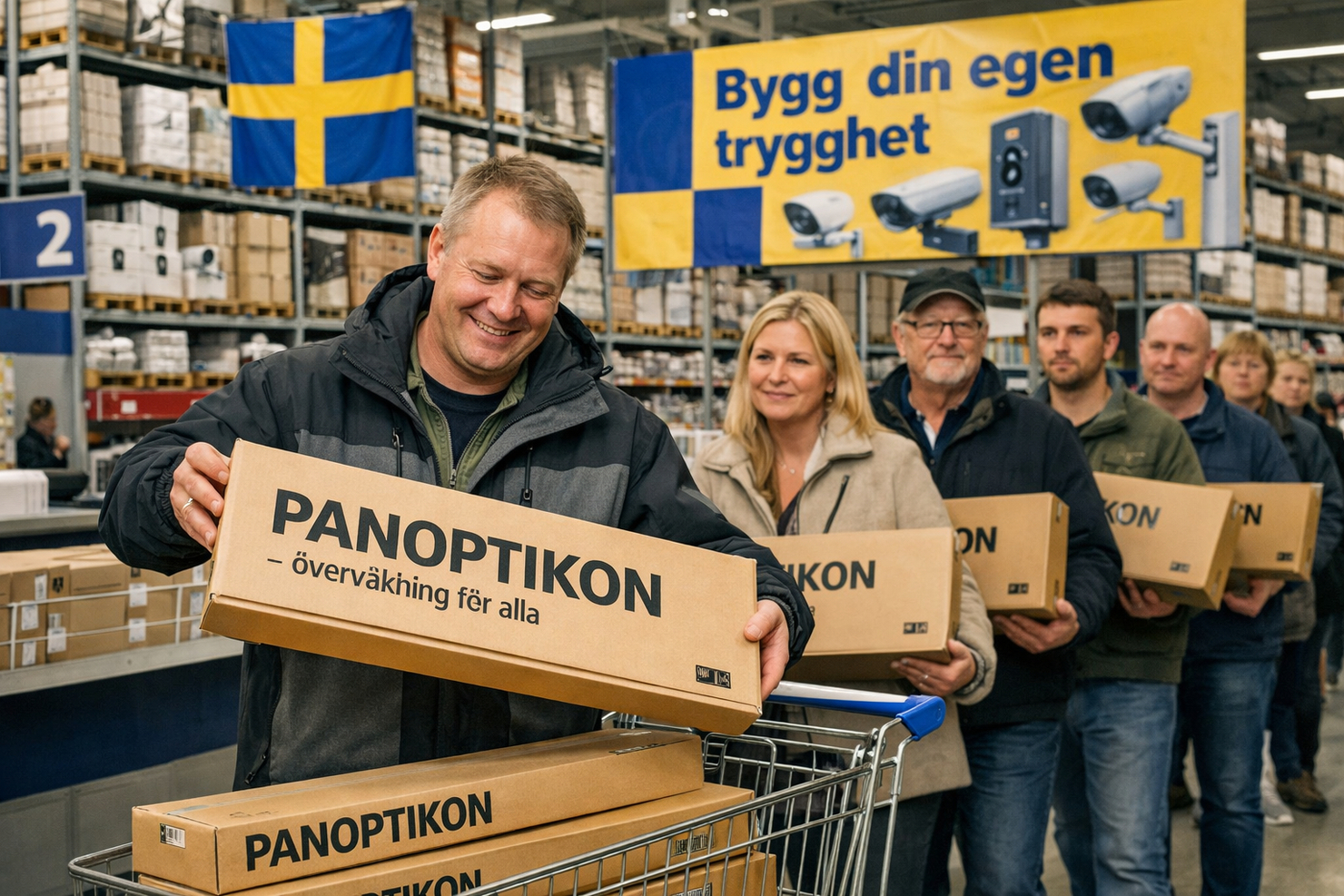
And now comes the part where the state reaps the fruits of its own failure. The center-right government under Ulf Kristersson, in power since 2022—supported by the Sweden Democrats, whose share of the vote had doubled amidst the chaos—came to power promising to dramatically increase the number of surveillance cameras. The irony is self-evident: Kristersson is now tackling with an iron fist the very problem that his party colleague Reinfeldt so readily created. In April 2024, the Riksdag passed the law on security zones, in which the police are allowed to search people and vehicles without concrete suspicion. The first zone of the country It came into force on June 5, 2024, in the Hageby district of Norrköping – a citizen's complaint regarding a violation of the anti-discrimination law was dutifully dismissed. In February 2026, an agreement was reached in the same city. all eight parties on a "security package"More cameras, more municipal law enforcement, 18 million crowns. From the left to the right-wing populists, there is touching unity when it comes to filming their own citizens.
The crowning achievement came on May 26, 2026: The Swedish Parliament (Rikstag) authorized the police to use AI-powered facial recognition in real time , effective July 1. The requirement is for approval by a public prosecutor or court – which, in "emergency" cases, can also be obtained retroactively within 24 hours. Anyone who has ever witnessed how quickly exceptions become routine knows the value of a retroactive approval requirement: exactly the piece of paper it's written on. The EU AI Act serves as a fig leaf, actually prohibiting real-time biometrics, but conveniently including precisely the exceptions that Stockholm is now expanding into standard practice. The infrastructure is supplied by the same security-industrial complex that has long since infiltrated Europe's bureaucracy – Palantir sends its regards . And anyone who thinks this will remain a Swedish problem should take a look at the drones flying over Swiss heads . Who's willing to bet that these same cameras won't one day be checking whether your digital behavior is still within acceptable limits?
Machiavelli would have applauded.
The mechanism is as simple as it is effective. A problem of such magnitude that it overwhelms any social system is imported, any criticism of it is labeled as racism for years, and the pressure is allowed to build. When the people then cry out for a firm hand, it is delivered – and the citizens celebrate the curtailment of their own fundamental rights as a victory over the chaos that was previously created for them. The totalitarian police state doesn't arrive in a tank; it arrives by popular mandate. Profits are made twice: first from the asylum centers, then from the cameras that monitor their consequences. The gang wars are not the system's failure – they are its fuel. Sweden first transformed its cities into ghettos and is now converting them into prison yards. The people, who were branded as racist for a decade, politely thank the authorities for the cameras they now monitor themselves. Those who trade security for freedom end up with neither – only a complete record of how they lost both. And Stockholm films its people around the clock – and calls this "Trygghet"!
More for you:





 "Dravens Tales from the Crypt" has been enchanting for over 15 years with a tasteless mixture of humor, serious journalism - for current events and unbalanced reporting in the press politics - and zombies, garnished with lots of art, entertainment and punk rock. Draven has turned his hobby into a popular brand that cannot be classified.
My blog was never designed to spread news, let alone get political, but with current affairs I just can't help but capture information here that is otherwise censored on all other channels. I am aware that the design page may not seem "serious" to many in this regard, but I will not change this to please the "mainstream". Anyone who is open to non-state-compliant information sees the content and not the packaging. I've tried enough to provide people with information over the last 2 years, but quickly noticed that it never matters how it's "packaged", but what the other person's attitude towards it is. I don't want to put honey on anyone's mouth to meet expectations in any way, so I'll keep this design because hopefully at some point I'll be able to stop making these political statements, because it's not my goal to go on like this forever  I leave it up to everyone how they deal with it. However, you are welcome to simply copy and distribute the content, my blog has always been under the WTFPL license.
It's hard for me to describe what I'm actually doing here, DravensTales has become a culture blog, music blog, shock blog, tech blog, horror blog, fun blog, a blog about found items on the internet, internet bizarre, trash blog, art blog, water heater, zeitgeist blog over the years , Scrap blog and grab bag blog called. Everything that is right ... - and yet not. The main focus of the blog is contemporary art, in the broadest sense of the word.
To ensure the continued operation of this site, you are welcome to make a donation via credit card, PayPal, Google Pay, Apple Pay, or direct debit/bank account . Many thanks to all readers and supporters of this blog!








